
Polish Heritage Festival 2026
Connecticut Virtuosi
First Presbyterian Church
Hartford
Nov. 5, 2026
October was Polish Heritage Month, and the Connecticut Virtuosi provided the capstone to the observance with the Polish Heritage Festival, a two-part concert celebrating Polish composers past and present. The first concert was held at the First Presbyterian Church in downtown Hartford; the second will be at St. Stanislaus B&M Church in New York City.
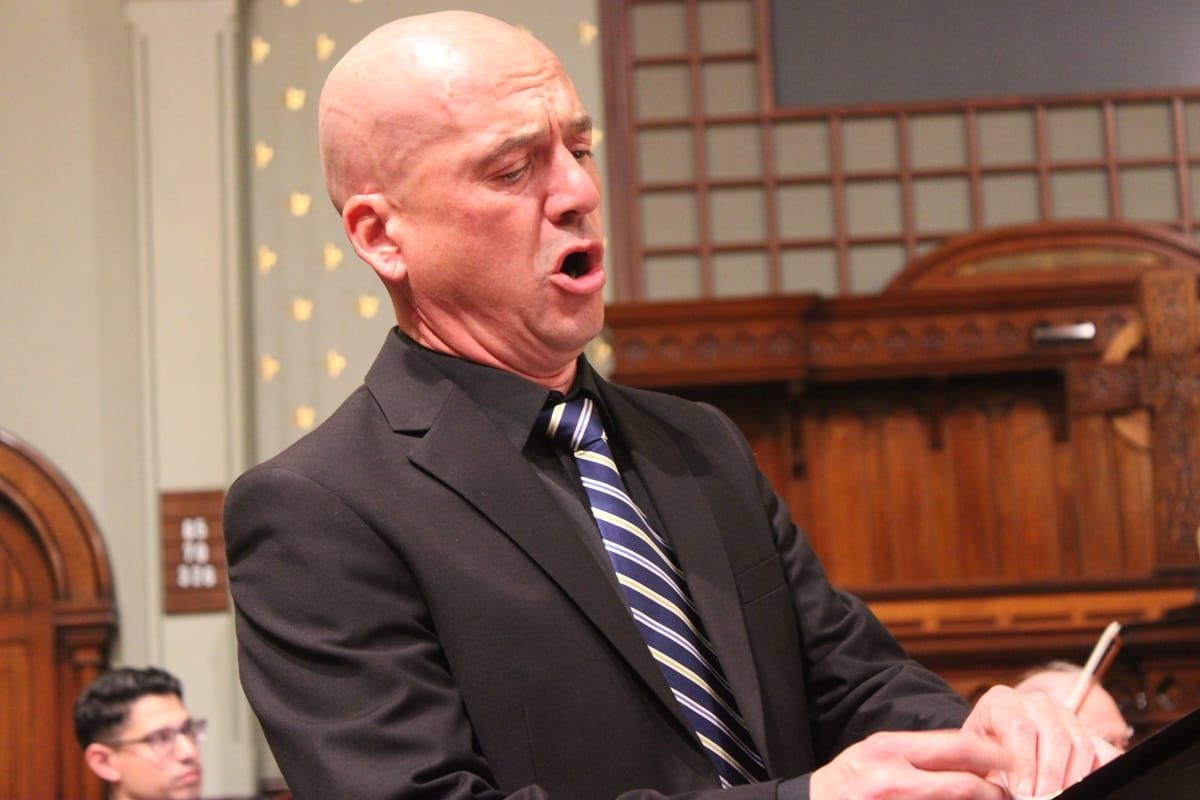
What I love about classical music is the juxtaposition of the old and the new. Even though the style is hundreds of years old, fresh takes by contemporary composers like Jakub Polaczyk demonstrate the music can still surprise and delight. He was present for the world premiere of his piece Pacierz Staropolski for Baritone and Orchestra, featuring bass-baritone singer Laurentiu Rotaru.
I was prepared for Rotaru’s deep voice to rumble throughout the church. I liked the slow buildup to his vocal performance. What I wasn’t ready for was the whistling. When guest conductor Przemyslaw Stanislawski pointed at him, Rotaru started whistling. Naturally he was pitch-perfect, producing a sound as clear and strong as his voice. It’s no small feat; try whistling right now without sounding raspy, without unintended vibrato, without running out of breath after an embarrassingly short amount of time. It just shows how music is not a matter of thousand dollar instruments and million dollar venues. Great music is also whistling in a church, when creative people bring their practice and talent to bear.
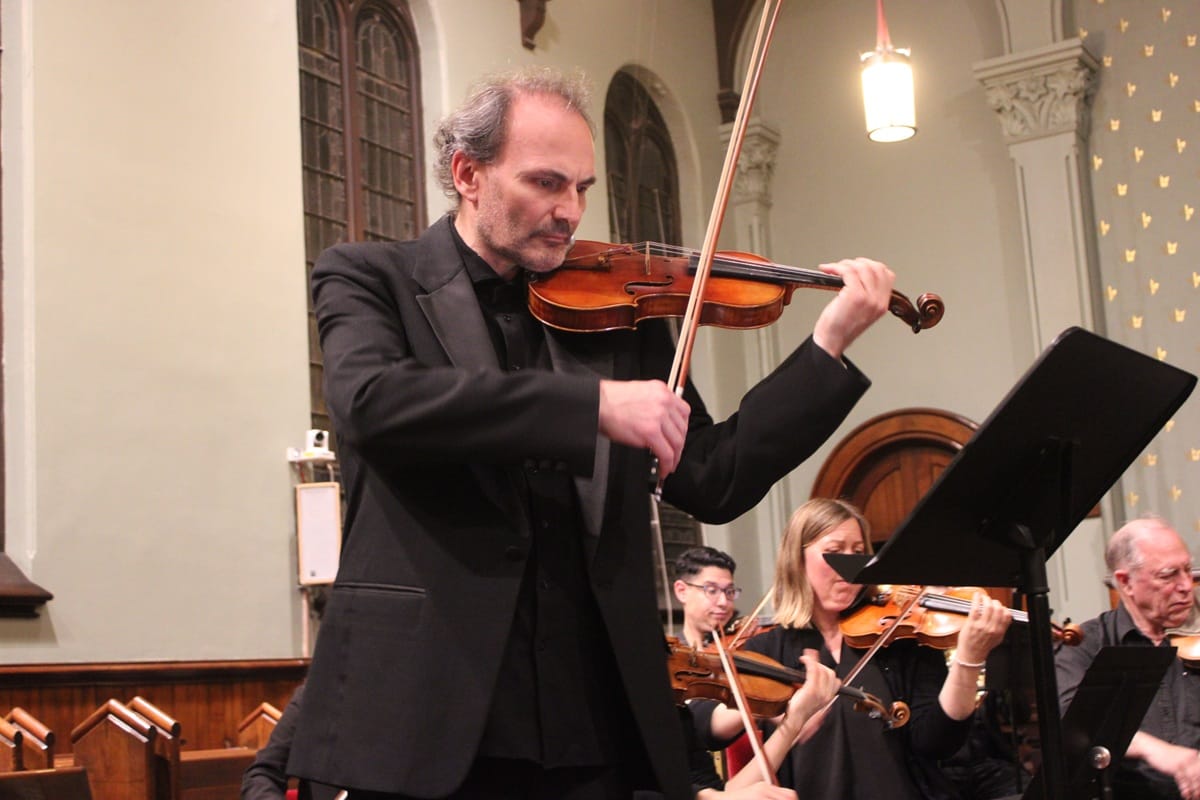
The concert recognized composers from the past, like Henryk Wieniawski, 19th century violin virtuoso whose Violin Concerto no. 2, op. 22 was performed. His music was in good hands with Adrian Sylveen, who in addition to being a fantastic violinist is also a founder and the artistic director for the Connecticut Virtuosi.
The third movement of Wieniawski’s piece is a triumphant culmination. Sylveen kept up with the sound of the chamber orchestra with precise, frenetic play, while maintaining an almost tender touch on the violin. His play gives the final movement an undercurrent of sorrow, almost like the finale of a great battle: although the day has been won, there were losses along the way.
Connecticut Virtuosi is an apt name, as both Sylveen and Rotaru demonstrated. But that leads me to an uncomfortable question that I must address: Why aren’t more people attending classical shows? When I arrived at 7:10 for the show’s 7:30 start time, I was the first audience member there. A few more people arrived, but not nearly the level of turnout one would expect for a free showcase of some of the most talented musicians in the state. It’s also not the first show I’ve been to with limited attendance.
One could argue that classical music just isn’t popular enough, but that simply isn’t true. People love their movie scores and their game soundtracks. It’s almost a childhood rite of passage to play a classical musical instrument. (My niece just got her cello.) The music is embedded in our culture, and people clearly value it. So where is everyone?
In the end, it’s their loss. The music endures thanks to the dedication of composers like Polaczyk and performers like the Connecticut Virtuosi. You still have a chance to see the second half of the Polish Heritage Festival concert tonight in the big city. It’s only a train ride away.
NEXT
Jamil goes to the Bushnell to see another take on classical music with John Violinist.


