Digba Ogunbiyi Trio
Cellar Dog
258 S 15th St.
Philadelphia
Oct. 14, 2026
In the early 1960s, Brooklyn-born pianist and theorist Randy Weston began mapping out a musical oeuvre that explored the kinship between jazz and the traditional music of the African continent. On albums like Uhuru Africa (Freedom Africa) and Music From The New African Nations featuring The Highlife, Weston not only combined the sounds of the African diaspora; he used that sound to express the political and cultural aspirations of Black folks everywhere at the time. Above all, Weston understood that African music is made up of shared DNA regardless of where or when it’s being created. At 90 years old — two years before his death — Weston spoke about the imperishable nature of African music and how it showed up in jazz. “We were taken away but America’s 400 years are nothing compared to Africa itself. Our ancestors brought this music with them.”
Today, Nigerian-born pianist and composer Digba Ogunbiyi embodies the spirit of Weston’s work and his music is a living link between the culture of the African continent and Black American jazz. With formal training in both Nigeria and the U.S., Ogunbiyi and a doctorate from the Eastman School of Music, Ogunbiyi’s musical resume is impressive and he pours all of that knowledge and training into a wholly unique approach to piano and composition.
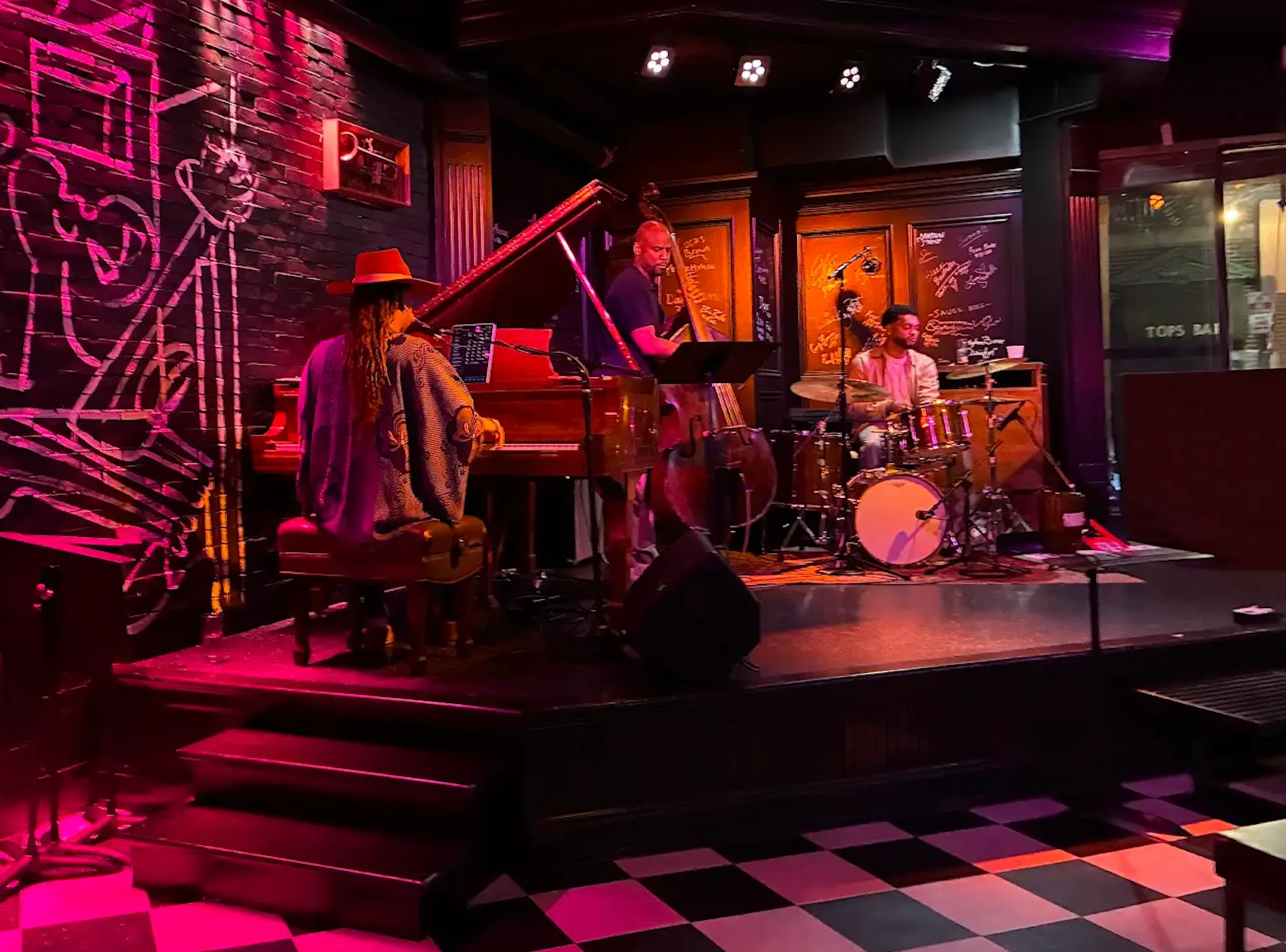
On Wednesday, Oct. 14, Ogunbiyi pulled up to the Cellar Dog for two blistering sets of West African-influenced contemporary jazz. With Gavin Gray on upright bass and Steven Perry on drums, the trio’s mix of originals and covers provided a perfect framework for Ogunbiyi’s vision. The first set opened with a dynamic version of Cedar Walton’s “Bittersweet.” A winding and complex maze of a song, “Bittersweet” is a challenge that the trio tackled with poise. Ogunbiyi’s piano solo was full of intricate, melodic riffing against Perry and Gray’s driving rhythms. One particularly powerful technique that the trio employs is playing counter-rhythms and stacking multiple meters on top of one another. This style of rhythmic counterpoint was on full display for Ogunbiyi’s original composition “Yoruba Suite #4.” A seamless union of American jazz and African musical sensibilities, "Yoruba Suite #4” alternated between a hypnotic melody and an ever-building tension where the band pushed the piece to the very brink of chaos. Perry’s solo here was both playful and furious while Gray’s displayed an impressive deal of control and inventiveness within the center of the musical maelstrom. While introducing the band, Ogunbiyi remarked on the richness of our city’s music scene. “One thing about living in a city like Philadelphia is that there are so many great musicians all over," he said. He then told the story of how Perry filled in for a sick drummer who couldn’t make the gig. This fact was astonishing because the band’s rapport was so natural when playing such technically difficult material. This trio might be the most unique and skilled I’ve seen all year and at the center of it all is Ogunbiyi, building on a number of age-old traditions and using his work to connect the music of the African diaspora and our shared history.


