
Where We Belong: The Architecture of Home
The Blvd
3939 Woodward Suite 100
Detroit
Until Sept. 20
When I read the description for Where We Belong: The Architecture of Home, I envisioned it being something akin to Womxnhouse Detroit, which takes place in an actual house that artists fill with installations. Instead, Where We Belong is the idea of a house inside a gallery setting.
Where We Belong is brought to us by Abayomi CDC, a housing counseling agency that supports first-time homebuyers and existing owners through its Community Homeownership Fund. The show, part of the Detroit Month of Design, features photography, paintings, and sculptures by twelve artists including Milah Renee Wallace, Elonte Davis, Bryce Williams, Mina James Gist, Darius Baber, and Javier Gonzalez, among others. The show runs two weekends, Sept. 10-20.
At the exhibit, I’m first directed to “the library” for an interactive piece where people use a string to create a web of answers to questions like whether they own or rent, how secure their home feels, what factors affect their housing security, and what makes a place feel like home.
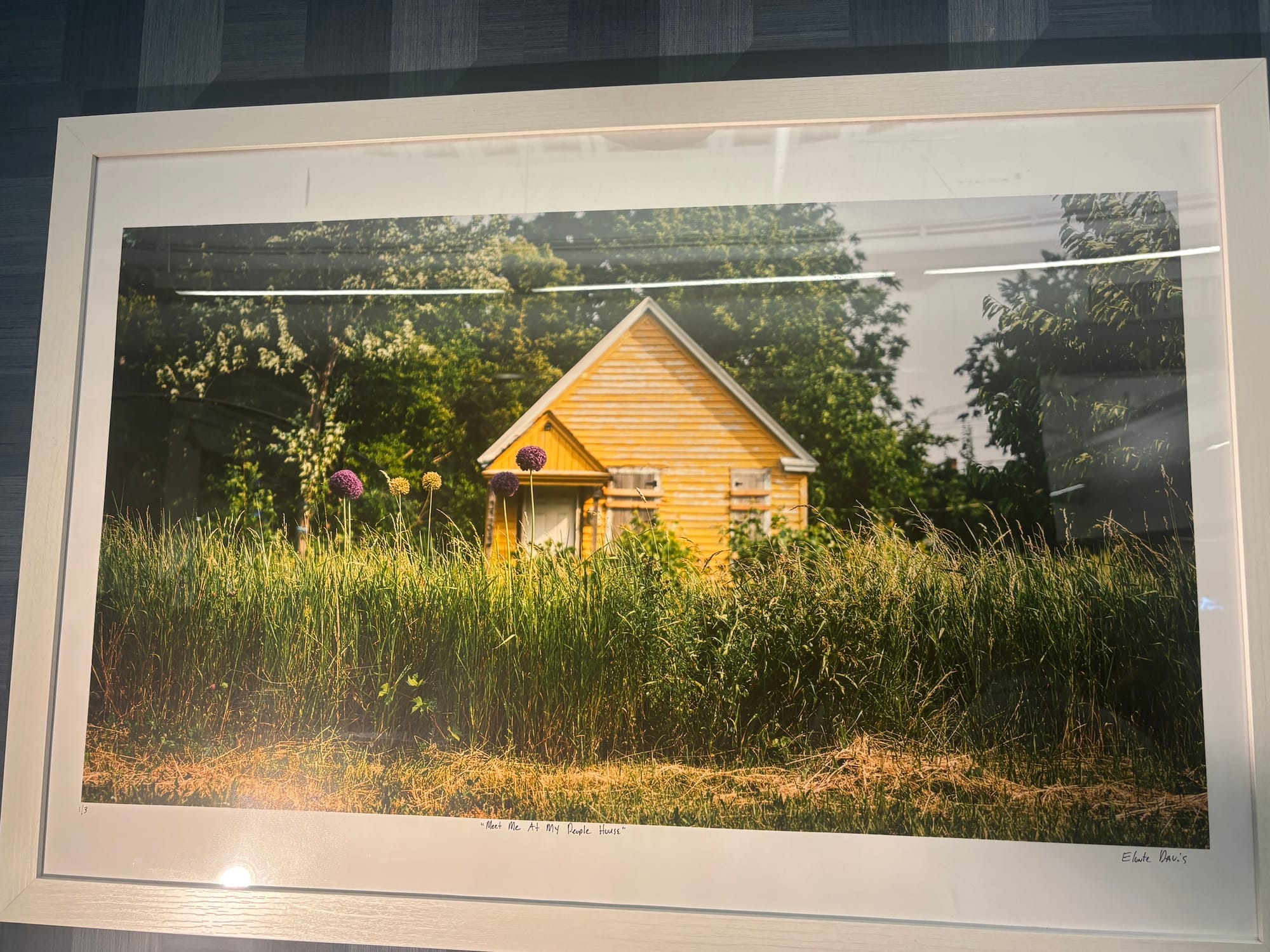
Work by the featured artists is scattered throughout. A photo of a bright yellow house, captured by Elonte Davis, grips me. The house is abandoned, but the photo is full of life. Lush trees flourish behind the house with no one to trim them, and overgrown grass is thriving in the front yard. A row of purple and yellow flowers grow defiantly out front. You can’t terminate nature’s lease because the trees didn’t pay the light bill.
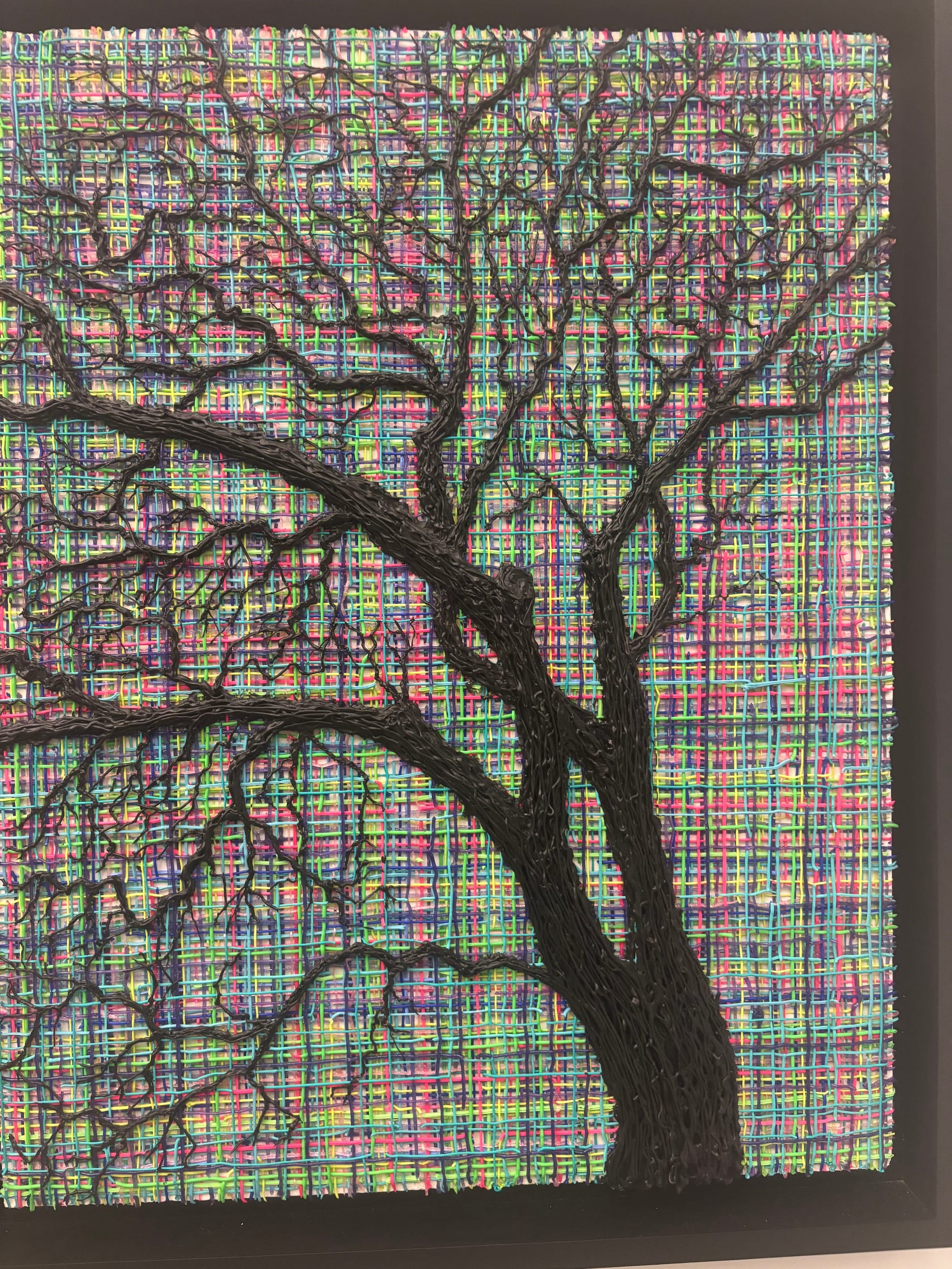
I could (willingly) be hypnotized by Javier Gonzalez’s work for hours. His sculptural paintings of trees are done with a technique he created by piping acrylic paint in layers like buttercream frosting on an intricate wedding cake. The trees jump off the canvas and the weaving behind them is like a tapestry woven from ancestral knowledge.
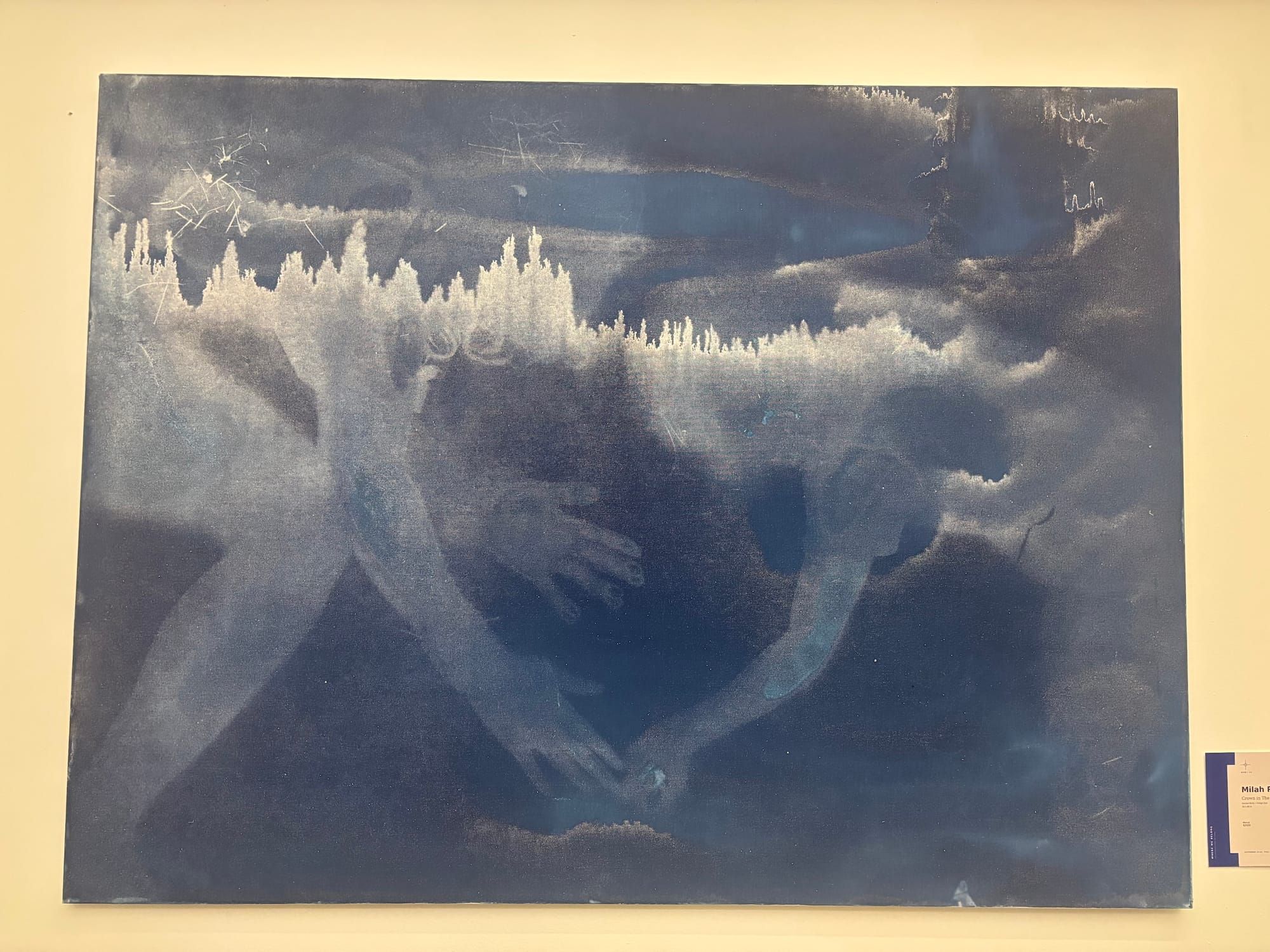
Milah Renne Wallace’s abstract blue paintings remind me of a raging tsunami. Hectic ocean spray splashes off dark waves in her paint splatters. The spirits of water and wind reach down from the clouds to touch us here on the ground, with the calming blue tones providing solace in the chaos.
Proceeds from art sold at the exhibit will go toward the Community Homeownership Fund. Here, the art itself is not the focal point; it supports the social impact of Abayomi CDC’s work.
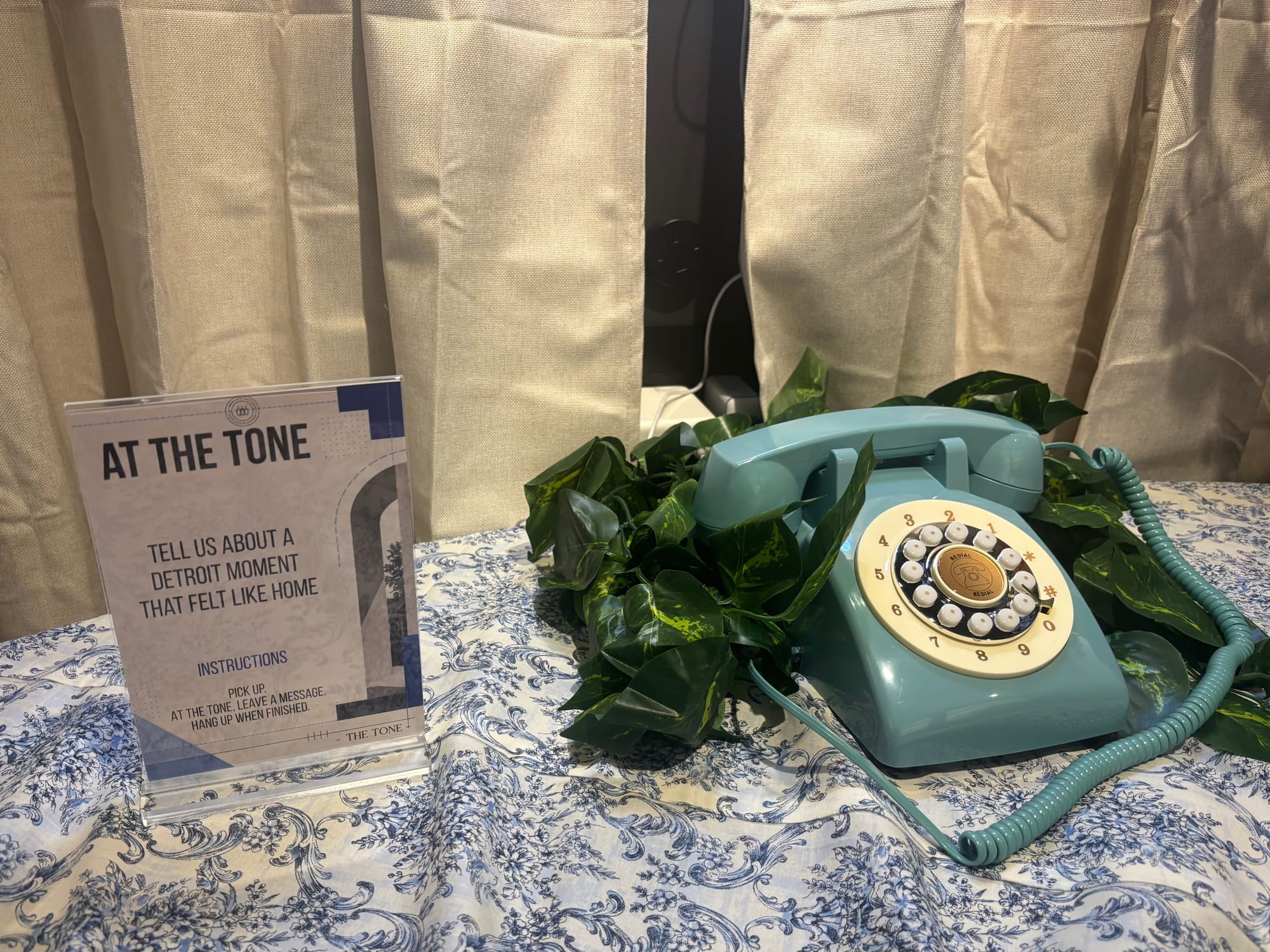
There are three soundproof testimony booths with a rotary telephone in the gallery, where attendees are invited to pick up the phone and record a message answering a prompt. The one I enter asks me to recall a “Detroit moment that felt like home.” There’s also a game room and lounge where you can participate in 50-minute filmed conversations about your family history for a future coffee table book about families across Detroit, Highland Park, and Hamtramck. Interviews must be scheduled online in advance, and some will be drawn live by Gil Ashby.
The show aims to tackle themes like displacement and generational wealth in a city whose landscape has been so drastically changed by gentrification, especially in “high-demand” areas like Downtown, Midtown, and even the east side.
I grew up a bonafide westsider, living everywhere from Asbury Park, to 7 Mile and Livernois, and the Grandmont neighborhood off Outer Drive and 6 Mile. Our house on Asbury Park is the earliest home I remember, with a huge park across the street where I played with my neighbors. I would walk over to my auntie’s house, on the other side of the park, to hang out with my cousins when my mom was at work during the day. It no longer felt like home after someone broke in while my mom and I were sleeping upstairs. Though I have sparse memories of the house being infested with rats, and the lonely house left on the burnt down block behind us, I never thought of it as “the hood,” just home. Until it wasn’t.
My mother bought the next house we lived in, off 7 Mile, near the end of my middle school years. Since we finally owned instead of renting, and I spent my formative years here, it felt like a more permanent home. This is where I started my first band, blasted Norwegian black metal in my room, and braided neon colored kanekolon into my hair during my high school goth phase.
I still remember when my mom called me while I was away at the University of Toledo asking me to come help her pack up the house when she filed bankruptcy because she couldn’t afford the property taxes anymore. We would later learn that the city illegally overassessed property taxes, causing droves of Detroit families to lose their homes. My grandmother’s house was lost as well, because no one in the family wanted to pitch in to save it from the land bank. Grandma’s house is now owned by an out-of-state developer who refurbished it and turned it into a rental. My grandmother died in that house. She thought she was leaving it to her family.
Now I live on the east side, in an Islandview flat owned by a white transplant couple. Home ownership doesn’t feel attainable for me. So, at Where We Belong, in the soundproof room where I was asked to record a message about the idea of “home” in Detroit, all I could think of was Belle Isle. The island has been a constant in my life through every house me and my mother have lived in.
I’ve already written about how Belle Isle and the Detroit River are sacred places for Black Detroiters. The river is the comforting blue in a raging storm from Milah Renee Wallace’s paintings. Detroit is home because the river lives here. Her water will always hold space for me, no matter how much the city changes.
Follow Midbrow Detroit on social media:
Bluesky, Facebook, Instagram, Threads, TikTok, X.


