
“Tosca”
Detroit Opera House
Detroit
Through Nov. 7, 2026
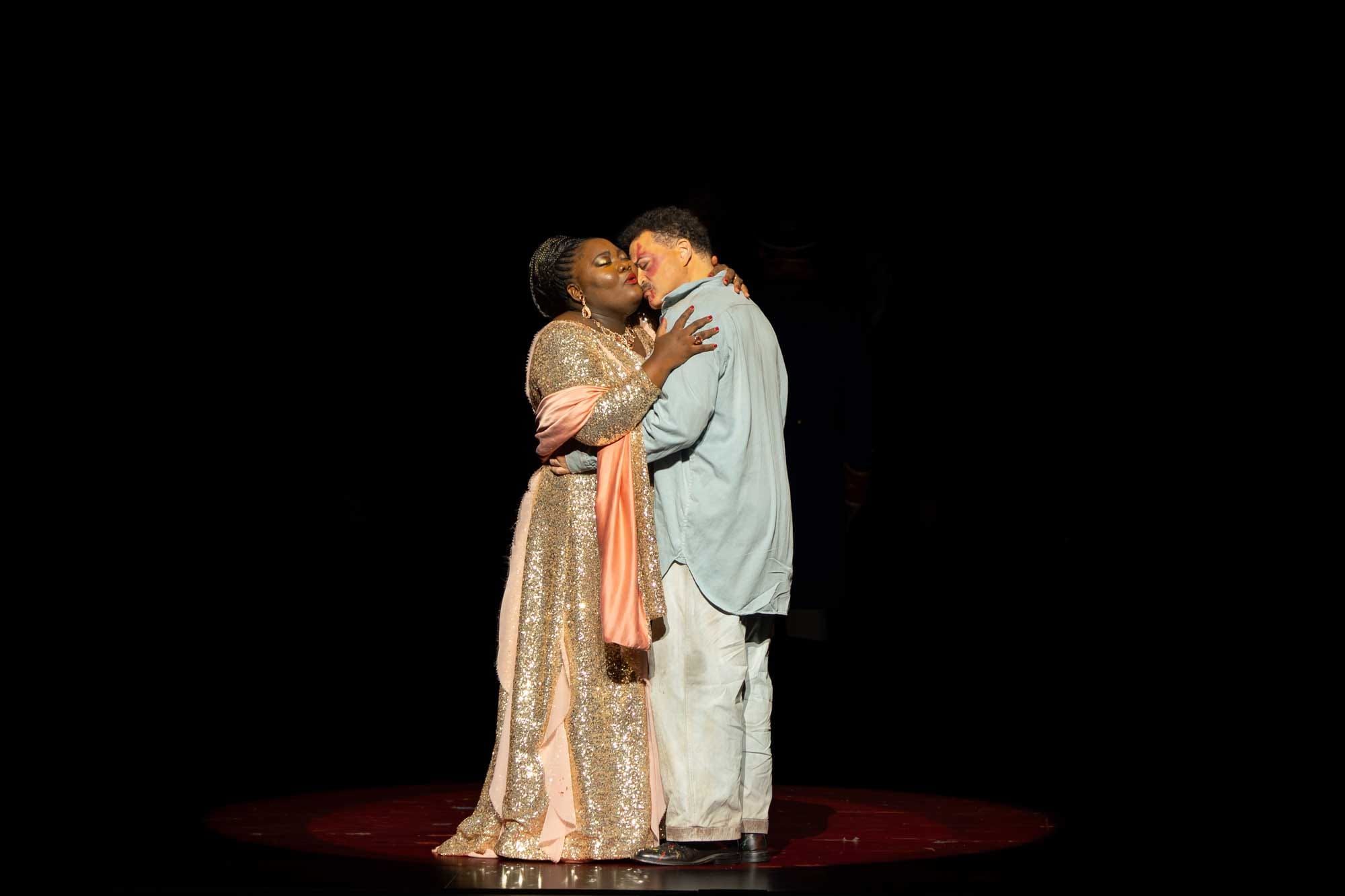
I sit in the Detroit Opera House with my mouth agape, tears pooling in my eyes at soprano Masabane Cecilia Rangwanasha’s voice. She is making her debut in Puccini’s “Tosca,” which opened at the Opera House on Sunday. Her voice dances on the sunburst ceiling and swims down the gilded columns to bury itself in the hearts of the audience. I am completely entranced by her shimmering gown, powerful voice, and willingness to kill.
“Tosca,” Puccini’s political thriller of love, power, and murder, opens Detroit Opera’s 55th season with a three-date run. Rangwanasha plays the title role, Floria Tosca. “Tosca” is not just a dramatic tale of the lengths people will go to for love. It is also a warning about the dangers of authoritarianism, and the role that artists have always played in fighting against it.
In “Tosca,” Rome is being run by corrupt police chief Scarpia, an evil man who is willing to kill, rape, and torture to get what he wants. And he wants the illustrious singer Tosca. Tosca’s lover Cavaradossi, a revolutionary and painter, is arrested for hiding a fellow rebel who has escaped from prison. Scarpia uses this as an opportunity to lure Tosca into his arms and offers to spare Cavaradossi’s life in return for sexual favors from the singer. But Tosca is not willing to lie down and take it, and this is where it gets interesting.
Rangwanasha and tenor Nathan Granner make a powerful pair as Tosca and Cavaradossi. The orchestra, led by conductor and Detroit Opera Music Director Roberto Kalb, takes us on a ride of excitement, wonder, and frenzy, but even they have to pause sometimes to let us watch in sheer awe as Rangwanasha and Granner’s a capella voices ring through the air. This is opera at its finest, from the breathtaking music to the lighting that paints the stage red in rage, lust, and catastrophe.
Scarpia is the scum of the earth, which is exactly why Alfred Walker’s performance deserves praise. The character is a horrible spawn of Satan who deserves everything that’s coming to him, yes, but Walker is a force onstage with a menacing presence who makes evil look polished and suave.
There are other things happening while political prisoners are being tortured and killed for reasons that are not explicitly stated in the opera. Tosca and Cavaradossi are dreaming up a life surrounded by beauty. Cavaradossi is working on a massive painting in a church. The pair sing their love for each other, and Tosca, the jealous diva, insists that the painting (of a woman) be changed more to her likeness. For a moment, you forget that the opera opened with an escaped political prisoner finding refuge in the church. But only for a moment. The threat of imminent violence is always there lurking in the background.
This story is equal parts passion, beauty, and tragedy. It is also a reminder of why authoritarian regimes fear artists. There have been concerted efforts to defund the arts, rewrite history, and dismantle cultural institutions under Donald Trump’s leadership. It is the duty of the artist to expose the truth. That’s what these regimes fear. Singers, painters, writers, actors, can all use their platforms to speak out against injustice, mobilize communities, and spark change. And this duty does not only sit with artists. It’s up to us, everyday people, to stand up as well.
We don’t have to necessarily go out and kill our oppressors, like Tosca, but we should decide what we are willing to do, lest we lie down and die.
Follow Midbrow Detroit on social media:
Bluesky, Facebook, Instagram, Threads, TikTok, X.


