
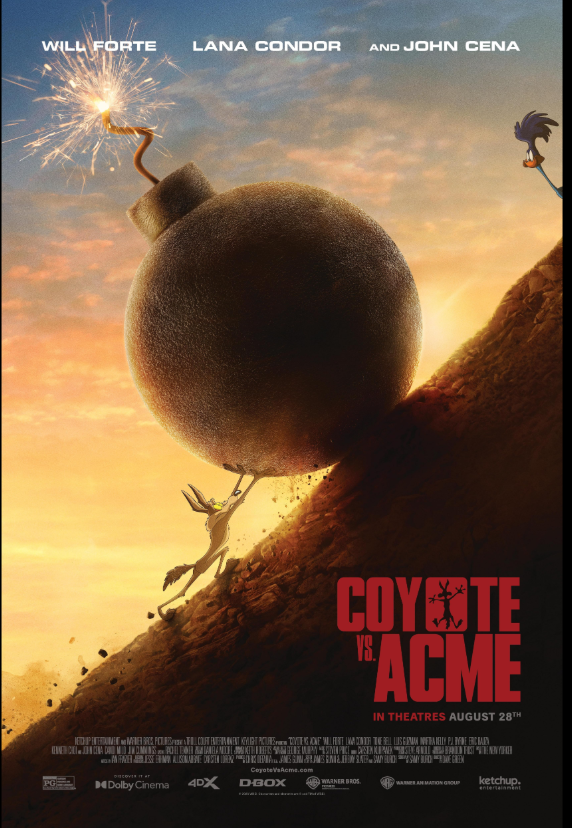
Coyote vs. Acme
Cinépolis West Hartford
West Hartford
August 5, 2026
Coyote vs. Acme is one of the most existential movies I’ve ever watched, despite its attempts to be otherwise.
That might sound odd for a Looney Tunes movie, but the classic toons were full of references to classic literature, art and the pop culture of its era. There’s something more deliberate in CvA that provides a fascinating philosophical underpinning to the pianos crashing down from above.
The plot is straightforward. The long-suffering Wile E. Coyote has finally had enough of his Acme brand products blowing up in his face. When he sees an ad for professional cartoon ambulance chaser Kevin Avery (Will Forte), he decides to sue the megacorporation for damages. Avery, who has a long history of settling cases against Acme, is forced to go up against Acme and its team of corporate lawyers, led by Buddy Crane (John Cena).
Eventually Kevin Avery, his niece/law intern Paige Avery (Lana Condor) and Mr. Coyote stumble onto Project Sisyphus, a program run by Acme that experiments on cartoons with harmful products to then sell to humans once they’re made safer.
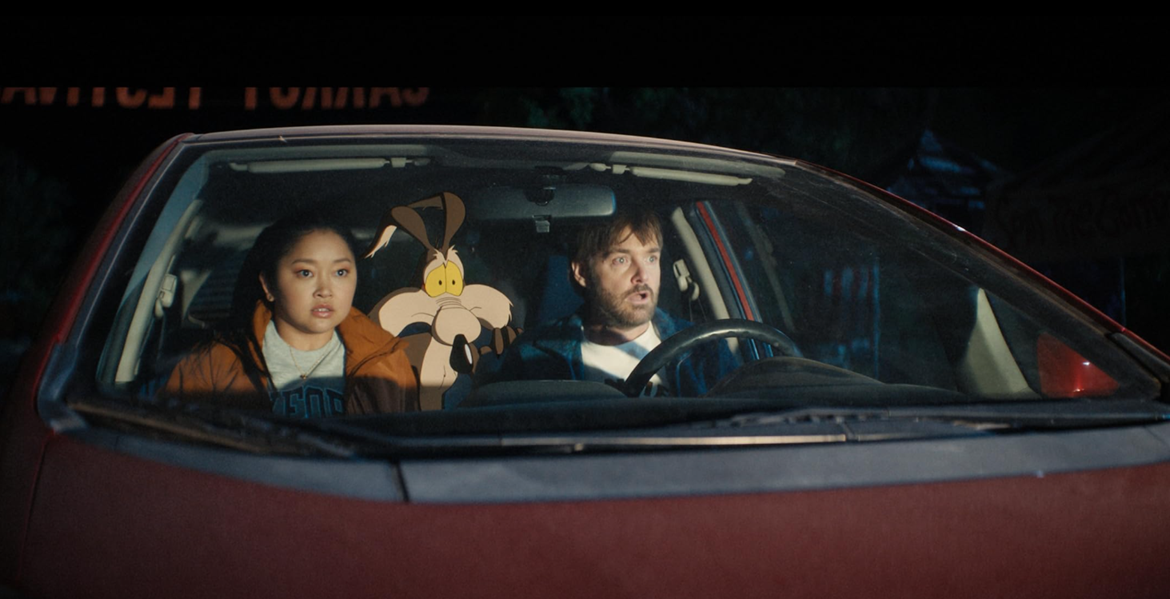
As a Looney Tunes movie, CvA works. It’s wonderful to see the mad machinations of the classic characters brought to the big screen with modern technology. I laughed at the new gags and at old footage of classic pranks. I have to say that I was surprised that Cena’s larger-than-life body and personality weren’t put through the toon ringer more. He barely interacted with the cartoons, a lost opportunity.
But as I said earlier, there’s a part of CvA that tries to be more than just modern slapstick. Foghorn Leghorn (perfectly “cast” as the swaggering CEO of Acme) gives a terrific speech about the necessity of the experiments, centering on the illuminating light of pain:
“You think progress isn’t worth a little pain? A little discomfort? It is son, it always has been…So what's a little pain for the greater good? Pain is a part of life, and it's valuable…so yes, yes, our cartoon products sometimes do explode. Sometimes they do backfire. Sometimes they push the boundaries of gravity and science. But do you all wanna live in a world without new, without progress?”
It’s a great villain speech because it couches cruelty in necessity, and brings into focus one of the existential themes running through the film about the unending human condition of suffering. However, the film constantly undermines its own point by purposefully showing that cartoons actually cannot be hurt. The coyote does this himself by hurling himself off a cliff multiple times to make a point to the elder Avery about perseverance (more on that later). It weakens both the philosophical consideration of pain, and the motivation of Avery and co. to go up against Acme in the first place.
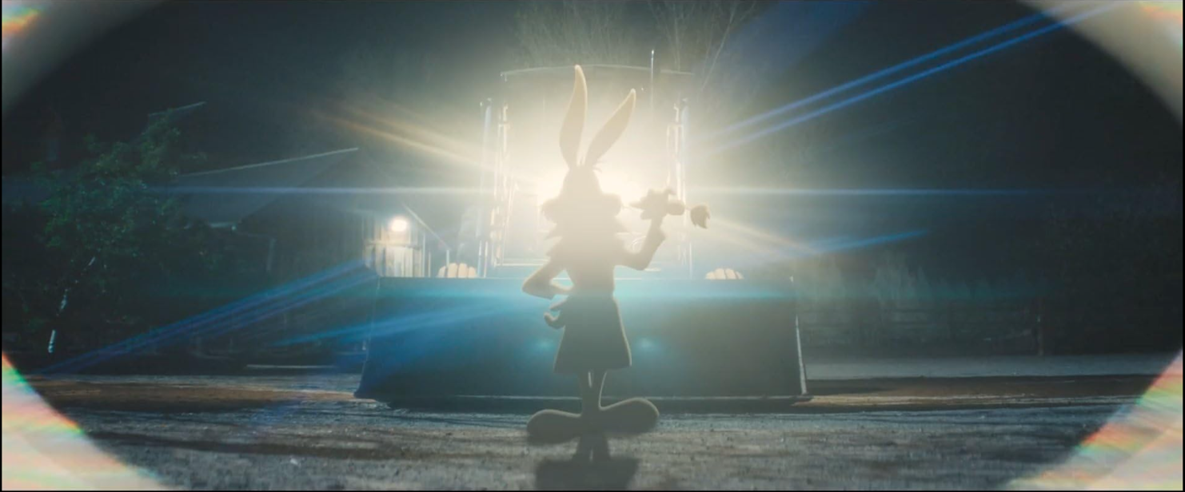
The philosophy of the film gets more obvious, although no less convoluted, when turning to its treatment of Sisyphus, the Greek king doomed to push a boulder uphill for eternity as punishment for betraying the gods. Including Sisyphus in a creative work is an explicit nod to existentialism, and an oblique reference to Albert Camus’ essay about the tragic figure as a stand-in for the “absurd” question at the center of human existence: Why do we fight so hard to live when we are destined to die?
This question is posed, in Looney Tunes terms, on two different tracks in the film. Most relevant to the plot of the movie is Avery’s correct assertion that his plucky law firm cannot defeat the overwhelming power of Acme. And yes, they lose in the end. Twice. There’s a throwaway scene which shows Buddy Crane and Foghorn Leghorn get their personal comeuppance, but the takeaway is seen when others stand up to fight Acme with Avery in spite of his defeat. Camus himself couldn’t have written something he agreed with more.
The other track is broader, going to the core of the Syssiphean experience: The coyote will never catch the road runner. The film acknowledges this reality over and over, both subtly and blatantly. (Uust look at the poster above– the coyote is literally Sisyphus.) Despite his constant failures, the coyote continues to try. He is the definition of the existential hero, standing against the uncaring universe as he bravely faces the futility of his chosen path. For a while, anyway.
This is where the film falters in its marriage of the narrative and philosophical tracks it laid out. Had the film simply stopped with the coyote learning to enjoy the thrill of the chase, Camus-style, then we’d be left with a message about finding joy in the absurd.
The writers seemed to be spooked by that idea, and instead turned it into a perseverance tale centering on the possibility that someday Wile E. Coyote will succeed. Which of course puts the film in an odd moral place lest we forget what the coyote is trying to succeed at.
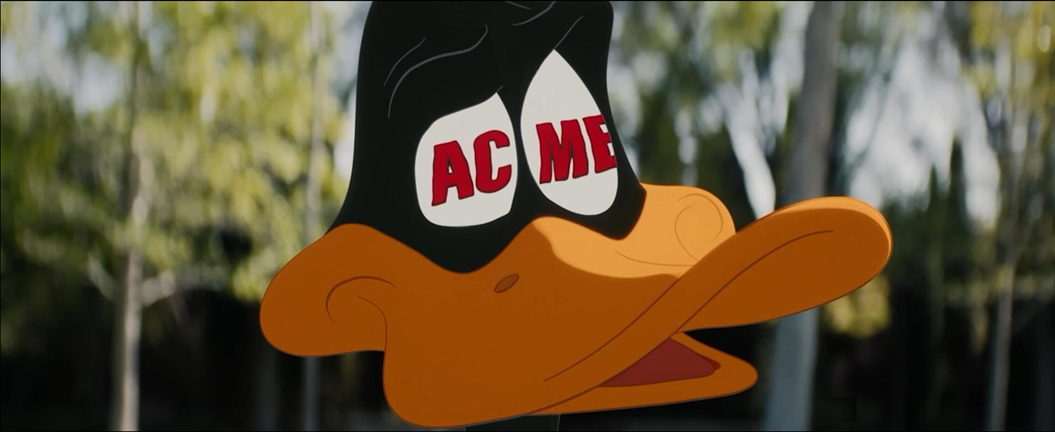
That moral dissonance is reinforced in the big blowup between Avery and the coyote, when the lawyer confronts the toon about his true reason for launching the lawsuit: to capture the road runner when he shows up to testify against Acme. Avery discovers later that the coyote intended to share the road runner dinner with him, and feels bad as a result.
So being an accessory to murder is justified because the perpetrator is going to share the spoils? I’m of course being dramatic here, but you can begin to see how all sorts of uncomfortable questions start to surface when we’re forced to empathize with the result of the coyote’s scheming instead of the effort behind it, which was Camus’ point.
Besides, making the story about a triumph someday runs counter to the film’s whole premise of facing failure with courage and grace, a lesson that we all must learn because things rarely go according to plan. We have to learn how to rage against the impossible.
Coyote v. Acme is a fun, 100-minute ride through zany characters and situations, but its reluctance to fully embrace the existential questions it poses is the film’s great missed opportunity. There’s probably no better story to introduce these ideas to modern audiences than the coyote and the road runner. Oh well, at least seeing Wil Forte’s car get destroyed is funny.
NEXT
Jamil goes to check out the music of Montez.


