
By Allan Appel
Haiti in the Age of Revolutions
Peabody Museum
New Haven
Through March 30, 2027
It’s a sad and highly understated truth that the story of the first nation to have organized a successful slave revolt, then to permanently outlaw slavery, and eventually to establish a republic — Haiti, beginning in 1804 — has gotten neither the attention nor the respect it deserves.
That in no small part is because throughout the 19th century and beyond the island nation’s example represented a perpetual threat to slave-holding nations of the world — especially France and Spain, who sought repeatedly to re-invade and re-establish slavery.
Haiti also represented a threat to the still young and ascending power very close by. Make that fledgling America with its rising divide between a slave-holding culture in the South and slavery-abhorring states in the North, along with a persistent anxiety about slave rebellions and desperate struggle to keep the states united.
It cannot be an accident, therefore, that when President Abraham Lincoln finally issued the Emancipation Proclamation, the day he picked to make the announcement — Jan. 1, 1863 — is precisely the day, 59 years earlier, on which Haiti issued its Declaration of Independence in 1804.
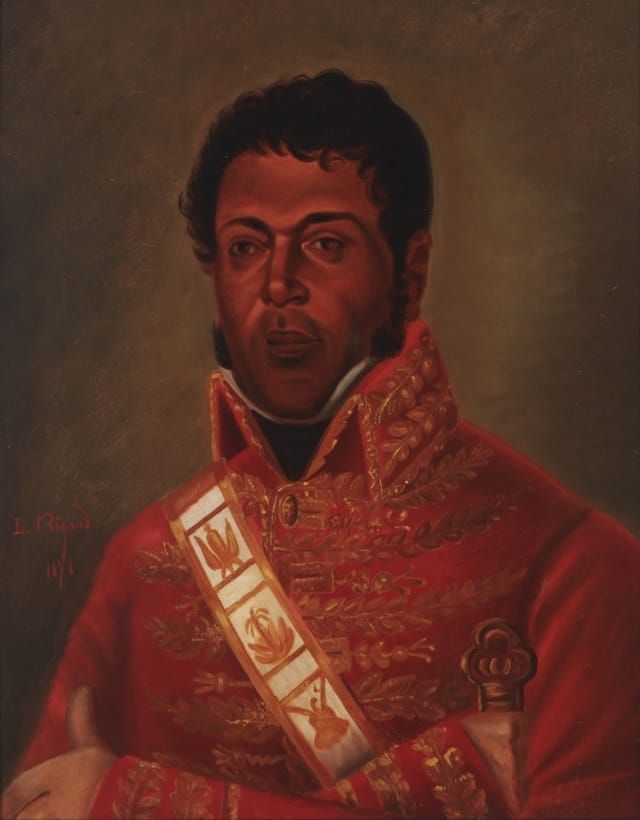
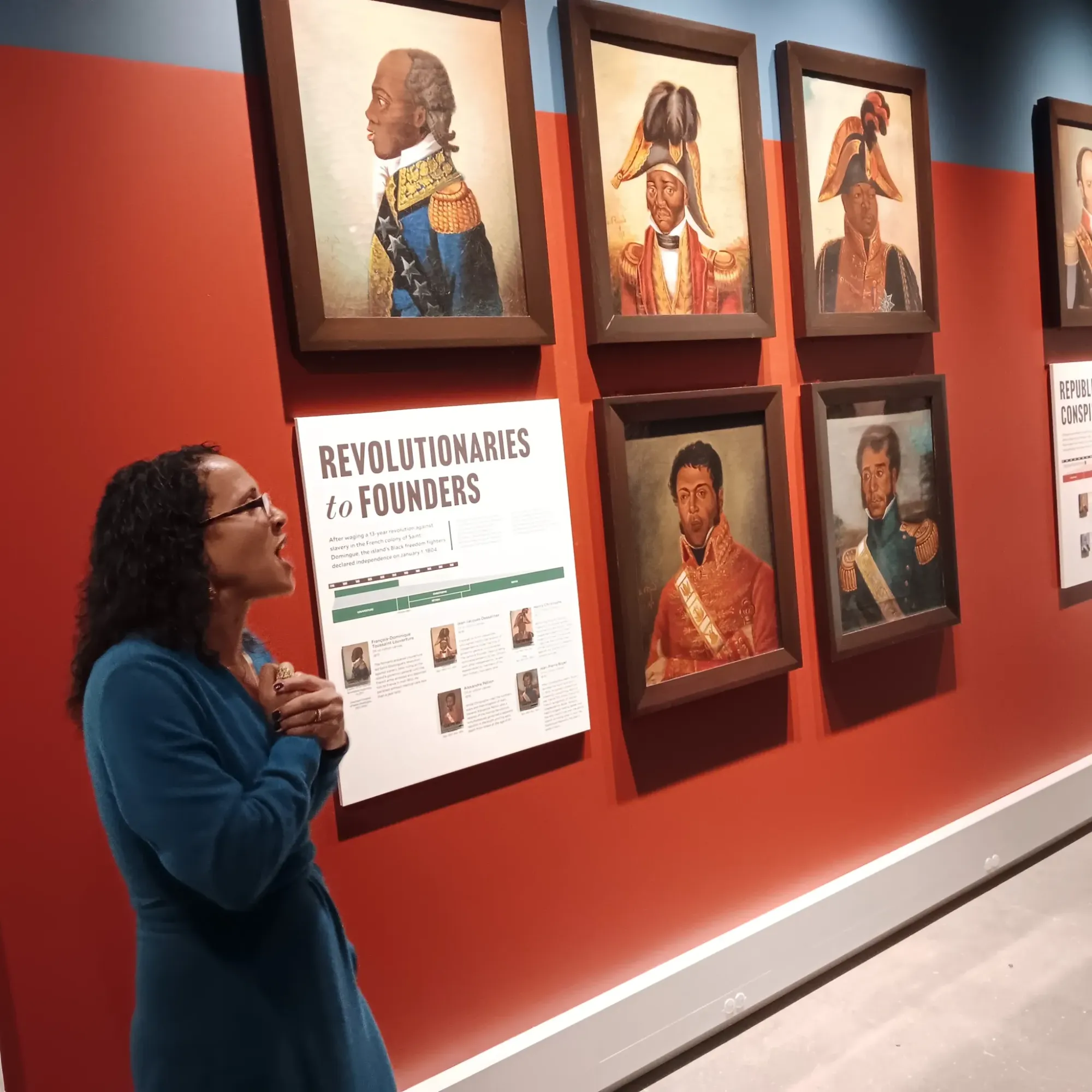
That perspective-shifting historical tidbit emerges from the small but illuminating exhibition, Haiti in the Age of Revolutions, which comprises 15 remarkable portraits rescued from obscurity and serious neglect. The images are of that country’s founders and major political figures, beginning with the slave revolt leader Toussaint Louverture, then Jeane-Jacques Dessalines and Henry Christophe among many others, and painted by Haitian artist Lafargue Rigaud between 1879 and 1881.
The exhibition has just opened in the small temporary gallery space just off the entryway atrium of the Yale Peabody Museum and will run through March 30, 2027.
Click here for an overview of the exhibition and its images. And here for a summary of the symposium occasioned by the exhibition.
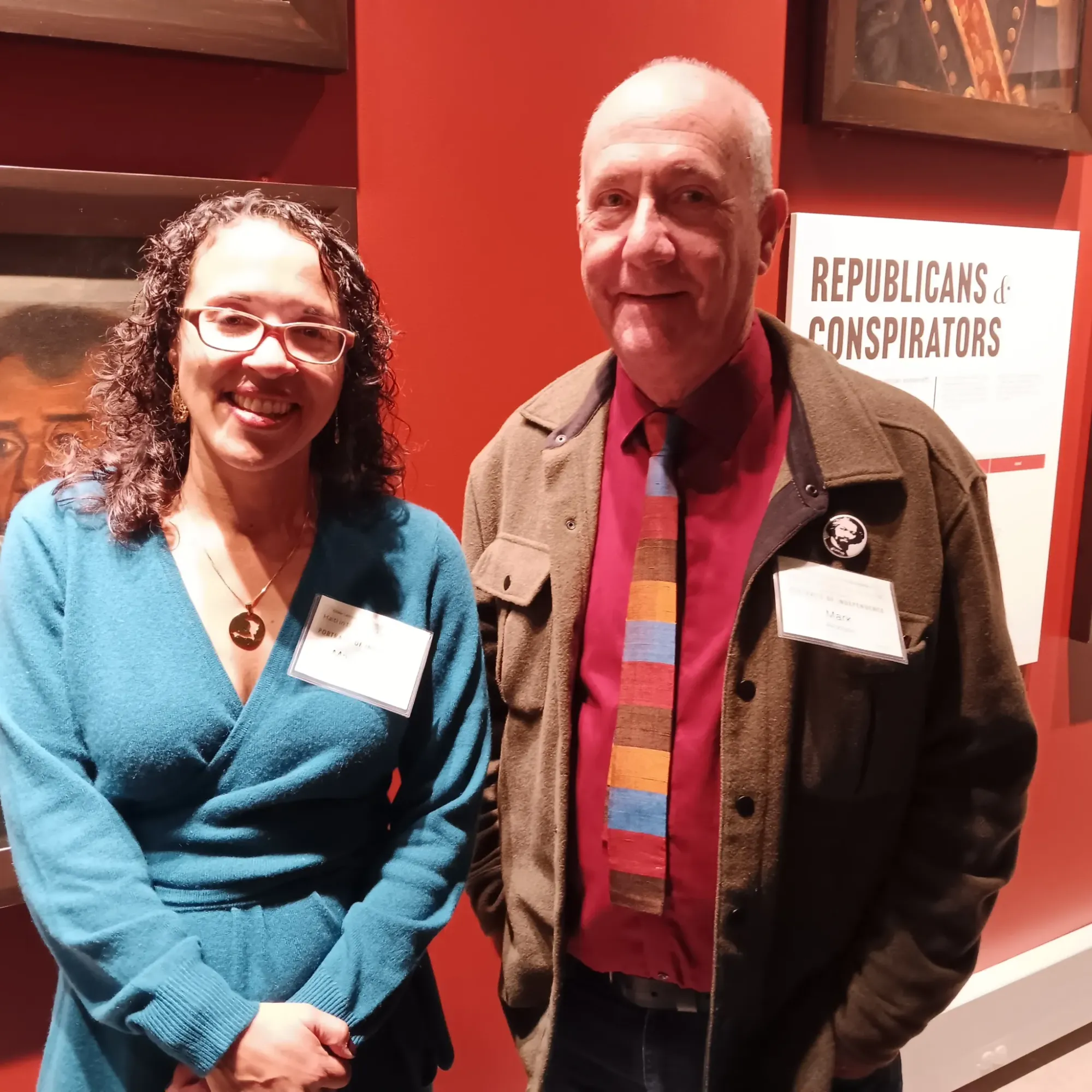
Friday’s symposium at Yale featured a range of scholars including the chief organizers/curators of the exhibition, Yale Center for British Art’s (YCBA) Senior Conservator Mark Aronson and Yale Professor of French, Black Studies, History Marlene Daut.
It’s also no accident, Daut averred, that despite fraught years of political experiment, rapidly changing rulers, and bloody internecine conflict until the republic was firmly established in 1859, that most of the leaders portrayed in the portraits are in serious be-medal-ed military uniform; they are rarely portrayed by Rigaud in monarchical robes or regal settings.
“That’s because so few other nations recognized them,” Daut said, “and they were always being attacked.”
Another of the symposium’s participants, Darcy Grimaldo Grigsby, an arts and humanities professor at the University of California at Berkeley, said that, in the commission to Rigaud, Hatians embraced the genre “most antithetical to slavery,” aka portraiture.
“Portraiture was about respectability,” writes Daut in the press material provided.
It was also about recognition, a repeated re-assertion of autonomy, and legacy.
In this regard Rigaud’s commission was not unlike John Trumbull’s painting of the portraits of the United States’ founding generation — many of them, as with Rigaud’s labors, were done after the principals had died, and there were few living sitters.
“That’s why it was so important for Haitians to have portraits of their leaders,” Daut continued. “They were often given as gifts to other nations.”
The presentation as a series, as well as the very seriality of it, added Grimaldo, was to convey continuity and solidity. It was to present that collective face of a politically stable, reliable trading partner to a skeptical world brought together to boost commerce at the World’s Industrial and Cotton Centennial in New Orleans in 1884.
At that vast world’s fair type of venue, the Rigaud portraits were shown in the “Colored People’s Pavilion,” one of the many foreign exhibitors — and this was the last time they were seen in public until now.
How The Portraits Landed In The Elm City
For then, in some still mysterious fashion the entire original suite of 17 portraits (two have been lost) ended up being shipped from New Orleans to the U.S. National Museum, a unit of The Smithsonian.
How the portraits eventually were brought to New Haven illustrates a tale of art’s historical survival and under-valuing that makes the exhibition not only long overdue but also poignant and even inspiring.
In Washington D.C. for better part of the last century the portraits languished in attic storage at The Smithsonian. There’s no record of exhibition and only notes indicating the curators felt the work had “no ethnological or artistic value.”
In 1963, the paintings were sent to Yale for study; not to the art gallery but to a Yale anthropology professor as part of his research. They were not put on public display here either. Rather they were loaned eventually to Richard Morse, another Yale professor, whose wife, Emerante de Pradines, was Haitian, for hanging in their home.
During the long and arduous restoration process one of the portraits showed serious liquid damage at the bottom, said Aronson.
The Haitian statesmen depicted in the portraits must have been as familiar to Emerante de Pradines Morse as portraits of Washington, Jefferson, Lincoln, and Roosevelt are to us.
Then eventually back to the Peabody for more languishing.
Only in 2010, in the aftermath of the earthquake that destroyed much of Haiti, did YCBA conservator Mark Aronson go to Haiti, through Yale’s Institute for the Preservation of Cultural Heritage and the Smithsonian’s Haiti Cultural Recovery Project. He initiated conservation efforts of surviving art works there — although other portraits by Rigaud had already been destroyed long before when the National Palace was destroyed in an explosion in 1910.
That visit spurred an all-important connection. A Haitian curator came to the Peabody and evaluated the sorry state of the Rigaud portraits here. The next step was gaining more funding, and eventually bringing Haitian conservators to New Haven to participate in the restoration work on Yale’s Rigaud portraits.
As he beheld them, during one of the tours that were part of the nearby conference, Aronson said that there was of course no way to be certain the restored portraits looked precisely like the originals. Still, he declared, as late afternoon light shimmered on the oil paintings, “they are wonderful.”
“This is something quite miraculous,” Professor Daut added. She meant both by way of their survival and also how their exhibition is catalyzing further study that can help illuminate and re-center Haiti in history.
“What do we want or expect from portraits?” Professor Grigsby had asked.
“First they are a testament to Haiti’s existence and achievement . . .they say they have an audience who wanted to see them . . .the series portrays Haiti as a governed island, not an impoverished state. . . and yet should portraits be considered masquerades? No, rather as placeholders for an identity still forming?
“Portraits also make us remember what we forget — for example, the subjects’ wives and children,” she added.
And, finally, she said, by way of a response to a query about the nature of “Black self-portraiture” during the Q & A, which concluded a session of the symposium: Whatever else the portraits are — and they are obviously many things, a portal, as urged all the participants for further study — “these are all portraits of the artist Lafargue Rigaud.”