Mom, to You Without a Name
강다희 (Kang Da Hee), 윤혜리 (Yoon Hyeri), 정지혜 (Jung Jee Hye), and 강방글 (Kang Bang-Geul)
A Galaxy in Void Exhibition
Seoro Sarang Bookstore
Gwangju
May 29, 2026
(Jisu Sheen recently moved from New Haven to Gwangju, South Korea, where she’s covering local arts and culture for the New Haven Independent and Midbrow.)
Being a mother is an identity crisis in the making.
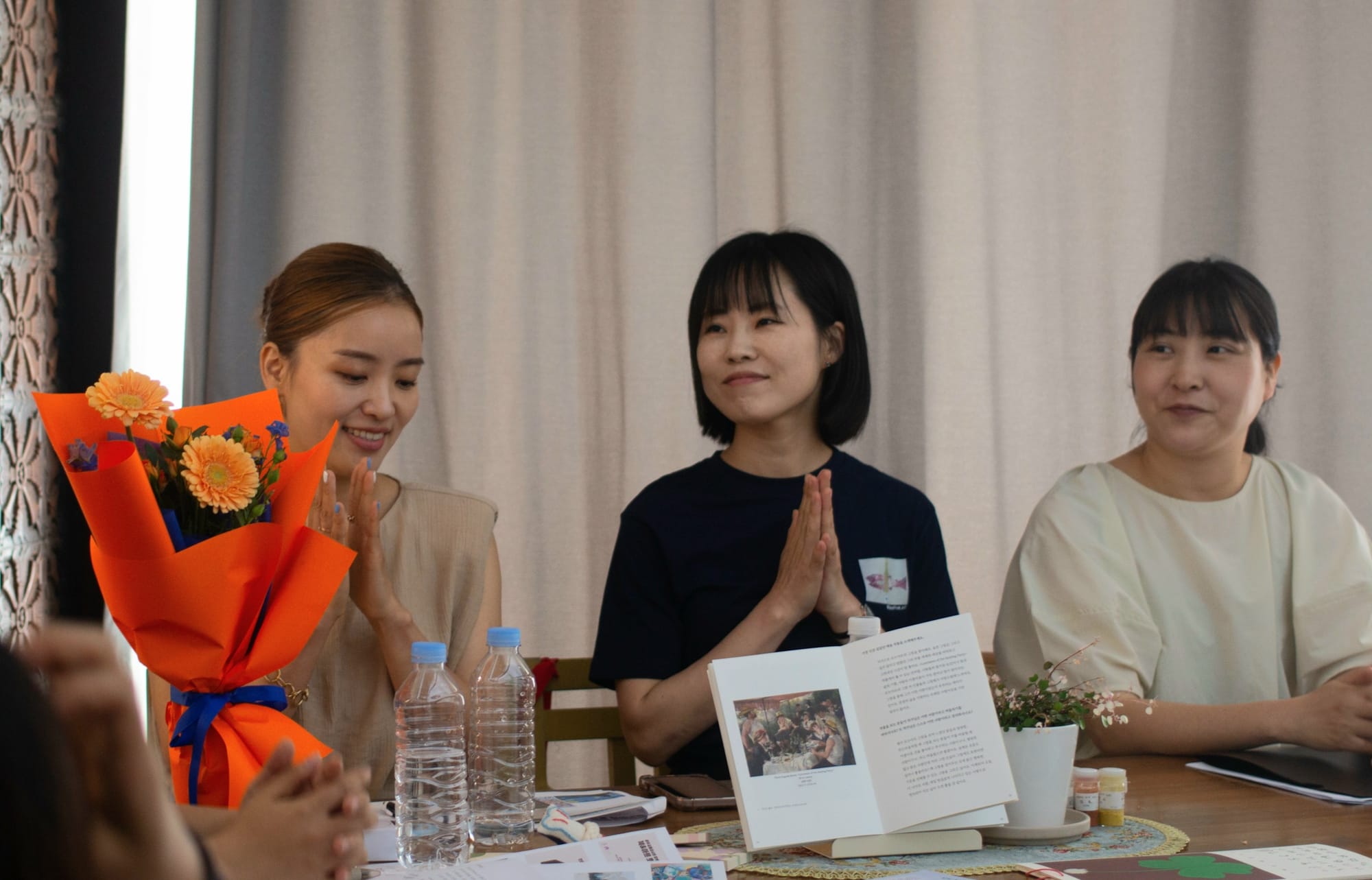
That’s what I realized at the “Mom, to You Without a Name” exhibit at Seoro Sarang bookstore in Gwangju’s Nam district when I visited Friday afternoon.
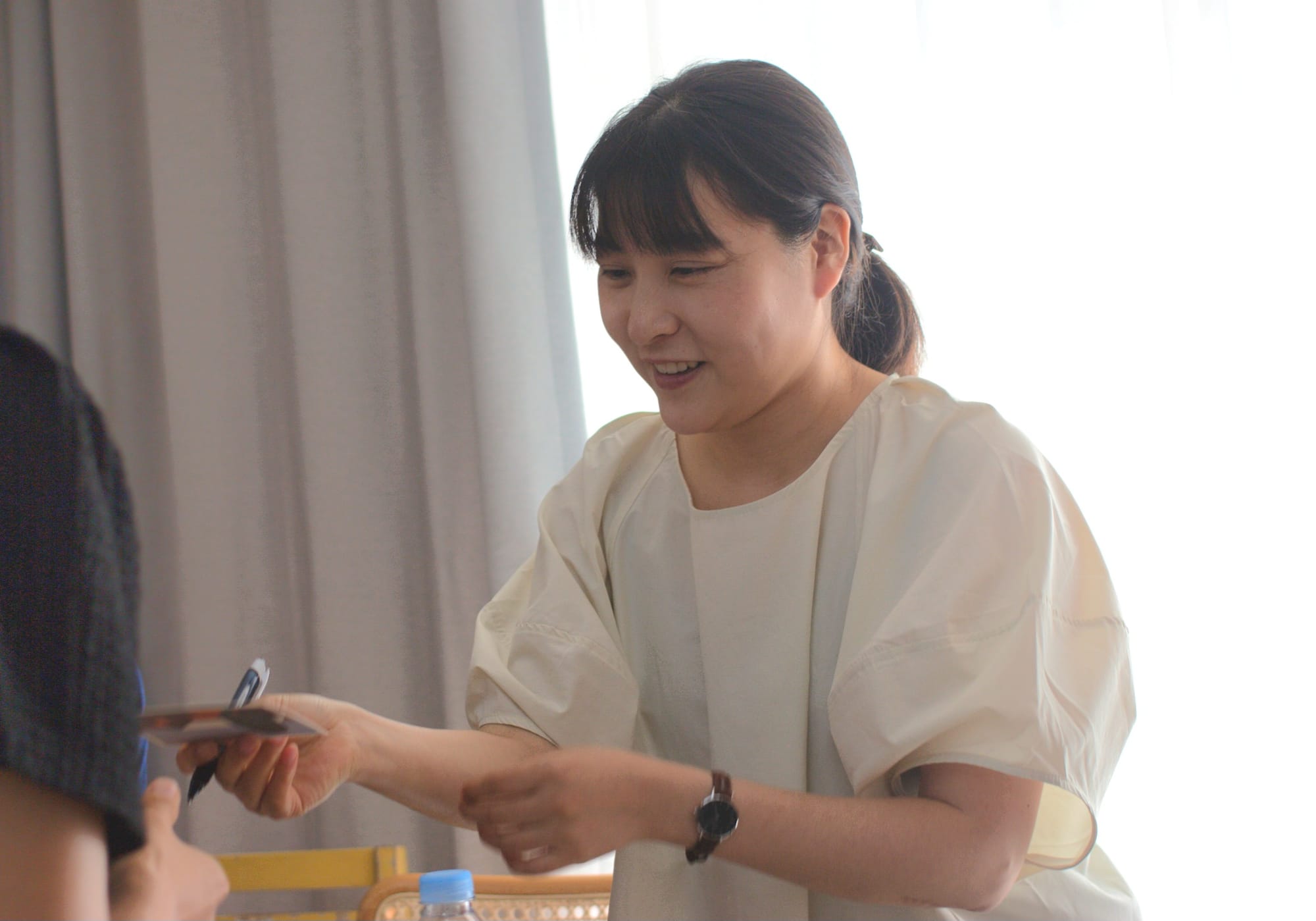
“What do I like? What makes me happy?” artist Kang Bang-Geul remembers asking. She is one of four artists (all mothers) featured in the exhibit.
Anyone who goes by “mom” once went by something else. Like any good origin story, these four artists’ “nameless” mode of being was rich with desires that would point the way forward.
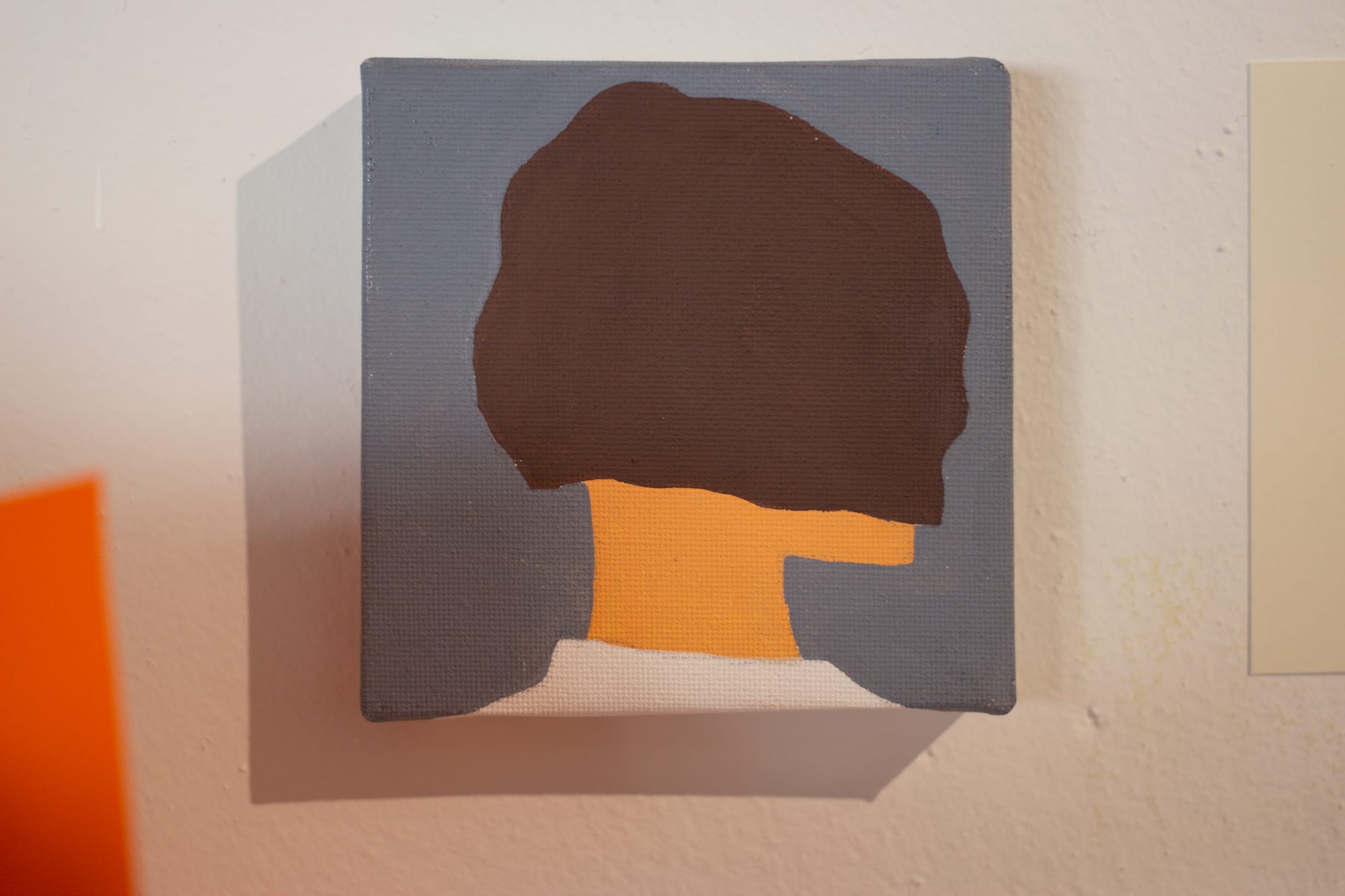
I gravitated toward a figure in one of Kang’s pieces on the wall. She is turned away from the viewer, her face obscured by her hair. Around her is a placid blue. She looks dignified, purposeful. The expression she has is not for us to see, at least not yet. It’s hers first.
She seems to be looking at something shorter than herself—maybe a child, maybe some toys, maybe a plant on the windowsill (all subjects of other paintings in the series). In casting her gaze somewhere beyond what we can see or know, the figure establishes the existence of that unknown dimension.
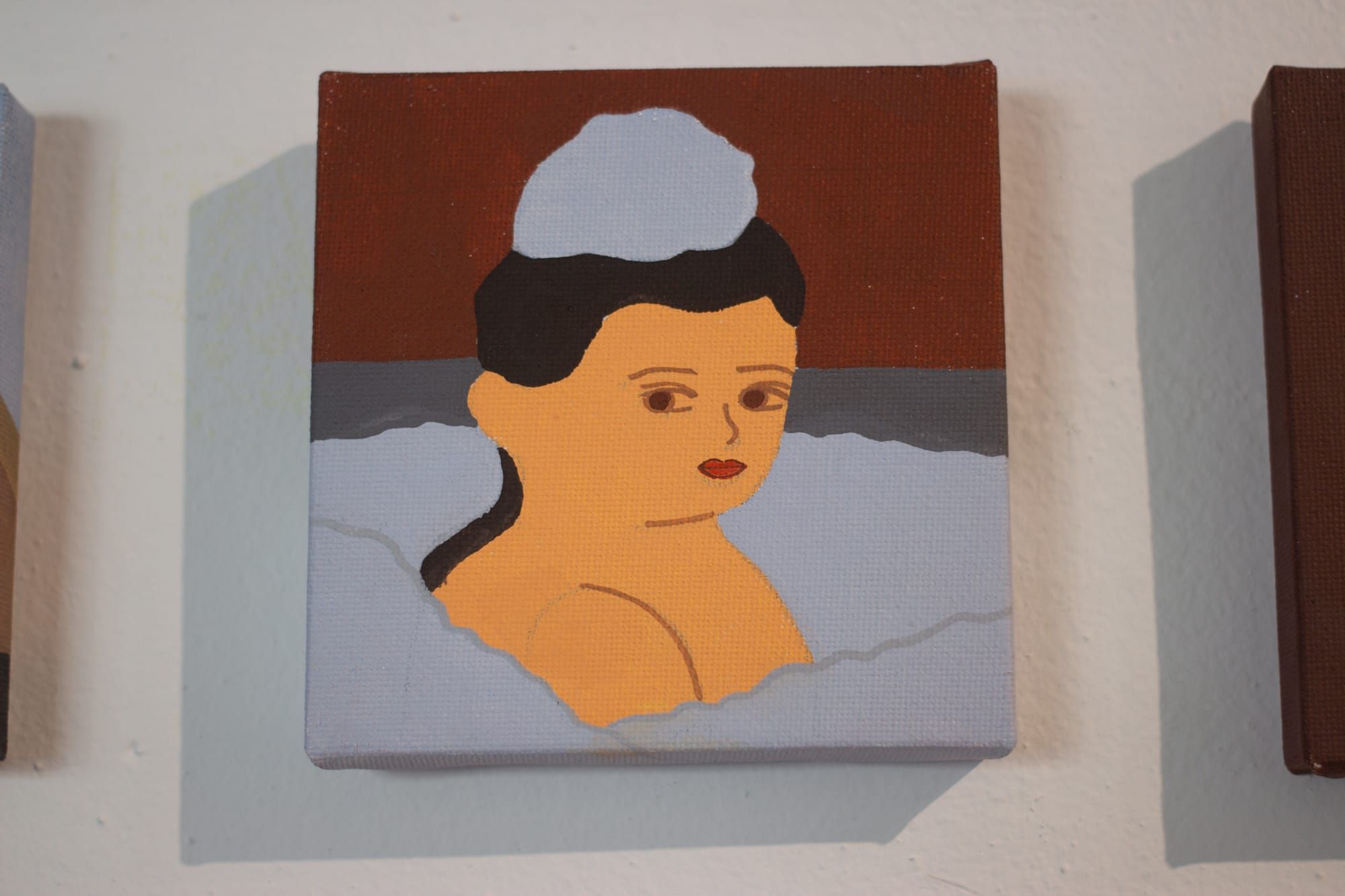
Small footsteps padded through the bookstore. Kang’s young daughter had come in to see the art. A painting of her toes, peeking out from somewhere beyond the frame to rest in front of a pair of Legos, hung on the wall as part of the same collection as the mysterious portrait.
The toes painting is a snapshot of a happy moment. It’s not the kind of miniature that tries to hold a million details. It’s not a diorama. The elements in this collection are chunky, bumping up against the edges of their small canvases. They feel like real life, the precious flashes of daily scenes that pass by as a mother turns her head. Kang titled this series “at home.”
Her art evokes textile art beyond just a likeness; canvas itself is, after all, a textile. By staying within a tiny 10-centimeter-by-10-centimeter square and using solid blocks of color, Kang lets the uniform grain of the fabric define the visual texture.
Kang’s painting of the turned-away head carries the same understated color palette of the rest of her “at home” series. Muted earth tones in wide swathes repeat throughout the collection, turning the subjects soft and familiar. All the items are made up of each other.
In a shared book of interviews accompanying the exhibition, Kang explains that she made this series after moving. In her new space, she was able to fill her days with small moments of happiness. “Even if the house was messy, my heart was at peace,” Kang writes in Korean.
On another page, Kang describes the serenity she gets from looking at a tree outside the window of her home. “Big trees, especially, give me a sense of calm,” she says.
Kang’s parting message in the book is one I’ve noticed in many places since moving to Korea, including in myself.
“Also, I would like to become someone who has admirable thoughts and actions,” she says. “In the time given to me, I want to live my life doing my best.”
It reminded me of Byun Young-Joo’s documentary Habitual Sadness, when the women she’s filming get remarkably focused on becoming dedicated pumpkin farmers, doing good work after the violence they survived.
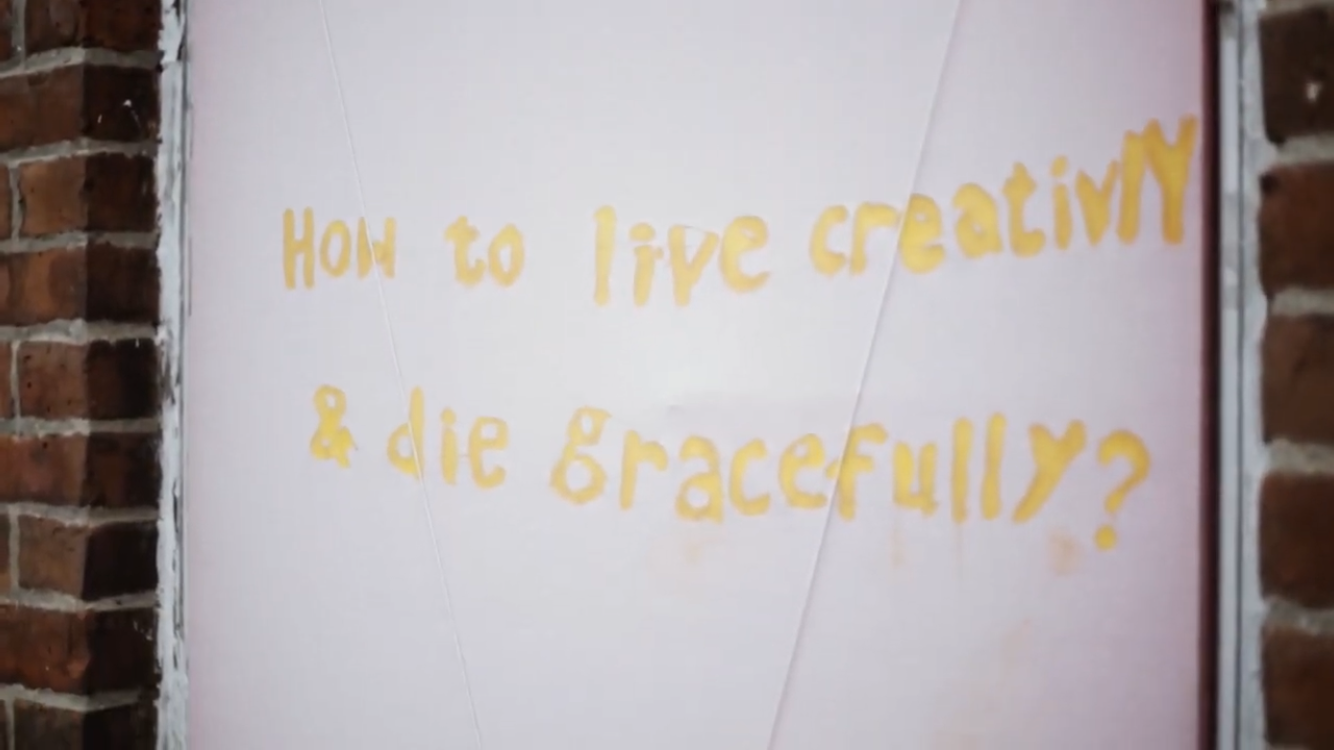
Looking back, I can see traces of Kang’s message in what was once my favorite piece of public art (now removed) in New Haven: a painted message on an exterior wall of Hanmi Grocery that said, “How to live creativly & die gracefully.”
For mothers, trained to anticipate the needs of those around them, even a look can be a request. What gives Kang’s painting a sense of ease isn’t just that the figure is looking away. It’s also that, because she’s not looking back at us, we can’t possibly be asking something of her. In this rare moment, we get to breathe and exist like trees alongside each other, facing different directions.
Sign up here to get Gwangju Midbrow email updates delivered straight to your inbox.


