
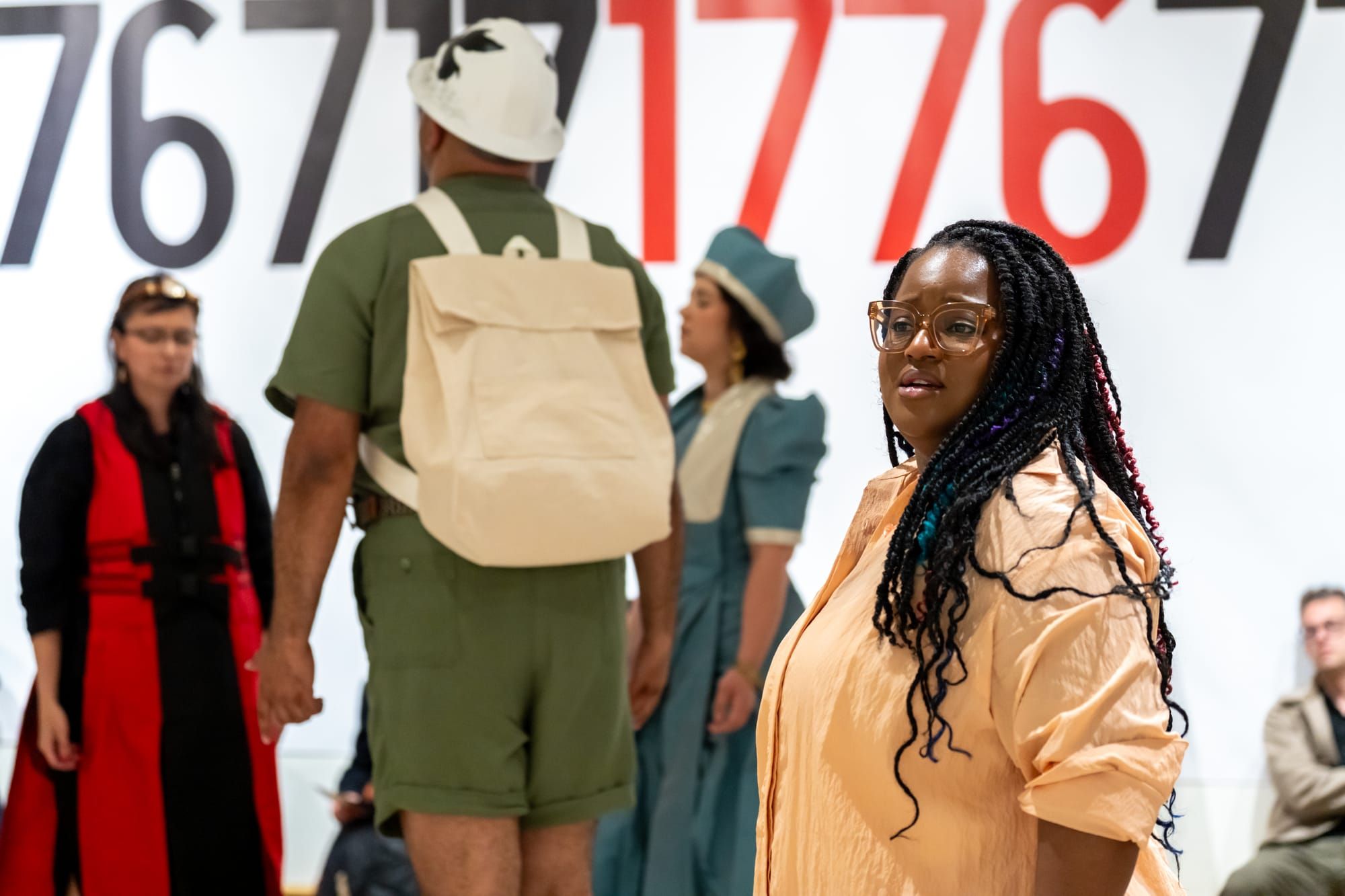
“Apartment House 1776”
Detroit Opera
Cranbrook Art Museum
Detroit
Through May 24, 2026
When I first learned of Detroit Opera’s production of John Cage’s “Apartment House 1776,” I had my reservations. As much as I appreciate unconventional theater, I was nervous that the performance would be less an immersive, thought-provoking operatic experience and more a stressful, chaotic mess. I was pleasantly surprised when it leaned toward the former.
“Apartment House 1776” is an exploration of what it means to be American, guided by four singers of different ethnic/spiritual backgrounds. The four performers – spread across different spaces within the Cranbook Art Museum — simultaneously sing music of their own choosing that represents their individual heritages, and the audience has the freedom to wander throughout.
Cage created the work in 1976 to commemorate the United States’ bicentennial, and selected singers representative of major ethnic/cultural groups of the United States at its founding: Protestant, African American, Native American and Sephardic Jew. With the country celebrating America’s 250, director Alexander Gedeon’s production has chosen singers who still encompass the original groups, but with mixed heritage backgrounds that fit less neatly into the original boxes: Travis Leon Williams, Selena Kearney, Mia Mandineau and Brianna J. Robinson.
The 90-minute experience began with a dramatic preview lecture of the performance, presented by Gedeon, Rod Serling-style. Our group was then divided into four subgroups and guided to separate starting points in the museum, each aligned with one of the four singers. The performance itself was only 32 minutes – with the option to go multiple times – and the production concludes with a follow-up group discussion where participants shared their thoughts and feelings.
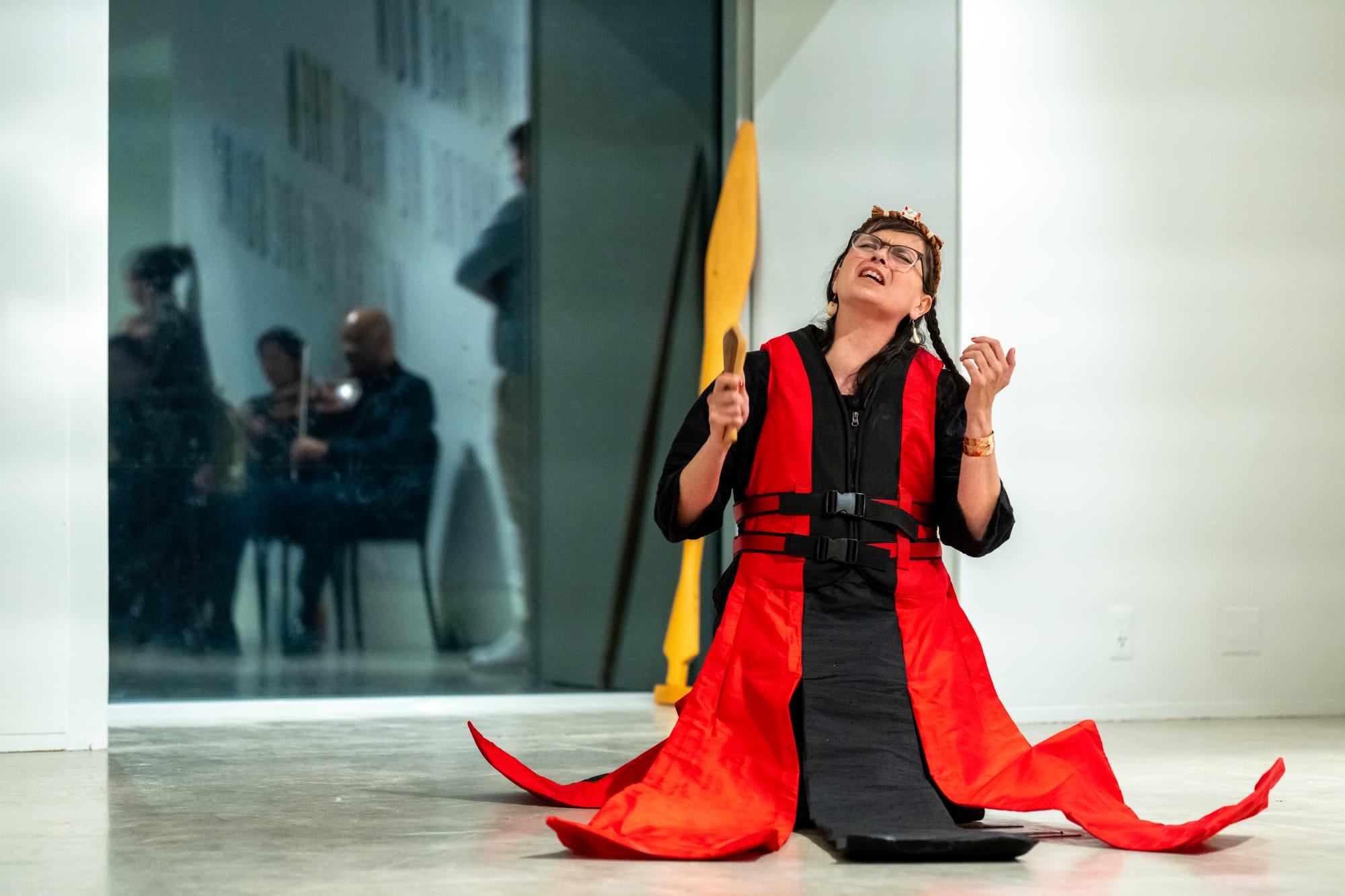
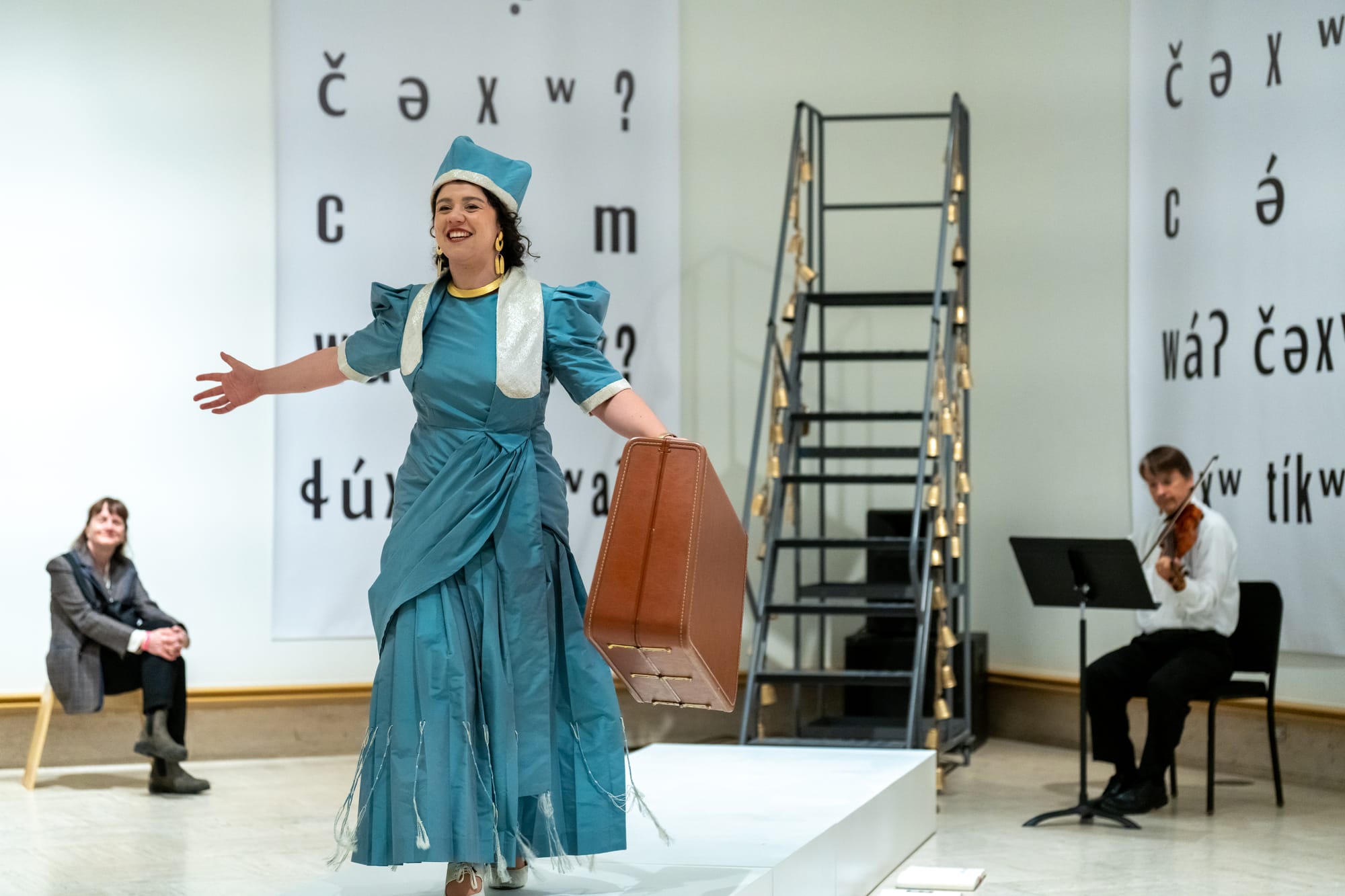
I was part of the fourth group that followed Mandineau, who was located in the farthest room in the back. She captured the American immigrant story, opening her track with “Misirlou,” a Sephardic folklore melody, while packing a series of vintage suitcases. As she clumsily gathered her suitcases on a dolly, we (well, many of us) followed her out on her journey into the next room, where we encountered Williams singing “Lord How Come Me Here,” an African American spiritual. At that point, it was pretty much a free for all, and both the singers and participants wandered freely throughout the adjacent rooms. Thirty-three members of the Detroit Opera Orchestra were stationed throughout, playing from a collection of period music that had been arranged by Cage.
As intended per the title, “Apartment House 1776” reflects an experience similar to walking by an apartment complex full of open windows with different music pouring out of each. The mix of singers and instrumentalists could be heard throughout the galleries, creating a layered sound that made it almost impossible to distinguish the individual songs. The effect was dreamy, though eerie at times, as you watched each of these performers essentially living in his or her own worlds, even when singing in the same rooms. Each was on his or her own path, and we were flies on the wall trying to make sense of it all. Large signs hung from the walls with quotes from the singers concerning what 1776 meant to them. The sayings included “Where We Are Now, Where We Were Then, Where We Are Going,” “The Word Slave Comes Up and Everybody Looks at You,” and “The Way to Make it in America is to Put Yourself First,” which I found particularly poignant.
If you have ADD, “Apartment House 1776” is either a dream or a nightmare. I leaned into the chaos, letting myself turn on a dime to follow the sound or the person who seemed most interesting at the moment. Others, especially those prone to overstimulation, might not enjoy the messiness of it all, but I have a problematically high tolerance for mess. My friend, who does not, would have preferred to hear the singers each perform individually. Gedeon, in a previous interview I’d done with him, said the barrage of sound is much closer to the constant bombardment of media we experience in our real lives than a traditional performance, and I felt that.
After my first run-through, I joined the rest of the group for the post-show discussion, where we were all asked to write down four words to describe our experience, with the insistence there were no wrong answers. Words like “dreamy,” “messy,” “lost” and “sad” were popular, though I personally had enjoyed just letting the sounds wash over me without naming them. I didn’t quite relate to the stronger emotional tones – like sadness or shame – until my second pass.
The second time around, I placed myself between rooms at the front of the galleries, where I could see more at once. Now that I knew what was up, I took a slower pace, allowing myself to spend more time with each of the singers. This time I found out what Mandineau did after she packed the suitcases – she took them on a ship (it seemed) and later opened them to reveal blank scores of music that she threw around and sang. Her journey was one of excitement and hope and was my favorite of the four.
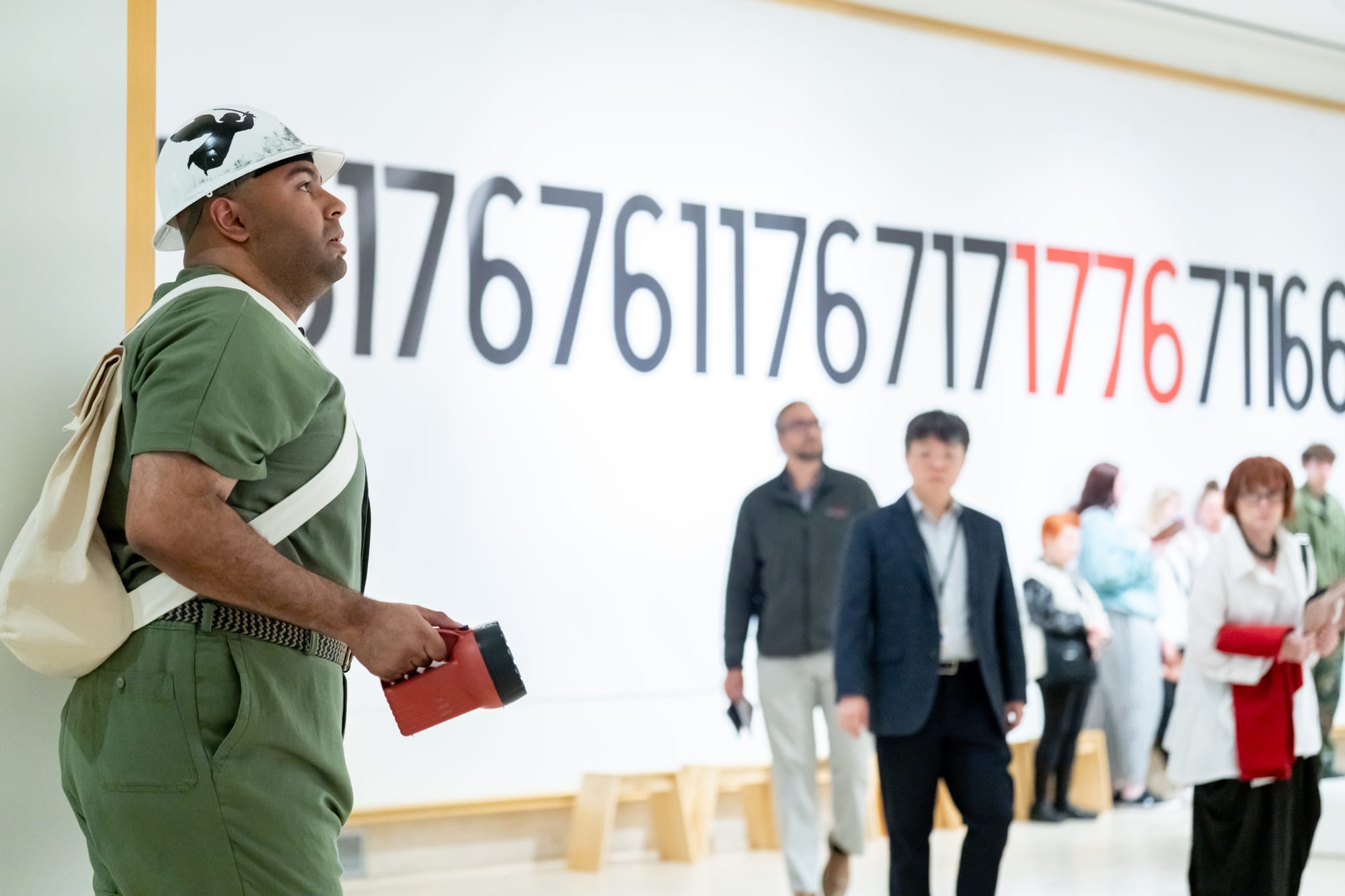
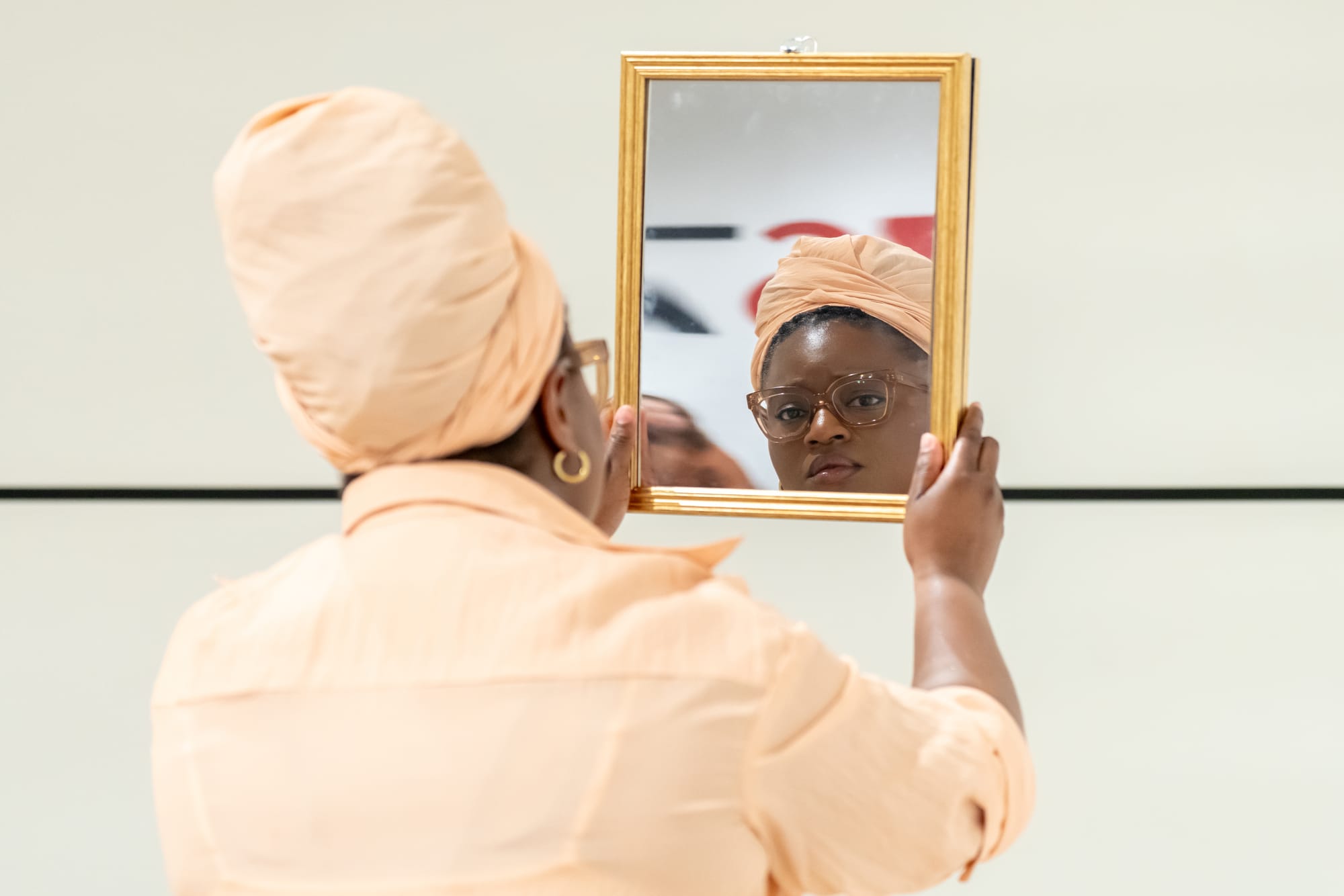
Kearney, on the Native American journey, brought out a melancholy mood as she played her slow, soothing drum to indigenous music. Robinson’s track was one of self-discovery. She carried around a prop that was a mirror on one side and a childhood photo of herself on the other, with music that expressed shame, sadness and searching. Williams, in a ranger-like outfit, carried a knife and his path was one of curiosity and exploration.
It’s best to go into “Apartment House 1776” with an open mind. You might feel something profound that makes you question what it is to be an American, or you might not, and simply get lost in the sound – for better or for worse. Most of the people I saw seemed to love the experience – one commented he wished the performance was twice as long – and many were actively engaged in the post-show discussion. I recommend signing up for one of the earlier timeslots so you can go through twice. It will offer a new perspective and be just as interesting.


