
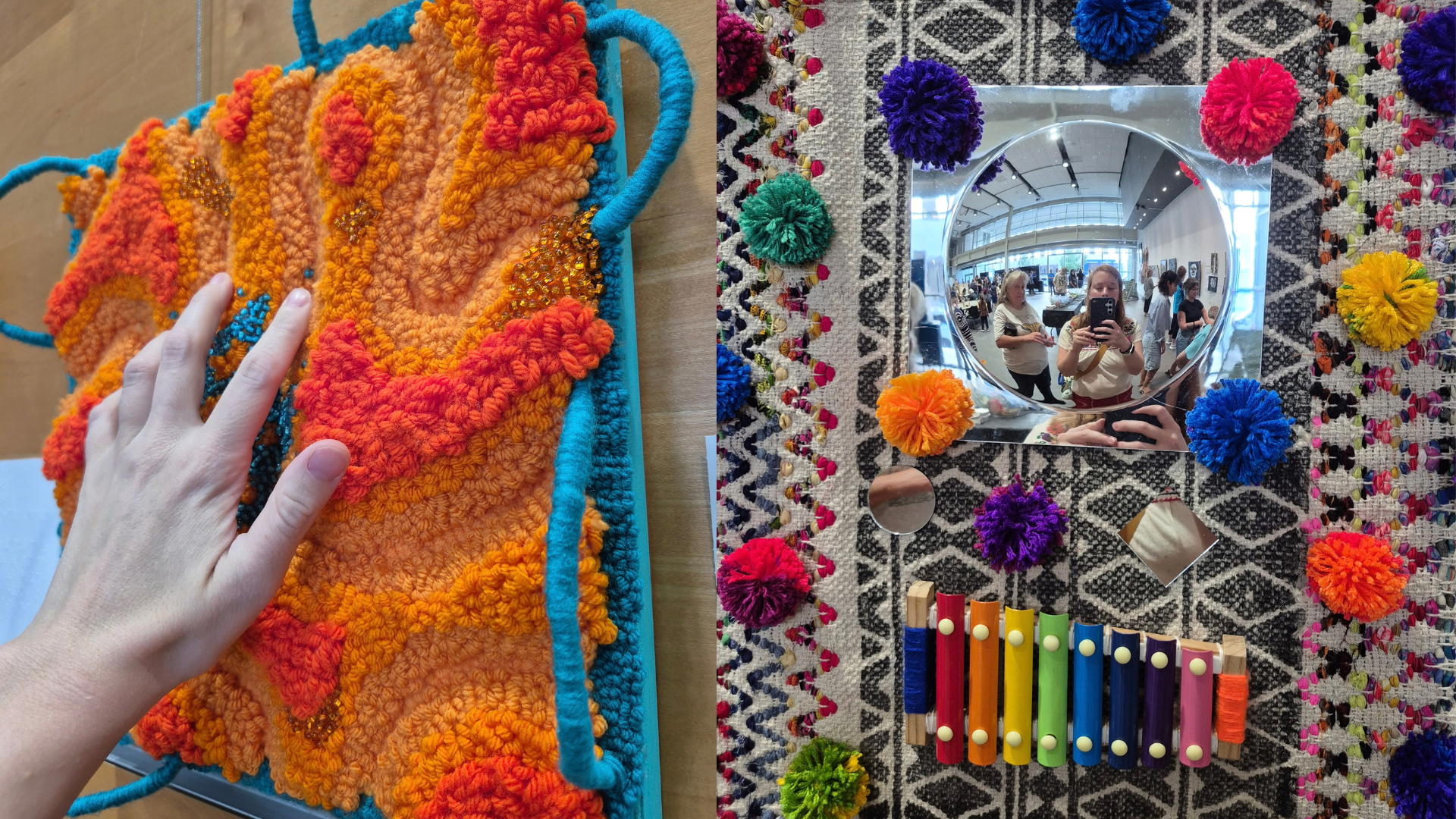
Please Touch The Art
TCC McKeon Center for Creativity
Through October 31
As a highly tactile and impulsive person, whenever I visit a museum or art gallery, I’m often seized by the desire to reach out and grab things and am only restrained by social pressure and the presence of security guards. Thus, I’ve rarely been so eager to attend an art show as I was to step through the doors of Please Touch The Art, TCC Center for Creativity’s group exhibition featuring dozens of artworks that you can—yes, at last!—lay your hands on.
This annual show, in its biggest year ever with 45 artists from nine states exhibiting their work, is geared toward celebrating artists with disabilities, especially visual impairments. More than 30% of the artists in the exhibition identify as blind, and every piece in the exhibit has a braille caption plate beside it, inviting the visually impaired to read each piece’s provenance. But the Center for Creativity is clear that this exhibit is for everyone who’s ever yearned to caress a knobbly surface or feel how cold a bronze statue is.
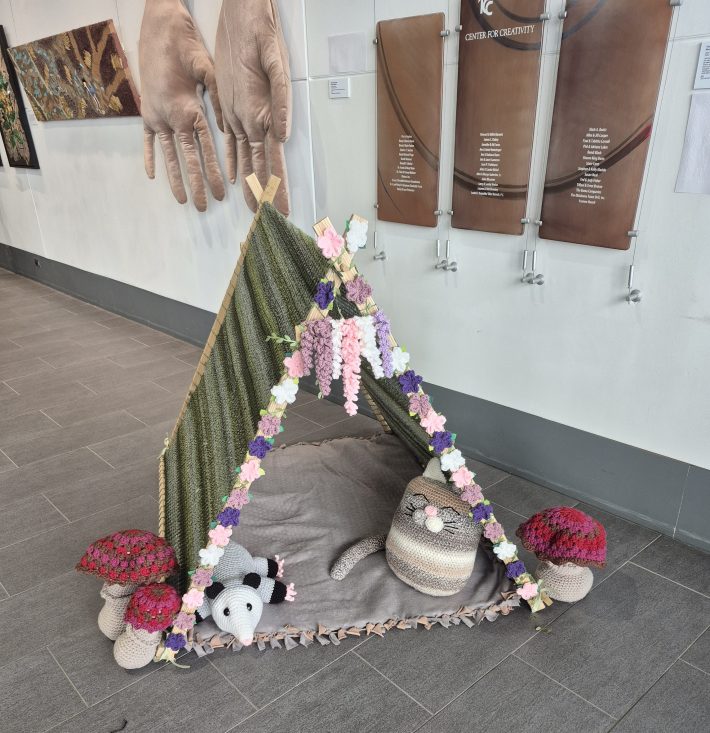
Right at the gallery’s entrance during the crowded, enthusiastic opening, I was immediately diverted by Marissa Henry’s The Cozy Garden Hideout, a sensuous little den consisting of a knitted tent flanked by friendly possum and cat pillows and jauntily askew mushrooms. I was prepared to crawl in posthaste but had to cede the territory to a heavily represented touch-enthusiastic population I couldn’t believe I hadn’t considered: children.
Girl Scouts swarmed every corner, batting at giant fabric hands and frantically twisting knobs. "Let me see let me see let me SEE!" I heard one Brownie say as she jostled a troopmate aside to open the tiny hinged door of Sergeant Scraps’ chest, revealing a heart amid his circuitry. Many of the pieces shared this playfulness, incorporating familiar items like beads and yarn or inviting viewers to interact by making noise, fiddling, or probing.
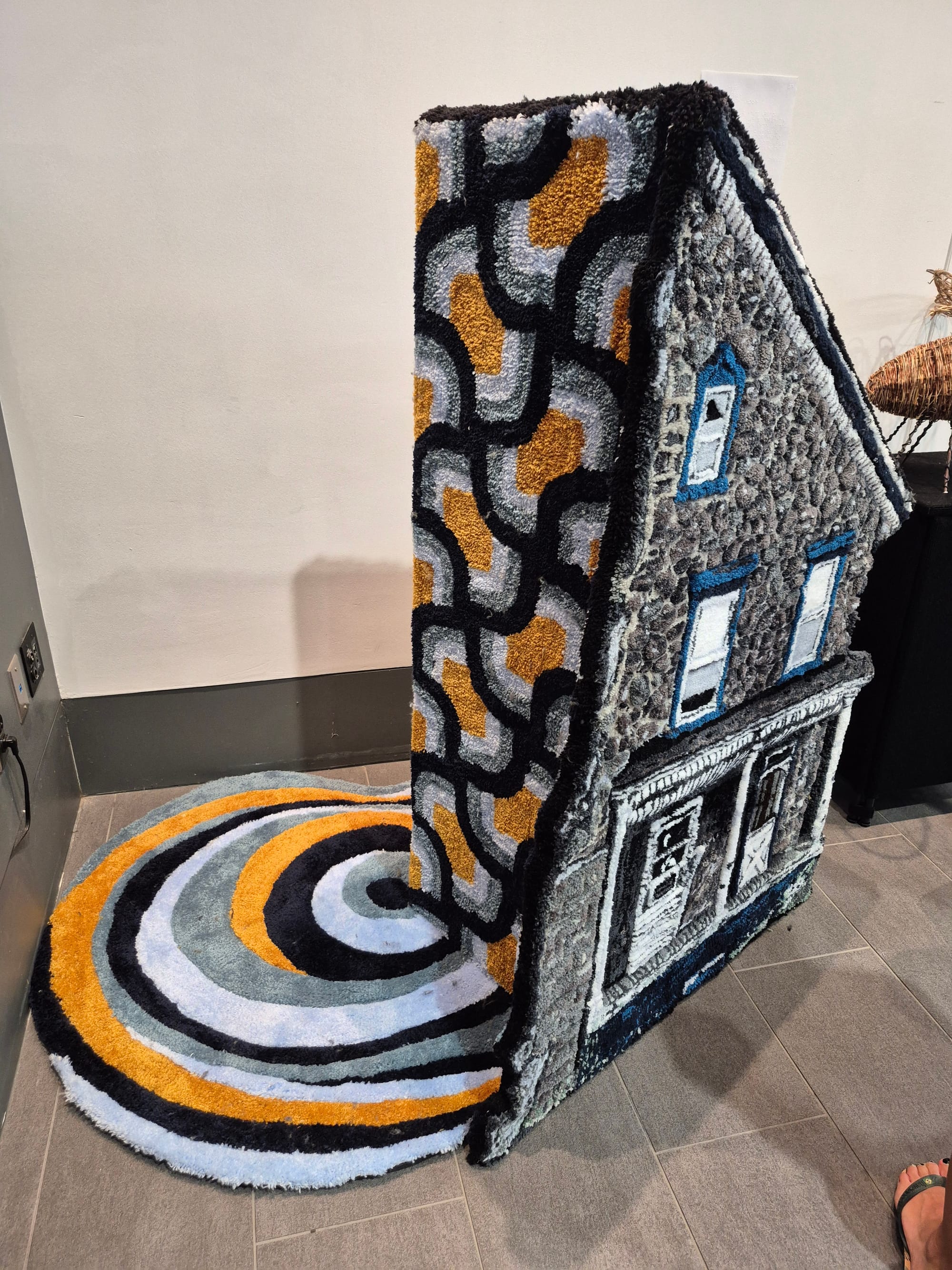
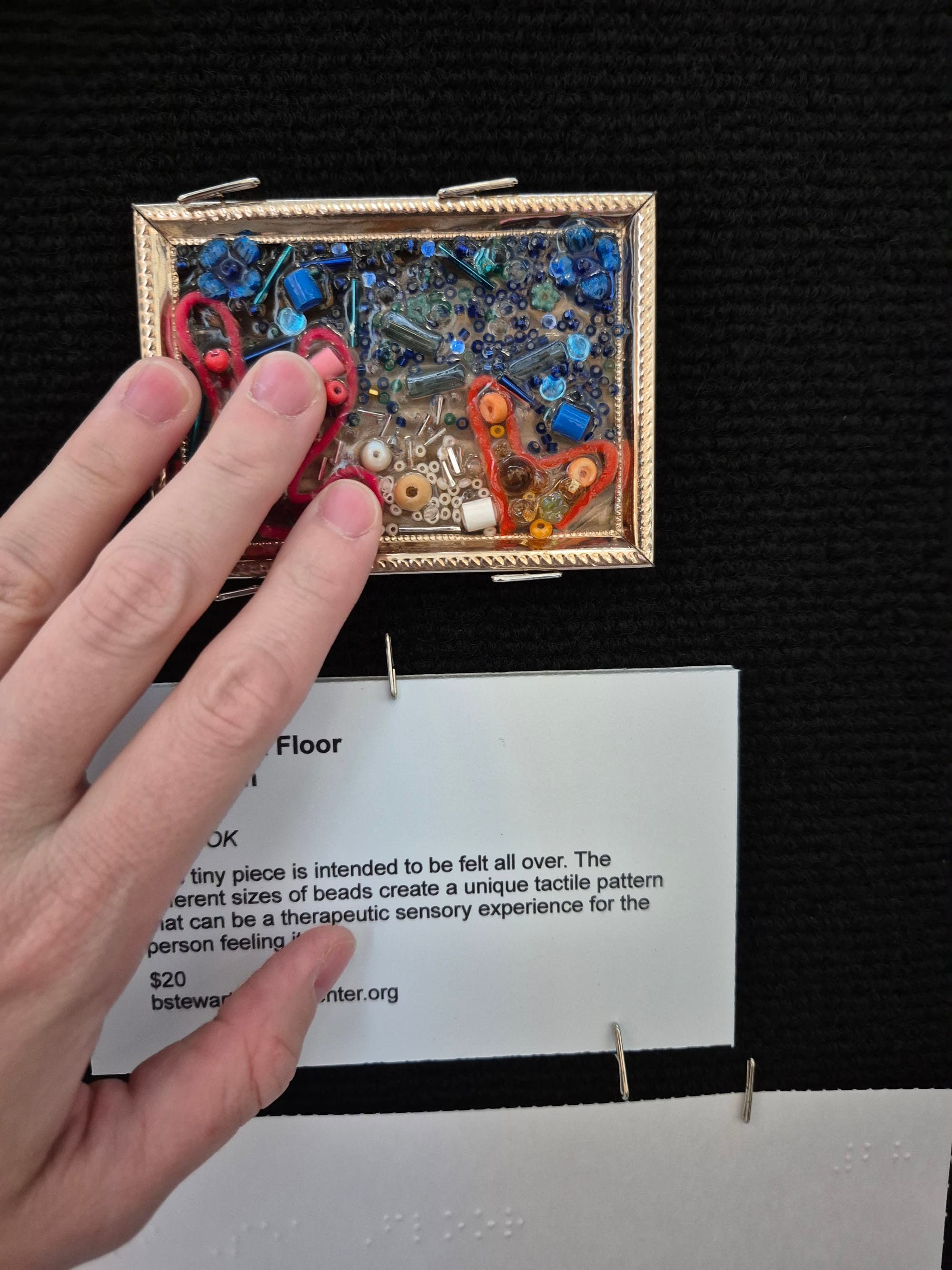
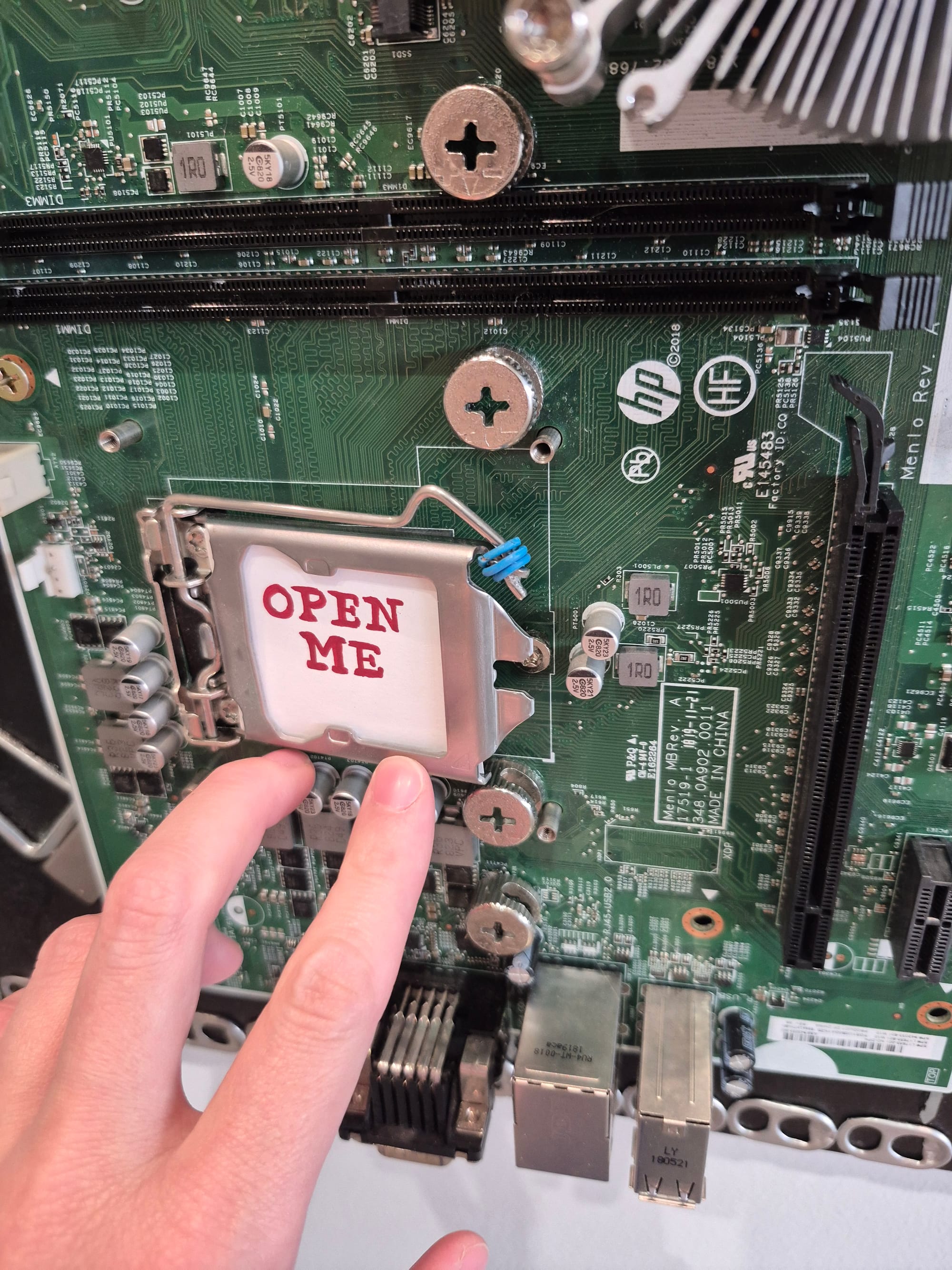
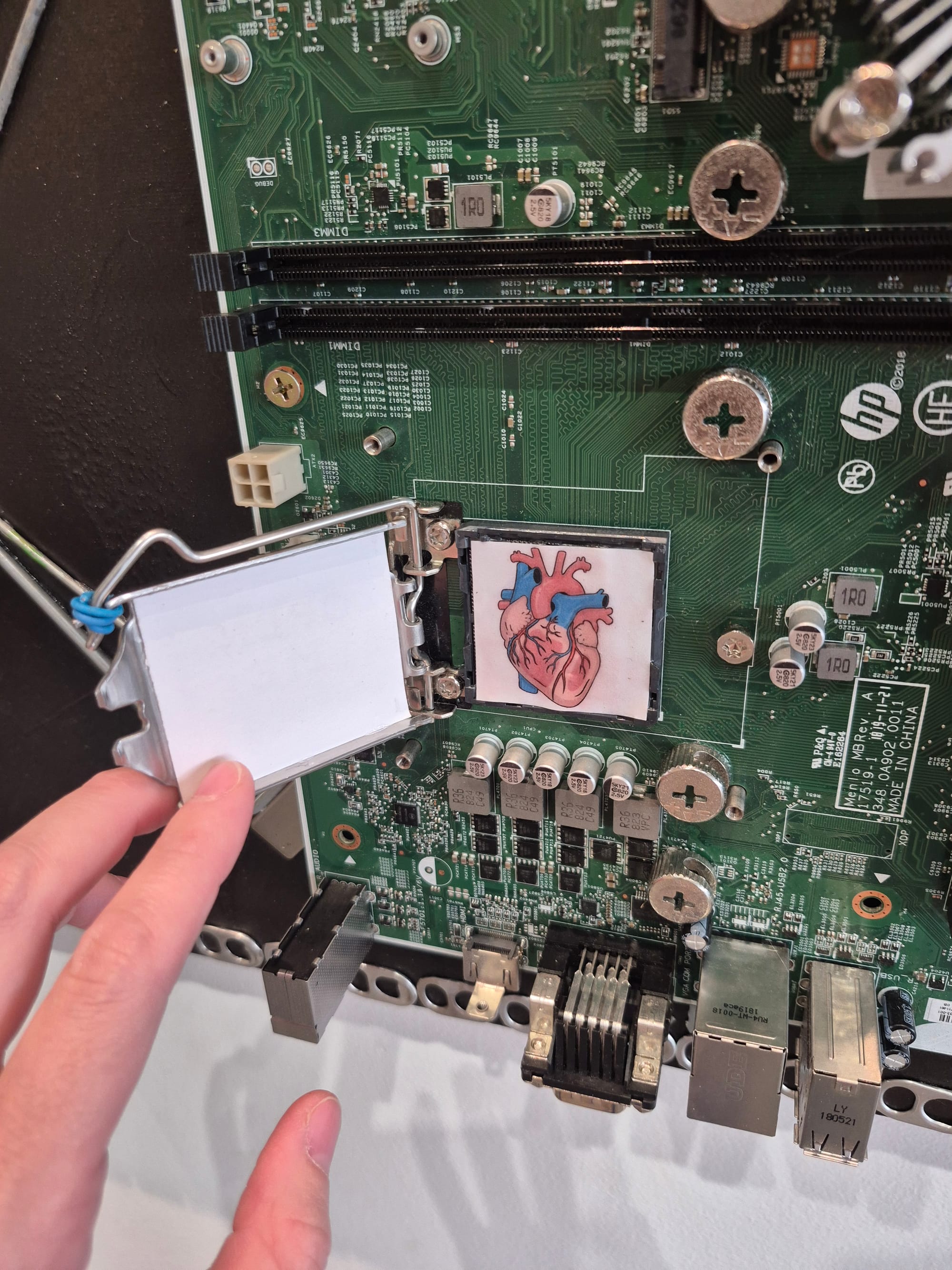
photos by Bailey James
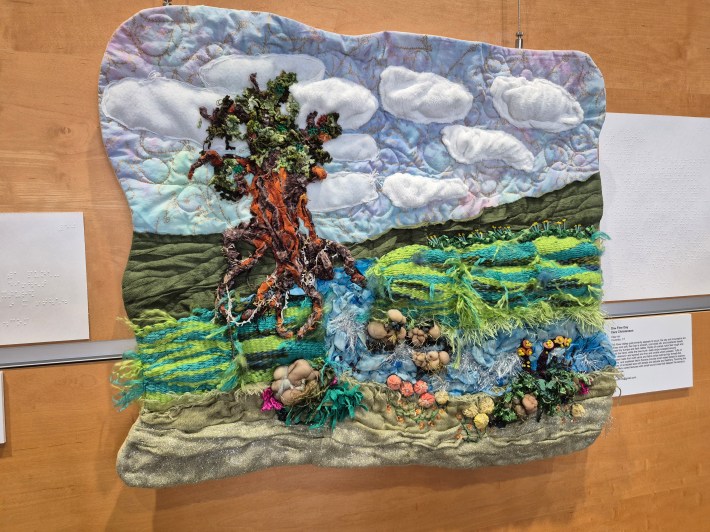
Touch is the first sense we develop as babies to make sense of the world, so maybe it isn’t surprising that feeling an unfamiliar object can be so viscerally affecting. Upon stroking the fluffy white clouds of Cara Christensen’s quilted landscape One Fine Day, I felt my heart seize up at how impossibly soft they were. The tender sensation felt almost private, associated more with being at home and safe in bed with a childhood stuffed animal than in a crowded public gallery.
Touch isn’t the only sense on display. Contemporary Asian American Medicine by Paige Nguyen features delicate hand-painted teabags tied to different social situations like “For Hermiting Alone In Bed and Scrolling Endlessly,” each containing real tea leaves that give off a delicate scent. And imagine my delight to find a Please TASTE The Art display by Margaret Laprarie, where mixed media canvases studded with tiny plastic ducks and beads were paired with plastic baggies of candy and cereal guests could eat while viewing the work, linking the textures on display with mouthfeels. I concentrated on texture instead of flavor and was amazed to notice for the first time how airy cereal feels on my tongue.
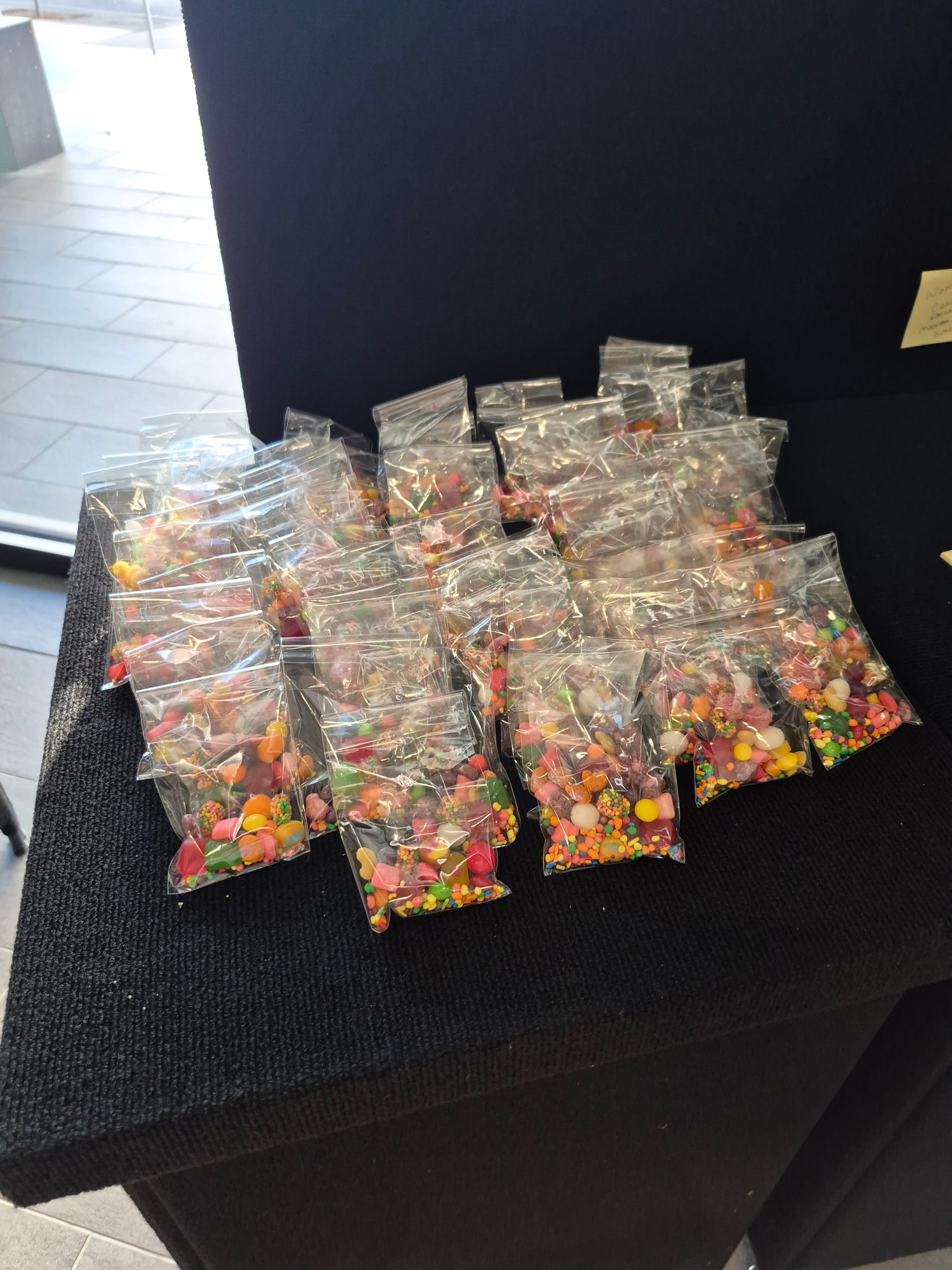
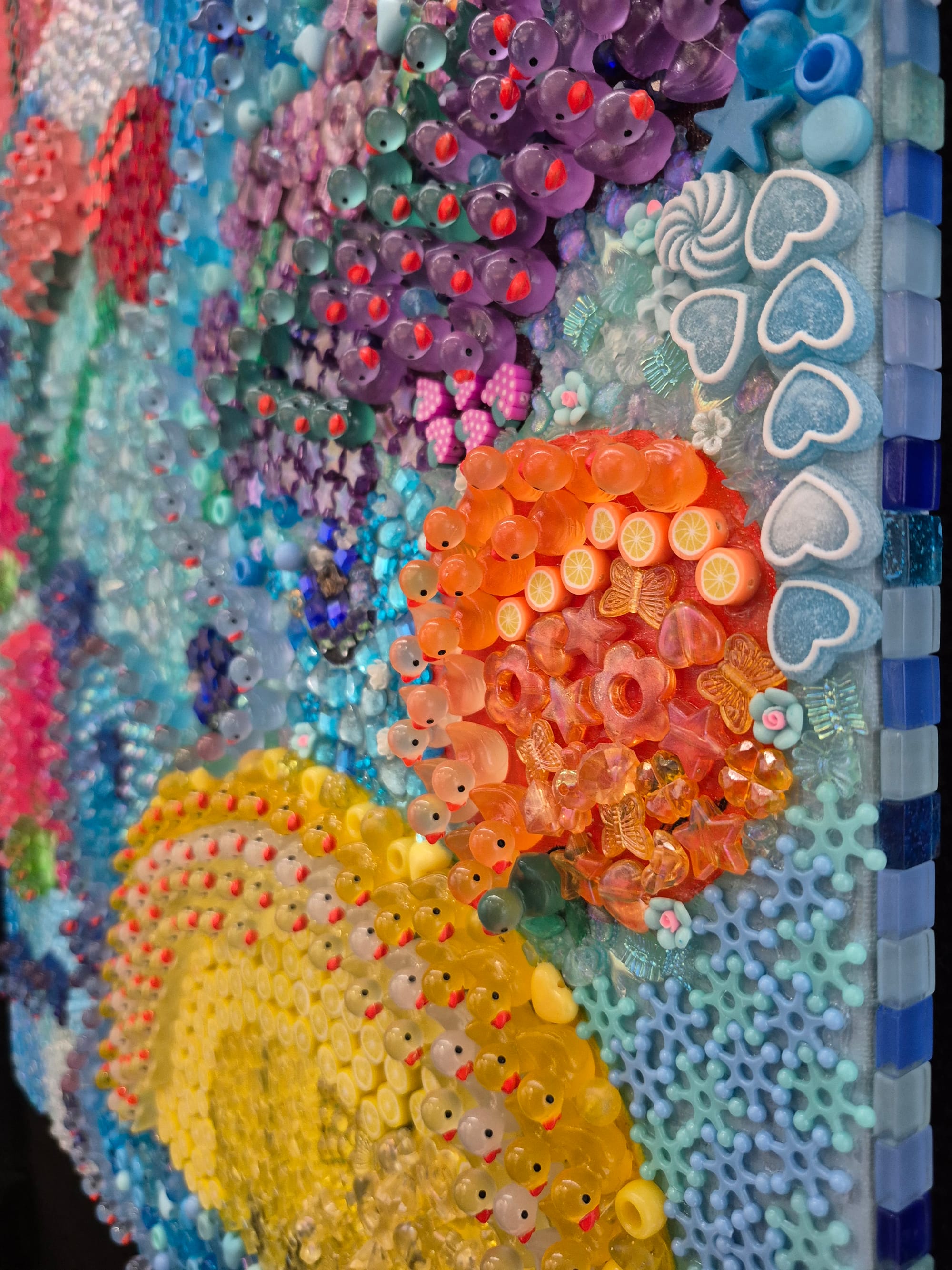
Sadly you couldn’t put everything in your mouth at this exhibit—but more than average! | photos by Bailey James
I tried moving through one section of the exhibit with my eyes closed, touching a piece before I looked at it and working to access the foreign-to-me idea of analyzing something new without the benefit of sight. It seemed impossible to get the full sense of a piece’s furrows and peaks without seeing it, as hard as I tried. Being called to notice a new facet in a pedestrian experience is rare, and the show did a commendable job of inviting me to sense the world differently.
The show anchored this exploration with a thoughtfully curated table of resources speaking to the experience of blind students, including a braille typewriter and a ceramic sculpture of a backpack containing adapted books, calculators, and other school supplies. I was most struck by a braille-printed section of an algebra textbook; it took 85 braille pages just to translate nine pages of a traditional textbook, which brought home how much I take for granted how fast my eyes can whip across small print.
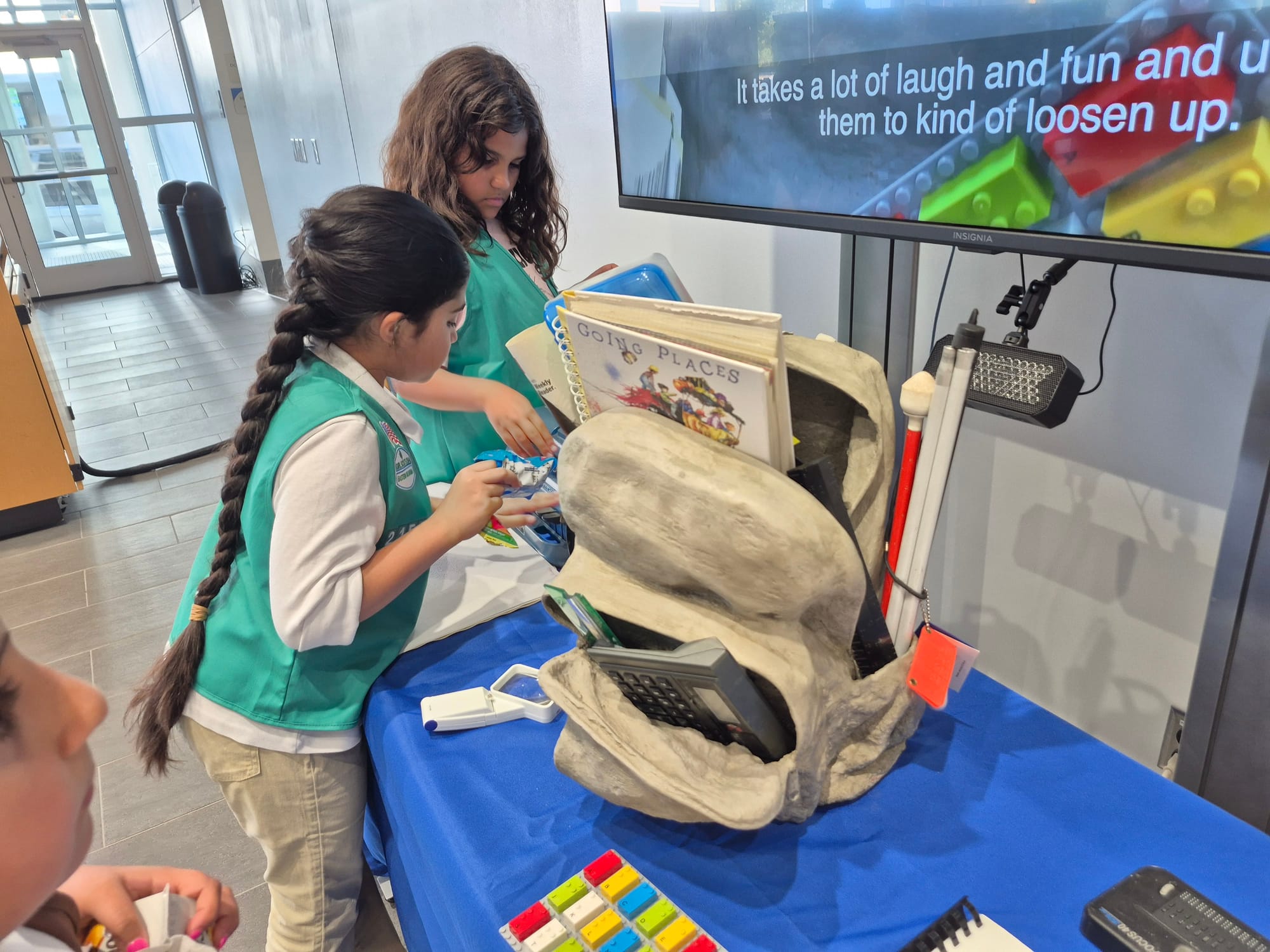
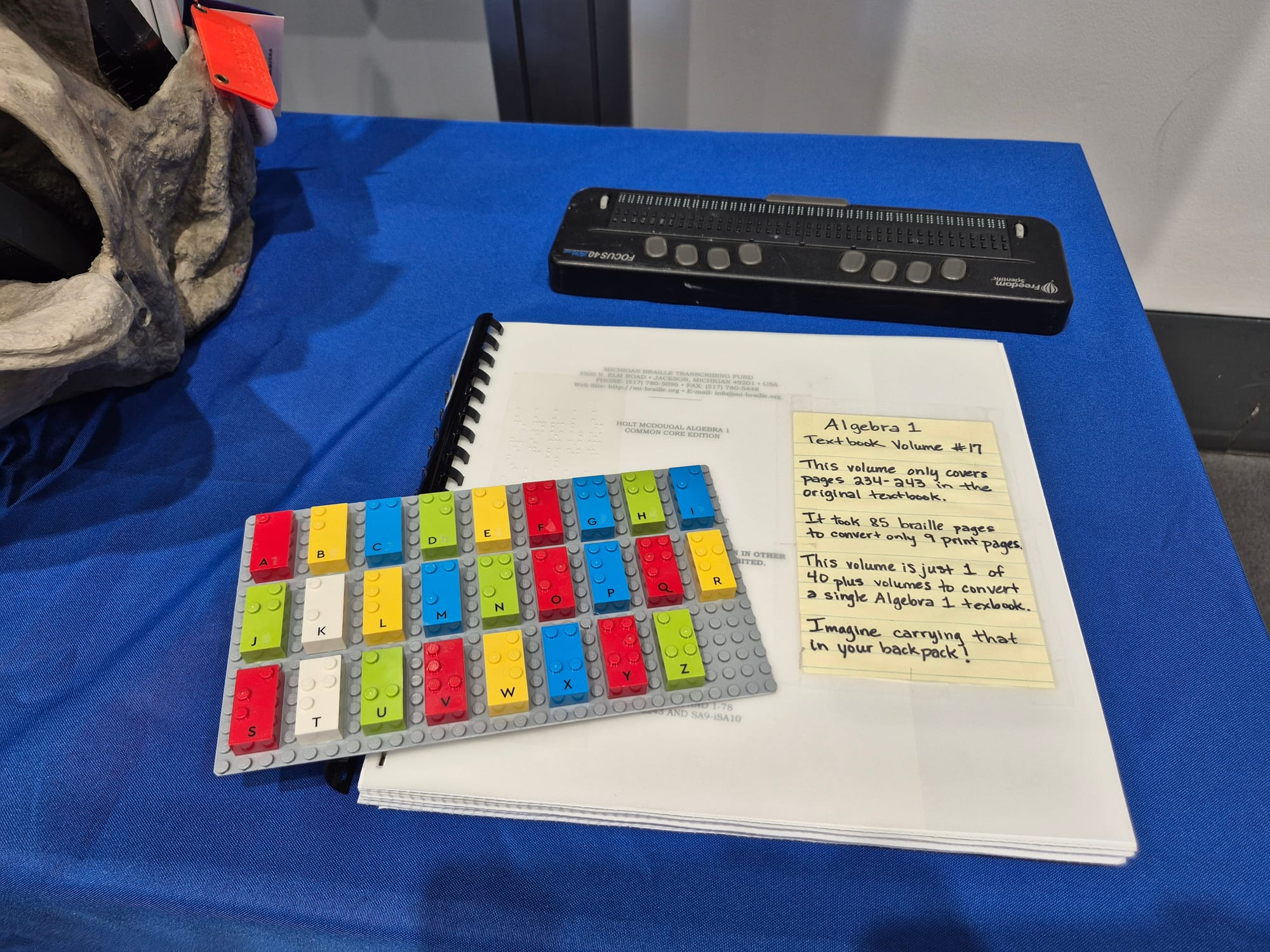
photos by Bailey James
Once I finally got my turn to shimmy inside The Cozy Garden Hideout, I lay on my back staring up at the loosely knit yarn canopy, contemplating what lives in the inch between our bodies and the art that hangs on museum walls: formality, money, institutional authority, the fear of damaging a thing that might not last forever.
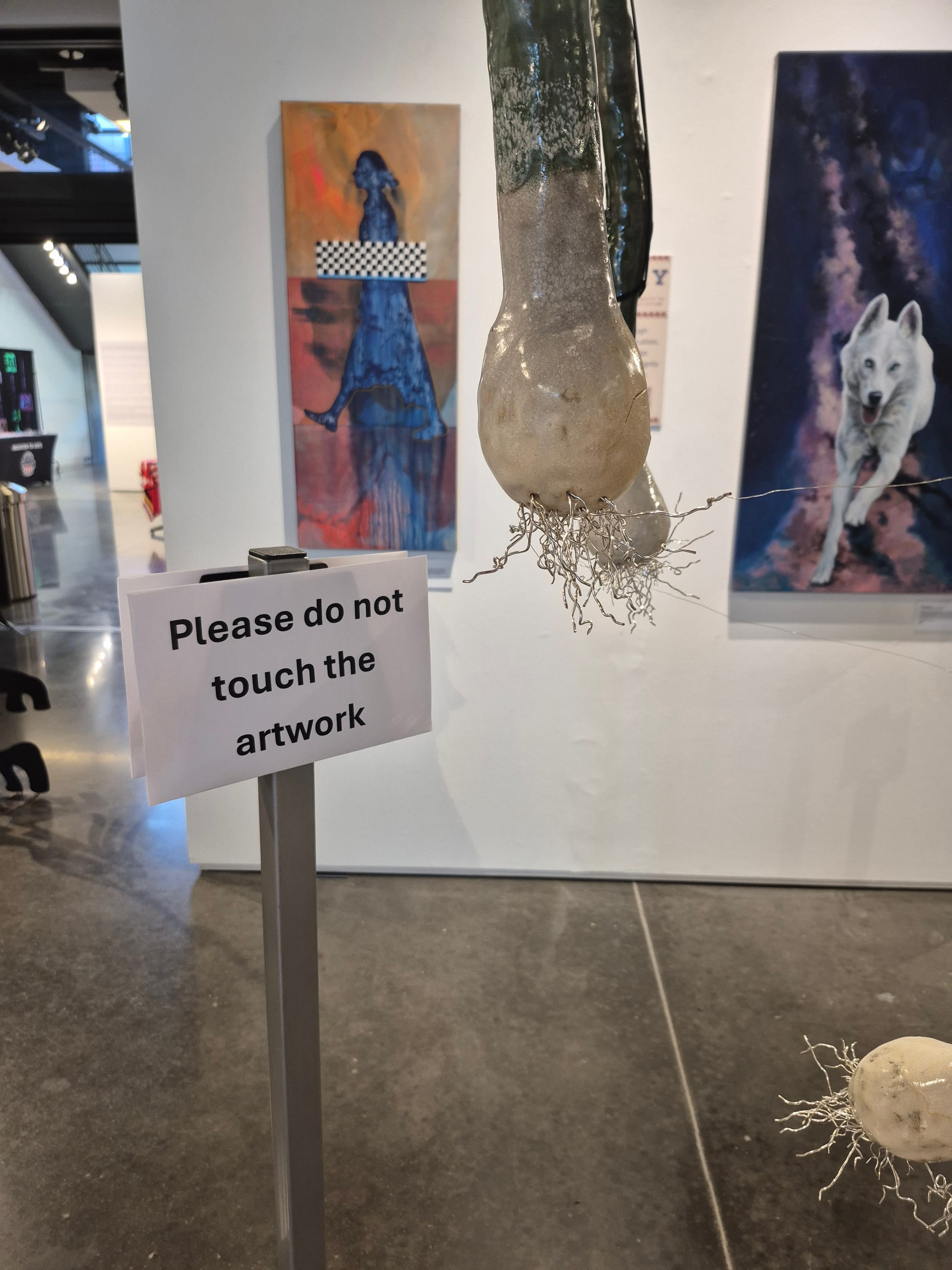
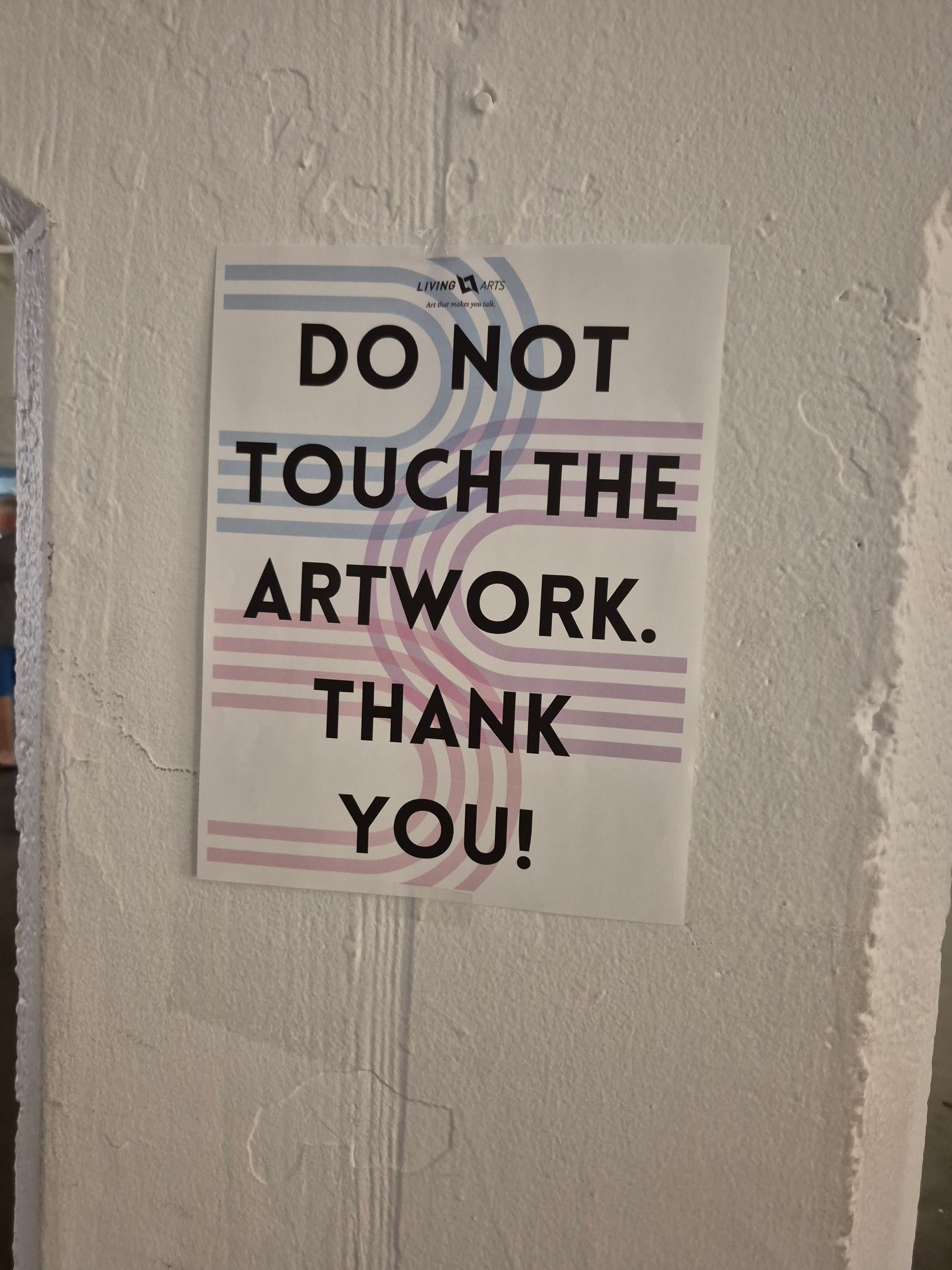
But so much connection and understanding can come from bridging that inch, making contact, and feeling the world the way someone else experiences it. We’re already kept so far from real experience by living through screens, scrolling fantasy lives and imagining the crunch of a croissant enjoyed steps from the Eiffel Tower while only ever feeling cool glass beneath our fingertips. Please Touch The Art brings the fibrous, rough, sharp, bright, luminous world straight to our hands. And as I went on that night to other galleries, all bearing “Please DON’T touch the art” signs, I knew—felt, actually—what a gift that is.
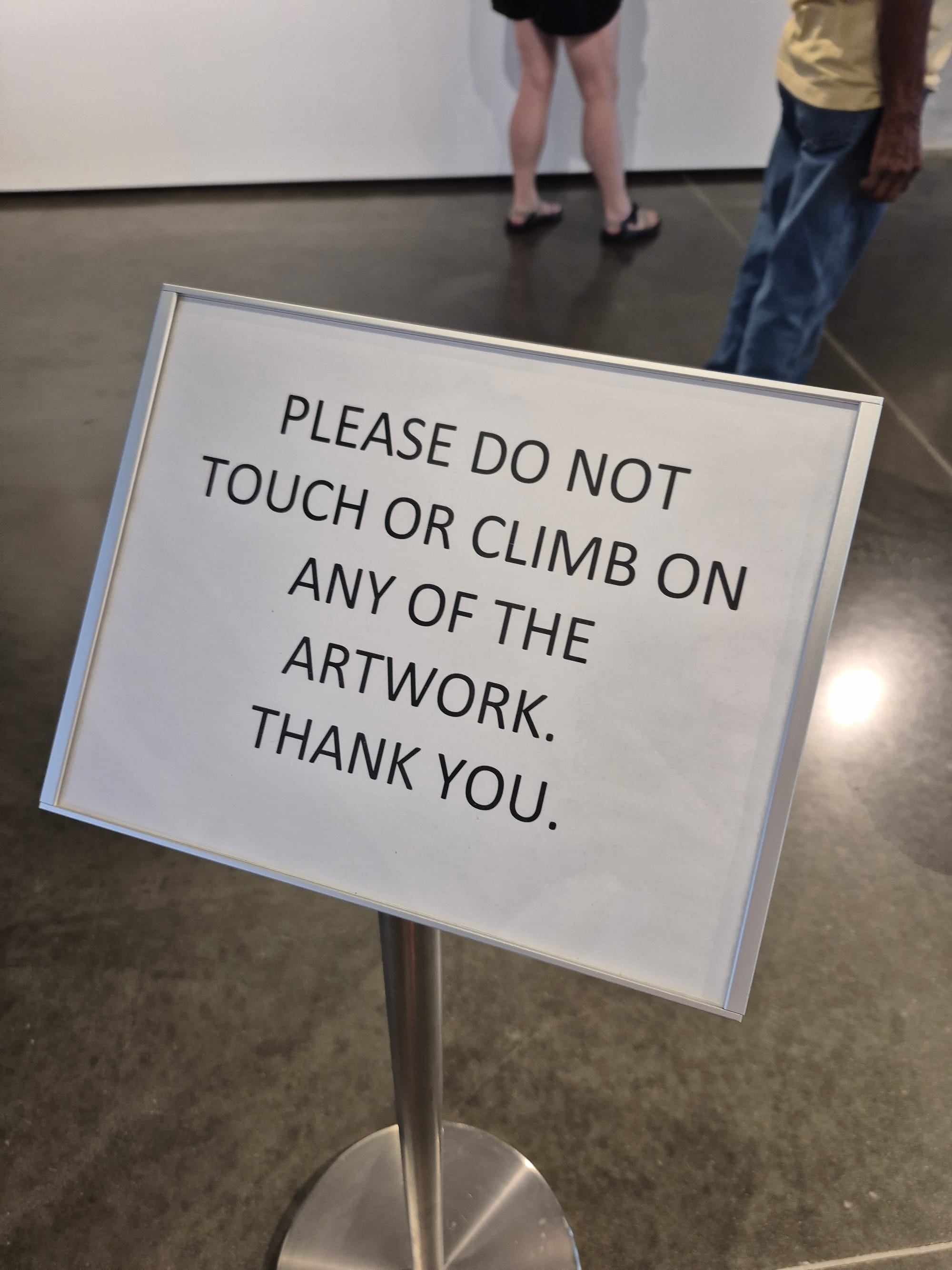
Back to the divided world. | photos by Bailey James


