Detroit Film Theatre
5200 John R St.
Detroit
Saturday, July 18
For a couple of glorious hours on Saturday, Detroit partied like it was the 1980s — or at least like Prince’s “1999.”
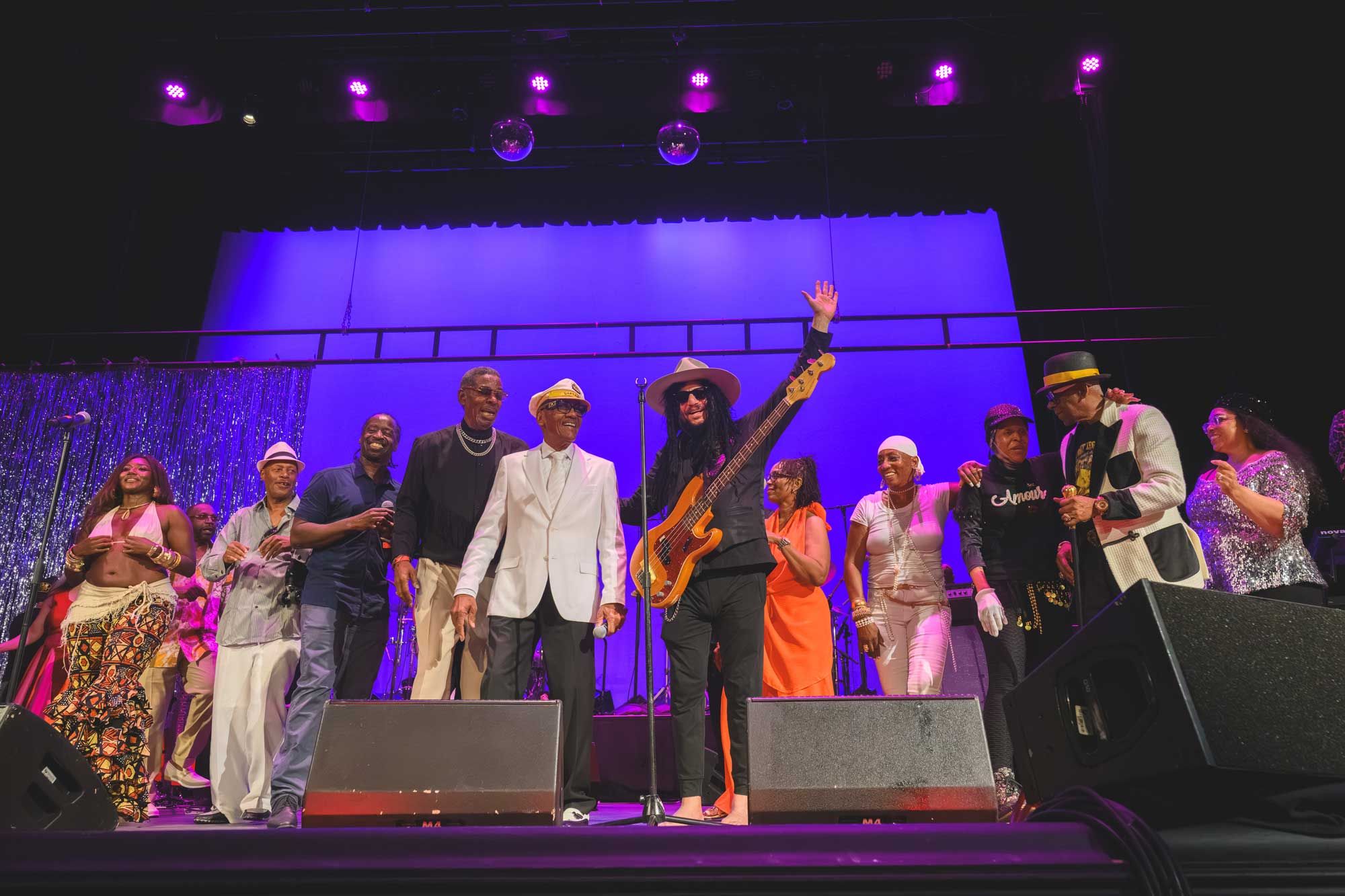
As part of the city’s 35th annual Concert of Colors music festival, the Detroit Film Theatre stage was transformed into a tribute to The Scene — the influential dance show that aired from 1975 to 1987 on WGPR-TV, the first Black-owned television station in the U.S. Best described as the Motor City’s answer to Soul Train, Detroiters tuned in five days a week to watch a cast of stylish, multi-racial dancers boogie to R&B, rock ’n’ roll, early techno cuts, and more. In recent years, clips from the show have garnered hundreds of thousands of views on YouTube.
Billed as a “Salute to The Scene,” the tribute was led by Don Was, who typically celebrates local music at the world music festival with his Detroit All-Star Revue tribute sets, enlisting a mix of longtime collaborators (who also perform with Was as part of his jazzy, Grateful Dead-inspired supergroup, Don Was and the Pan-Detroit Ensemble) alongside special guests. On Saturday, behind a pair of sunglasses, Was plucked funky basslines while bandmate Luis Resto worked racks of vintage synthesizers, making them squeal.
Meanwhile, original The Scene host Nat Morris donned his captain’s hat as he reprised his role as host against a tinsel backdrop, and the dancers, many of whom originally appeared on the show decades ago, crowded the stage and busted moves like no time had passed at all. In no time, nearly everyone in the Detroit Film Theatre auditorium was dancing at their seats.
Saturday’s set featured an eclectic sampling of what made The Scene so great, including tracks like “Out Come the Freaks” by Was’s group Was (Not Was), the Dazz Band’s “Let It Whip,” and Felix and Jarvis’s “Flamethrower Rap,” a reinterpretation of a J. Geils Band song that became one of the first hip-hop tracks from Michigan to ever chart. A revolving door of guest vocalists included the Pan-Detroit Ensemble’s Steffanie Christi’an on a cover of “Big Fun” by electronic duo Inner City, Carson Macc of the rock band Mac Saturn for Rick James’s “Give It to Me Baby,” and hip-hop artists Brent “Blak” Smith, Michael Ellison, and Xavier Jack, who performed a rendition of the Sugarhill Gang’s “Rapper’s Delight.’”
Was, an acclaimed producer who also serves as president of Blue Note Records, says his relationship with Morris goes back years.
“I’ve been friends with him for a long, long time,” Was explains by phone, adding that The Scene along with the influential Detroit radio DJ the Electrifying Mojo were among the first programs to play his music. Morris even once let Was and his punk band the Traitors do a “takeover” of the show, seizing the microphone from Morris.
“Anything went,” Was says.
Was says the magic of the show, along with the broader music market in the greater Detroit area in the 1970s and ’80s, was its penchant for being “genre-phobic.” The Scene and the Electrifying Mojo would play tracks from out-there acts like Prince, Kraftwerk, the B-52s, and audiences ate it up.
“Kids of all backgrounds were responding to it,” Was says.
Was sees Morris and Mojo as “super progressive” DJs who helped set trends that would take the rest of the world by storm. (Prince was reportedly a fan of both.)
“They were not following radio format advice, and they certainly were not following racial stereotypes,” Was explains. “They understood and had a fundamental understanding of the commonality of all people, particularly when it comes to music. We all share the same basic emotions. Everybody laughs, everybody cries, everybody gets pissed off, everybody falls in love. It’s the same. And when people understand that, they start operating with less fear ... When you suspend that, great things can happen in music.”
Was says he had a blast revisiting the era.
“It was a great time, because it reminded me of the ’60s where all of a sudden, anything was possible — and you could have it heard all over the world too,” he says. “You could create something that didn’t sound like everything else, and have it be popular, which is not always the scenario. ... When that happens, you start pushing the boundaries. And that’s when it starts to get fun.”
He adds, “I love this music. It was a great time. I enjoyed these songs the first time around, and I dig playing them now.”
The free, five-day festival was held in and around Detroit’s Midtown district and also included performances from British roots reggae band Steel Pulse, Los Angeles psychedelic rock band Dengue Fever, and New York City’s Burnt Sugar pairing up with Detroit artists like poet jessica Care moore to reinterpret the work of the late Detroit hip-hop producer J Dilla, among others.
Follow Midbrow Detroit on social media: Bluesky, Facebook, Instagram, Threads, TikTok, X.


