
The Great Gatsby
Bushnell Center for the Performing Arts
Hartford
Sept. 29, 2026
This review contains spoilers.
F. Scott Fitzgerald’s novel The Great Gatsby has endured for over a century thanks to its vivid portrayal of the flash and decadence of the Roaring '20s. The new musical based on the book captures the style everyone loves and cranks it up to the max with a wonderfully entertaining show– but it never sidesteps the dire warning about the price that everyone pays for all that opulence.
The story follows protagonist Nick Carraway (Joshua Grosso), a young man of modest means who fought in the Great War and is trying to build a life. He rents a home from an elusive millionaire in New York City named Jay Gatsby (Jake David Smith), a man who throws elaborate parties but never attends them.
Nick learns that Gatsby throws the parties to get the attention of Daisy Buchanan (Senzel Ahmady), a woman he was in love with before being sent off to war. Nick gets dragged into Gatsby’s attempt to woo Daisy, but there’s one problem: She’s already married to a rich “brute” of a man named Tom Buchanan (Will Branner). Tom has his own secret as well, as he’s been having an affair with a woman named Myrtle Wilson (Lila Coogan), who is married to the local gas station attendant George (Tally Sessions). All the while, Nick becomes caught up in his own torrid love affair with Jordan Baker (Leanne Robinson), a modern woman who rejects the idea of marriage.
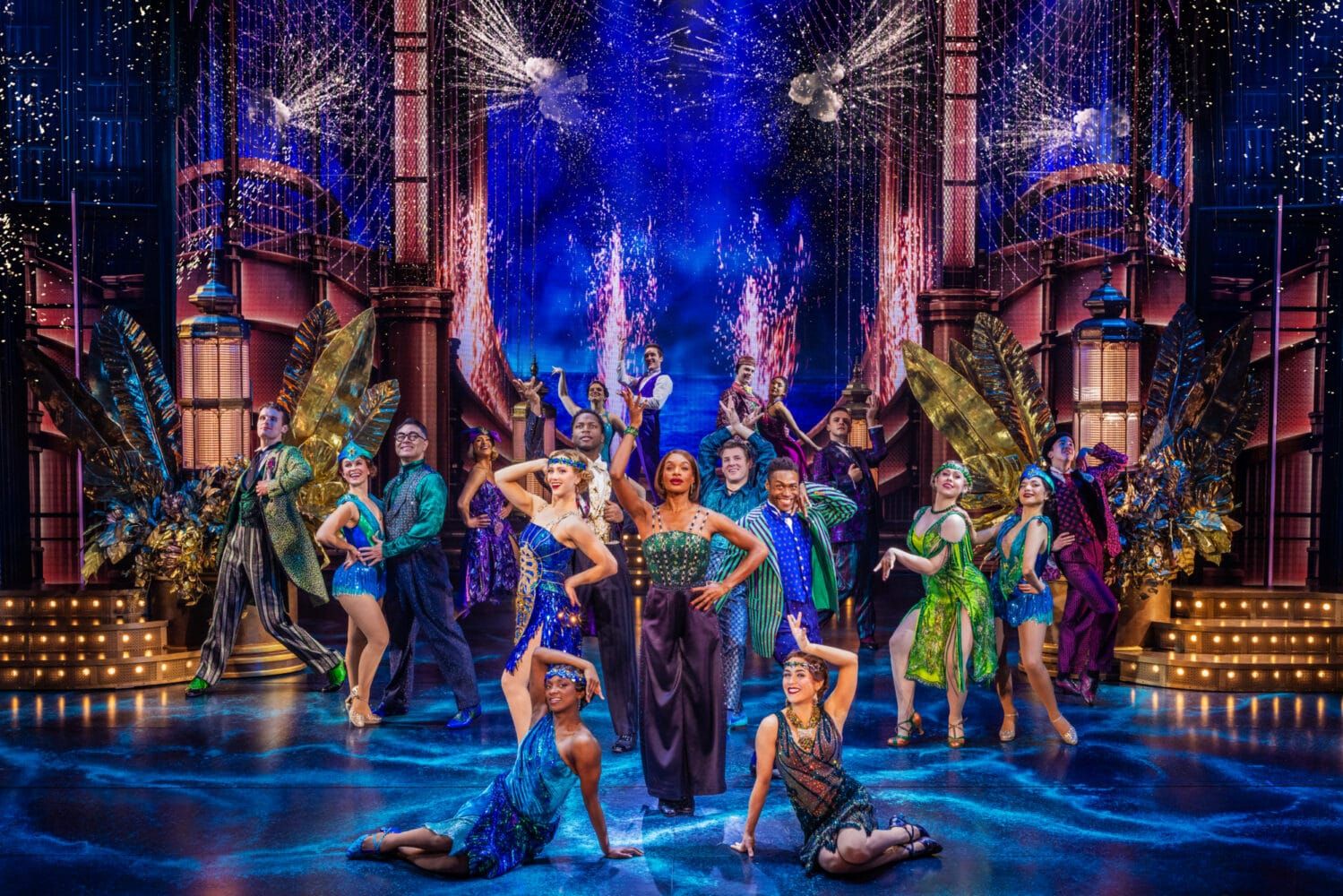
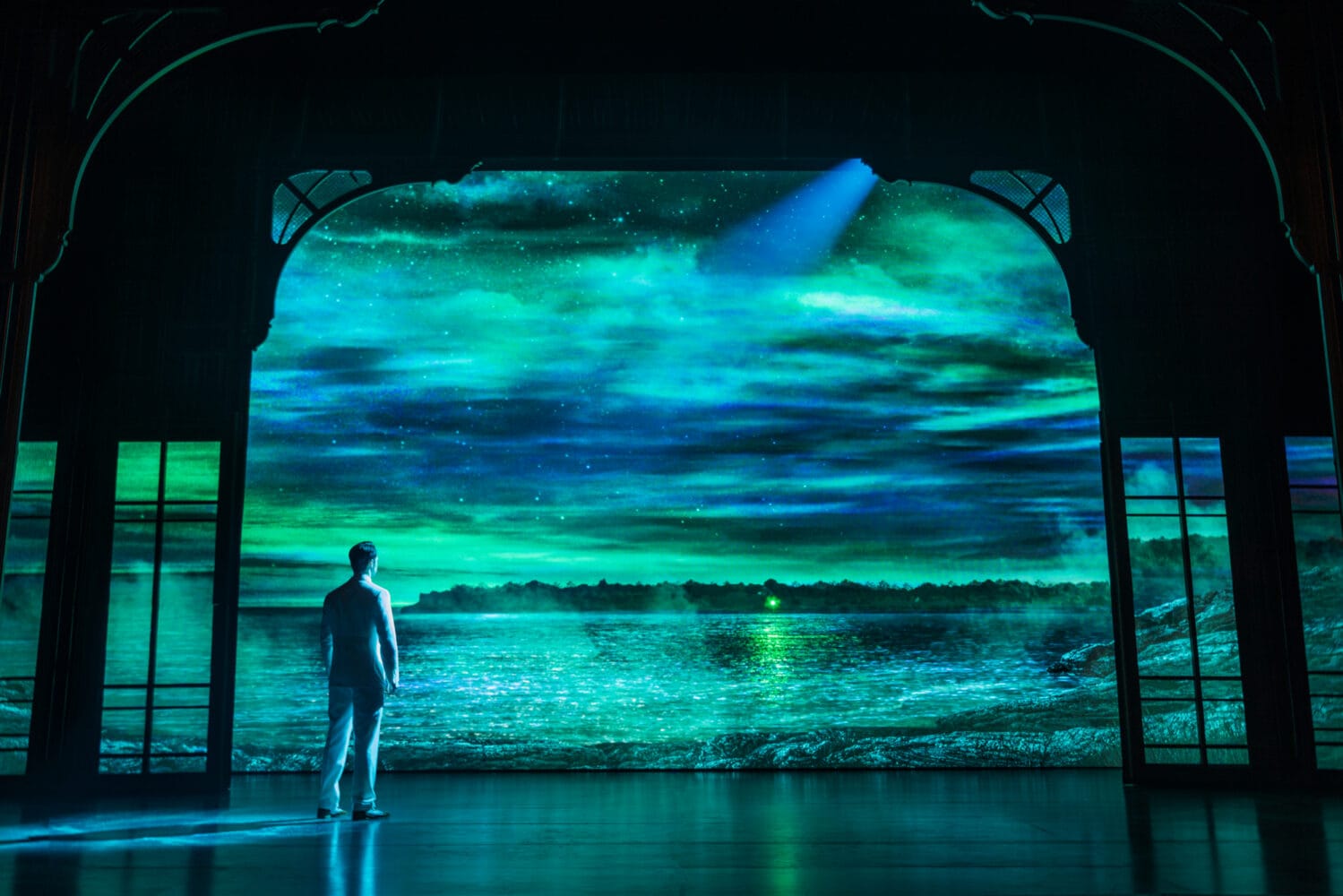
The Great Gatsby sets all these spinning tops in motion, and lets them crash into each other over the course of its two-and-a-half hour runtime. The staging for the production is immaculate. The stage was transformed into a 1920s-era mansion, complete with moving gates and gaudy furniture. The artistic direction just as adeptly renders it as a cold, lonely gas station and the shimmering pool where Gatsby meets his final end. Flappers, soldiers, men in dapper suits, golfers and the working-class trapeze across the stage looking like they were pulled straight from the history books.
Gatsby’s cast performs the music and eye-popping choreography without a hitch. I could go on praising the cast (and the ensemble, which performed a tap dance sequence I didn’t expect), but I think my favorite performance was Branner’s Tom Buchanan. His ability to use both his voice and his physical presence to be a genuinely despicable person was a real contrast to the rest of the cast, who hid their misanthropy behind booze-fueled smiles. Branner showed the dark undercurrent of the era.
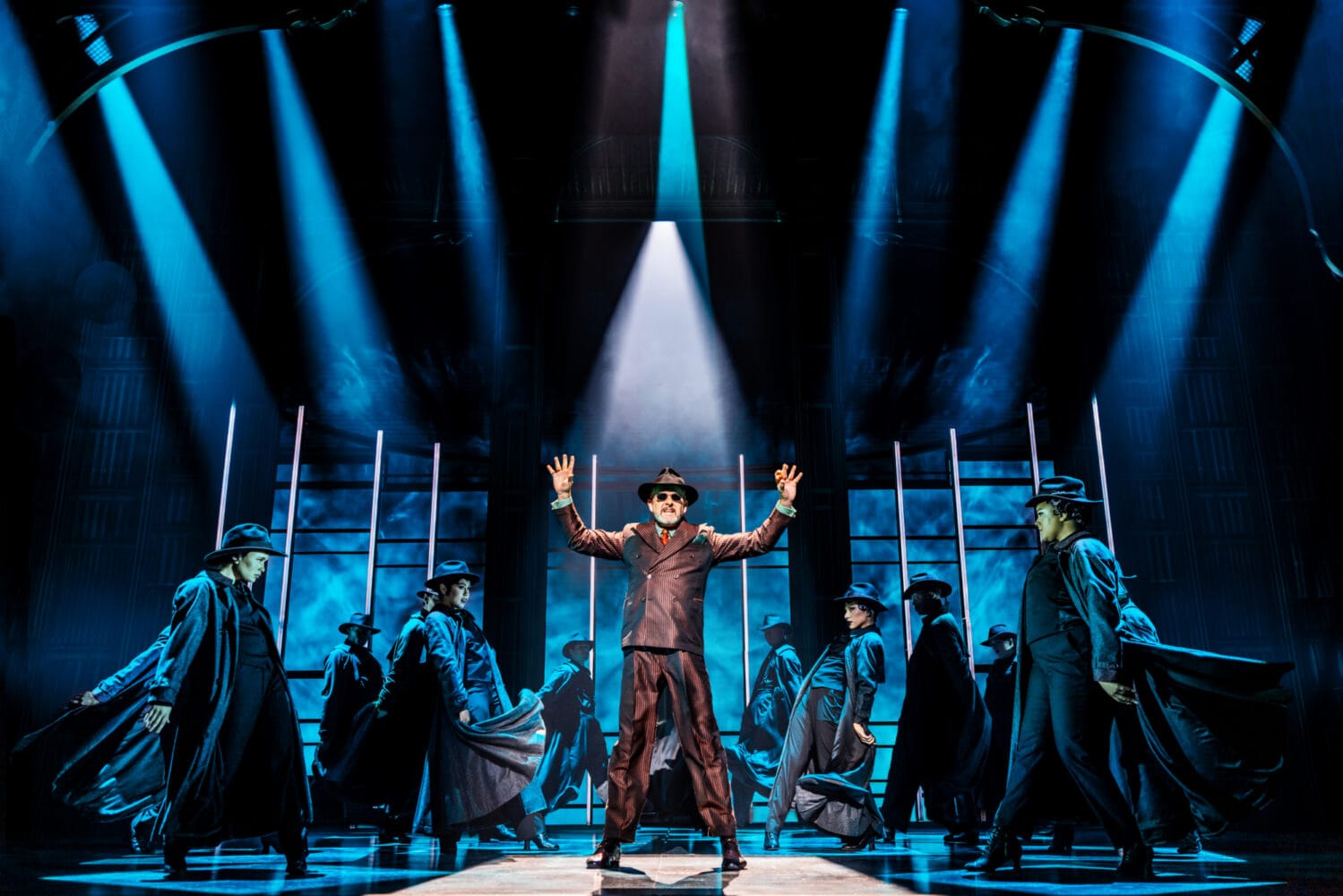
There were some great surprises as well. The second act of the play opens with a conversation between George Wilson and Meyer Wolfsheim (Edward Staudenmayer), a shady businessman. It turns out that Gatsby has made all his money through bootlegging, but he’s been too busy pursuing Daisy to pick up the illegal booze Wolfsheim has been smuggling through George’s gas station.
Wolfsheim then launches into what can only be described as a villain’s anthem, with choreography involving black trench coats, smoke and green lighting. I would have never thought Gatsby needed a Disney-style bad guy song, but it fits perfectly into the ove-the-top style of the era, and conveys the central message of the story: nothing is in fact free, and eventually the time comes to pay up.
That time arrives after a heated scene between Nick, the Buchanans, Gatsby and Jordan. Afterwards, Gatsby and Daisy drive off recklessly, hitting and killing Myrtle. Nick is disgusted by the refusal of any of his friends to accept responsibility for the death, and prepares to leave New York for his home in St. Paul, disillusioned by the summer of partying. Before he leaves, Gatsby is killed by George in revenge for Myrtle’s death, who then kills himself. Again, no one can stand to take responsibility for what has transpired, and the characters scatter to the four winds as the play concludes.
It’s easy to get caught up in the glamour of Gatsby. The musical puts the audience right in the center of what it must have felt like to have the world at their fingertips. The success of recreating the opulence does not come at the expense of the story's message, thankfully, and the adapted script reminds us over and over again that the wealthy characters are vapid, destructive and uninterested in the lives of those around them– but they are still people. When Daisy wishes that her daughter would grow up to be a beautiful fool, I feel sympathy for her lot in life, but no pity for the way in which she’s played the role she was given.
I couldn’t shake the feeling that despite being written a century ago, Gatsby is telling a story that mirrors our current situation. While some human beings amass absurd levels of wealth, others are watching as fuel and food prices skyrocket, at the same time the social safety net is being shredded beyond repair. Social media spews opulence and decadence at us. And, as always, the rich get away with basically whatever they want, so long as the stock market keeps climbing higher and higher.
The Great Gatsby is a timely spectacle then, a warning of what will happen if we don’t hold the wealthy to account. In the story, three people died, but in reality, the Great Depression began less than five years after the novel’s publication. How close are we to repeating the mistakes of the past?
NEXT
The Great Gatsby is showing at the Bushnell Theater for Performing Arts through Oct. 4.
Jamil goes to Trinity to check out a new exhibit.


