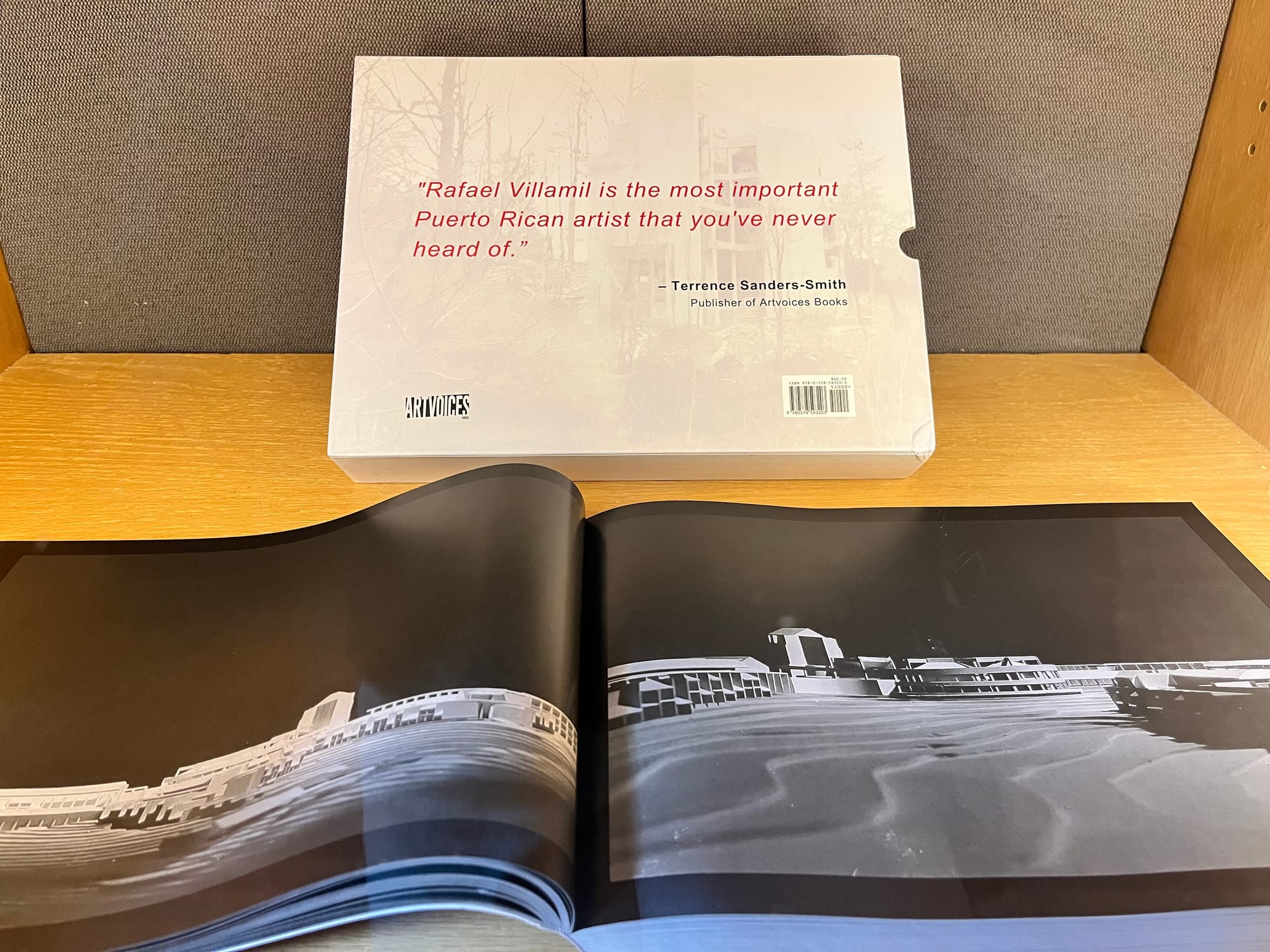
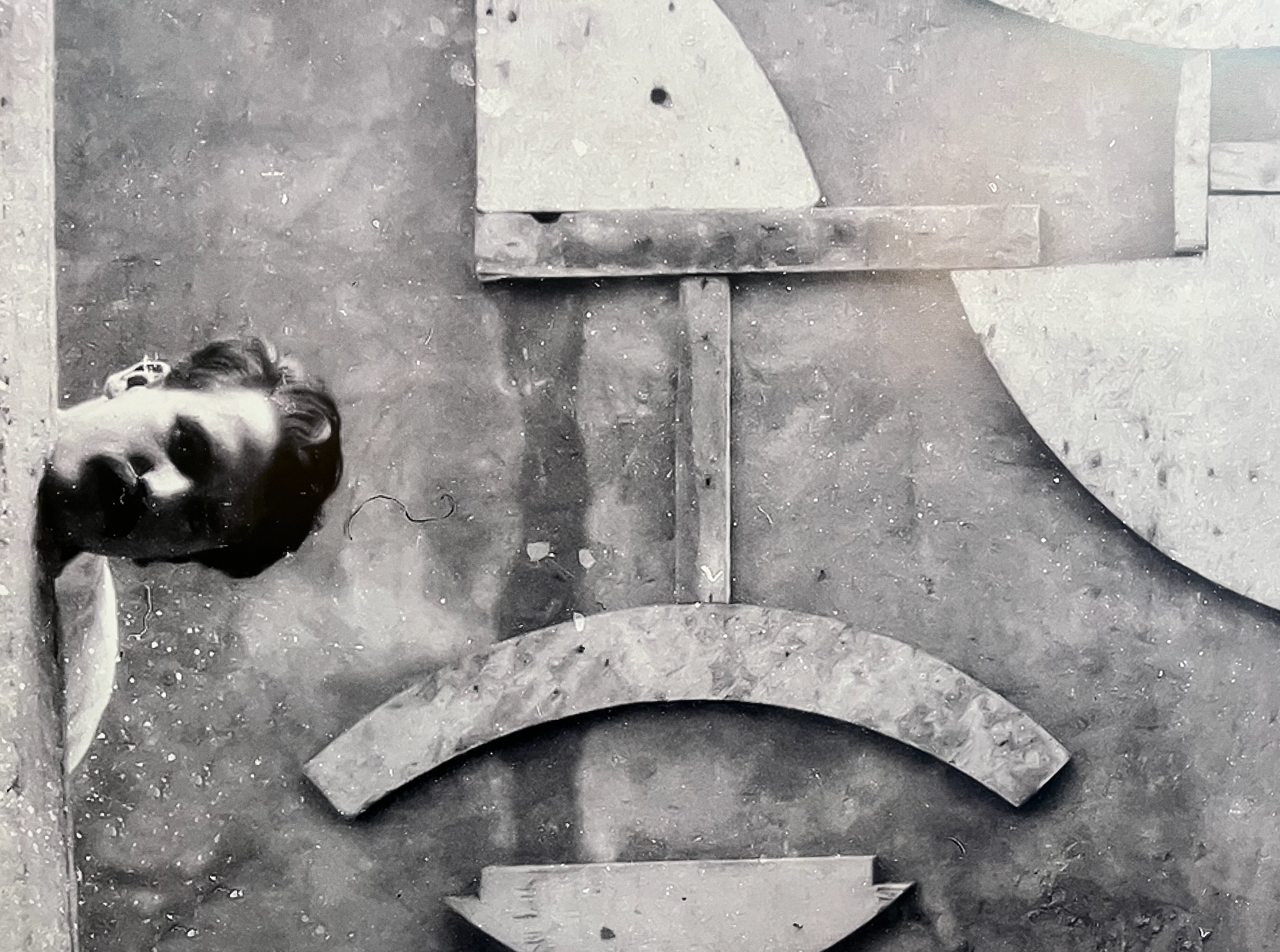
La Ruta Interminable: The Architectural Legacy of Rafael Villamil
Community College of Philadelphia
The Rotunda at 1700 Spring Garden St.
Philadelphia
Showing through Oct. 30, 2026
Rafael “Chafo” Vilamil’s artistic footprint can be felt all around Philadelphia — but for some reason the 92-year-old’s dual legacy as both a groundbreaking architect and painter has gone largely unsung by the city he calls home.
This could be in part because Vilamil’s greatest work of art is a private piece hidden in the Philadelphia suburbs: the house he built by himself with a small crew of workers, including family and friends, on Caryl Lane, about two decades after immigrating from Puerto Rico to Philadelphia to join the architecture firm of legendary Louis Khan.
A short-term exhibit showing at Community College of Philadelphia (CCP) for Latine Heritage Month — titled “La Ruta Interminable” — is the latest attempt to draw the public’s attention to Vilamil’s expansive genius.
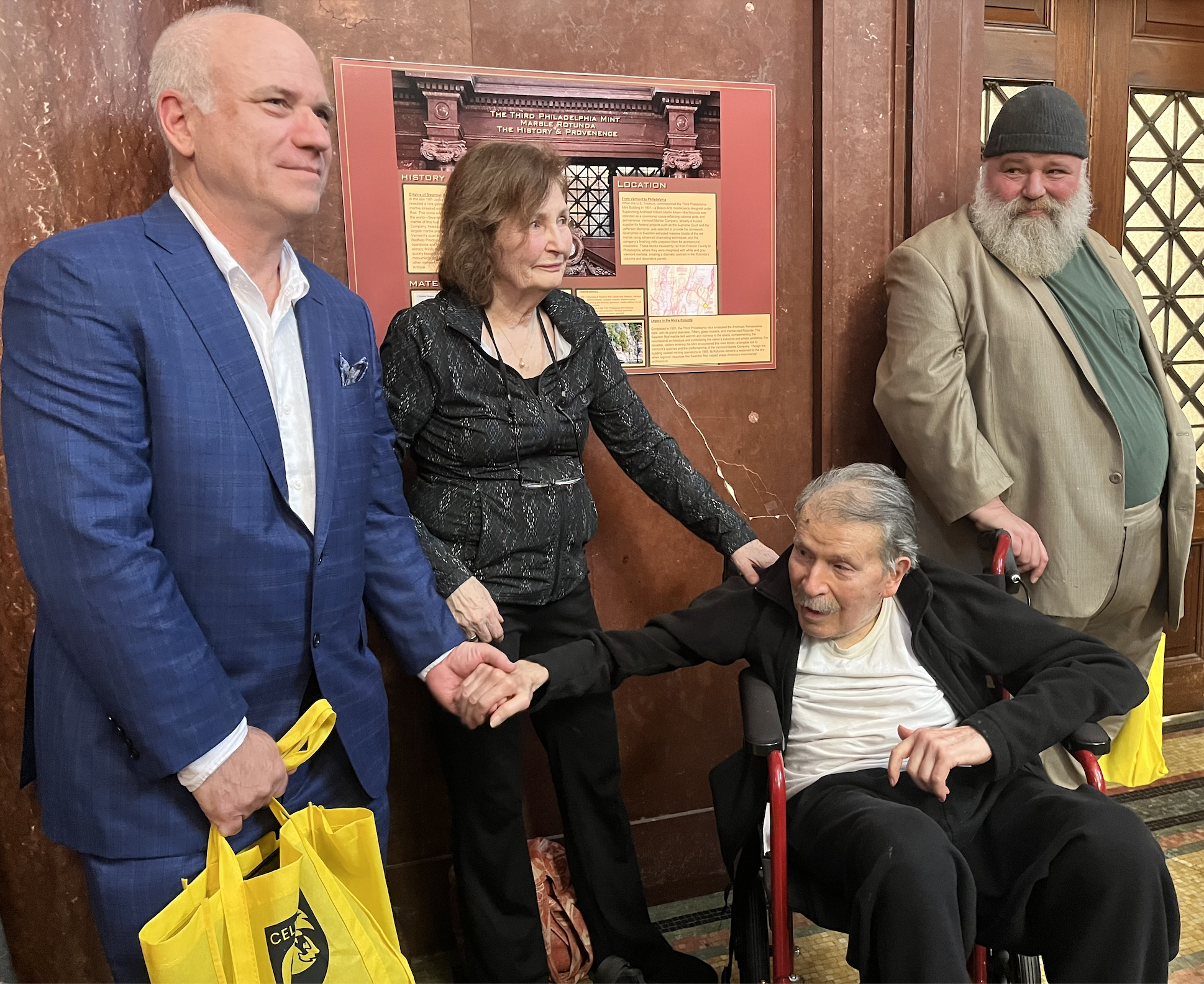
On Oct. 7, the gallery hosted a kick-off “open house” of sorts, featuring speeches from Khan’s son, Nathaniel, and Vilamil’s son, Andres, to provide personal texture for attendees as they peered at compressed photographs of Vilamil’s monumental works and ate finger-sandwich-sized chicken tostadas. Vilamil sat quietly to the side of the podium.
“There was always a distance between my father’s art and his drawings,” Nathaniel Kahn said. “Rafael’s work is something different. They are one and the same.”
The exhibition is a strong introduction to Vilamil's career, especially his architectural legacy. It successfully tells the technical and thematic parallels between Vilamil's crafts as both a visual artist and architect — but struggles to show the soul that makes Vilamil's work really sing. I was fortunate to get a deeper feel for Vilamil's voice when he gave me a tour of his home three years ago.
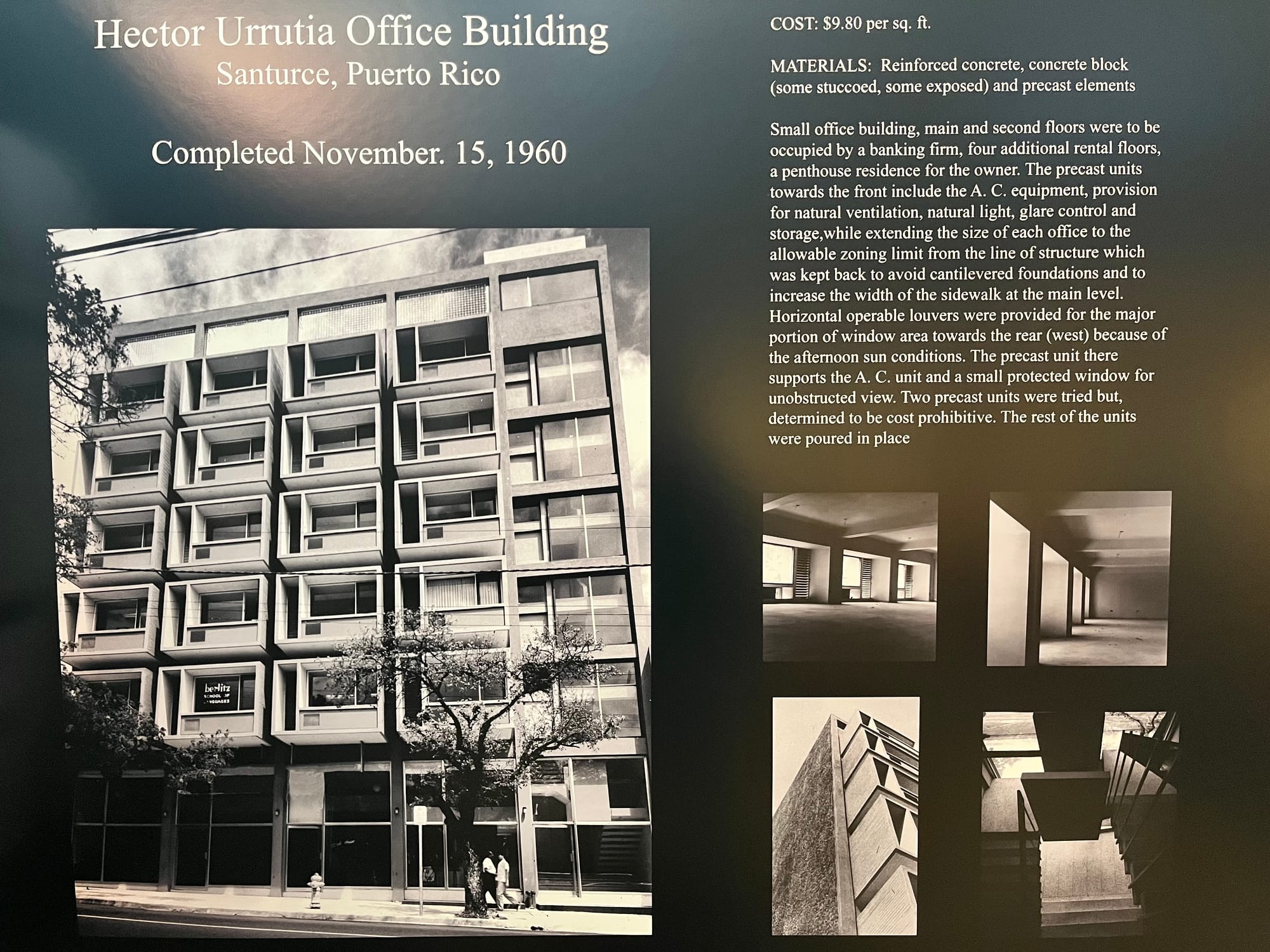
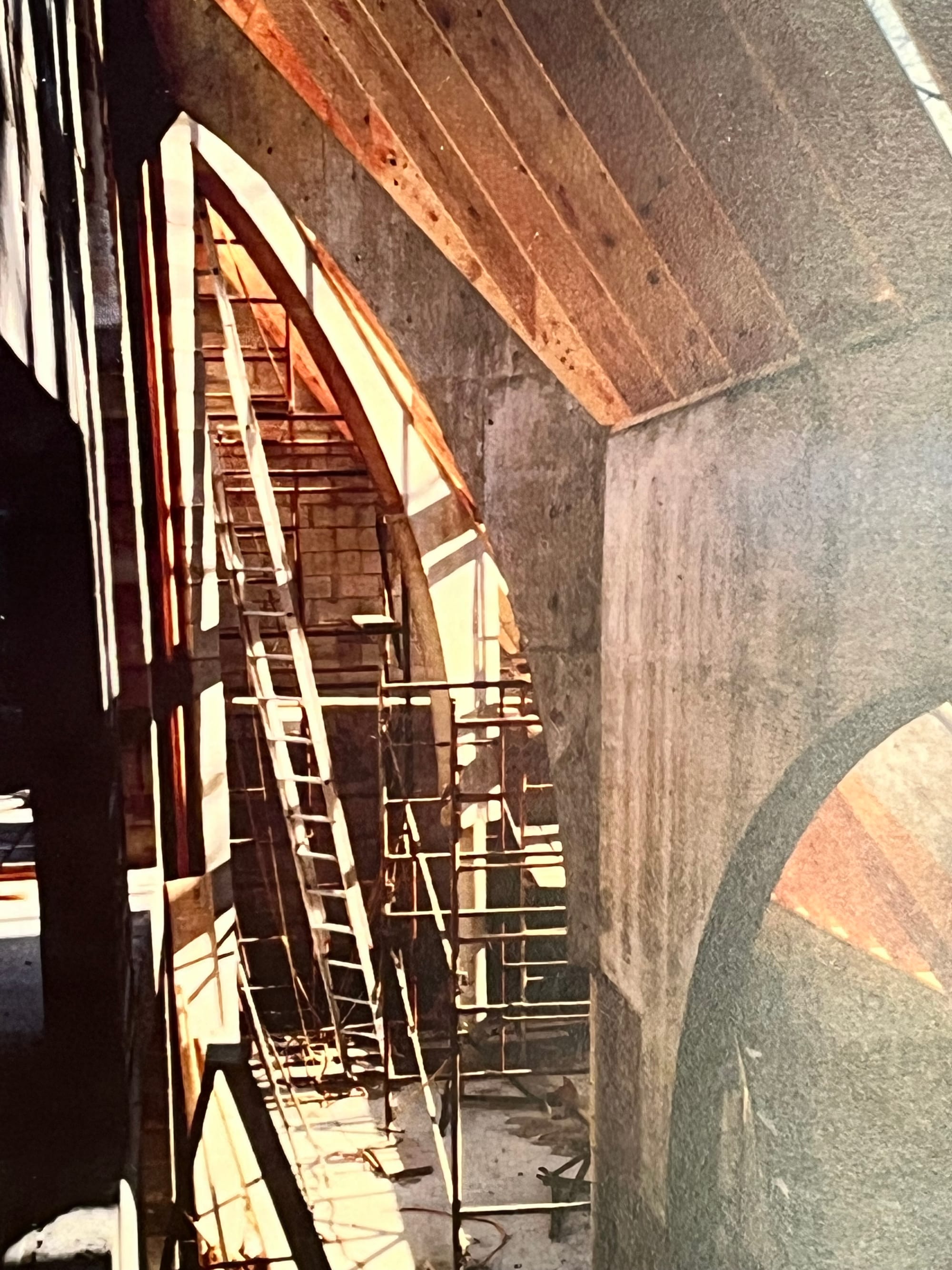
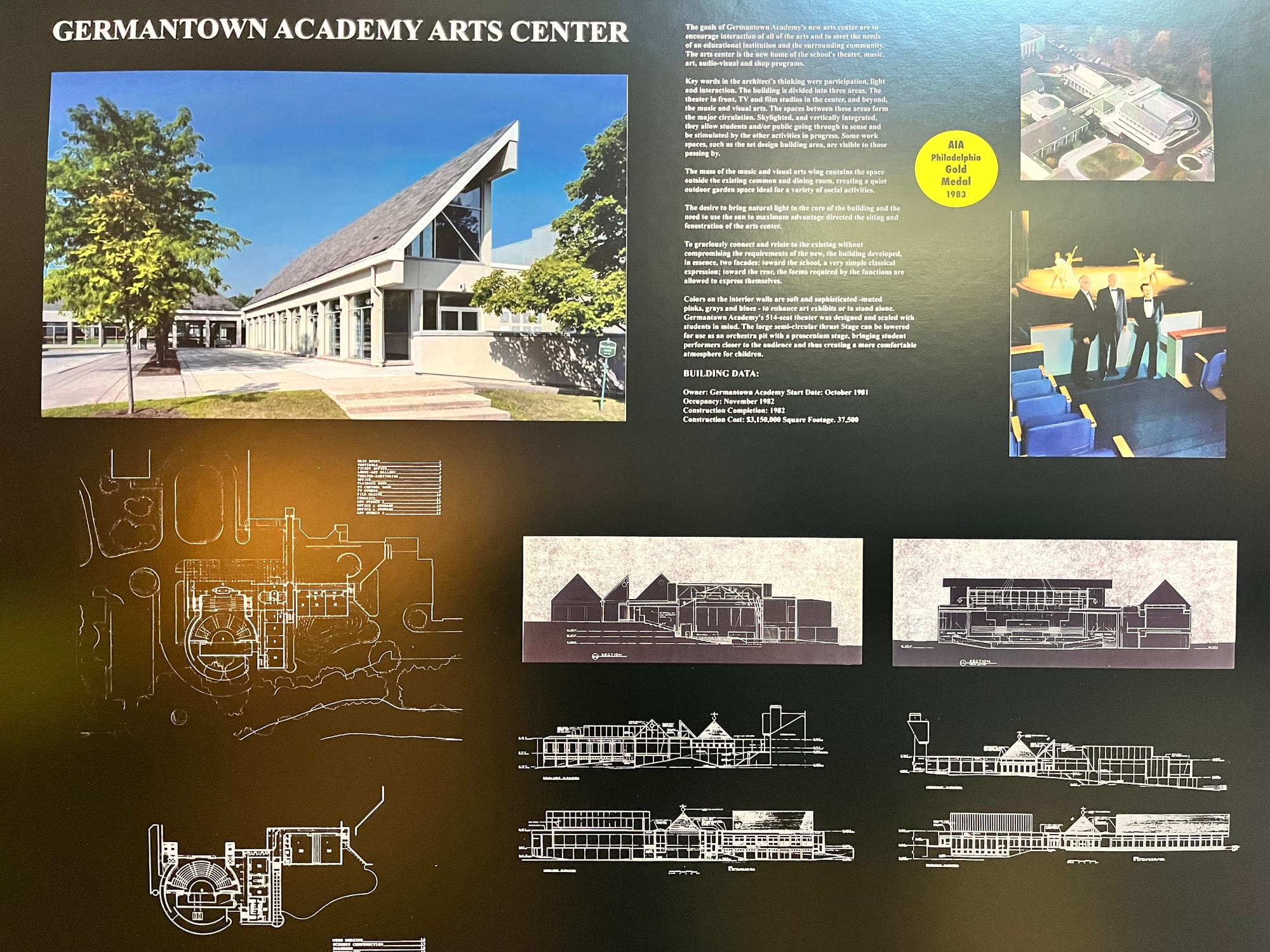
A snapshot of some of Vilamil's designs, as displayed in the exhibit.
The show offers a succinct overview of Vilamil’s contributions to the city, in addition to the private homes and projects he drew up in Puerto Rico before immigrating to Philadelphia. After coming here in the ‘60s, Vilamil designed architectural plans for the Germantown Academy Arts Center; the 1986 Merriam Theater renovation and reconstruction; the Cathedral Village Retirement Community; Bryn Mawr’s Yarnall Gymnasium; the Curtis Institute of Music; a Philadelphia Academy of Arts and Sciences; and a theater and gallery for University of the Arts.
“Far too few were built or completed the way you imagined,” Khan lamented to Vilamil during the reception.
One project that was executed almost exactly how Vilamil intended was the home he built for his family on Caryl Lane, completed in 1982. The house is a work of art in and of itself, as well as a gallery displaying Vilamil’s prolific paintings and art collection. Andres, who was a teenager at the time, helped assemble the house, recalling at the reception pouring concrete and performing other construction work he felt “unqualified” to carry out. The perhaps untraditional process by which the house was built imbues the design with even more of what defines Vilamil’s voice and soul: There’s a sense of freedom, independence, do-it-yourself determination and familial pride that goes as deep or deeper than the house’s foundation. It demonstrates exactly what the exhibit seeks to say: That Vilamil’s talents as an artist and architect are inextricable, because his sense of style, even at its most abstract, is inseparable from his sense of self.
The projects featured in the exhibit — including blueprints and photos of his architectural designs and a slide deck projecting images of his visual art — effectively capture Vilamil’s consistency of interests. His architectural eye and artistic perspective are both drawn towards geometric contrast. Architectural motifs like stark skylights and bold archways parallel the symbolism seen in his visual art, like the curves of a feminine figure versus the horizontal plane of an ocean view. Vilamil uses a sculptural approach across forms to join modernist abstraction with human emotion, utilizing geometry to conjure non-linear narrative themes like memory, moralism, the multi-dimensionalism of identity and the fragmented feeling of home.
Vilamil’s work is so alive – and so defined by the artist’s own life — that pretty much no reiterative explanation — no article or exhibit — can channel the power of his work as well as the experience of walking through his front door.
Khan made this point himself: “I don’t know if you want lots of guests,” he said, winking at Vilamil, “but I urge anyone who hasn’t seen the house to find a way to go see it. When I walked in, a whole world opened up for me… For me, great architecture in and of itself is something that just is.”
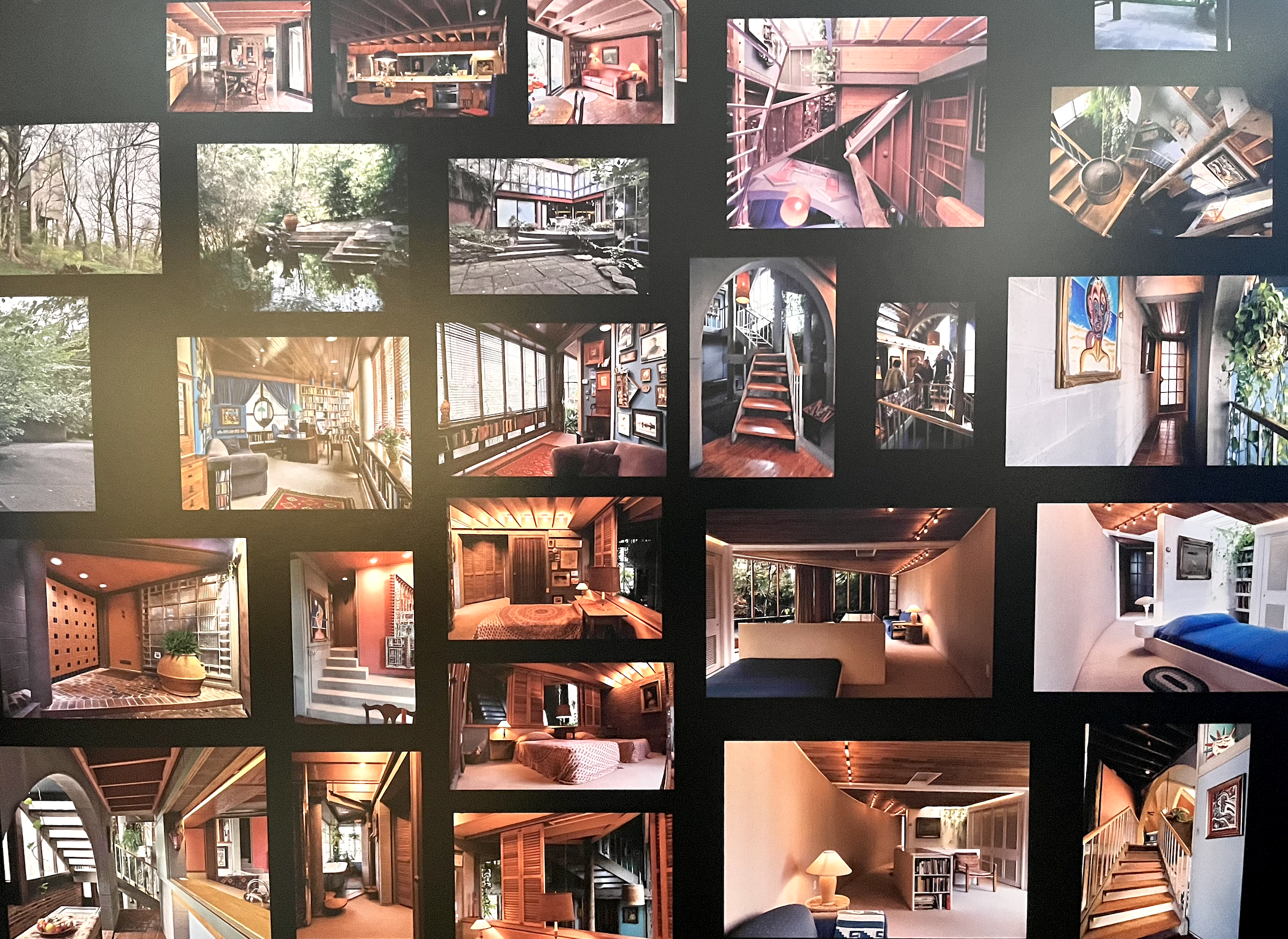
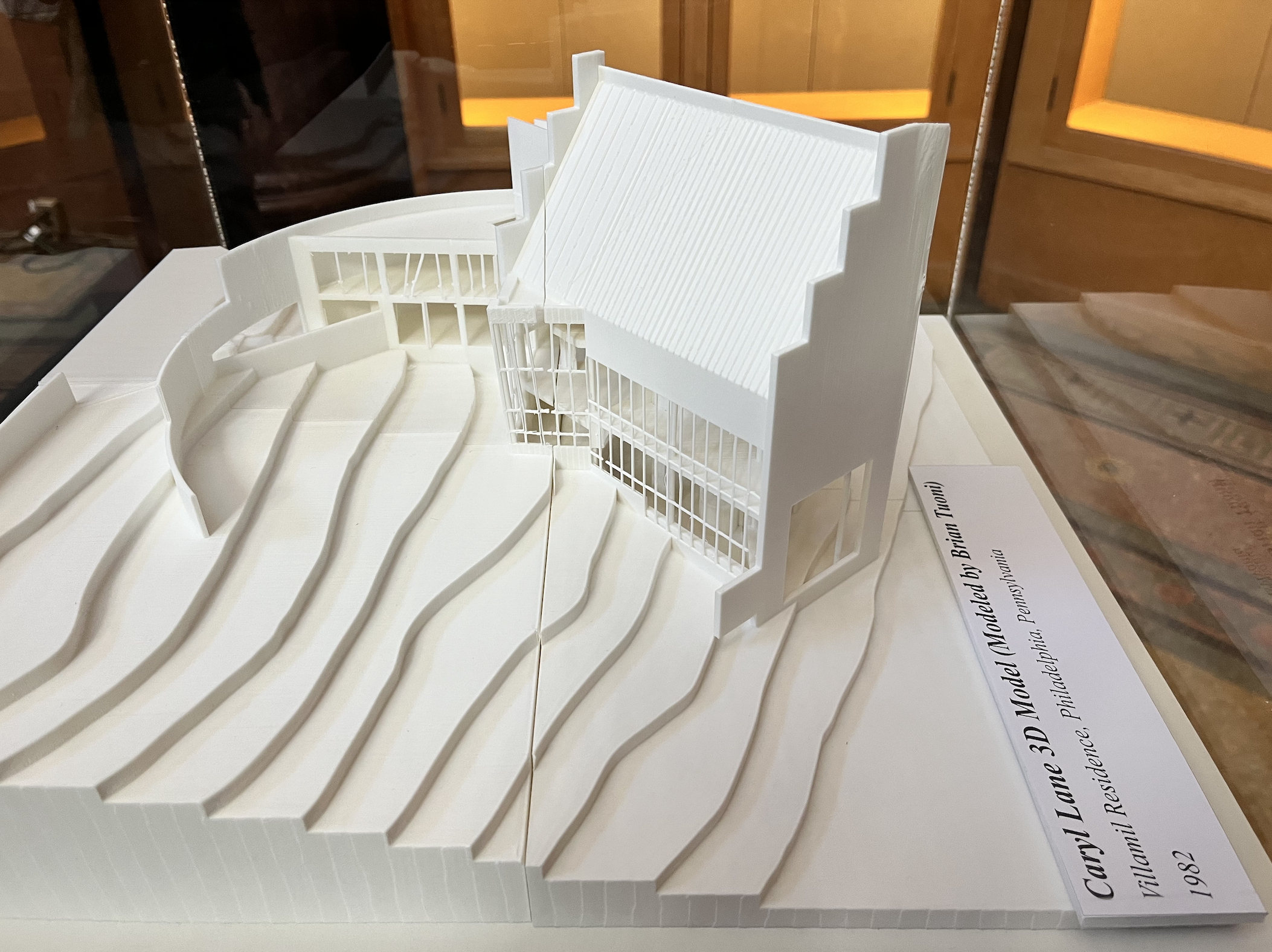
The exhibition features a full wall of photographs revealing the inside of the house, but it’s something else to feel it in the flesh. As Khan put it, “It’s filled with imagination, of spaces moving into other spaces… of worlds opening into worlds, not just horizontally but also vertically… The entire house moves; it doesn’t resolve itself.” There's an indoor pool and an outdoor pond; all kinds of greenery vine down from the loft-style ceilings; arrows painted into pictures on the walls also serve to point guests from one space to the next.
“To compare it to an MC Escher portrait is to reduce it,” Khan stated. “To build it must’ve been a nightmare.”
I visited the home when I first moved to Philadelphia nearly three years ago; at the time, Vilamil led me through each room, telling me the stories hidden within every detail of the house. I followed him all the way to the third floor of the house, where we entered a small dark attic room: His studio.
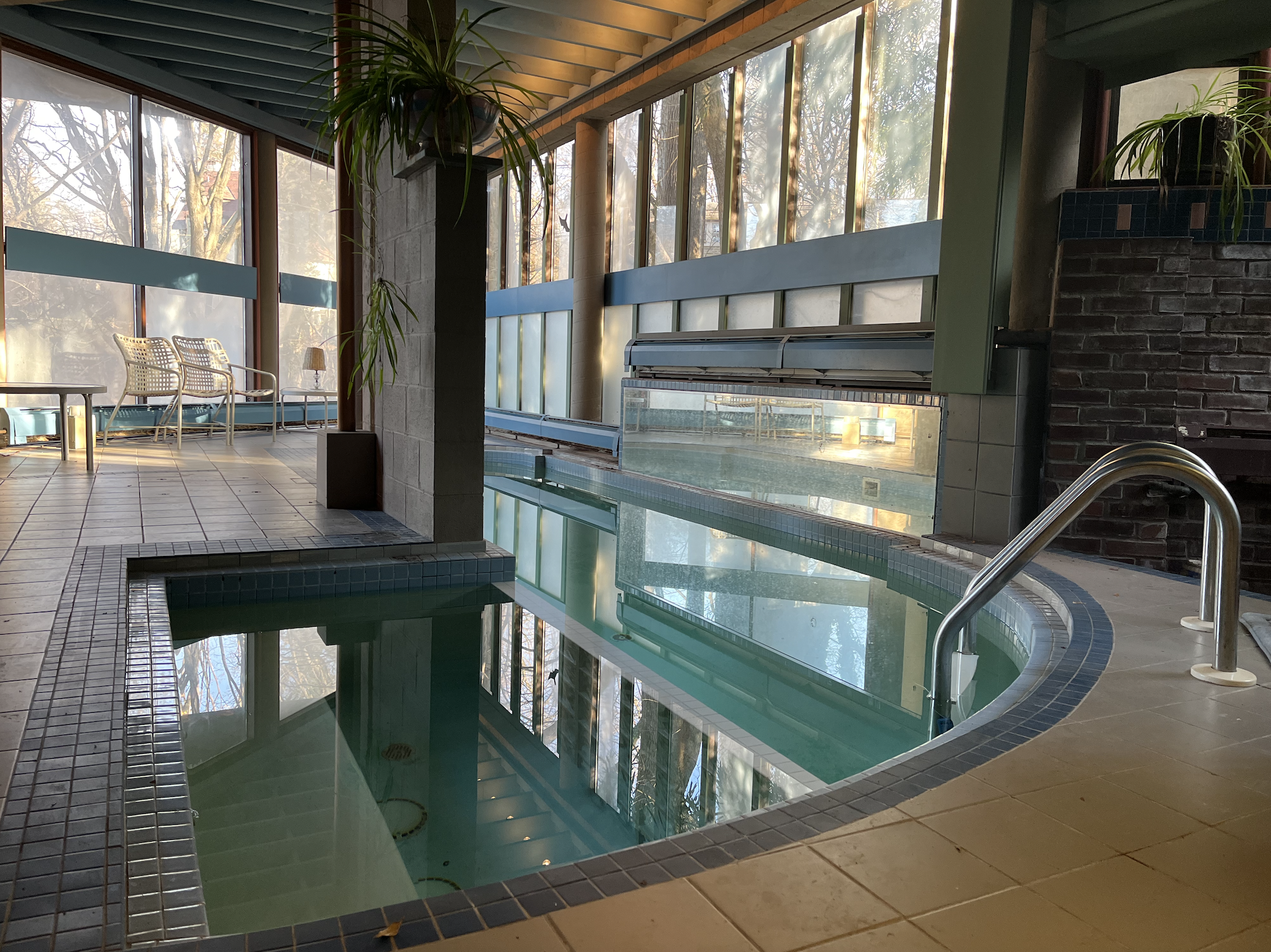
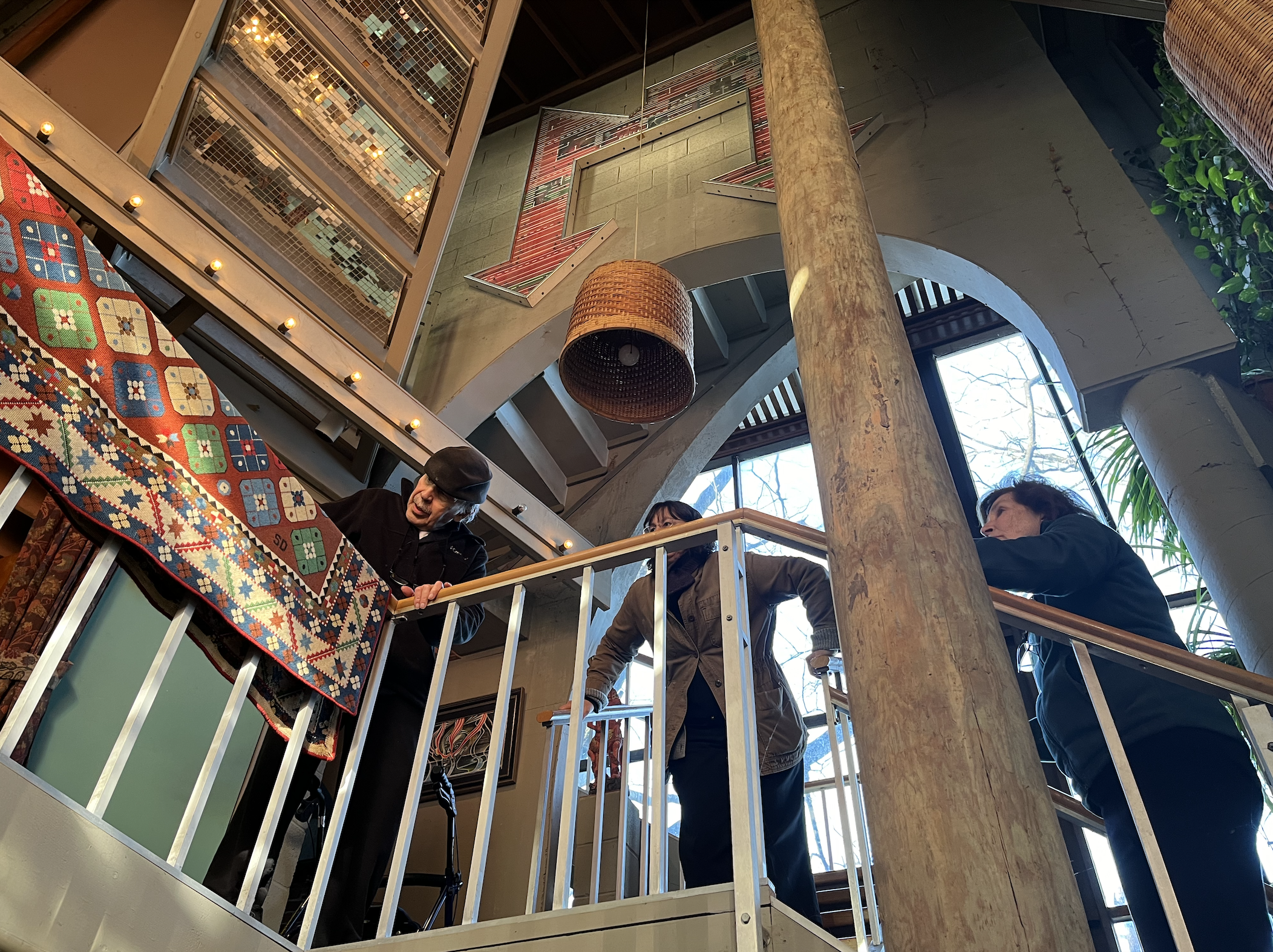
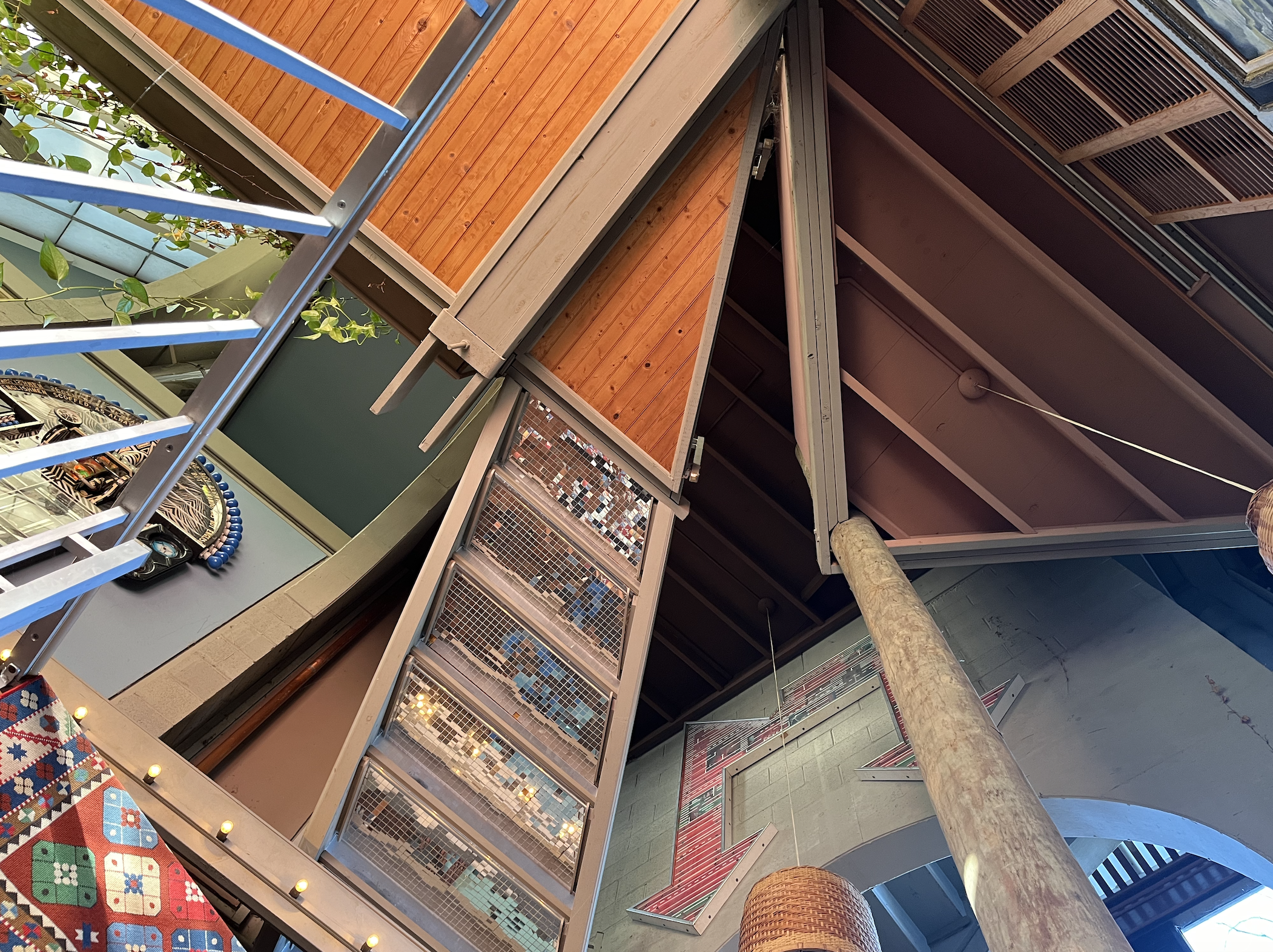
Some photos I took when I got my own house tour from Vilamil.
At his current age, Vilamil can’t climb those stairs anymore. But that studio still symbolizes the consistently ever-colliding inner machinations of Vilamil’s mind: “It’s an utter mess, a complete disaster,” Kahn said with a laugh. “It’s a dark, tiny room filled with magic and color.”
Just as his paintings are often “violent and scary but filled with life and vitality,” it’s the “same imagination,” unresolvable but whole, that “gave birth to the architecture,” Khan said.
Andres Vilamil, who helped curate the exhibit alongside CCP alum Ariel Vazquez, gave his own take on what separates genius architecture from the rest: “Good architecture lives in the landscape as part of the landscape,” he said. “Great architecture lives in and enhances the landscape — and also tells a story.”
Vilamil had few words to say at the ceremony. But three years after giving me the tour of his home, he waved me down at the exhibit after spotting me watching the slide deck of his artwork. “Each work tells a story,” he whispered.
Maybe what makes a great storyteller, rather than just a good one, is someone who not only has a story to tell, but who takes a stance on what a story is. This is what the exhibit — built in part by family, just like that house on Caryl Lane — so intimately communicates about Vilamil through its title, “La Ruta Interminable,” or the never-ending path: A successful story is something that lives on forever, with infinite stops and starts.
Though there should be many more shows dedicated to documenting Vilamil’s career — and perhaps a bus tour tracing Vilamil’s Philadelphia footprint across the city — what the exhibit ultimately proves is that even without all the explanations and analysis, Vilamil’s story can speak for itself. Vilamil’s years of handing out house tours are probably behind him; luckily, the artwork is capable of doing the talking for him.