
Conserving Artemisia Gentileschi's Hercules and Omphale
Wadsworth Atheneum
Hartford
Oct. 22, 2026
The 2020 Beirut Port explosion killed more than 200 people, left 300,000 displaced and caused more than $15 billion worth of property damage. One of the items damaged in the explosion was the painting Hercules and Omphale by Italian artist Artemisia Gentileschi. It was located in Sursock Palace, which was hit especially hard by the explosion.
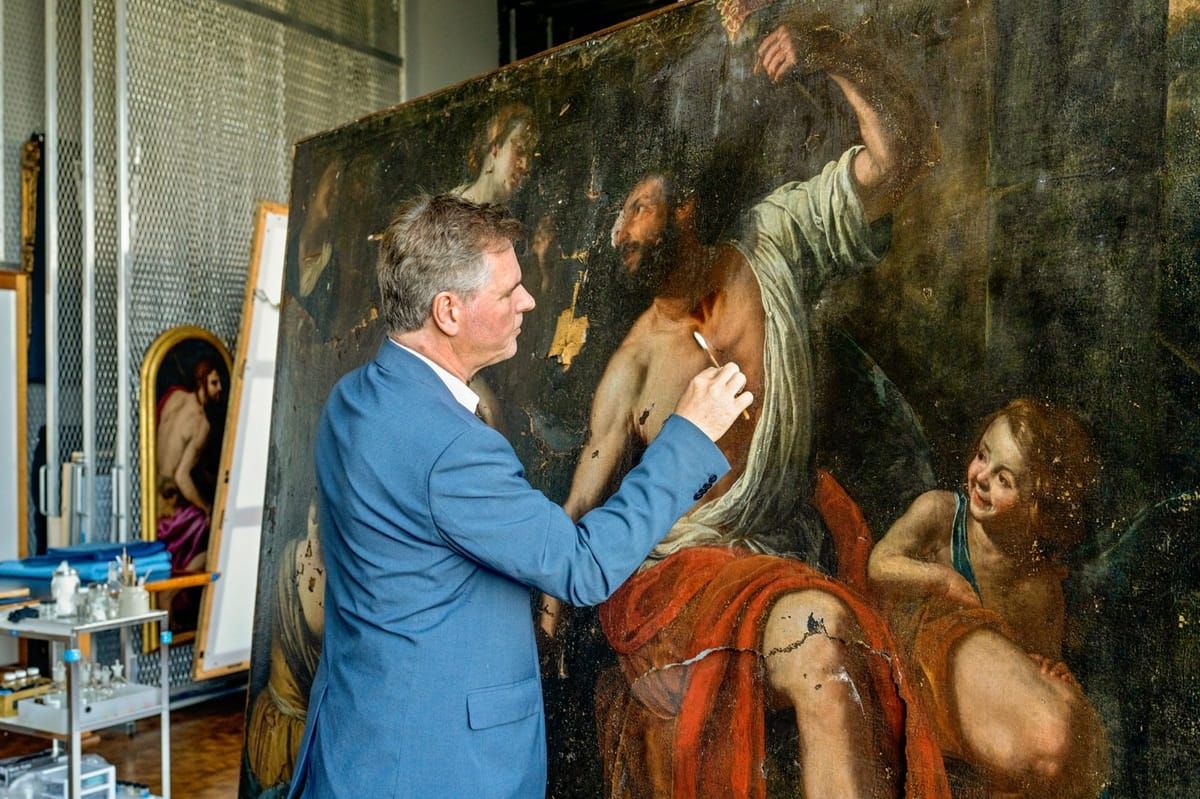
“In the context of the explosion, the site, the loss of life, it was actually very emotional when I first saw the painting,” Ulrich Birkmaier, senior conservator of paintings at the Getty Museum and former chief conservator at The Wadsworth, explained during a Hartford talk Thursday in which he described the three-year process he and his colleagues at Getty undertook to restore the painting.
“The blast actually caused the windows and the plaster to be blown into and through the painting. It caused really severe damages, paint losses, many holes and tears, so it was basically in pieces. It's probably one of the most severe damages to a painting I've seen ever in my 30-plus year career as a paintings conservator.”
One of the most interesting aspects of the work is that it’s meant to be invisible. Birkmaier said the best restoration is one the viewer doesn’t notice. So the team’s painstaking work isn’t designed to enhance or improve, but recreate the artist’s original work as closely as possible. That task is more difficult, as it requires an exhaustive process and exacting attention to detail.
Before the physical work of restoring the painting began, Birkmaier and his team spent nearly a year studying and examining the painting to determine the best course of action for repairing the damage. When the work began, the painting received new structural support for the original canvas and frame. Afterwards the team carefully cleaned the painting, revealing the true colors of Gentileschi’s work nearly 400 years ago.
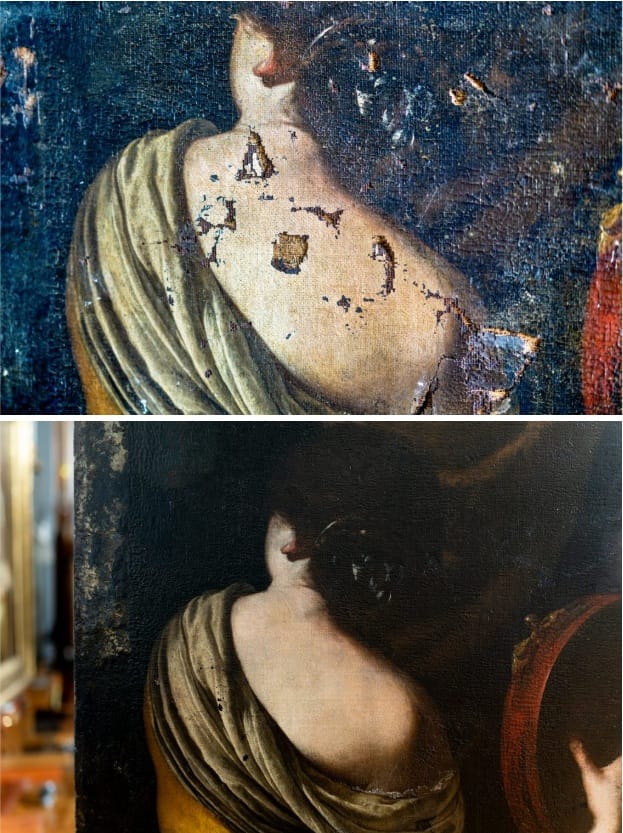
The next step was the fill process, where the team literally filled in the holes and damages the painting suffered. Wherever possible, the team collected the original paint pieces and restored them, and otherwise used an inert fill material to make a continuous surface for the restoration.
Finally came the painting process. Conservationists carefully painted over the fill material to match the original composition. The team needed to hit the sweet spot of repairing the damage, but not going too far in its efforts, because the painting should still look 400 years old.
Surprisingly, the work of Birkmaier and the other restorationists is not permanent. The team takes great care to make sure their own restorations are stable, yet easily removable so future restorationists can work on the painting again in the future. Birkmaier said he hopes that the restoration he and his team accomplished lasts for the next 50-100 years. Hhe finds comfort in knowing that the painting will outlast him and be available for the next conservation team to repair again.
Birkmaier’s love of Artemisia Gentileschi made this restoration a special project to work on; he joked that he spent more time restoring Hercules and Omphale than she spent painting it. Gentileschi is fascinating in her own right. The Wadsworth acquired one of her other works, so someday I’ll tell her story. I’m sure she would be gratified to know so many people worked to ensure her vision can be enjoyed for hopefully another 400 years.
NEXT
Jamil returns to Claire Gallery for their latest exhibit.


