
Stargazing
Cedar Hill Cemetery
Hartford
Sept. 15, 2026
My grandfather bought my family a telescope when I was a kid. It was all black, a thin, cheap model that sat on a four-foot tall tripod. I looked at it more than I looked through it, as none of us really knew how to use it. Eventually, our rough housing knocked it over, and it was damaged beyond repair.
Tuesday evening was my first time looking through a telescope since those halcyon days. The Cedar Hill Cemetery Foundation joined forces with the Astronomical Society of Greater Hartford to offer a stargazing experience for anyone willing to brave the encroaching cold and circling mosquitoes. Cedar Hill provided the space (one of the relatively darkest areas in the city for stargazing), the Astronomical Society provided the telescopes, and more than 40 provided their sense of wonder.
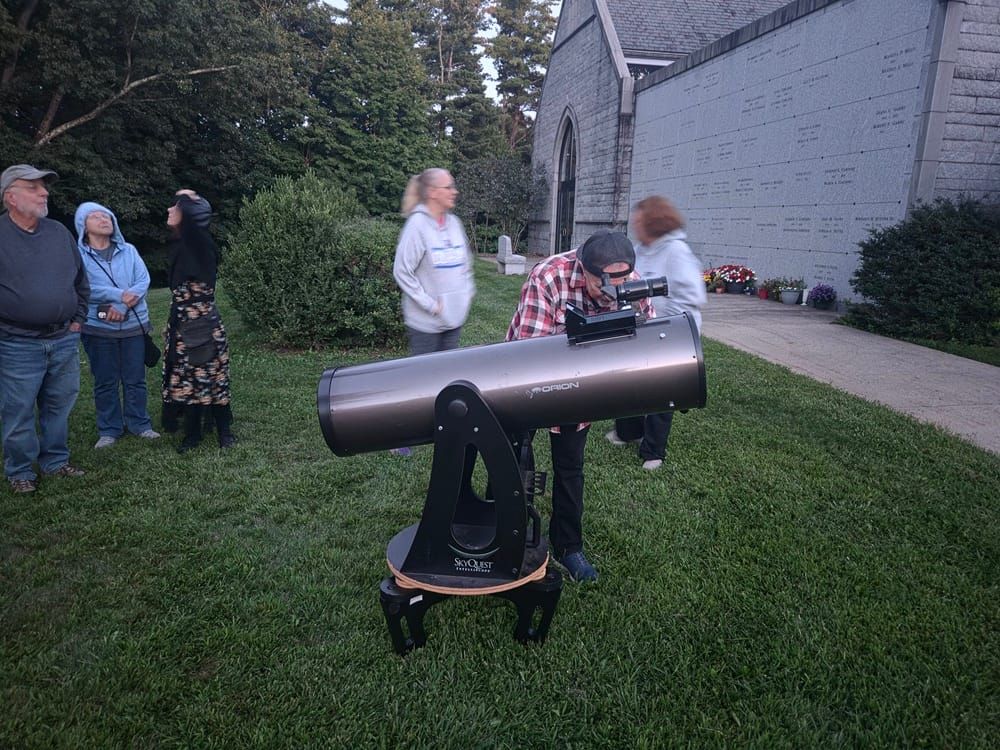
The first object we looked at was the moon, just as the sun set over the horizon. We used the large telescope pictured above. Much has changed in the 30 years since my telescope, as the large, powerful scope on display was about the same price as our cheap plastic model was in the 1990s (adjusted for inflation, of course).
I was able to see the craters on the moon for the first time. It was in its waxing crescent phase, and I was able to see the part of the moon shrouded in shadow. It was a transformative experience for how I think about the moon. Until last night, the moon was a thing, like a cloud or a tree. Seeing the actual texture of the moon – its rocky surface, the silvery white color– turned it into a place. People have walked on that surface, and may again soon. If moon tourism becomes a reality before I die, I’ll be the first person in line.
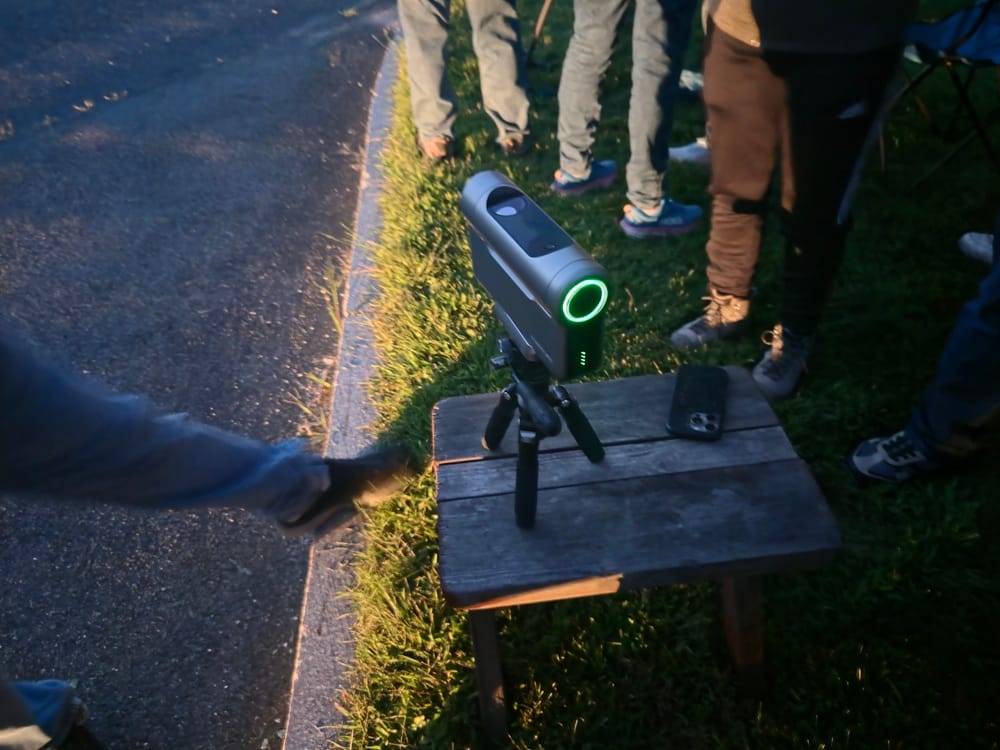
Not only have telescopes become cheaper. They’ve been revolutionized in ways I couldn’t imagine. Above is a DWARF telescope, resembling an old-style hand camera more than a telescope. In reality, the device is a merging of the two devices. It’s operated with a cell phone or tablet through bluetooth, and uses an app to position itself to observe far away objects. There’s no traditional ocular lens. Instead, the telescope takes pictures constantly, compiling and layering the images over each other to produce a sharper composite the longer it aims at an object. That image is then beamed back to the cell phone/tablet for viewing.
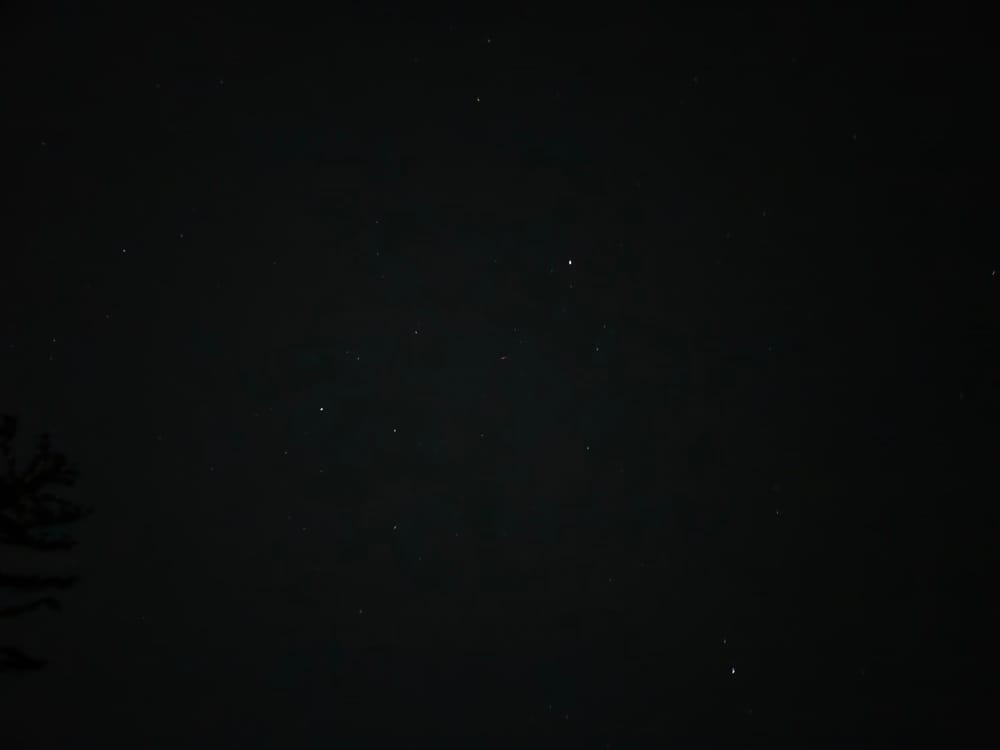
To illustrate, here’s a picture I was able to take with my cell phone with three seconds of exposure.
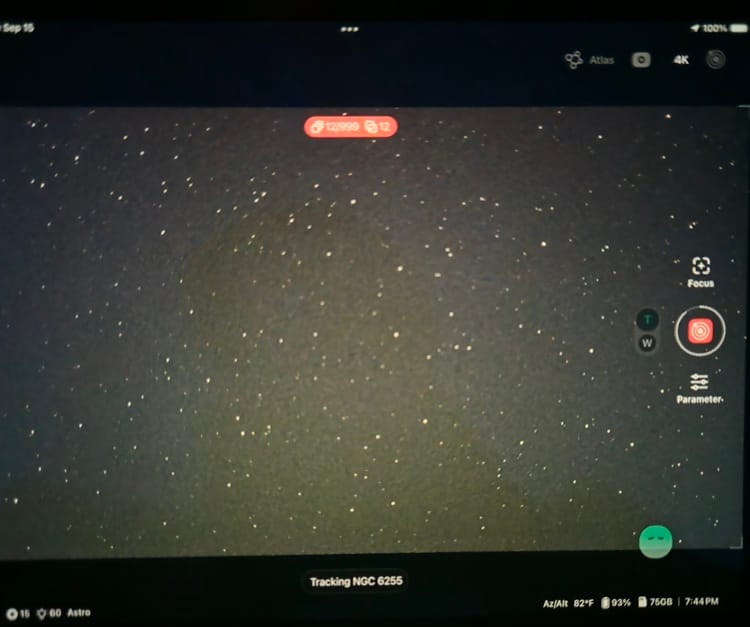
And here’s the image of the same sky one of the digital telescopes produced after about twenty minutes.
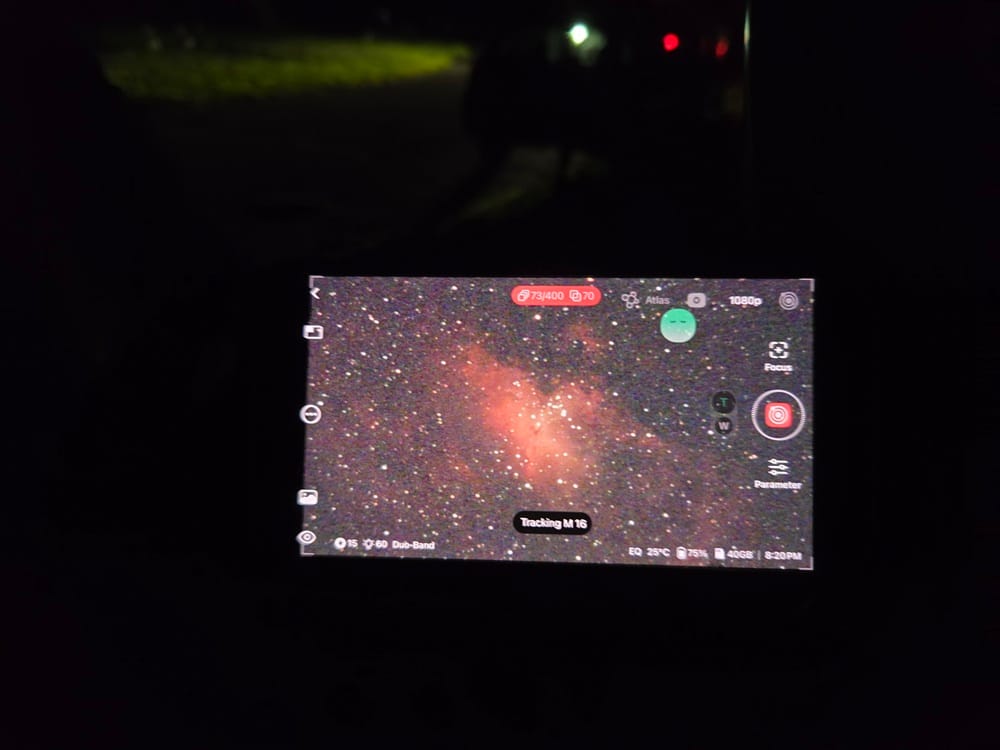
The small scopes are also capable of deep zooms. This is an image of the Eagle Nebula, a giant gaseous nursery for stars. It’s almost 6,000 light years away; our fastest current spacecraft would take between six to seven million years to reach it. Yet the image produced is almost tangible, despite being a snapshot of the nebula as it existed when humans first began farming.
The evening was great fun, but you might be wondering: Whose idea was it to host a stargazing event in the cemetery (as my Uber driver certainly wondered when he picked me up)? That stroke of genius belongs to Beverly Lucas, the director of the Cedar Hill Cemetery Foundation. She explained to me that Cedar Hill is a “rural cemetery” built on the outskirts of cities to relieve overcrowding in urban cemeteries. They were built as much for aesthetic as for purpose; Cedar Hill is no exception.
This was the first time the cemetery hosted stargazing since 2019, but Lucas has consistently provided interesting programming for the space (for example, the concert I covered earlier this summer). Her mission is to educate people about the place they may drive past, but have never considered visiting.
“This is a beautiful place to visit,” she said. “It was designed to be a place for both the living and the deceased.”
And for stargazers too.
NEXT
Jamil goes to the dad bar to check out new music.


