
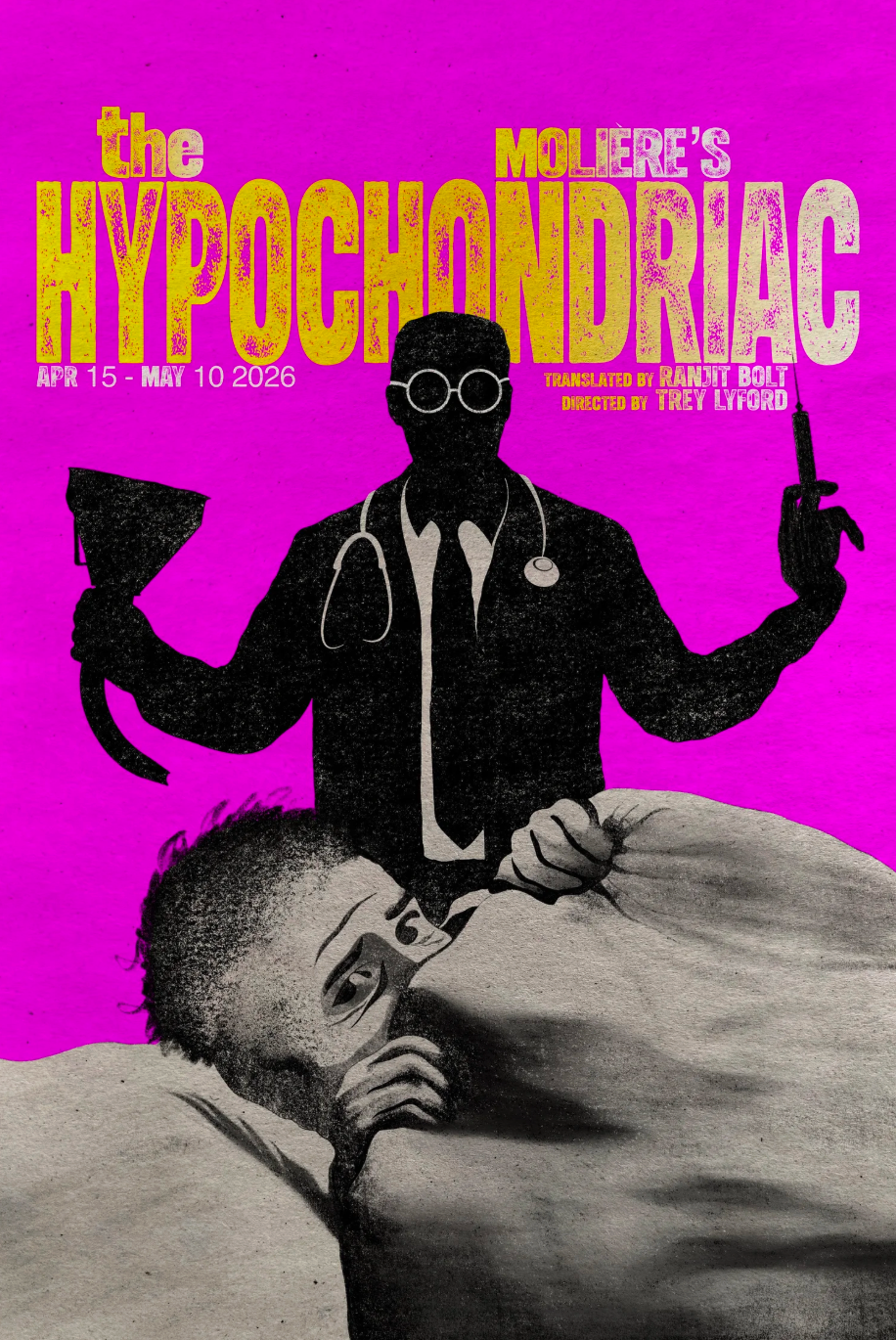
Molière's The Hypochondriac
Quintessence Theater
7137 Germantown Ave.
Philadelphia
May 8, 2026
It takes a lot to make an audience grieve a playwright who has been dead for 350 plus years. Quintessence pulled it off with immersion that shocked the senses in their recent production of The Hypochondriac, which is based on the last piece Molière wrote, and died performing, The Imaginary Invalid. I took my father with me to see the show and found that his background as a commedia dell’arte performer provided a helpful perspective.
My dad was recently in a production of another Molière play, Love’s the Best Doctor, where he played the cheap and controlling father figure. He enjoys characters that repeat their forms and allow for physical comedy experimentation to shine. He’s not the crotchety miser of my life, but I do strive to make him proud, so I was hopeful that the Philadelphia theater scene would inspire.
“There's something to be said about working with archetypical characters and classical scripts. I felt like The Hypochondriac was very successful at contemporizing those characters and exploring how those situations work in a more modern setting. I think it is really interesting and also very rich for comedy,” he said when reflecting on the show in the car ride home.
The excess of works from this era harping on a similar theme — the dubiousness of medical practice — has to do with Molière's benefactor. In writing about medicine, he struck a nerve with King Louis XIV, and was commissioned to write several doctor plays in quick succession. The Imaginary Invalid is one of these plays, and Quintessence’s reimagining brought the king's impact to the fore, allowing the audience to feel the full weight of a king’s power.
From the moment we found our seats, the king was looming. Up the middle aisle, there was a red carpet leading to a throne with a whoopee cushion on it. There was no king yet, but there was a dedicated volunteer in charge of ensuring that no one stepped on the red carpet: “It's for the king — please find your seat from the outside aisles only.” I sat just in front of the king and every time he chimed in over my shoulder I became more attuned to the concession of the time period.
In keeping with the show’s biographical accuracy, Molière died in the middle of the show. He was helped off stage, knocking over props as he went; this time, we did not hear the king laughing behind us or asking them to repeat a fart joke. Instead, a voice emerged from the curtains behind us: “Call someone!” An audience member swiveled around in their chair with distress, “Is this real!?” I am a skeptical person but still I noticed my heart rate increase. Even when it was made abundantly clear that it was a farce as they carried on with a pool noodle ballet, the real sense of panic from the audience lingered. We were grieving a man who had been dead for decades.
As my father and I continued our discussion of the efficacy of the play’s choices, we got into what brings new comedic life to a classical set of characters, allowing them to resonate today. “It's fun to play the comedy of those archetypes, it’s what they call in mask work the swing of the character. You can be one thing and then stop on a dime and be something totally different. That's what makes the comedy, the swing,” he explained.
This classic comedic formula was utilized in the most dramatic flip of The Hypochondriac, when King Louis was thrust into the spotlight. After Molière died on stage and they informed the king that the show could not go on, the king decided he would play Argan in Molière’s place. Naively excited to join in on his favorite pastime, he was clearly unaware of the vulnerable position he'd be put into. My father and I agreed that this twist gave the second act a new life, but we were truly sad to see Molière go after the physical comedienne playing him had brought so much life to the show.
Molière died in 1673, a time in France when tensions were steadily rising as the ruling class continued to take from the poor. This dynamic is not unfamiliar to us today and is likely part of the reason the work’s comedic strengths still lie in status reversals. In Quintessence’s show, the king's surrender to the comedic was gratifying; it fulfilled my desire to see a character so high and mighty poked, prodded, and debased to fart humor.
“I think we as an audience appreciate and find humor in status switches. Like, you’re very high status and then you get the rug pulled out from under you, that's really funny to us, when there’s a comeuppance. We live in a world where the rich keep getting richer and the poor get poorer, we like seeing the vulnerability of the status flip,” my dad said. The play ended with a final ballet sequence where the king was re-crowned as a fart sound effect rang out and a toilet seat was trapped around his neck.
With classic archetypes and fresh physical comedy, Quintessence reminded us that even plays where the playwright died in production can be given a shock of undeniable life-force. Their toying with a trip back in time was immersive and reminded us of the dangers of unchecked power. In discussing the show with my father, who has spent his performing career revisiting these traditions, I was able to see timeless theater tropes with fresh eyes.
This is the last weekend to see Quintessence's production of The Hypochondriac. Buy tickets here.


