
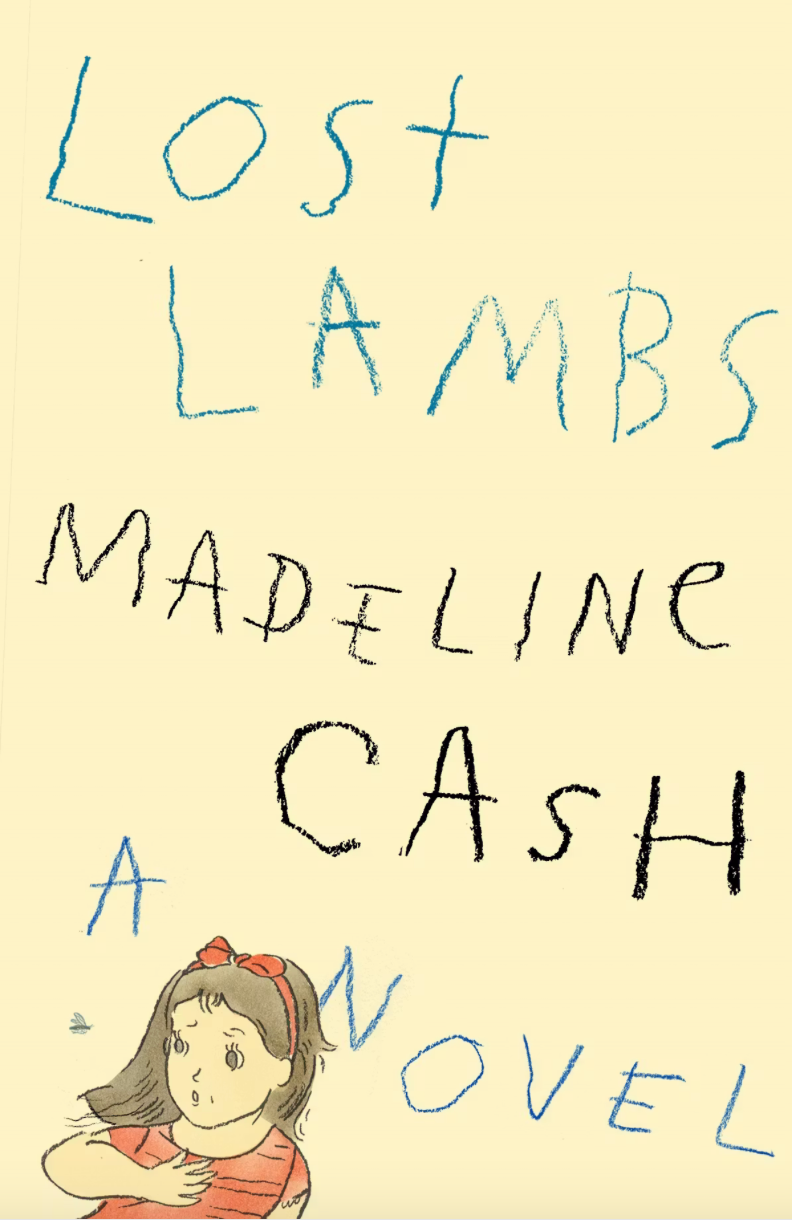
“Lost Lambs”
by Madeline Cash
Farrar, Straus & Giroux
There’s a lot of “screwball comedy caper” energy at the heart of Madeline Cash’s debut novel, “Lost Lambs,” and it’s cued up from the get-go.
In chapter one, the youngest of three Flynn sisters (12-year-old Harper) arrives in Father Andrew’s office to confess to precociously quirky sins like “I started Father Hayworth’s nickname – Father Gayworth – and it’s really caught on” and “I sent a video of Nordic pornography to everyone in my dad’s work email – it’s a really specific genre, lots of pelts involved.”
Like every member of the Flynn clan, Harper has issues, stemming in part from her mother Catherine’s recent, unilateral decision to open up her marriage. Her adrift and depressed husband, Bud, all but moves into the family’s parked minivan, convinced Catherine will jump into an affair with their annoying neighbor. Meanwhile, beautiful oldest daughter Abigail (age 17), fresh off an ill-advised relationship with a student teacher, gets involved with a solemn, 20-something veteran called War Crimes Wes, who works security for the nefarious local billionaire. Lonely middle child Louise (age 15), desperate for attention, falls prey to a would-be love interest online who recruits her as a young terrorist-in-training. And Harper’s boredom-fueled snooping and theorizing get her sent to St. Peter’s Nature and Wilderness Retreat, which she later refers to as “bad kids camp.”
It’s no accident that “Lost Lambs” is bookended by chapters focused on the perspective of locals who judge the eccentric Flynns harshly. Father Andrew, though a self-proclaimed “progressive priest,” views the Flynns’ marital arrangement as “a creative avenue through which each spouse could inflict pain upon the other and their three daughters.” But as the book progresses, we see this assumption isn’t true,. The Flynns are – you guessed it – lost sheep who each feel isolated, as if accidentally separated from their flock.
While the grumpy priest reels off complaints about the family, Cash slyly makes readers love the spunky Flynn rebel girls before we even meet them. Not only are they always missing Mass and forging farcical notes to be excused from weekly school chapel assemblies, but “They were missing from the community performance of Noah’s Ark and were later spotted in the parking lot, a lion, a fox, and a hedgehog, sharing a cigarette. They had not volunteered that year for the town’s winter food drive, the Christians for the Cure walkathon, the three-legged race for three-legged dogs, Apply Bobbing for Autism, or Knitting for Narcolepsy.”
This excerpt provides both a taste of the girls’ appealing nonconformity and the novel’s witty tone. Though lots of novels are described as “funny,” precious few actually make me laugh. “Lost Lambs” is a refreshing exception. Cash, like young Harper, can sometimes fall a bit too in love with her own flights of whimsy. For example, a silent “g” appears in a series of words until Father Andrew’s church infestation of gnats is finally exterminated, and the trademark symbol accompanies every entity owned or donated by the town billionaire (pointedly named Alabaster). But her unwavering affection for her misfit characters carries the day.
Which is good, because the Flynns’ open marriage “arrangement” takes a surprising turn: Bud gets romantically involved with frumpy church lady Miss Winkle (who leads a self-help group his boss requires him to join, called Lost Lambs), and Catherine’s attempted affair flames out before it even happens.
Bud, suddenly feeling a renewed sense of pride and purpose, starts dutifully investigating a discrepancy that Harper has sniffed out from his work emails at Alabaster’s shipping company. Without Bud realizing it, his inquiry sends the Flynns down a dangerous path, and Cash’s character-driven novel shifts into comic action movie mode.
It’s a somewhat jarring turn. But really, given the challenges already faced by the Flynns, it’s exactly the souped-up kind of crisis they need to act collectively to preserve the family, and thus hold onto the connections they have, no matter what that looks like to others.
Because as I mentioned before, the last chapter focuses on the perspective of a father and son who, at least initially, consider the Flynns to be freaks. But when the father steps away from the restaurant table to take a call, and the son, Myles, quietly studies them, he notes, “The girls, the dad, the mom … all seemed so … something. Myles couldn’t place it. Sharing silverware. Passing naan and disco fries and and sneaking sips from wineglasses. They were – was he hearing correctly? – laughing. Not fighting or looking at their phones or sitting in stony silence but laughing. … There was love.”
Something this comic, wry novel has in spades.


