
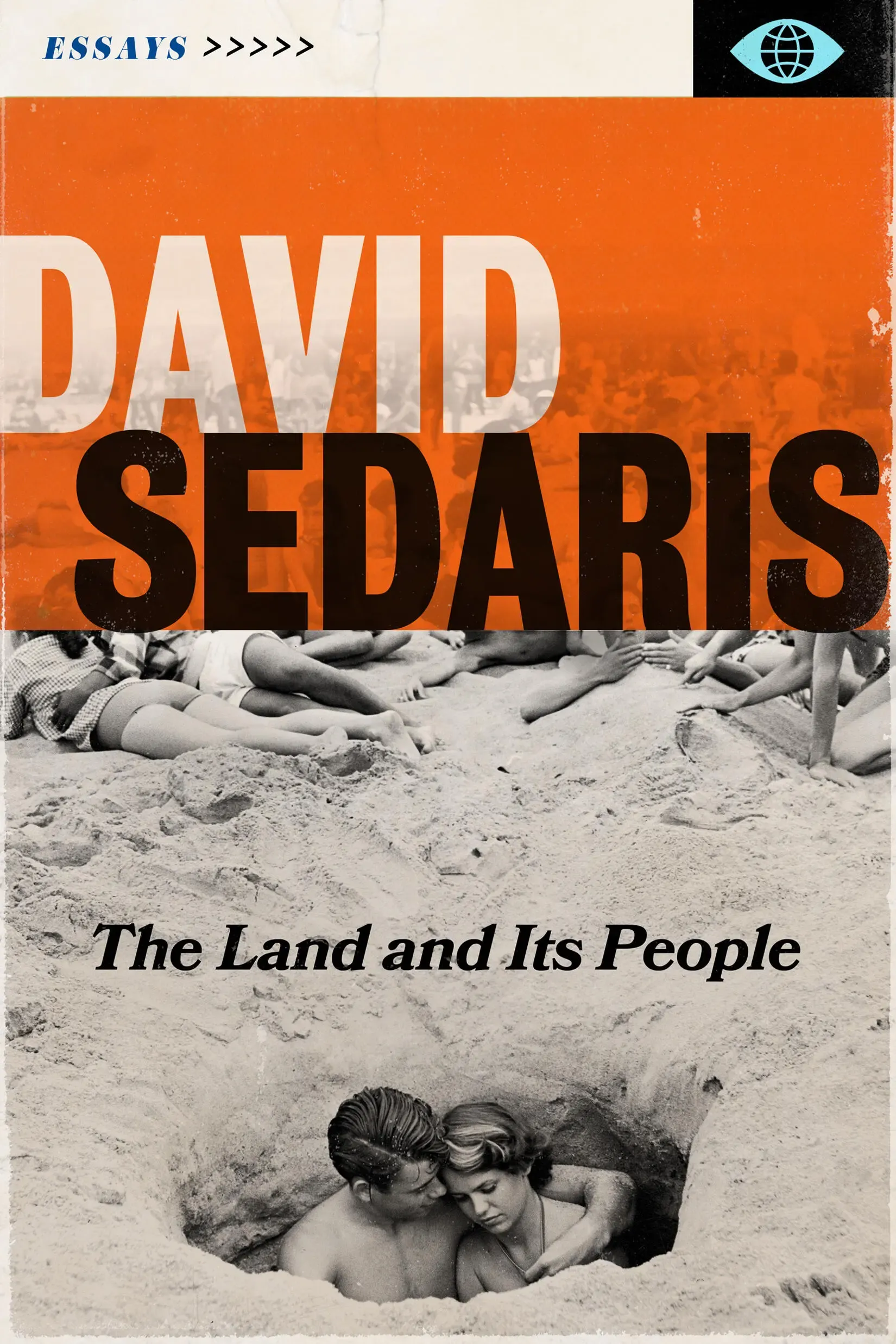
"The Land and Its People"
by David Sedaris
Little, Brown
At this point, you’re either a fan of humorist David Sedaris’ work or you’re not.
I mean, let’s face it: Every essay collection he publishes ends up on the bestseller list, and he still regularly contributes pieces to The New Yorker, so … more than likely, you’ve picked a side by now.
So you might ask, what’s the use of reviewing his latest, “The Land and Its People”?
Because even Sedaris’ most ardent fans will likely acknowledge that not all of his essay collections are created equal.
After being introduced to Sedaris and his offbeat, large Greek family (“Naked”); drinking in his hilarious fish-out-of-water tales of moving to France (“Me Talk Pretty One Day”); and witnessing Sedaris grapple with acclaim and success after having grown accustomed to failure in young adulthood (“Dress Your Family in Corduroy and Denim”), I felt he’d lost steam and struggled to find his subject matter when “When You Are Engulfed in Flames” came out, followed by “Squirrel Seeks Chipmunk,” a collection of short stories focused on animals with human problems. (I’ll confess I never cracked the latter.)
“Calypso” gets my vote for Sedaris’ masterpiece – a pitch-perfect blend of wit and heartache, in which Sedaris and his family process the loss of a troubled younger sister to suicide. “Happy-Go-Lucky,” largely about the last days and death of Sedaris’ spiky, stingy father, feels darker in tone, but still delivers on a its promise to be brutally honest about the end of the writer’s nearly lifelong battle for even a scrap of parental praise and approval from his dad.
Where does “The Land and Its People” fit in this larger scheme? Somewhere in the middle. Part of the draw in Sedaris’ work now, since his life is the subject, is “tuning back in” to see what his day-to-day life is like, what his latest obsessions are, and what he’s experiencing as he ages with his longtime partner (now husband) Hugh.
Indeed, the book opens with “Care and Feeding,” an account of Hugh’s hip replacement, and how Sedaris resists the role of caretaker for his fussy, cantankerous partner: “The day before his surgery, Hugh talked to his older brother John in Washington State, then limped into my office to recap their conversation. ‘He said he really wished he was here to help take care of me.’ I looked up from my laptop. ‘Call him back.’ ‘I don’t know that he really meant it,’ Hugh said. I handed him my phone. ‘Sure he did. Call him. Do it now.’ ‘John can’t afford a last-minute ticket across the country,’ Hugh told me. ‘And I know for a fact that he won’t want to drive three hours from his house to the Seattle airport.’ ‘He won’t have to,’ I said. ‘Call him.’ That was at three p.m. New York time. By five, a hired car was heading to Port Angeles to collect Hugh’s brother, and by midnight John was in a first-class seat to JFK, where another car would be waiting to deliver him to our apartment. I said to Amy [Sedaris’ sister], ‘It’s worth every penny.’”
This kind of blunt honesty about not-so-noble, self-centered impulses is one reason we love Sedaris. He unabashedly gives voice to the thoughts we all have, but never say out loud for fear of judgment.
Sedaris’ version is often funnier than our own. In “A Long Way Home,” he travels to Maine, where a college friend of Hugh has a four-bedroom house in the woods. She announces upon their arrival that her rule is no phones, iPads, or laptops on the ground floor.
“‘Bitch, you what?’ I thought. But it was her house, and so, for the first time in recent memory, I spent two and a half days talking to people and having them talk back. It was shocking to see no one staring down at their devices. That said, at our ages, we sort of needed them. ‘Did anyone see that movie … the funny one directed by the Greek who did that other movie about what’s her name? Oh, you know, it starred … that actor. She was on that British TV show?’”
Even Sedaris’ less obviously emotional pieces take on extra resonance when you’re a reader who’s followed his work and know his backstory.
Sedaris’ mother, the drily hysterical, unhappy, beloved center of the family’s universe, died when he was in his 30s, leaving a hole that would never be filled. So when readers arrive at the cheekily titled essay, “The Violence of the Rams,” and hear about a farmer who must separate a young ram from his ewe mother near Sedaris’ and Hugh’s property in England, the two men briefly reflect on times in their childhood when they felt scared and abandoned. Like a quiet gut punch at the essay’s end, as the ewe and young ram are crying back and forth to each other, Sedaris leveled me with this: “I put my pillow over my head, thinking that, come morning, I would talk to Luke and ask how long we’d have to put up with this. Goddamn children crying their mothers. It’s the kind of thing that keeps you up at night.”
So for Sedaris’ faithful readers, these are the rewards of our sustained attention and willingness to go wherever he wants to take us next. No, “The Land and Its People” doesn’t quite meet the high bar set by “Calypso.” But it’s like that person at work you always want to sit next to at meetings: still fun and genuine and far better than many of the alternatives.


