
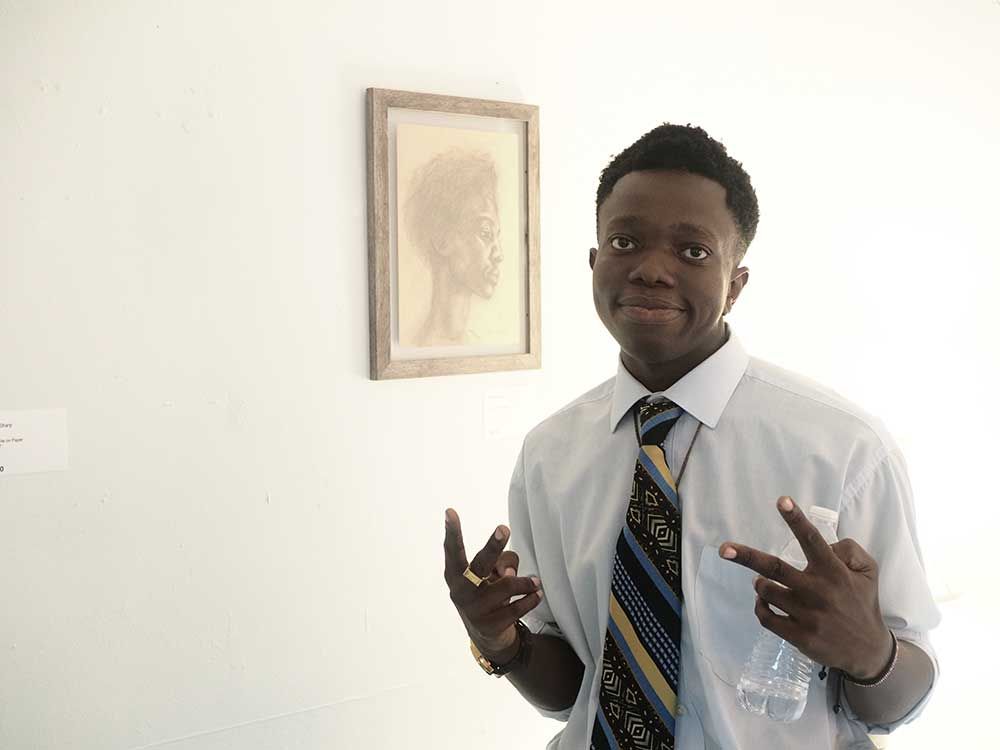
“Trickling Dreams”
Harper Galleries of Art & Interiors
173 E. Grand Blvd.
Detroit
Aug. 15, 2026
“The walls are kind of sparse,” Seth Sharp, whose solo show my friend and I were walking into, says to us.
We quickly found out why. At Harper Galleries of Art and Interiors, a house-turned-gallery on Detroit’s east side owned by artist and collector Henry Harper, buyers can take pieces home as soon as they purchase them. So while Sharp’s show, “Trickling Dreams,” is technically on view through the end of the month, more than half of the work was gone just hours after opening.
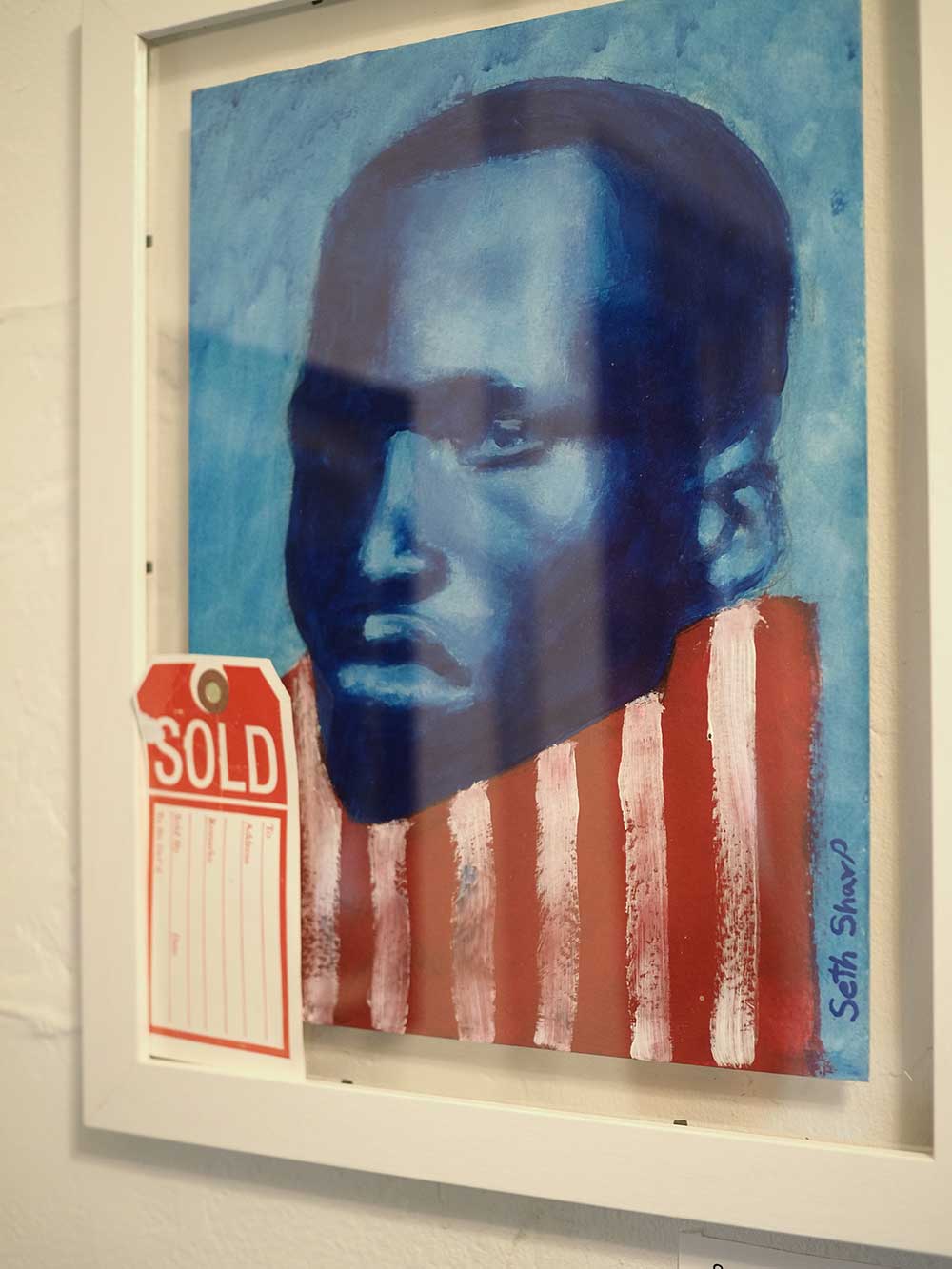
The show includes Sharp’s graphite series “We The People,” along with more than a dozen acrylic paintings, most of which depict Black people with what Sharp describes as a sense of “melancholy” or a “realistic depiction of the underside of reality.”
The graphite drawings are Sharp’s favorite pieces, and the medium is one he’s been working with the longest. In the series, he traces his genealogy through each portrait, using the faces to explore the different pieces of his own ancestry.
“When I was making the work, they wanted a solo show and they wanted me to make a bunch of landscapes and I didn’t wanna do that,” Sharp says. “So I’m like I might as well just make things that I like, return to what I started with.”
Looking around the room and the hallway, you can tell that Sharp has been refining his craft for years. It’s surprising to learn that he’s only been painting for two years, as the same precision and emotional weight of his drawings comes through in the acrylics, too.
“I noticed it started to turn into my own personal 23andMe because if I do a real one, I’m not seeing anything,” the artist tells me, pointing to the portraits one by one. “But I know I have a little Nigerian in me, a little Ghanian in me, a little Sierra Leone, a little Native American, so it’s sort of just what’s a part of me.”
That sense of personal history gives the portraits an intimacy that extends beyond their technical realism. The subjects seem to be looking back at you, each carrying an emotion that feels specific even when you don’t know their stories.
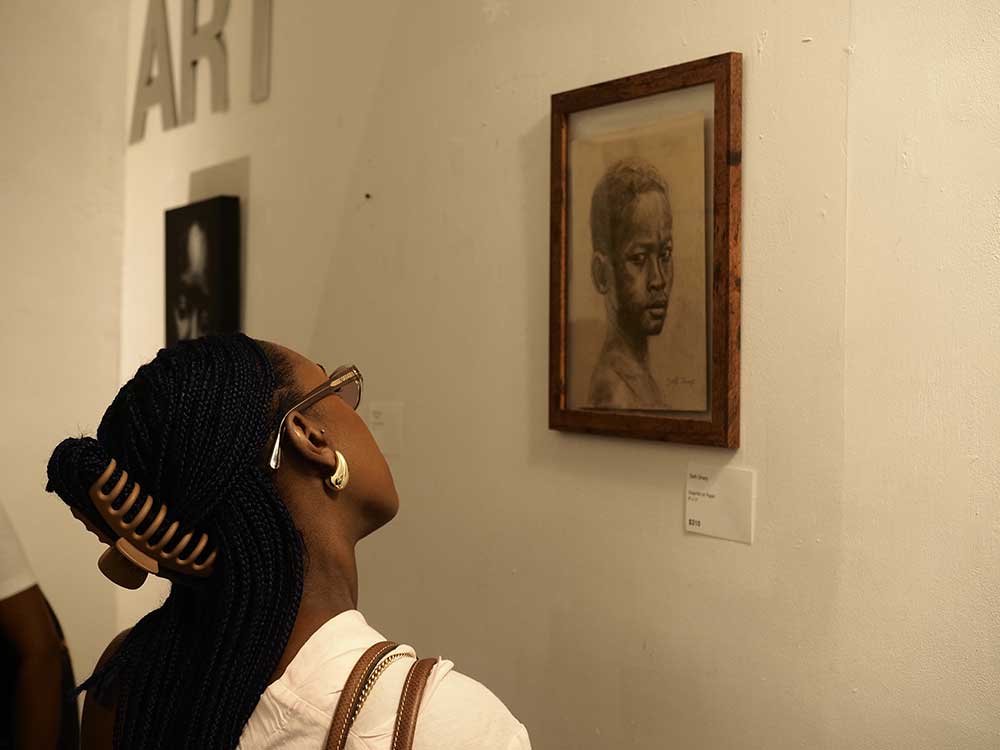
As I’m walking through the space, one viewer asks Sharp to pull one of the portraits off the wall and put it next to another so she can really examine them and decide which one to buy: a young girl with an innocent expression and a young boy with a stern look.
“There’s something about his face,” she says. “I feel like he gives me motivation. When he’s looking at me right now, it’s like ‘Did you really do what you said you were gonna do today?’”
Looking at the pieces, I instantly understand what she means, and the emotion in the subjects’ eyes is what strikes me most about the work. The realism demonstrates Sharp’s technical ability, but the expressions give the portraits their pull. They don’t just depict people; they make you want to know what they’re thinking.
“I love her,” the buyer says, looking between the two pieces. “But… I need him.”
There are cheers as yet another piece sells and comes down from the wall to get wrapped up. Yet another space on the wall now blank.
The fact that so many pieces sold already was awesome to hear, but I do think the show could be appreciated by more viewers if the buyers waited until the show was over to take the work home.
Despite this, “Trickling Dreams” still blew me away.
Follow Midbrow Detroit on social media:
Bluesky, Facebook, Instagram, Threads, TikTok, X.


