
Fellows
Widener Gallery
Trinity College
Hartford
Oct. 2, 2026
Fellows, the latest exhibition at Trinity College’s Widener Gallery, might seem a bit random at first glance. The exhibit features wooden sculptures, diary entries written across the wall, even a guide on how to swim. Aside from the fact the three artists are alumni of Trinity College’s fellowship program that supports post-bachelors, there doesn’t seem to be much in common.
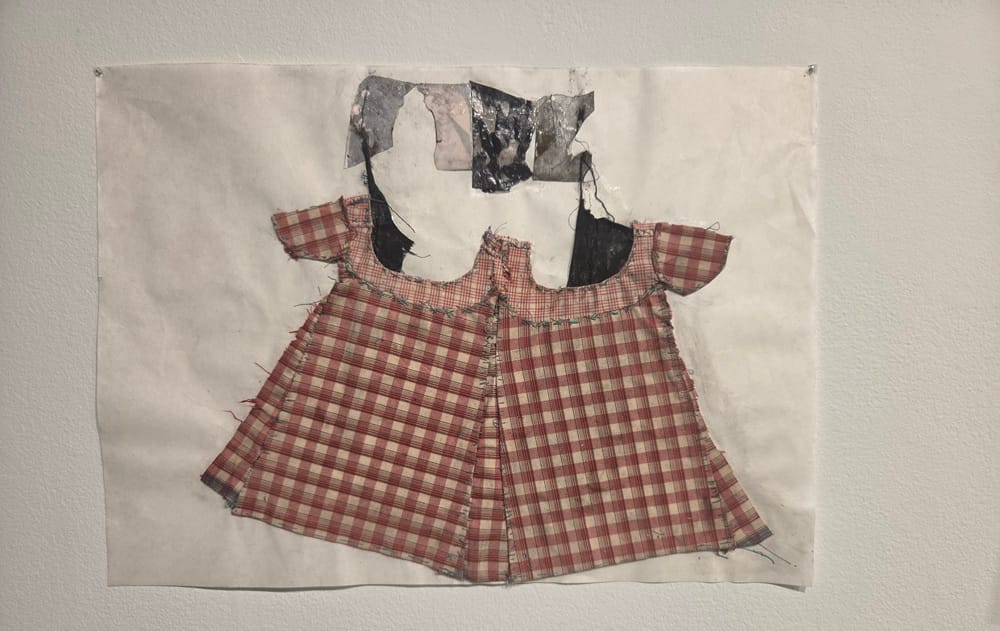
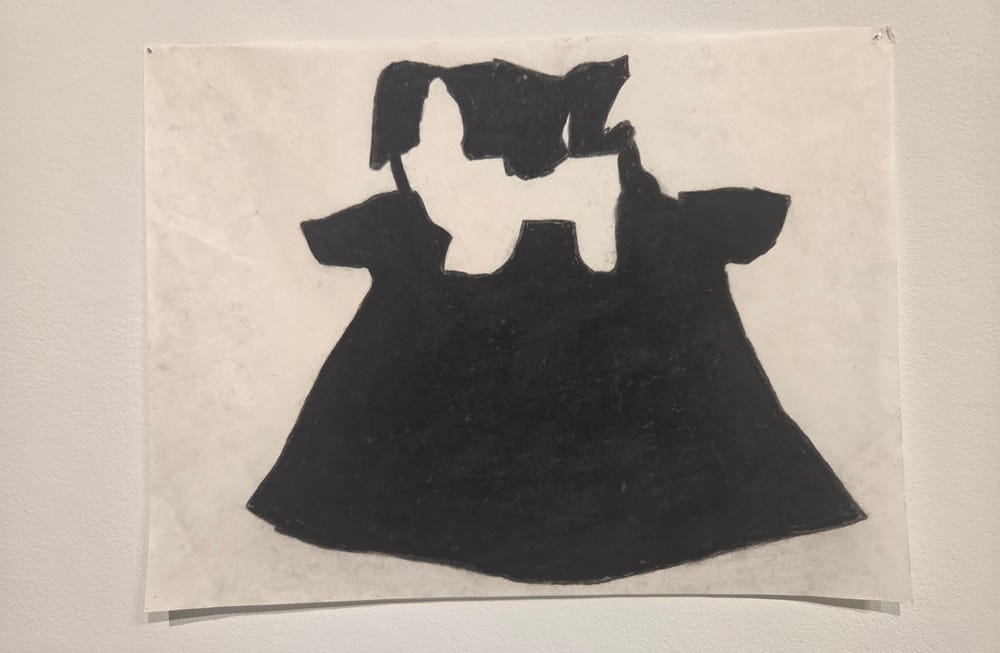
What may not be readily apparent is these works are all reflections of the self. Conjoined Twins Dance Apart, by artist Ciara Rubi, looks like a pairing of opposites, as if Annie and Wednesday were forced to wear matching outfits. However these are really representations of Rubi herself. The collage which forms the dresses consists of Polaroid autoportraits that have been peeled, cut, scratched and layered until they are unrecognizable. Then they were combined with fabric, acrylic and other materials.
I don’t think Rubi was trying to render the self as invisible with her work, but more the self as absorbed. We can identify a lot about a person based on their clothing, more than we can from their faces– their job, relative social status, even sometimes culture and religion. The face doesn’t disappear, it just becomes one less important detail in sizing up another’s personhood. Facial expressions tell us who someone is now, but their clothes tells us who they generally are.
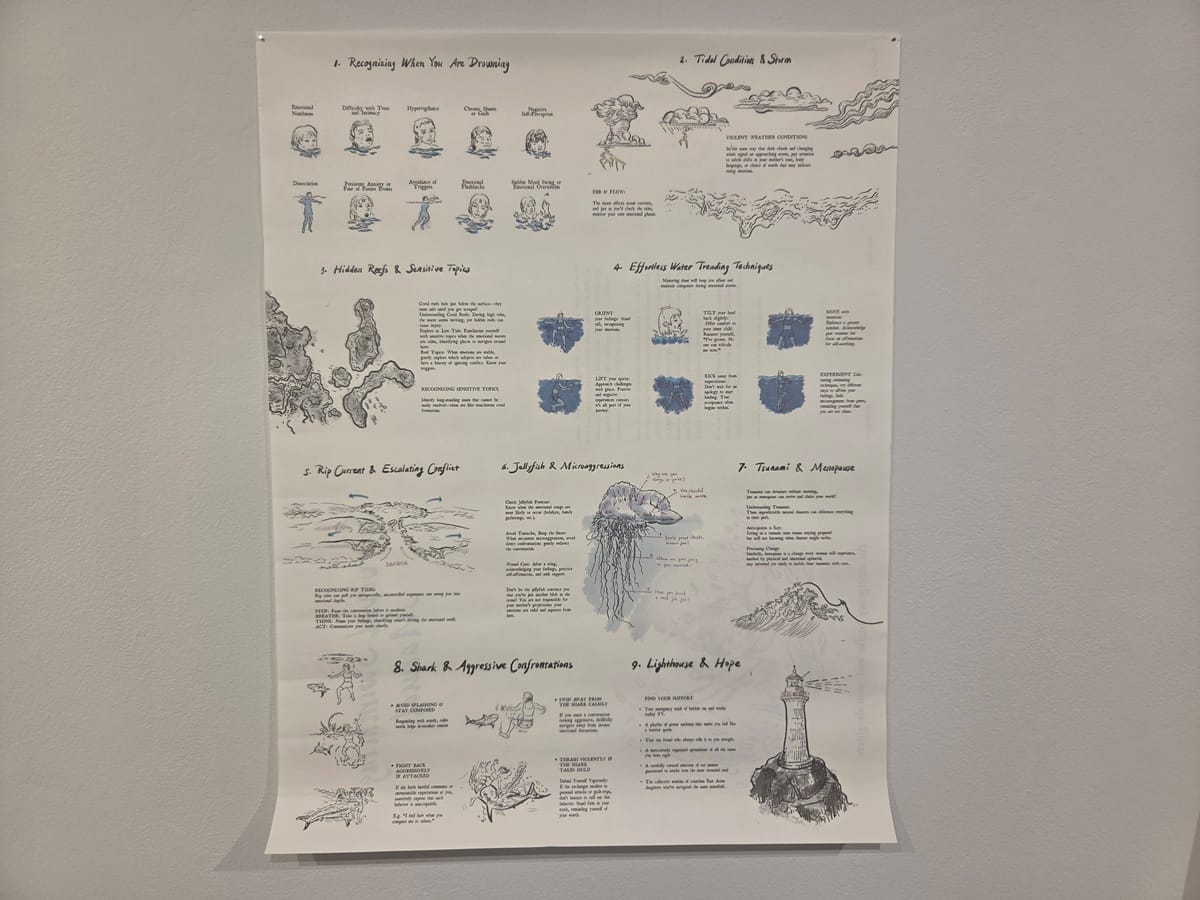
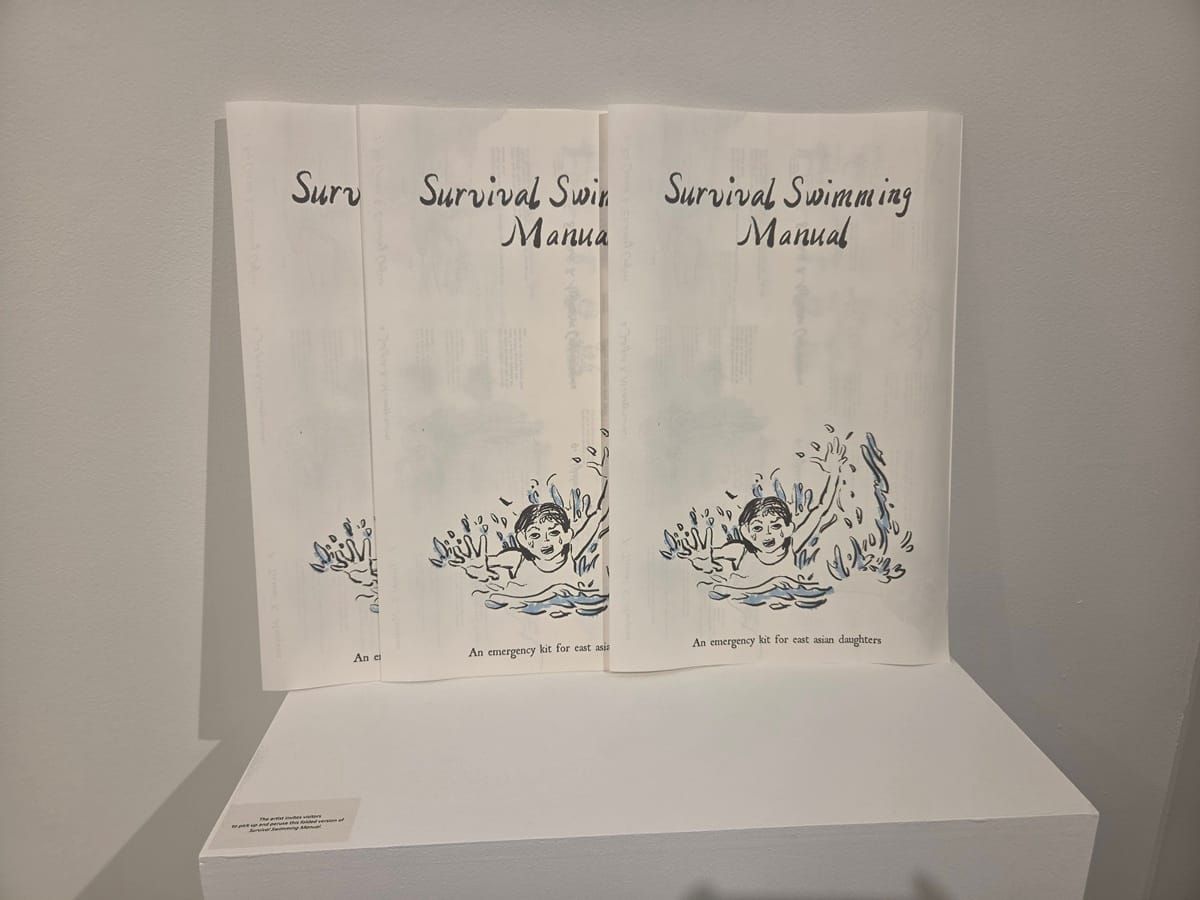
Most impactful to me is Weixi Zhang’s Survival Swimming Manual. In her multi-page pamphlet, Zhang lays out how she navigates the sometimes fraught relationship between herself and her mother as a guide for surviving in the ocean. While some of the advice she gives is more specific at times (I don’t think my son and I will be dealing with “Tsunami and Menopause” with each other), it’s a fascinating look into the mind of how a child relates to their parent.
I was especially affected by the caption under 2. Tidal Condition & Storm. It reads:
In the same way that dark clouds and changing winds signal an approaching storm, pay attention to subtle shifts in your mother’s tone, body language or choice of words that may indicate rising emotion.
I’m on the other side of that equation; I’m the parent being monitored. A reality of my parenting is that I tried to prepare my son for the future by looking back at the past. Was I doing things better than I thought my parents had? Did I do a better job at being even keeled and responsive? Maybe he has his own guide, his own warning signs that he looks out for with me.
Avoiding drowning is an extremely appropriate metaphor for trying to keep a family together, whether you’re a parent or a child, and Zhang brilliantly put it to use in a novel and interesting form. The entire exhibit is a unique look at the self, and worth your time to see.
Fellows continues at the Widener Gallery through Oct. 30.


