
A History of the Blues: Talk and Performance
Bloomfield Public Library at Prosser
Bloomfield
June 30, 2026
As Black Music Month draws to a close, Bloomfield Public Library at Prosser decided to end the observation with a dual concert and history lesson to celebrate perhaps the most quintessentially American form of music, the blues.
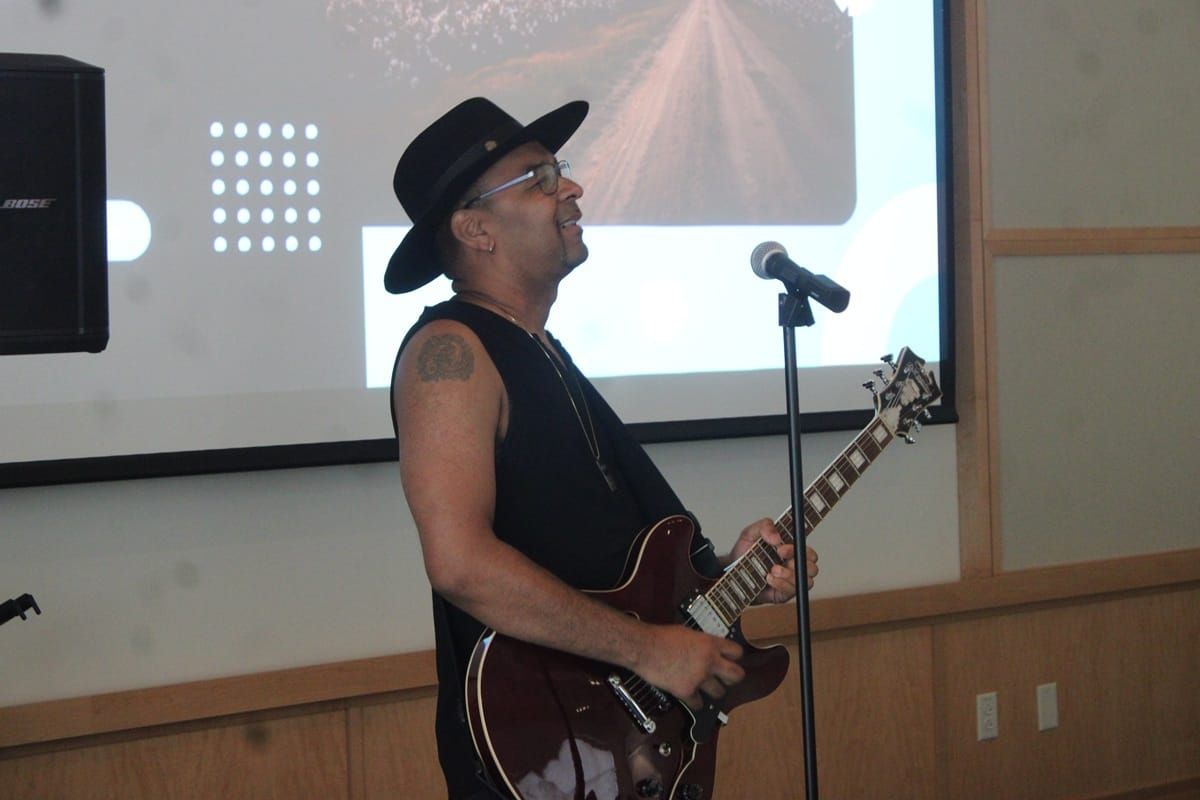
Fourth or fifth-generation blues performer (in his own words) Jaeme Brennan McDonald delivered a wide-ranging lecture about the history of the blues. He traced its evolution from West African call-and-response traditions dating back long before the transatlantic slave trade through the genre’s recent resurgence in popularity thanks in part to the film Sinners and a cadre of young performers keeping the traditions alive.
McDonald focused not just on who made the blues, but also what makes the blues, on a technical level. He went into a rather in-depth discussion of the music theory behind the sound, laying out the building blocks for what makes a blues song, well, blue.
The blues is built on a pentatonic scale, skipping the fourth and seventh notes in a traditional scale. Blues also traditionally works on a minor scale, which gives the music its sad, forlorn sound– a major part of what makes the song blue (in reference to the phrase “having the blues,” which McDonald told us predates the music form).
From there, the notes are organized into a 12-bar structure, one of the most common chord progressions in popular music. It sounds complicated, but in reality is very straight forward:
- Four bars on the 1st chord (or first note of the five-note pentatonic scale).
- Two bars on the fourth chord, back to two bars on the 1st chord.
- One bar on the fifth, one bar on the first, one bar on the fourth, one bar on the fifth.
McDonald did a much better job explaining blues music theory than I can. It helped that he had his own guitar on hand to demonstrate while explaining. But while McDonald’s brief music theory lesson may have gotten a little heady for some, I enjoyed it because it showed that there are rules and form to the music. It’s not simply sad wailing over a guitar.
Beyond the tutorial, McDonald gave us a live demonstration of the blues in practice while performing his song The Next One. McDonald dug into the long history of the blues, zeroing in on the train as a recurring symbol of freedom, whether musicians past were chasing their dreams or running from the past. It was a great way to connect the happenings of the past with the sound of today.
The United States turns 250 years old this weekend, and the music of our nation’s history will be a key part of the celebration. The blues deserves to be featured prominently in those celebrations, as one of the first truly indigenous sounds of the American nation. Thanks to Bloomfield Public Library and Jaeme Brennan McDonald for making sure we don’t forget.
NEXT
Jamil joins in on the Long Weekend celebrations.


