
Connecticut Witch and Culture Festival
Downtown Hartford
Aug. 9, 2026
Double, double, toil and trouble
Fires burn and cauldrons…dance?
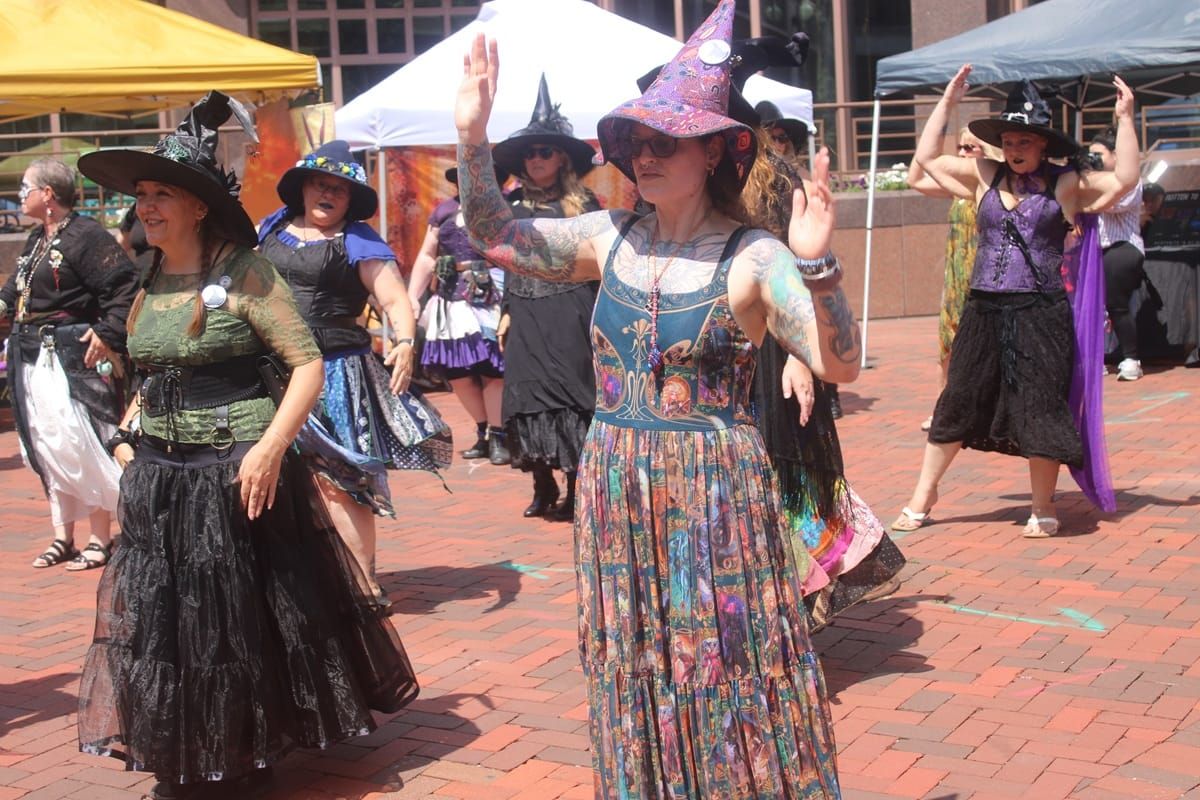
The cauldrons themselves may not have moved, but the witches certainly did at the annual Connecticut Witch and Culture Festival, which took place this past weekend in downtown Hartford.
The two-day event featured lectures and remembrances on Saturday about the history of the witch trials and performances on Sunday. I attended on Sunday, to get a glimpse of what the event website intriguingly referred to as “hex dancers”.
The festival commemorates the Connecticut witch trials, which lasted from the late 1640s through the 1660s. While not as famous as the witch trials in Salem, the anti-witch panic that swept Connecticut colony predates Salem by almost 30 years.
The first person executed for witchcraft in the colonies (and some sources say the first person executed for any reason) was Alse Young of Windsor in 1647. In total, 11 people were executed for witchcraft over the following 20 years. A resolution was passed by the Connecticut General Assembly in 2023 exonerating all 34 people accused of witchcraft.
Even as the festival honored the memories of those who were wrongly killed, it turned towards an air of celebration on the second day. Being a witch has changed from being a scarlet letter to being a marker of fierce independence and pride. I’ve known several women who call themselves witches, and one of the guiding principles I’ve noticed is the sense of spiritual ordainment they receive from non-Christian sources.
It makes sense – the persecution of witchcraft was primarily patriarchal, primarily targeting “troublesome” women, and primarily using the patriarchal Christian religion to justify accusations and convictions. Modern witchcraft being a feminist movement against patriarchy feels like history attempting to balance itself.
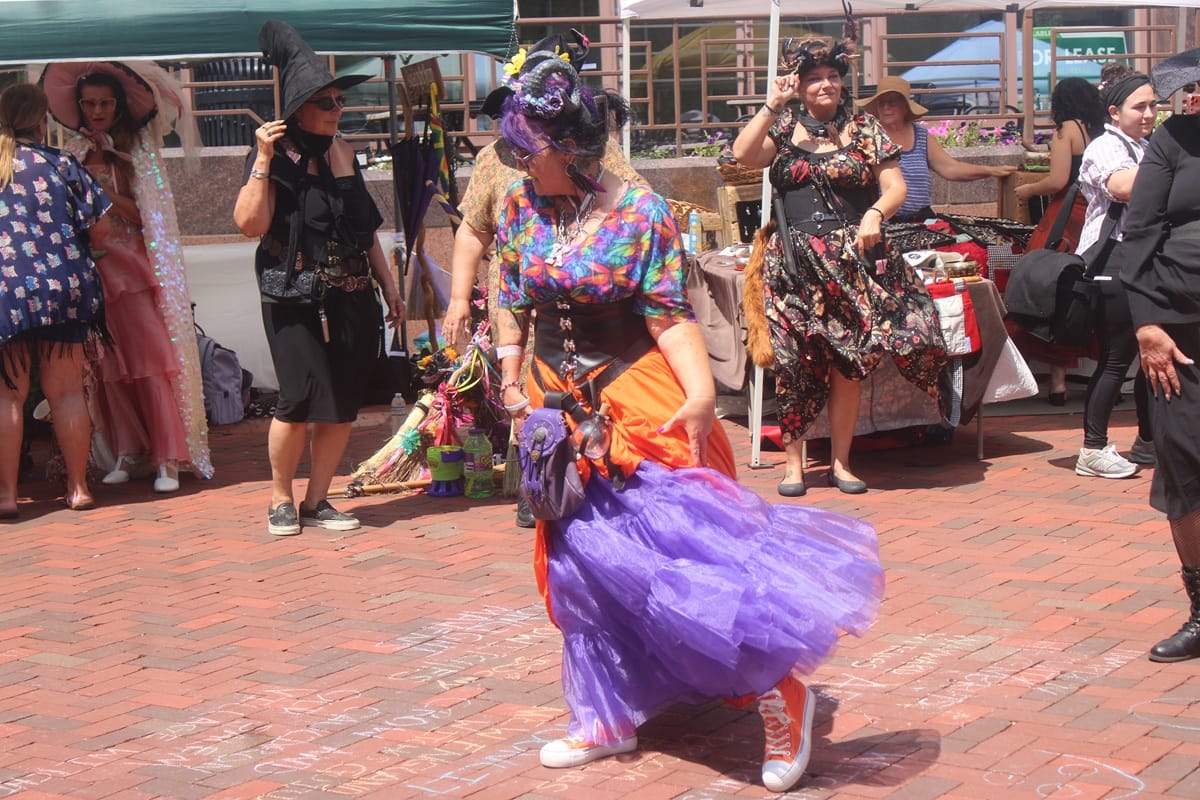
Which brings us to hex dancing (which I’ll call witch dancing to minimize confusion). Because if there’s one thing women have been policed for more than witchcraft, it's dancing. The witch dancers at the festival aren’t just randoms jumping onto the dance floor. Witch dancing is an organized movement, with groups all over the world. There were several different witch dancing groups from the region who came to perform.
One of them is Brooms Friends Fun (BFF). I spoke to member Deanna Rhodes. She’s traveled all over the world as a witch dancer, including to Poland earlier this summer to dance with Bulgarian, Polish and German witches to celebrate the summer solstice. She said that witch dancing is a non-political, non-religious activity and that people of all backgrounds and faiths are witch dancers.
“We believe in spreading peace, unity, and love through dance,” she said.
The first dance the hex dancers performed is called Gute Lavin, or “good vibes” in English. Rhodes told me that it’s a German club song that basically plays the same role as the English song “If You’re Happy and You Know It.” Not only was it the first time I’ve seen hex dancing, but it was also my first experience with German club music, so quite the twofer for a Sunday afternoon.
Despite Deanna’s statement that the dance is non-religious, a friend of mine at the event described what she was seeing as a kind of praise dance. I think that’s an appropriate comparison. The dance itself may not be meant to invoke any particular deity, but there was a distinct spiritualism that was impossible to deny. It’s like giving thanks for an alternative way to live and experience the world, through a supernatural medium that many people scoff at, but none of us can prove doesn’t actually exist.
Later in the performance came the witch dance standard, called Schüttel deinen Speck, or for those of us like me who have no idea how to pronounce an umlaut, “Shake Your Bacon.” This is the one dance that all witch dance groups perform. It’s a fun, catchy dance that encourages the audience to do exactly what the title says, the bacon being your hips and booty.
Out of the tragedy of innocents losing their lives has come a celebration, but also a warning. It’s important that those who were killed are honored and exonerated, both to please the cosmic sense of justice we all rely on, and to remind us of a sobering fact. Hundreds of years may have passed since the Connecticut witch trials, but we’re always just moments away from the public madness that caused them.
NEXT
Jamil is taking the night off. See you in a couple days!


