
Dreamworld: Surrealism at 100
Philadelphia Museum of Art
2600 Benjamin Franklin Pkwy
Philadelphia
Showing through Feb. 16, 2026
Whenever I showed signs of boredom, frustration, or, more typically, total chaos as a kid, my mom had a collective coping mechanism on hand: Exquisite corpse.
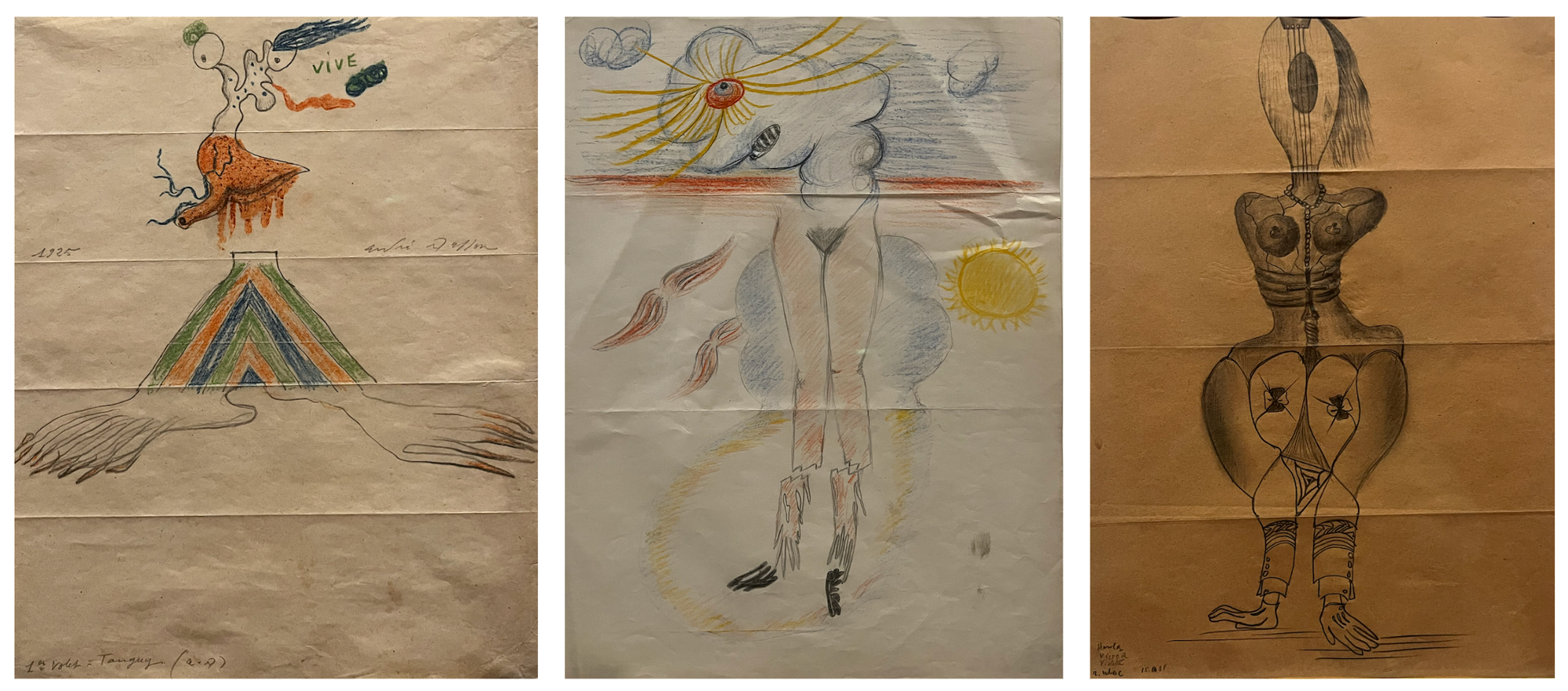
It’s a sketching game that goes like this: One person draws the head of a figure, then folds the paper over to conceal their contribution, so that every additional element (torso, legs, feet) added to the body is illustrated in sequential secrecy by the players. At the end, a strange creature is revealed in full form.
Dreamworld: Surrealism at 100, a sweeping exhibit of Surrealist works now showing at the Philadelphia Museum of Art, features some of the earliest expert renditions of that childhood game. On display are sketches by the likes of André Breton, one of the fathers of Surrealism, and many unnamed collaborators, which include an amoeba-face in striped pajama pants, a mandolin-headed woman with gloves for feet, a cloud formation with no underwear on while mustaches fly in the breeze around its naked legs.
The “corpses” happen to be perfect representations of the fundamental ingredients of the Surrealist art and literary movement. Born in 1920s Paris, Surrealism protested the idea of objective reality by championing dream-like images driven by subconscious thought and feeling. The exhibit spans three decades of Surrealist development, chronicling how artists across the globe channeled and depicted desire, war and exile from the '20s through the '50s using an absurd lens. Free association thinking showed itself through graphic nudity, celestial and biblical symbolism, animal parts, and fantastical imagination — as embodied by the mixed-up bodies that are exquisite corpses.
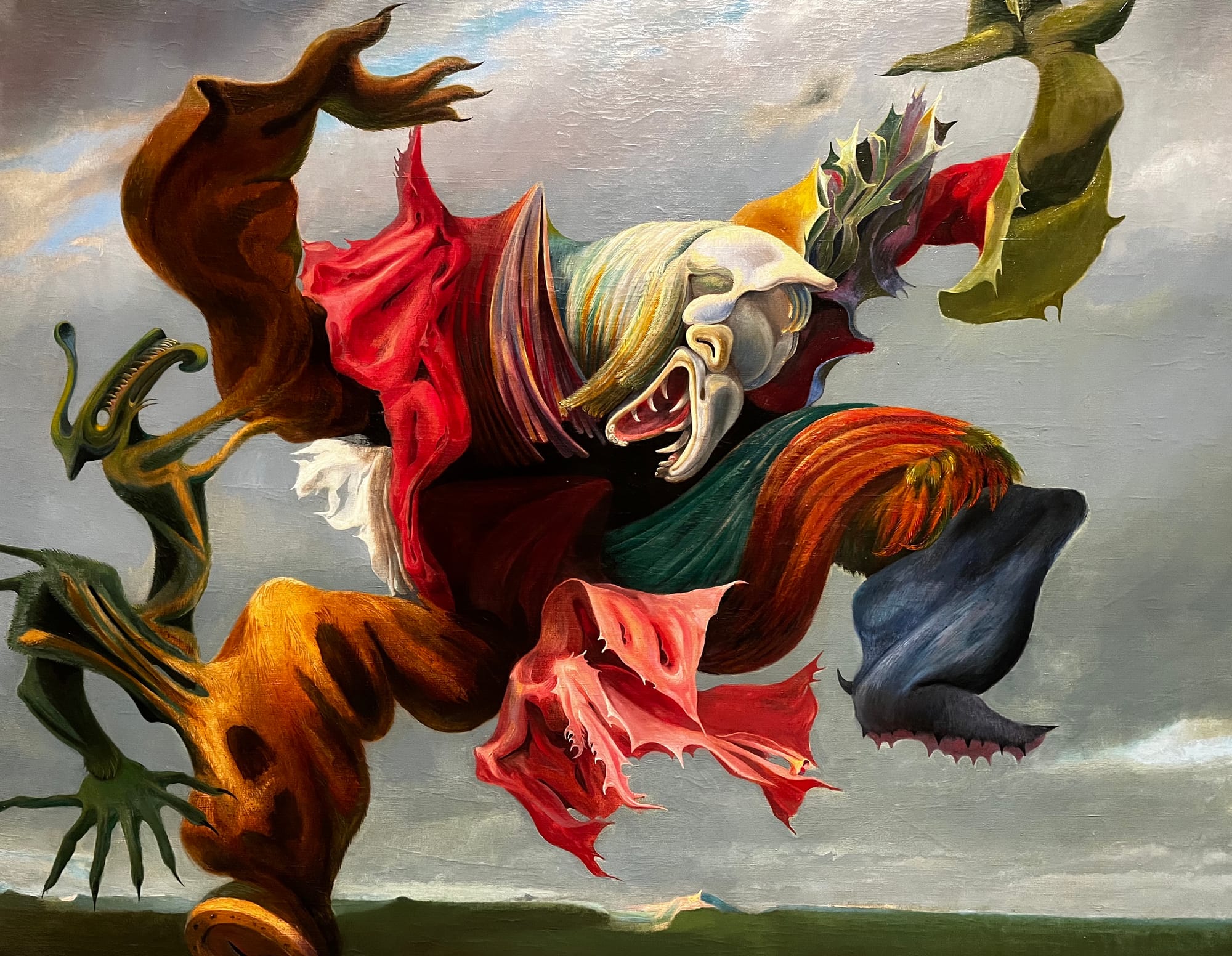
Walking through the show’s many parts, from the Max Ernsts to the Salvador Dalís to the Joan Mirós to the Leonora Carringtons, I realized the underlying conception of the exquisite corpse was ubiquitous. I saw the whimsical game take an intense turn in the chimeras, minotaurs and monsters painted during Francisco Franco’s takeover of Spain and the rise of totalitarianism across Europe. Ernst’s “The Fireside Angel” (1937) or André Masson’s “The Labyrinth" (1938) capture twisted, barbaric nature of violence through subversive figure studies of patchworked mythical beings rather than literal translations of political conflict.
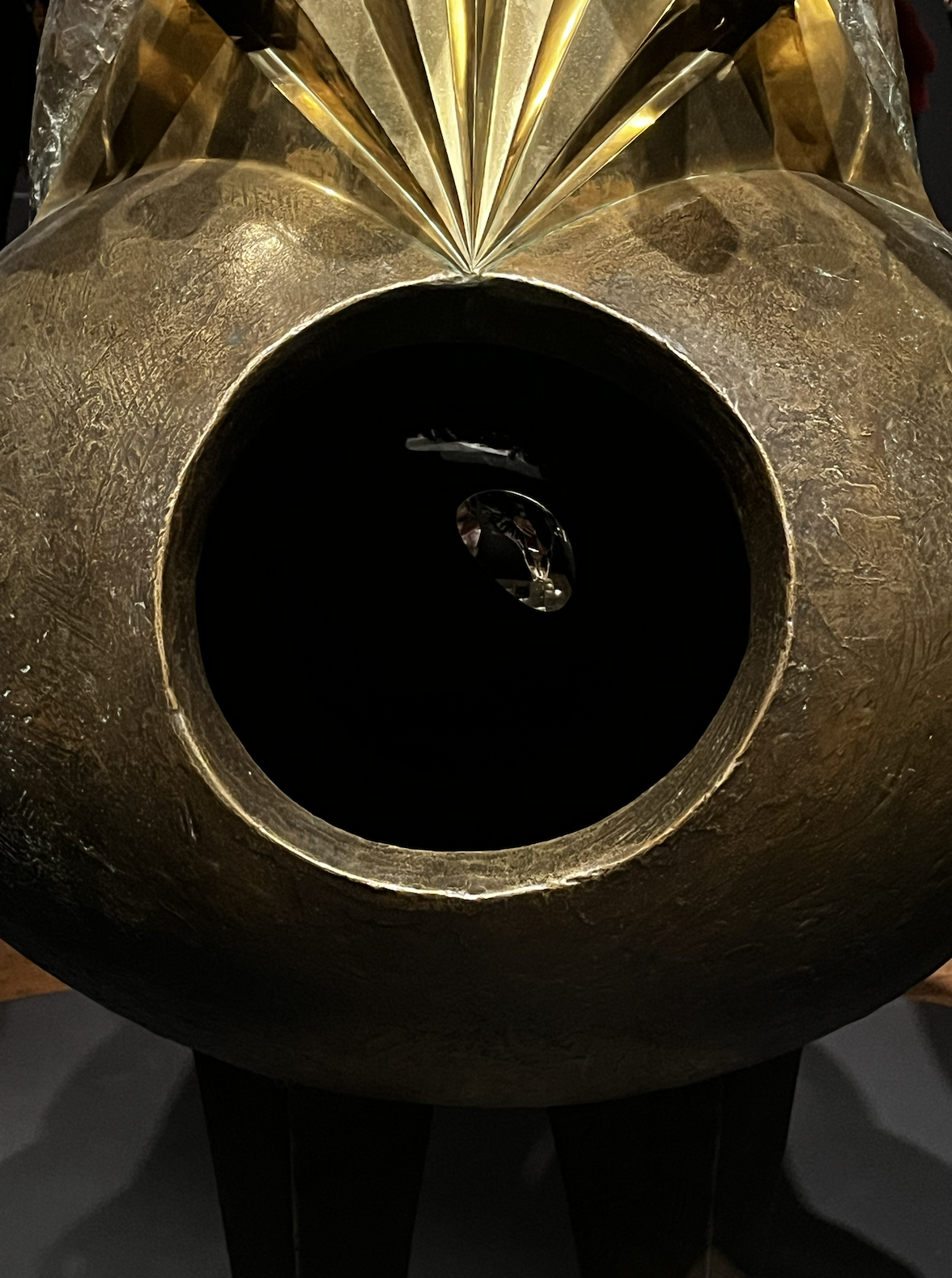
I observed a sort of strange person standing inside Frederick Kiesler’s 1947 sculpture, “Totem for All Religions,” which stacks astronomical symbols along a totem pole like a symbol of universal spirituality, standing tall like a warped personification of crashing cultures. But the most magnanimous example of a one-man-made exquisite corpse was perhaps Romanian artist Jacques Herold’s “Le Grand Transparent,” a chunky metal sculpture with crystals for teeth, a sun and a moon on its chest and an ear, an eye and a nose around its waist, and a mirror in its round stomach.
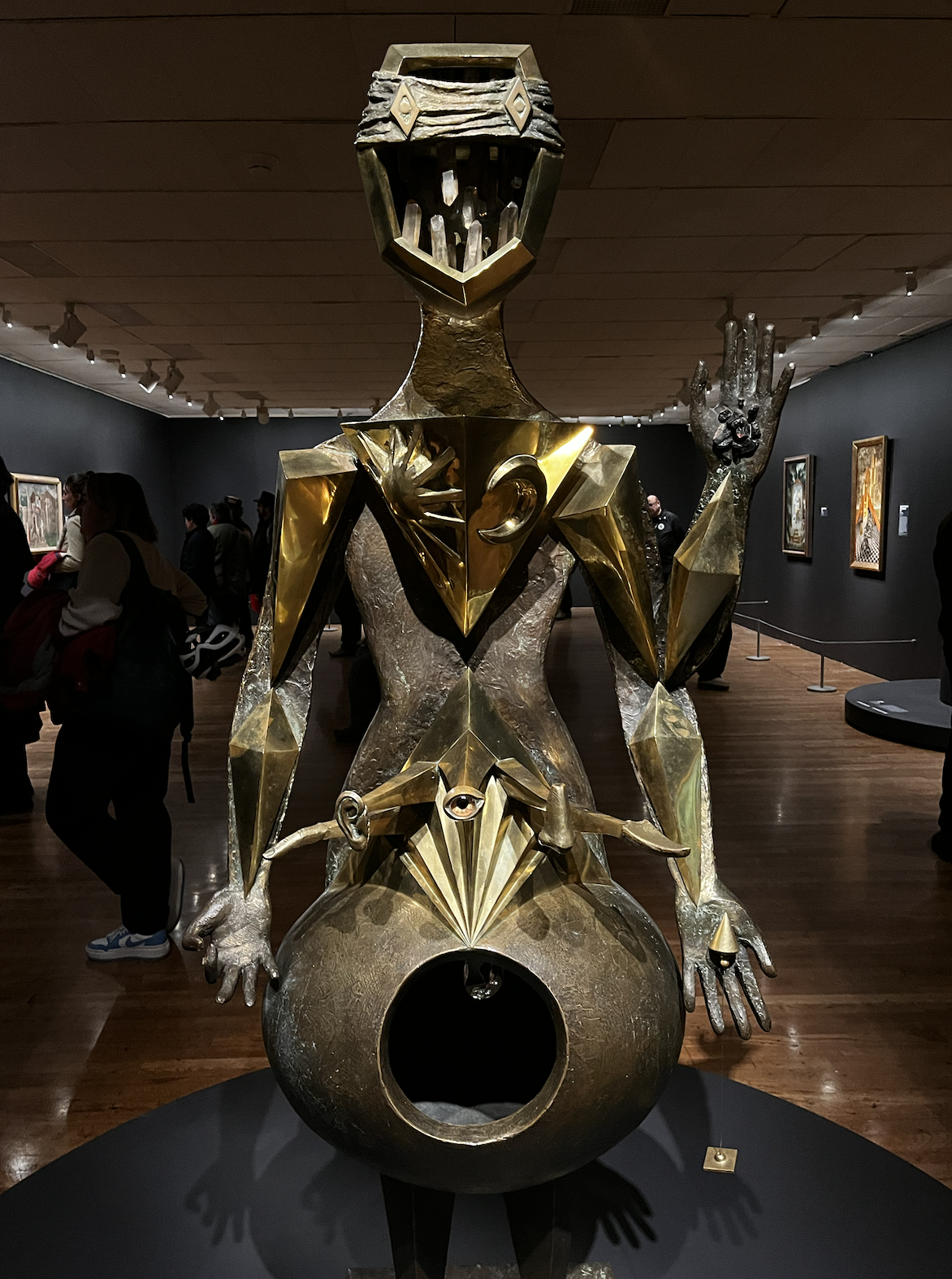
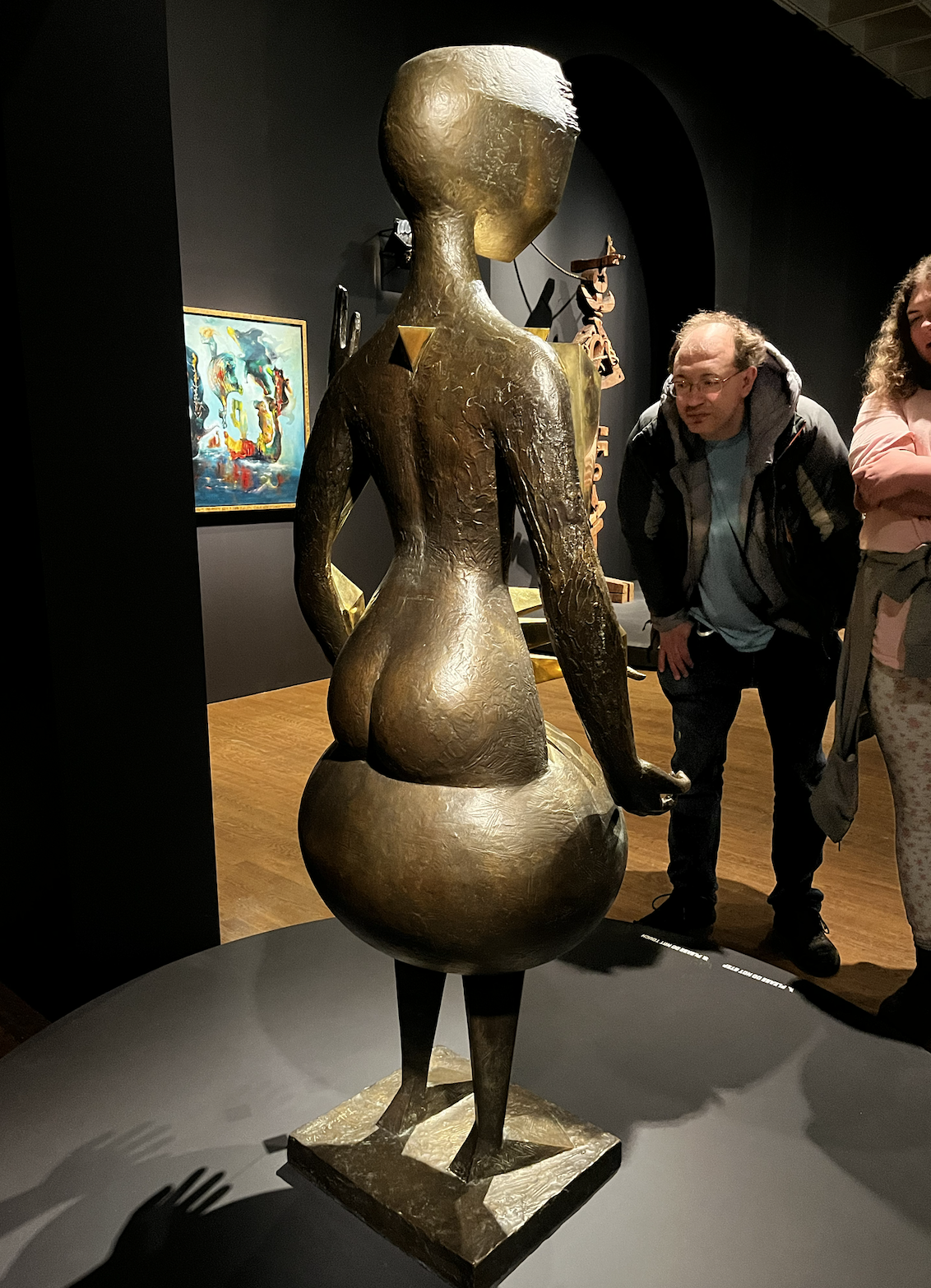
“She’s a baddie,” I overheard someone say.
“I can relate to the teeth, ‘cause I just had to get my dental work done,” another whispered. “It’s a good reminder.”
Someone else offered an insight to fellow passersby: “She’s pregnant! And when you look in the mirror, she’s pregnant with you.”
I thought Le Grand Transparent and other exquisite corpses were supposed to express something beyond the subconscious, to lead us into strange, unknown worlds. It seemed this scarcely human sculpture was, instead, prompting people to reflect back on their own appearances — and overdue dental exams.
“At about 20 years of age, we make the error of trading our childlike imaginations for adult good sense and logic,” Breton wrote in his manifesto of Surrealism. Breton and other Surrealists believed that finding freedom was the highest human aspiration. Tending to our imaginations, they posited, is what allows us to be free.
Though I drew hundreds of exquisite corpses myself as a kid, I, for better or worse, never considered my creations of winged pencil-heads and squirrels with shovels for torsos as reflections of myself. I understood them as keepers of the peace. My inner child couldn’t calm herself down, but a round of exquisite corpse always quieted my mind.
I might prescribe the same treatment — either a game of exquisite corpse or a visit to the Dreamworld exhibit — to other now-grown adults trying to make sense of an ever-louder world echoing the totalitarian anxieties of the ‘30s and '40s. If you’re crying a few folds in, it will hopefully be from laughter.


