
When the Earth Speaks
Morse Recital Hall
New Haven
Sept. 17
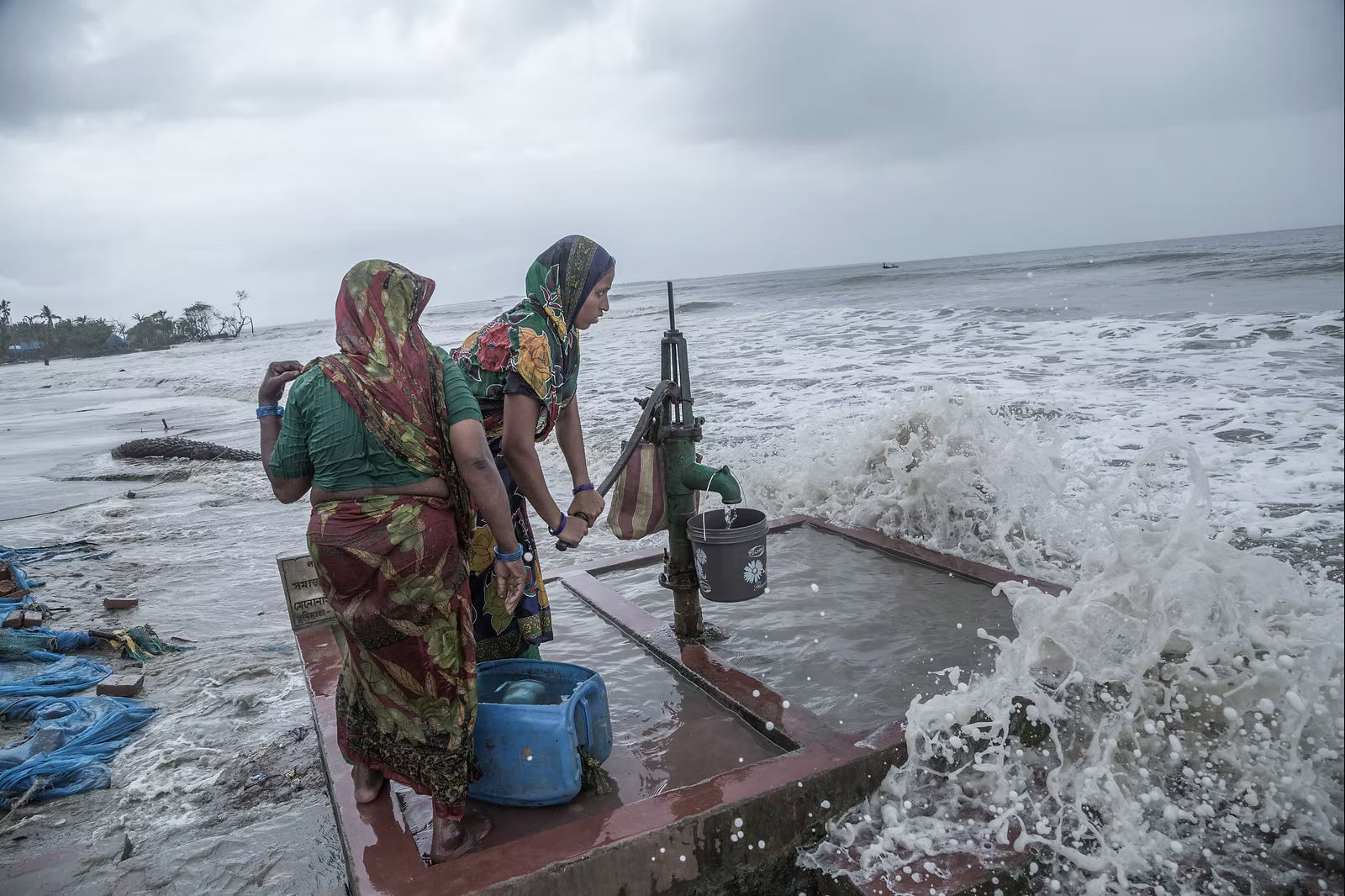
Two women trying to pull fresh water from a pump already half-covered in ocean waves. Two men in a piazza somewhere, lounging at a table in a cafe as they always have, except that they're knee-deep in water. Burning grass on a plain. Cows grazing in a field of trash.
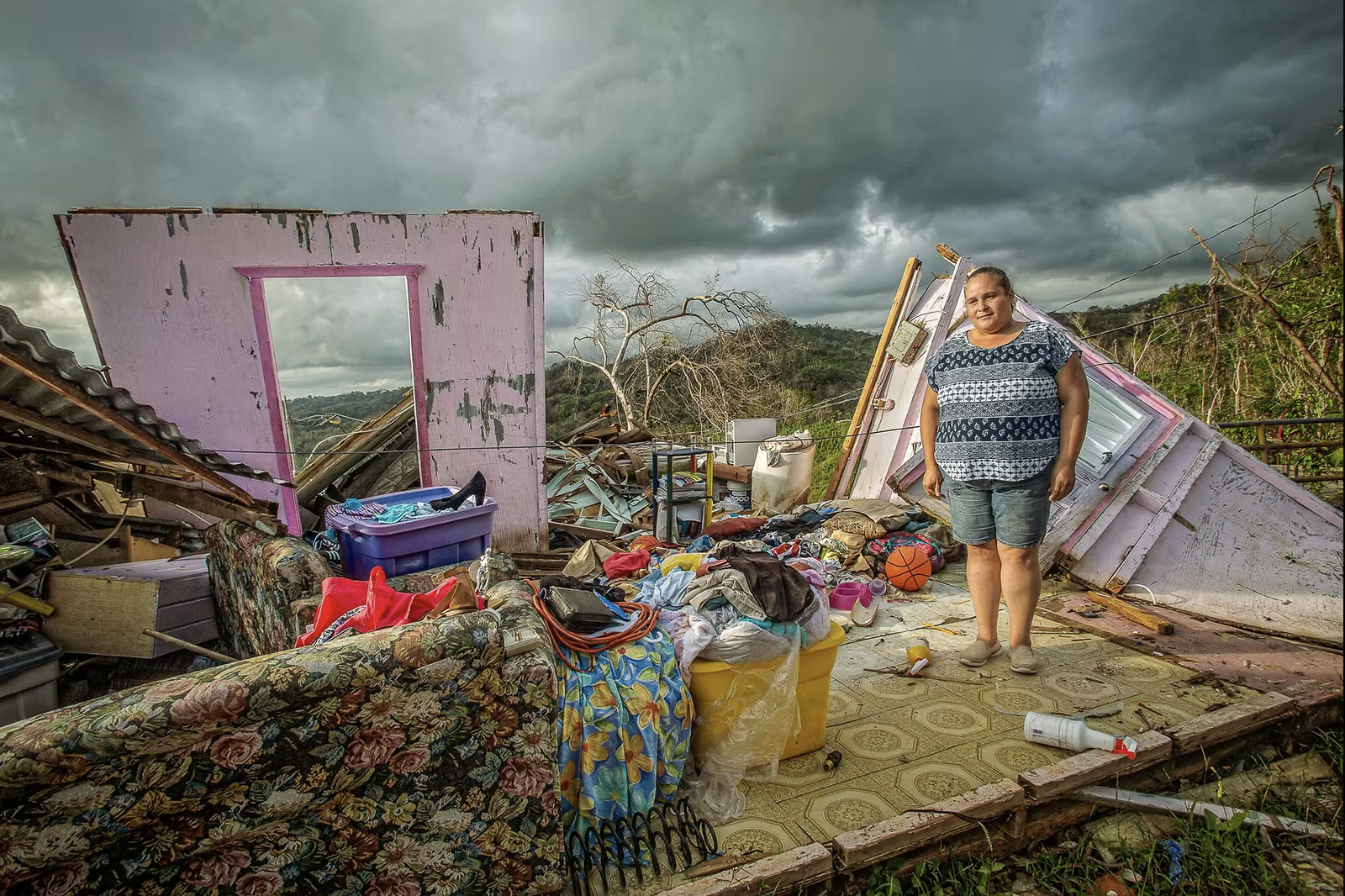
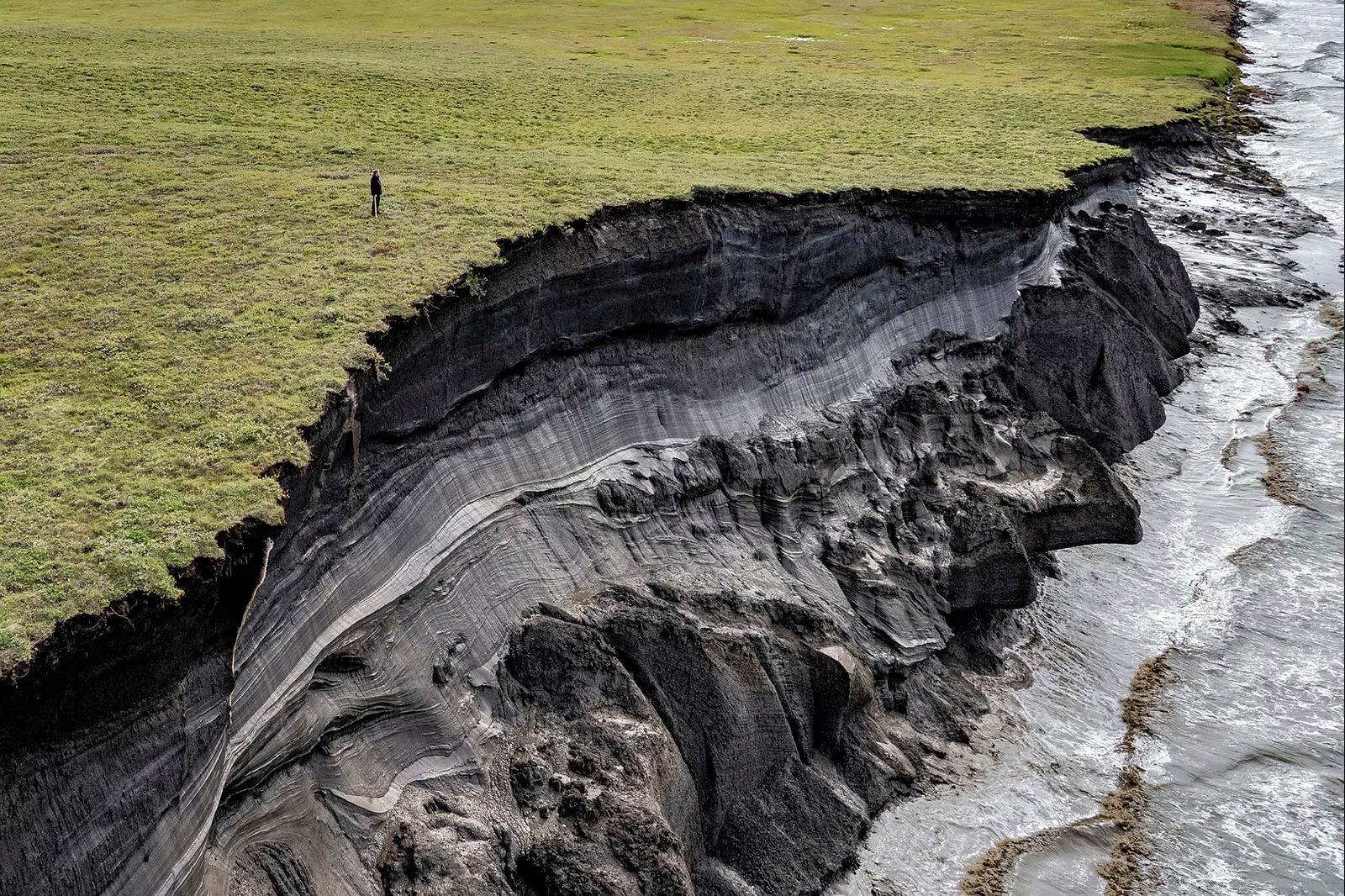
The images, from all over the world and part of the BarTur Photo Award, floated by on an overhead screen at Morse Recital Hall on College Street on Thursday evening. They had impact all on their own, but the impact was amplified by the string quartet of Jaewon Wee and Hyein Koo on violins, Annis Ma on viola, and Vesper Park on cello, playing works by Forrest Eimold and Jaebong Rho intended not just to call attention to the effects of climate change, but to approach it from a different perspective.
The performance was part of a multidisciplinary event intended to bring together the arts, architecture, and science to begin to address the increasingly urgent issue of climate change in new ways. As Jennifer Marlon — senior research scientist, lecturer, and director of data science at the Yale School of the Environment; executive director at the Yale Center for Geospatial Solutions; and lecturer in molecular, cellular, and developmental biology — stated in a panel following the string quartet's performance, "the most interesting questions are at the intersections of different disciplines." The panel was also a symptom of a shift in understanding of what to do in the wake of the failure of national and international -level institutions to address the problem; the large-scale, coordinated efforts many may have hoped for, say, in the 1970s and again in the early 2000s, have yet to materialize. Today, Marlon said, "we need a million different solutions to the problem."
Those million solutions could come from a million different people. Anthony Acciavatti, Diana Balmori Associate Professor at the School of Architecture, pointed to a project in India in which people collectively addressed a groundwater problem. India extracts a quarter of the world's groundwater, at such a rate that it is causing the earth to move and buildings to collapse. Communities in India have responded by collecting rainwater and reintroducing it to underwater aquifers, leading in some cases to a replenishment of the water supply and restoration of the land. Marlon pointed out surveying showing that 60 to 70 percent of the U.S. population understands climate change as an urgent issue. In the current political climate, "we've stopped talking about it," so "there's a perception that it's not a problem." But people are worried; and when politicians know this, Marlon said, they respond to their constituencies.
Marlon said she drew optimism from the hundreds of stories of local efforts happening around the country, from oyster castles in South Carolina to prevent erosion to mapping climate risk in Texas. She pointed also to the fact that 6 million households in the United States now have solar power. It took 40 years to reach the 1 million mark; the latest million happened in the past two years. "The transition to a renewable economy" is underway, she said.
There was still much more to be done in finding new ways for people to connect with the issue. For both Marlon and Acciavatti, that's where the arts came in. Acciavatti suggested people return to reading more novels. Online life, he explained, has reduced many people's attention spans and encouraged thinking about problems in a reductive and short-term way. Novels — in which characters solve complex problems over a longer period of time — are models in how to think about climate change, and an antidote to the way the internet affects our thinking. They "push back against the commodification of attention," he said, and better equip us for the challenges we face.
So too did the photography and music show, which worked on the intellect and the emotions at the same time. Eimold explained before the performance of his piece, Age of Iron, that he hoped his quartet would create a space to meditate on climate change in a novel way. His piece began with a spike of aggressive pizzicato from the cello, followed by long, serene chords from the violins and viola. The language established, the ideas were passed from instrument to instrument, giving a sense of disrupted peace. Imagery of floods around the world, rising tides, and the power of the ocean passed across the screen as the long tones grew more dissonant, the disruptions more intense. The violins sprinted into quiet yet frenetic passages that suggested submerged forces roiling to the surface. As they settled into sparser chords, ambient, underwater sounds filled the recital hall, an acceptance of things to come that felt like the first step in adapting to it.
Introducing his piece, testimony, Rho explained that in his initial research on climate change he concluded that "we are all doomed — it's too late." But, he added, "if we think we're doomed, then we are." Music could push back against that despair. In the conclusion of the piece, "I hope you hear," he said, "a refusal to give up our humanity." Rho's piece began on tense, pulsing chords that — akin to Eimold's piece — were subjected to increasingly violent musical interruptions, bursts of sound and razor-sharp spikes in dynamics that showcased the dexterity of the players. Over time, the interruptions began to eclipse the chords. The players deployed harmonics and harsh bowing to wrench difficult sounds from their instruments. The imagery above the quartet intensified, with images of wildfires, burned forest, burning houses, burned bodies. The music rose in its insistence, and the imagery turned to photographs of war in a few parts of the world as well as the Capitol riots, making a short, sharp suggestion that perhaps the rising anxiety about climate change and its effects was already taking its political toll. But the moment Rho asked the audience to listen for appeared: strong tones from the instruments' lower registers amid the chaos, suggesting something battered but not yet beaten. The imagery changed to a man playing a violin up to his chest in ocean waves. The music cut off. The pulse that testimony started with returned, tired but not yet tired out. It wasn't giving up. Was there really any other choice?


