
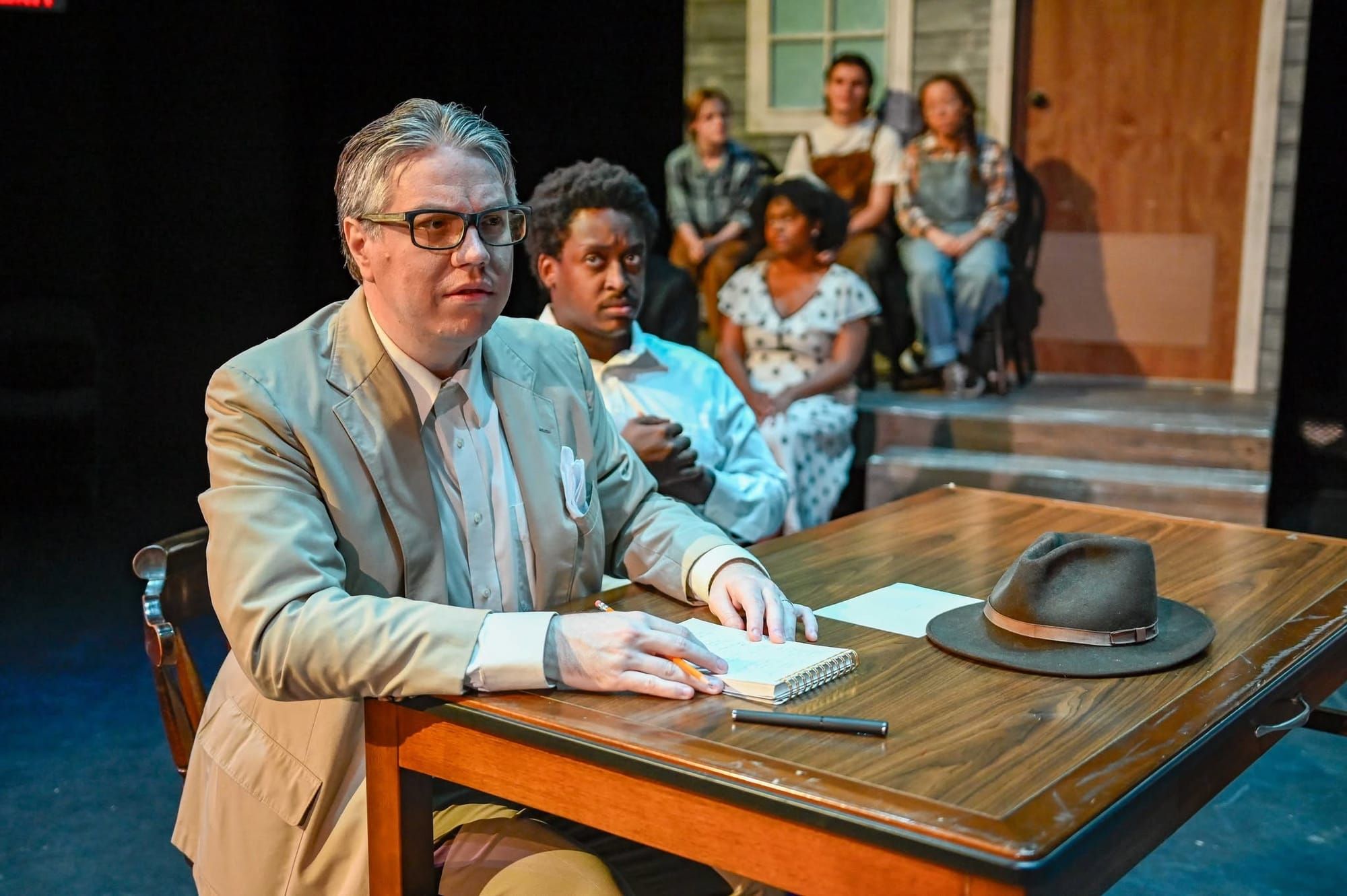
World Stage Theatre Company: To Kill a Mockingbird
Tulsa Performing Arts Center, Liddy Doenges Theatre
June 19, 2026
World Stage Theatre Company’s eighth season promised a full slate of “timeless and relevant stories,” and To Kill A Mockingbird, which closes that season this weekend, is certainly both. For many, including myself, reading Harper Lee’s 1960 novel in middle school was a primer on the ways that liberty and justice have not been for all in America. In World Stage’s production, with David Blakely directing an adaptation by Christopher Sergel, clear performances and effective technical elements created a welcoming invitation into what can be a heavy story.
Set during the Great Depression in the fictional town of Maycomb, Alabama, Lee’s novel tells the story of a lawyer named Atticus Finch, tasked with defending Tom Robinson, a Black man accused of molesting a white woman. The story’s narrator is Atticus’ young daughter, Jean Louise, aka “Scout,” whose worldview expands as she watches events unfold leading up to and during the trial, in which, despite resounding evidence that Robinson did not commit the crime, the town’s jury finds him guilty.
A grown-up Jean Louise (Kathryn Hartney) opens World Stage’s production with a scene-setting monologue, introducing the various characters in the Finch home and the town of Maycomb. Hartney carries the audience through the story with ease, bringing warmth, humor, and an inquisitive spirit to the character—qualities I remember from my first reading of the book and was delighted to find still present after all these years.

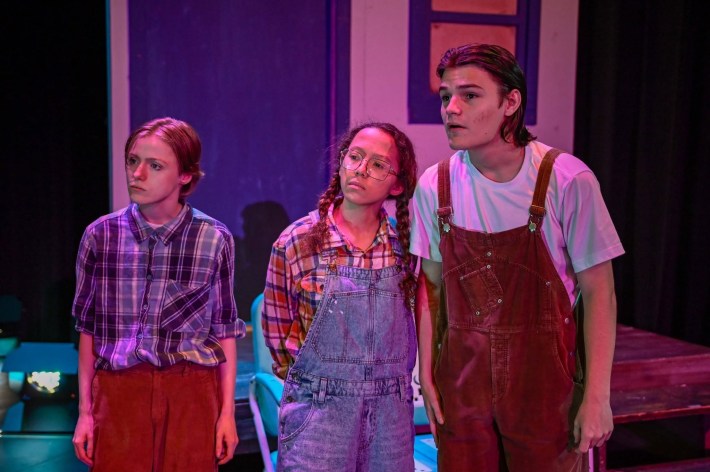
It’s also fun to watch Hartney watch the show; at some points she specifically matches her physicality with that of her younger self, played by D’mi Johnson. Johnson also brings out this character’s quizzical nature, but she aptly emboldens it with youthful bluntness, making for some enjoyable moments of comedy and truth.
As young Scout, Johnson’s bold energy creates a delightful foil to Lucus Levy Keppel’s Atticus Finch, who speaks gently and carries himself with a calm conviction, especially during the trial scene. No matter how much of a fuss Bob Ewell (Ben Morgan), the primary witness, and Mayella Ewell, the alleged victim (Brenna Cook), make on the stand or how nervous Tom Robinson becomes, Keppel’s clear-headed performance makes the truth indisputable for the audience—and thus makes that truth’s betrayal by the jury all the more devastating.
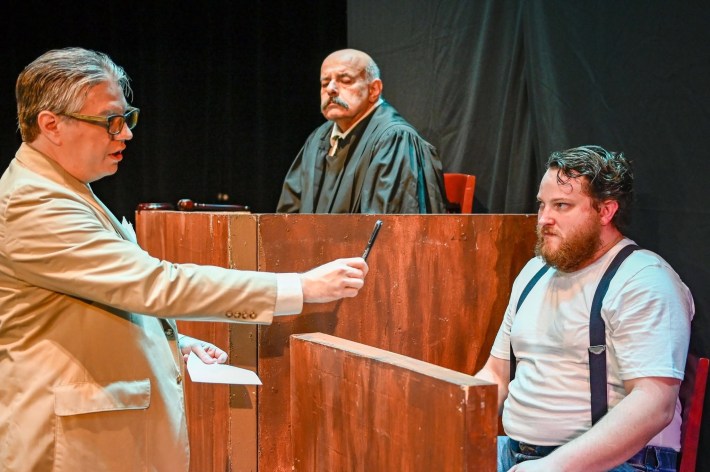
Cornelius Johnson’s performance as Tom Robinson adds to this tragedy. Like Keppel, Johnson speaks with level-headed clarity and specificity. He is the only Black person on the floor during the trial; in his performance, I could see him compartmentalizing Robinson’s emotions, no matter what was happening, in order to appear palatable to the jury and strengthen his case. Johnson also brings out the full dimensions of his victimization at the hands of Mayella, a stirring plot element that adds nuance to the rest of the story’s dialogue.
I must give a shout out to the other youth performers in the play, Josiah Hoffman (Jem) and Jay Riggins (Dill), who both had lively camaraderie with D’mi Johnson on stage, their back-and-forth creating some of the more confident moments in the show. Cook took on the difficult role of Mayella with command and astonishing range.
Given the expositional and rambly nature of this script, World Stage’s production mostly flows well, and I found myself warmly welcomed into the story. After the trial ended in act two, the play’s momentum felt a little aimless and unsure—until the sudden arrival of one of the most cinematic moments that I’ve seen on a Tulsa stage this year. I won’t spoil the surprise; I’ll just say that the moment we see Boo Radley for the first time is a masterful marriage of precise lighting (by Anna Puhl), sound (by Zora Smallwood), and fight choreography (by David and Quinn Blakely) that made for some “edge-of-your-seat” theatre.
There are certainly stories that better expose the racism and injustice in America today, but some elements of To Kill a Mockingbird still hit home, like Atticus’ unwavering morality. His conviction to do what is right, no matter the consequences, feels like a breath of fresh air in this world of corrupt so-called leaders and high-powered individuals who only look out for their egos. It’s a good reminder that bravery and equilibrium stay timeless and relevant, too.


