
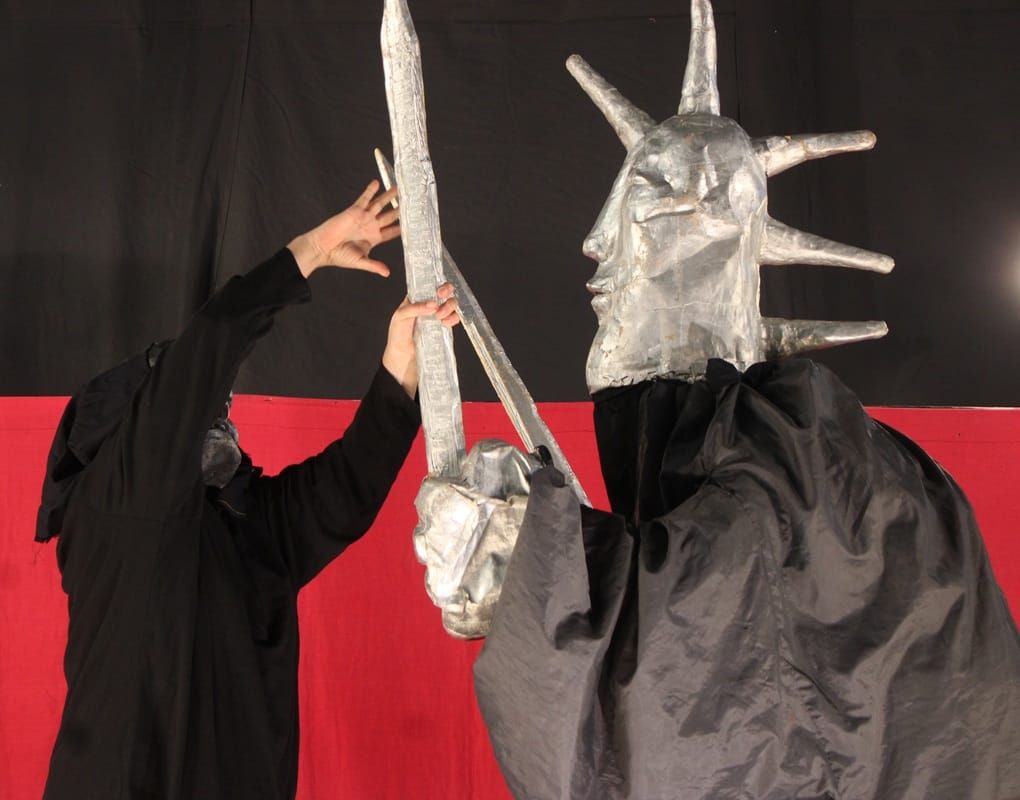
The End of the World Never Minding Show
Bread and Puppet Theater
First Presbyterian Church
Hartford
April 22, 2026
The revolution will not be televised, but that doesn’t mean it won’t be performed.
First Presbyterian Church was such performance when it hosted Bread and Puppet Theater, a radical troupe hailing from their farm and home performance venue in Vermont. Their show, The End of the World Never Minding Show, carries on their tradition of political theater started when the group was founded in 1963.
The show opened with the story of a king who called upon a great warrior to slay a dragon who threatened his kingdom, despite the warnings of his advisers not to invite the warrior into the kingdom. The warrior defeated the dragon, but turned his sword against the king and the people of the kingdom, killing everyone. Finally, he waited alone, until death came and took him too.
At first, I didn’t understand why I heard people laughing during the first act. As I looked around, I saw there were a lot more young children at the show than I expected. The lure of live puppetry must have drawn their parents in, but these puppets were not cute or whimsical. They were abstractions, at times grotesque, of the worst qualities of humanity. The adults were forcing themselves to laugh for the children’s sake, because there was nothing funny about the puppets slaying each other.
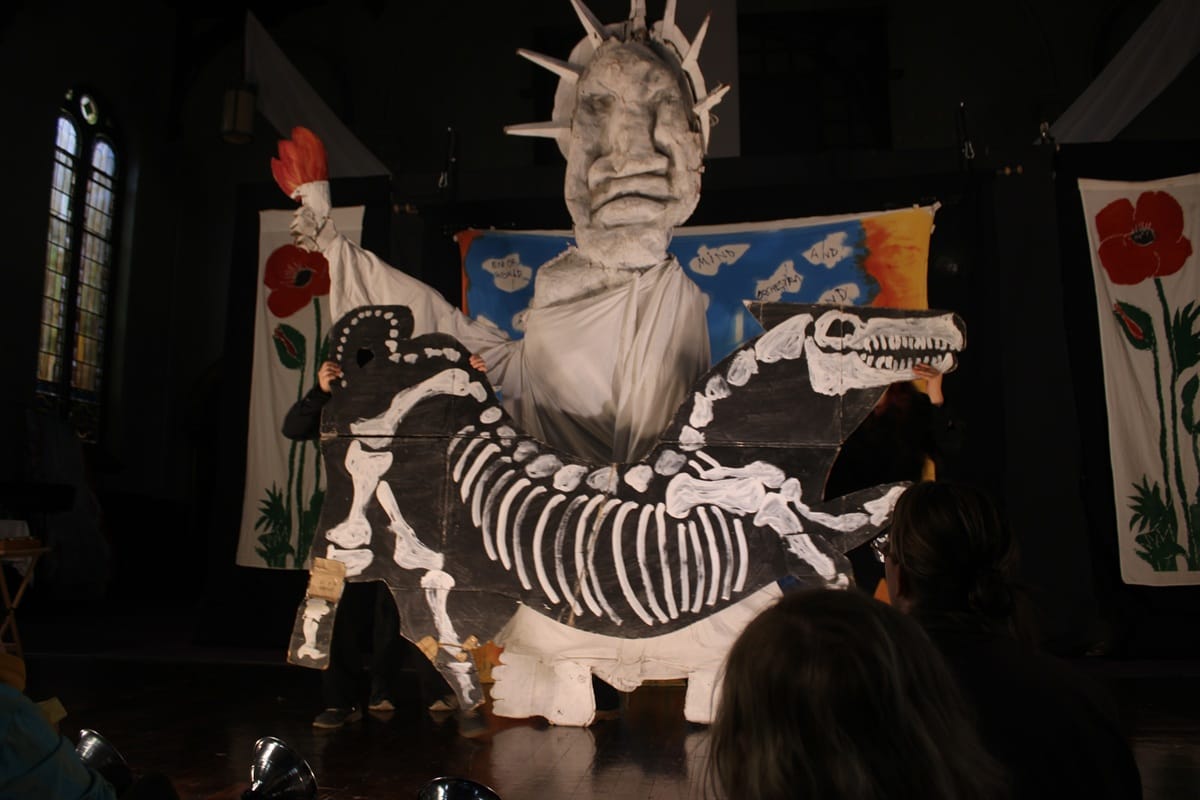
The rest of the show was more direct in its scathing critique of American imperialism, capitalist exploitation and the modern police state. As I mentioned, the puppets were visual representations of American vice: disfigured human beings recognizable only by their labels as workers; massive fatcat businessmen towering over the people in the audience; charred bodies, victims of American bombs in Iran.
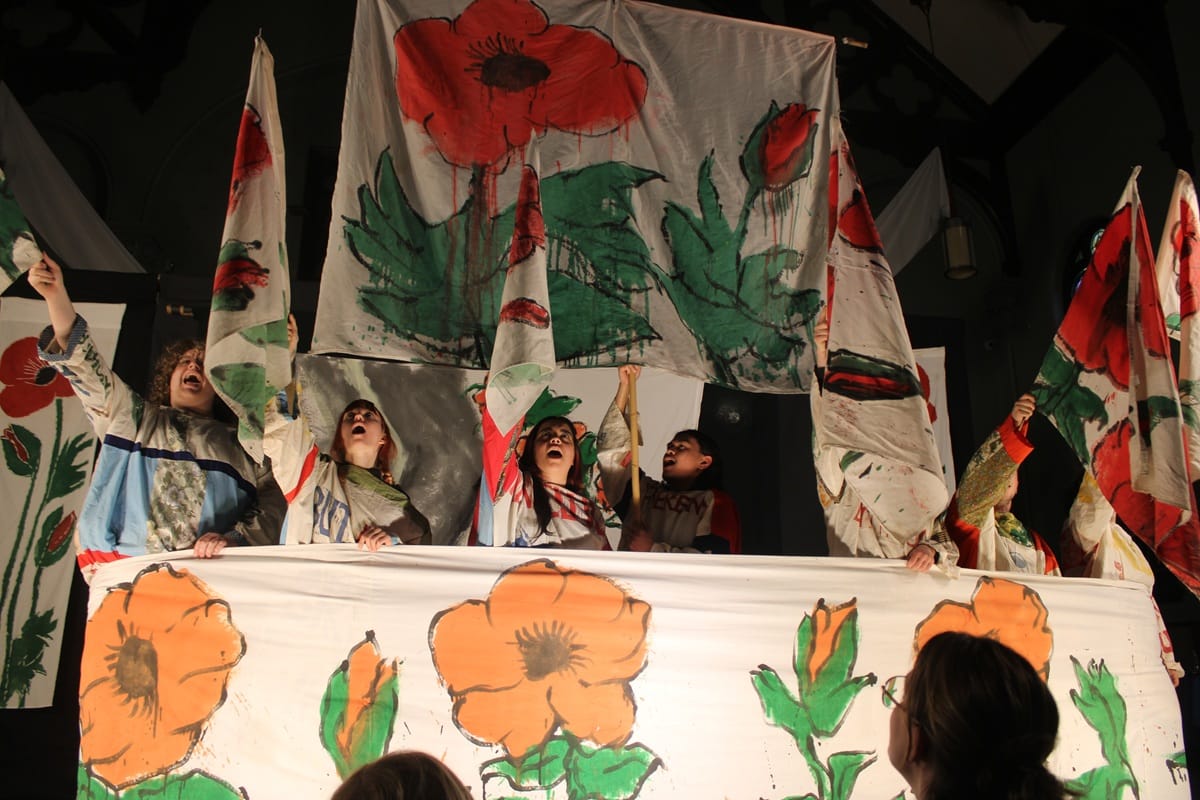
The performance was controlled chaos. I don’t often talk about form, but I think that the decision to structure the play in so many nontraditional ways was itself a challenge to the bourgeois expectations of an audience (myself included) that may view art through a lens of consumption as opposed to expression. There was no narrative throughline or cast of zany characters to latch onto. The sense of whiplash between acts felt like it was meant to communicate how urgent the situation is.
As one might expect, this did not hold the attention of many of the children in the audience. But maybe the point of bringing the children wasn’t entertainment, but to expose them to a different kind of art? Watching them squirm and walk back and forth in the crowd reminded me of my son. He’s much older than the children there, but would he have liked this?
On the walk home, I gave him a call. I told him about the play and some of my initial thoughts, and mentioned how many kids were there.
“I always made the decision to not really talk to you about politics, because I didn’t want to force what I was doing on you. I thought I’d let you come to it on your own if you were interested.”
“I appreciate that,” he said. “But a little push couldn’t have hurt.”
Bread and Puppets returns to Hartford in September, so there'll be another opportunity to make that push.
NEXT
Jamil goes to check out the premiere of Hartford Stage’s latest play.


