
Sound of Music
Gwangju
Aug. 25, 2026
(Jisu Sheen recently moved from New Haven to Gwangju, South Korea, where she’s covering local arts and culture for the New Haven Independent and Midbrow.)
On Tuesday night at Gwangju music bar Sound of Music, glorious hi-fi audio streamed through hefty speakers on either side of the bar. Manager 정현정 (Jeong Hyun-Jeong) explained that the owner designed the dimensions of the space for the best possible sound.
When people are going through hard times, Jeong noted, it's music that comforts us.
"You look like a different person," she told me in Korean as I sat at the bar. I had come by a few weeks before. Maybe the music had changed me.
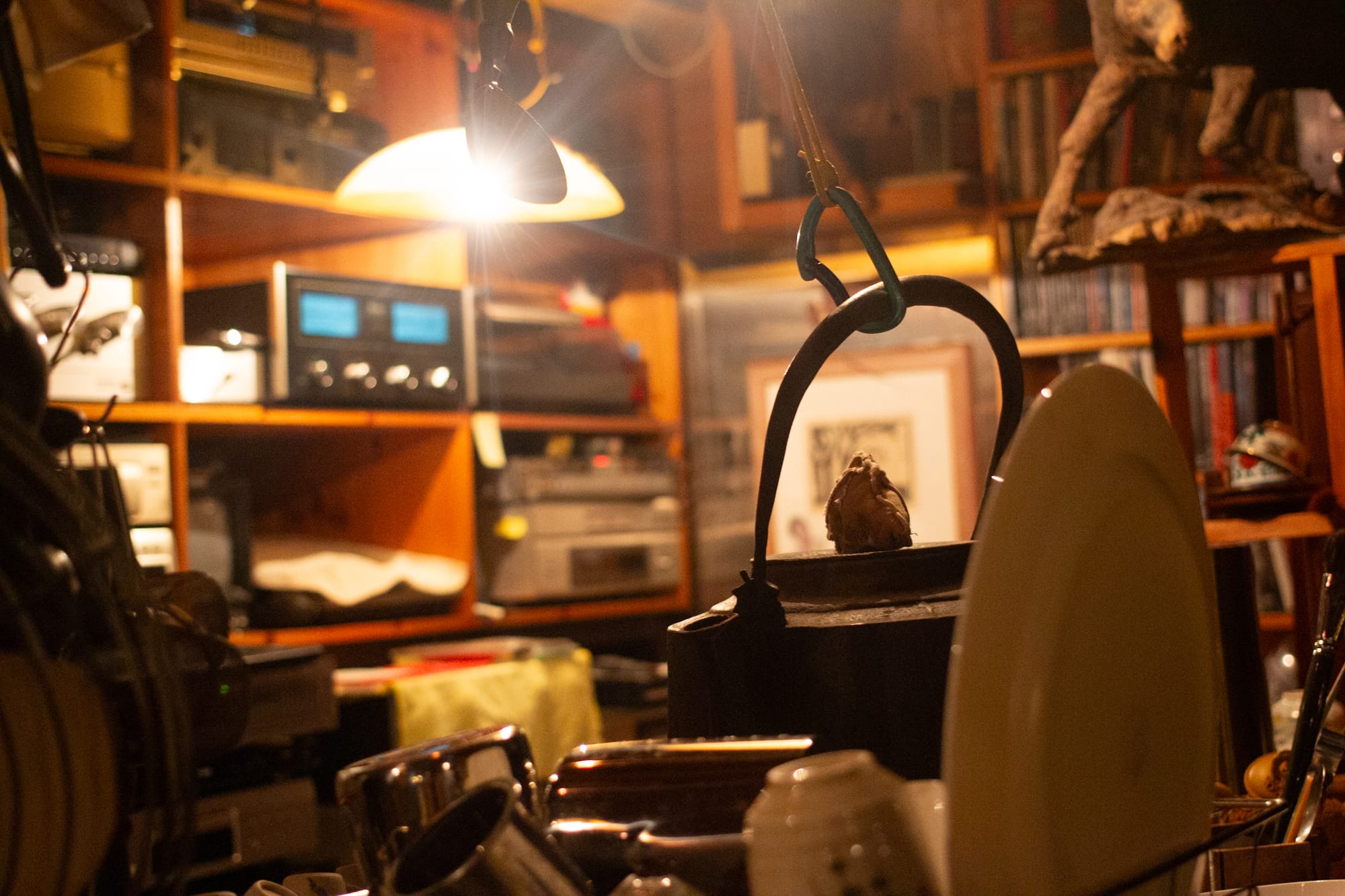
Jeong gave me a cup of tea brewed in an over-200-year-old Japanese cast iron kettle. The years of careful use and upkeep impart a depth of flavor, she explained.
"200 years?" I repeated just to make sure.
"It's like something that should be in a museum," she replied.
Sound of Music first started in 2002, and Jeong joined in 2007 as a part-timer.
Rather than aiming to make money, Jeong explained, Sound of Music's purpose is to be a cultural space. "Even this tea is culture," she said, pointing to the cup in front of me.
Jeong explained that with a good sound system, you can hear elements you might otherwise miss. The sound of breathing, for example.
She put on a version of Italian ballad "In Assenza Di Te" by Deborah Blando.
I did find a breath—not just in the song, but behind the bar. There, sitting among the many knick-knacks, the centuries-old, cauldron-like tea kettle puffed out steam in quiet sighs. It was making another tea.
Another voice hummed into existence. It was Brazilian singer Elizeth Cardoso, singing "Manhã de Carnaval."
Music I thought I knew appeared in forms I'd never heard before. Pachelbel's Canon, the classic wedding-aisle cue, arrived at the bar with the twang of a Korean instrument, the gayageum. It was a rendition by 서울 새울 가야금 삼중주단, the Seoul Sewool Gayageum Trio.
Many of the songs were live versions; even the sound of the audience's applause came through in high fidelity.
Above the bar was a traditional drum. Above the drum, a realistic stuffed polar bear. Around the room were brass instruments, paintings, mountain climbing gear, and elephant figurines of all kinds. I felt like I was inside Howl's Moving Castle or a page of an Eye Spy book.
"A minimalist would probably want to clear this all away," Jeong said.
Song Chang Sik's "밤눈" (Night Snow) stepped through like a Korean cowboy tune. The hi-fi sound system caught every lilt within a lilt. I thought of the first article I ever wrote for the New Haven Independent, a review of a "Desert Hearts" screening at Best Video. My memories mixed with Song's voice.
Part of the experience of listening to songs at Sound of Music was the knowledge that each selection had a reason to be there. If the reason wasn't apparent right away, it would be soon.
Jeong held her hand over the CD collection before pulling out a single thin rectangle among thousands. Korean singer Yoon Do Hyun entered with his song, "가을 우체국 앞에서" (In Front of the Post Office in Autumn). It started with a pleasant melody that — sure enough — built up into a glam, layered chorus and a transcendent electric guitar solo.
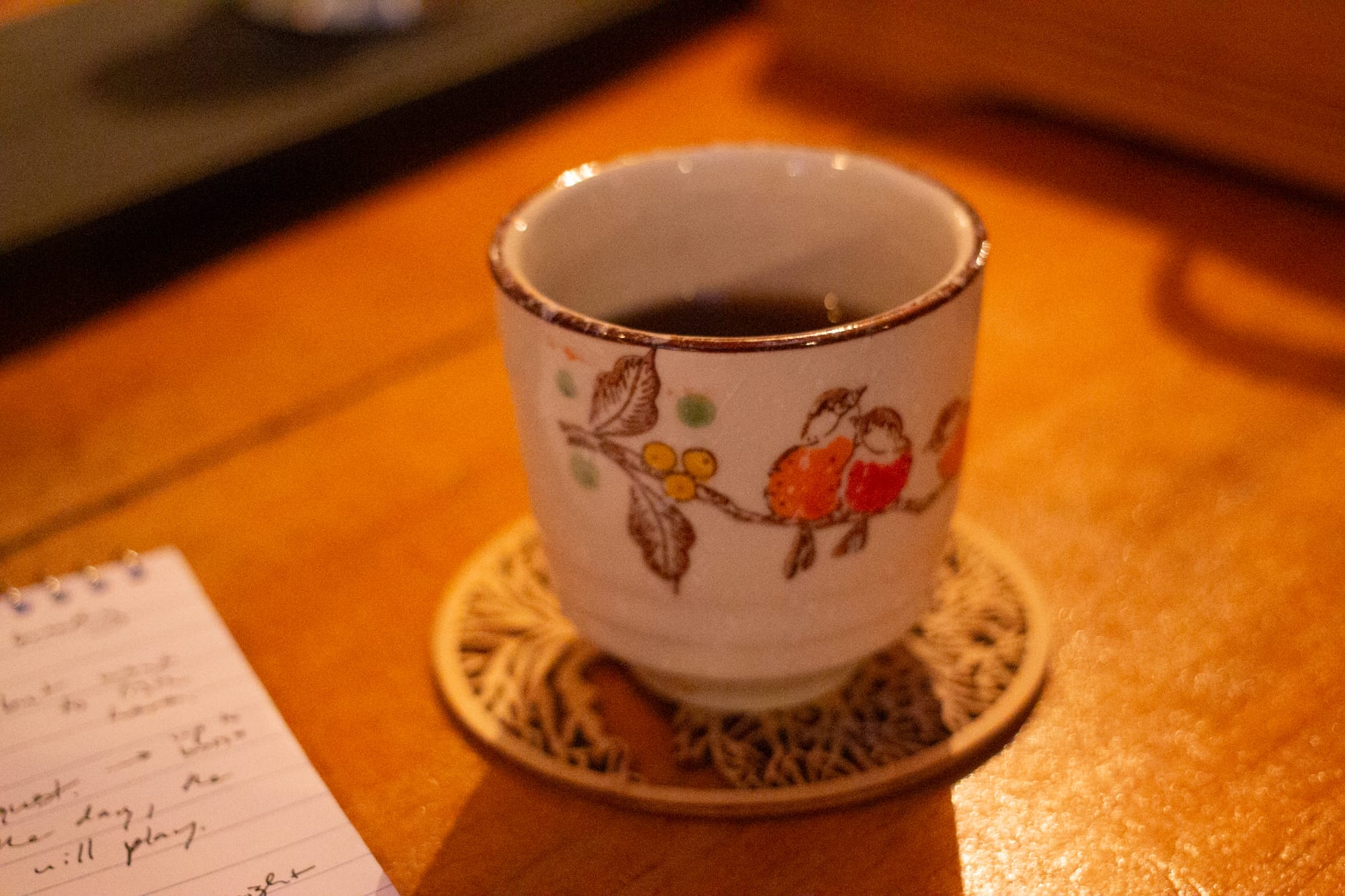
I ate the bar snacks, watching the floral motifs at the bottom of the dishes take shape. On the cup of cold tea, two birds cuddled on a branch. I hadn't noticed them before.
Over the speakers, I heard a familiar vocal intro. What was this song again?
"Killing Me Softly," the patron next to me whispered to her barmate.
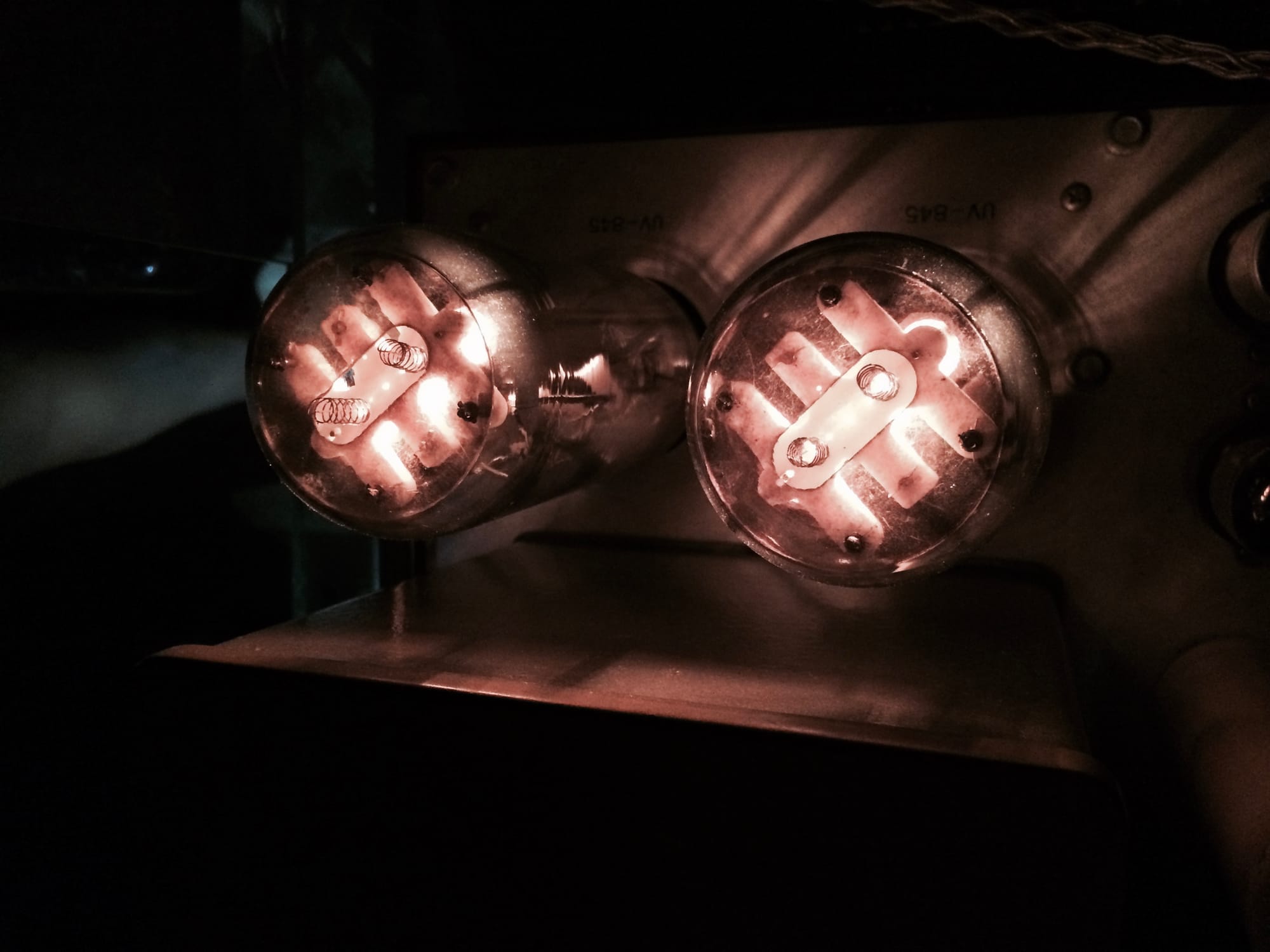
On special nights, music-lovers gather to listen to Sound of Music's analog sound system, which illuminates built-in bulbs as energy passes through. As the amplifier tubes heat up, Jeong explained, they create a stronger and richer sound.
She added that the point of the music bar is not just the quality of its equipment. It's the acoustics of the space and the ability to play loud. A music-lover might invest in a nice sound system only to be limited by the noise restrictions of an apartment building.
At the music bar, I felt like I was understanding loudness as I never had before. Here, gaining volume didn't mean sacrificing quality. It was like being bathed in the music.
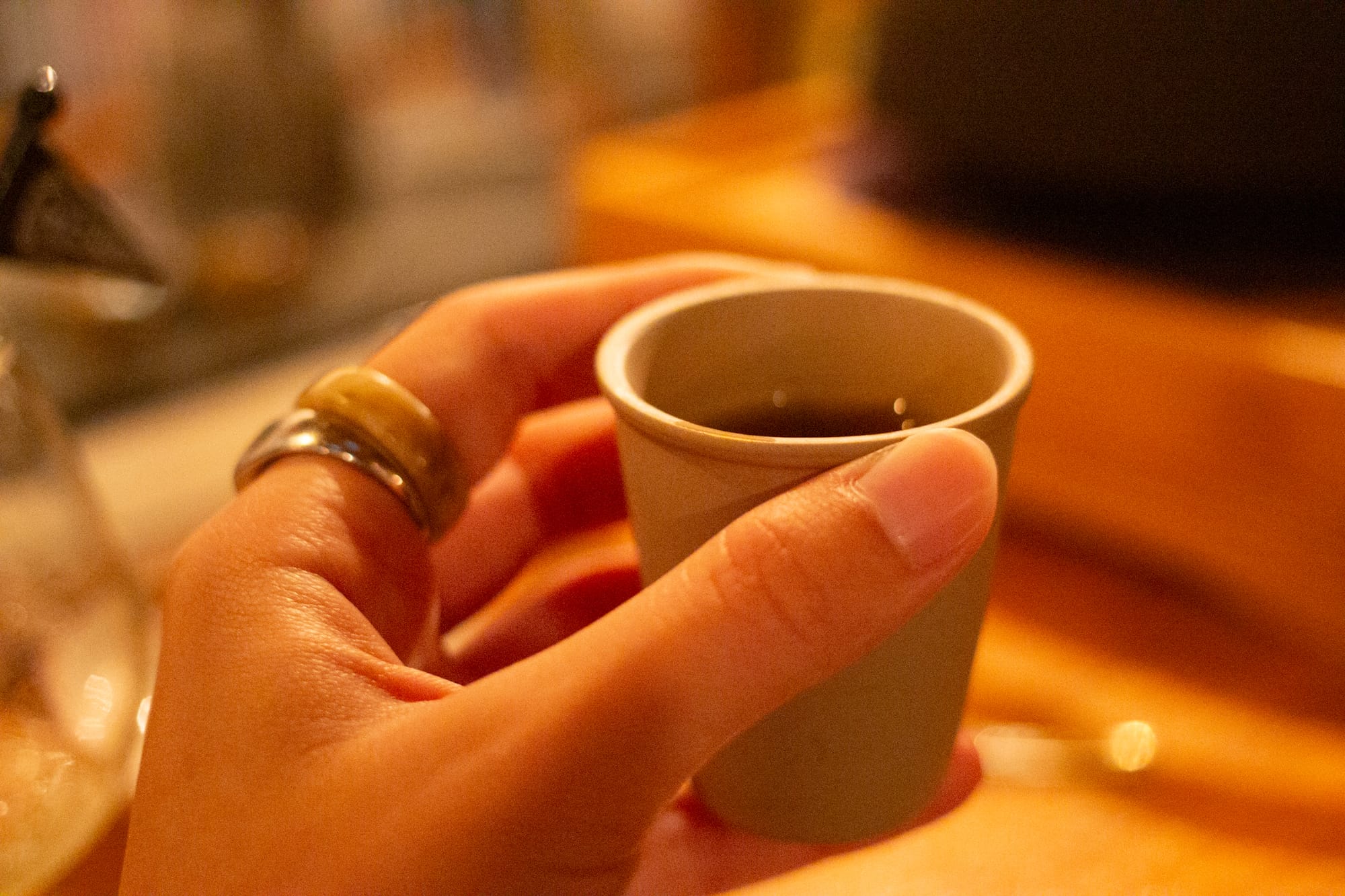
Before I left for the night, Jeong handed me a tiny cup. "Hot tea," she said. This was what the kettle had been brewing as the music played.
Sign up here to get Gwangju Midbrow email updates delivered straight to your inbox.