Uncovered Cities
Kim Ok Jin, No Eun Yeong, Yun U Jei, Choi Jae Deok, Bada, artists of Dasom Daycare
Dong-gu Eco-friendly Resources and Recycling Center
Gwangju
Through June 27, 2026
(Jisu Sheen recently moved from New Haven to Gwangju, South Korea, where she’s covering local arts and culture for the New Haven Independent and Midbrow.)
In 김옥진 (Kim Ok Jin)‘s world, cats move into vacant buildings, trees dance to control the weather, and birds play with their friends in would-be memories just out of reach.
It’s the same world we live in, when we let ourselves see—a world of non-human beings.
Kim hadn’t always spoken their language.
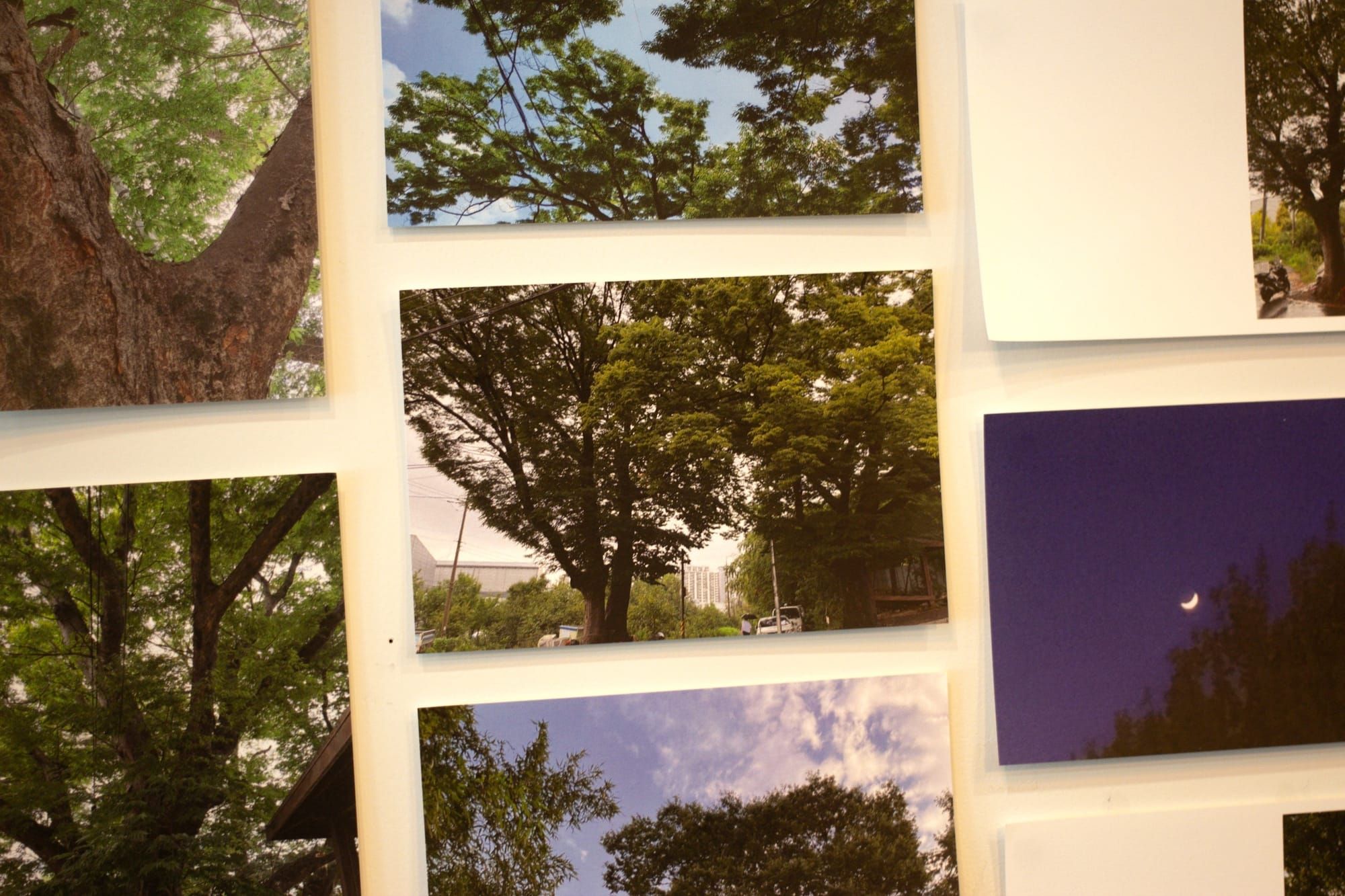
“Slowly, I learned a way to look them in the eye and share stories with them,” she says of the trees in her neighborhood (written in Korean in an artist statement). Her drawings and photos are in a group show called “Uncovered Cities” at the Dong District’s Eco-Friendly Resources and Recycling Center. It’s a zero-waste facility dedicated to approachable environmental practices, like using secondhand goods and repairing household objects. I saw Kim’s work on the wall of the center’s first-floor Donggurami Cafe.
The show’s flyer promised to include the bright young minds of a nearby daycare. I looked around the cafe, sipping an aloe tea, but couldn’t see any art that screamed “kid.” To find it, I’d have to think outside the box.
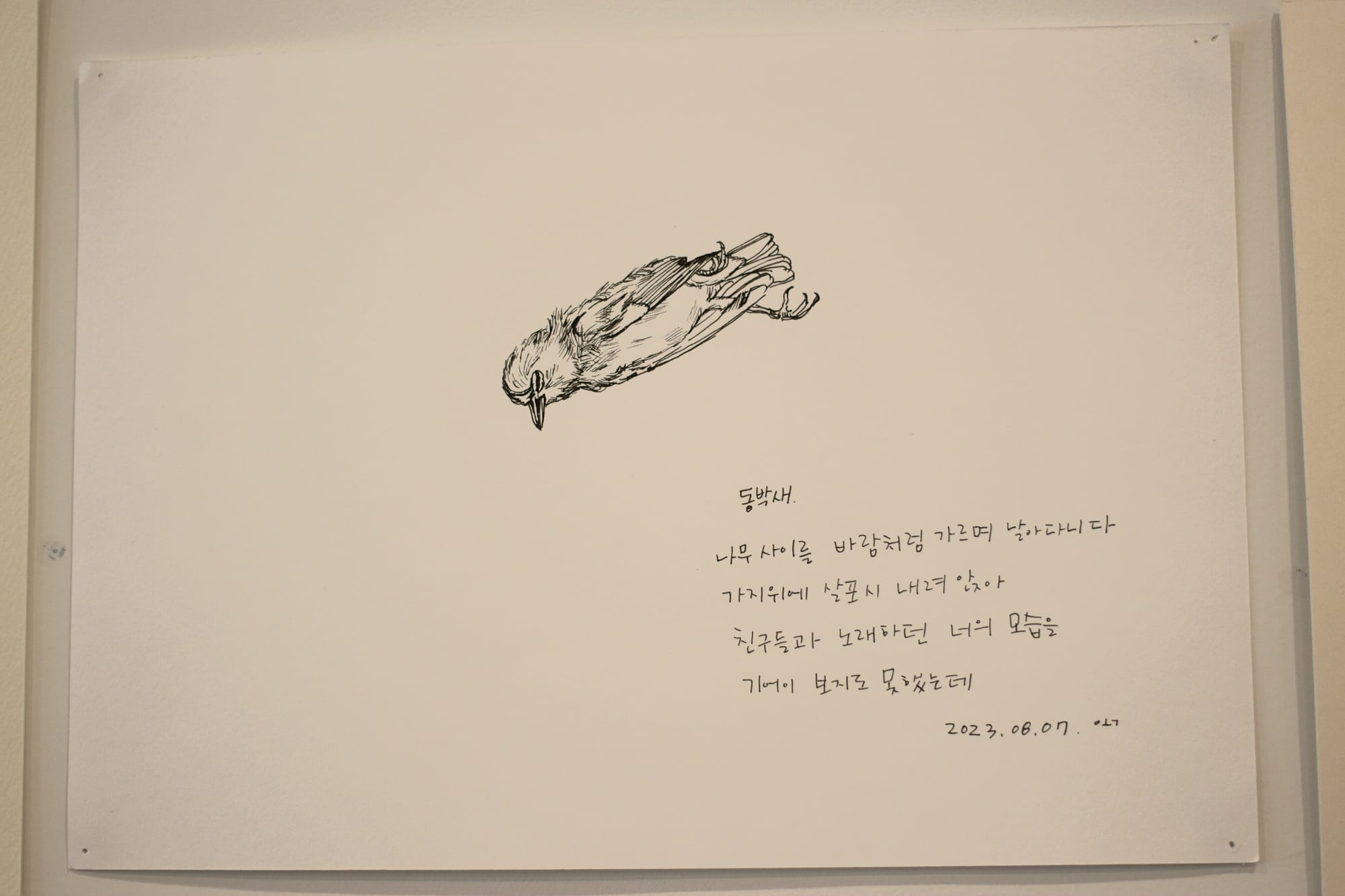
A drawing of a dead bird caught my eye. Kim had drawn it in the center of a sparse page, its eyes closed. It reminded me of the countless unfortunate avian souls I’ve paid my respects to over the years in the ornithological supercenter that is New Haven.
Beneath the bird was a short message in Korean, starting with “동바새,” the Korean name for the Warbling White Eye.
“I never even got to see how you looked, flying among the trees like a breeze and sitting on a branch to sing with your friends,” she writes, a blunt wish ungranted.
With a few well-placed words, Kim implies a system of surreal relationships. I spent a few seconds with a sketch of leaves before realizing what the poem under it was saying.
This one was a borrowed writing called “나무,” or tree, by poet 윤동주 (Yun Dong Ju):
“When the trees dance, the wind blows, and when they are quiet, the wind sleeps too.”
Give it a sec. Right.
Nearby was a drawing of what I thought were stray cats on the roof of an abandoned building. The cats, according to Kim’s note in the corner, are not so stray after all. This is their house, which they share with the trees. When the humans left, they moved in.
How did Kim get like this? I wondered. Was it really just through having frank conversations with the trees?
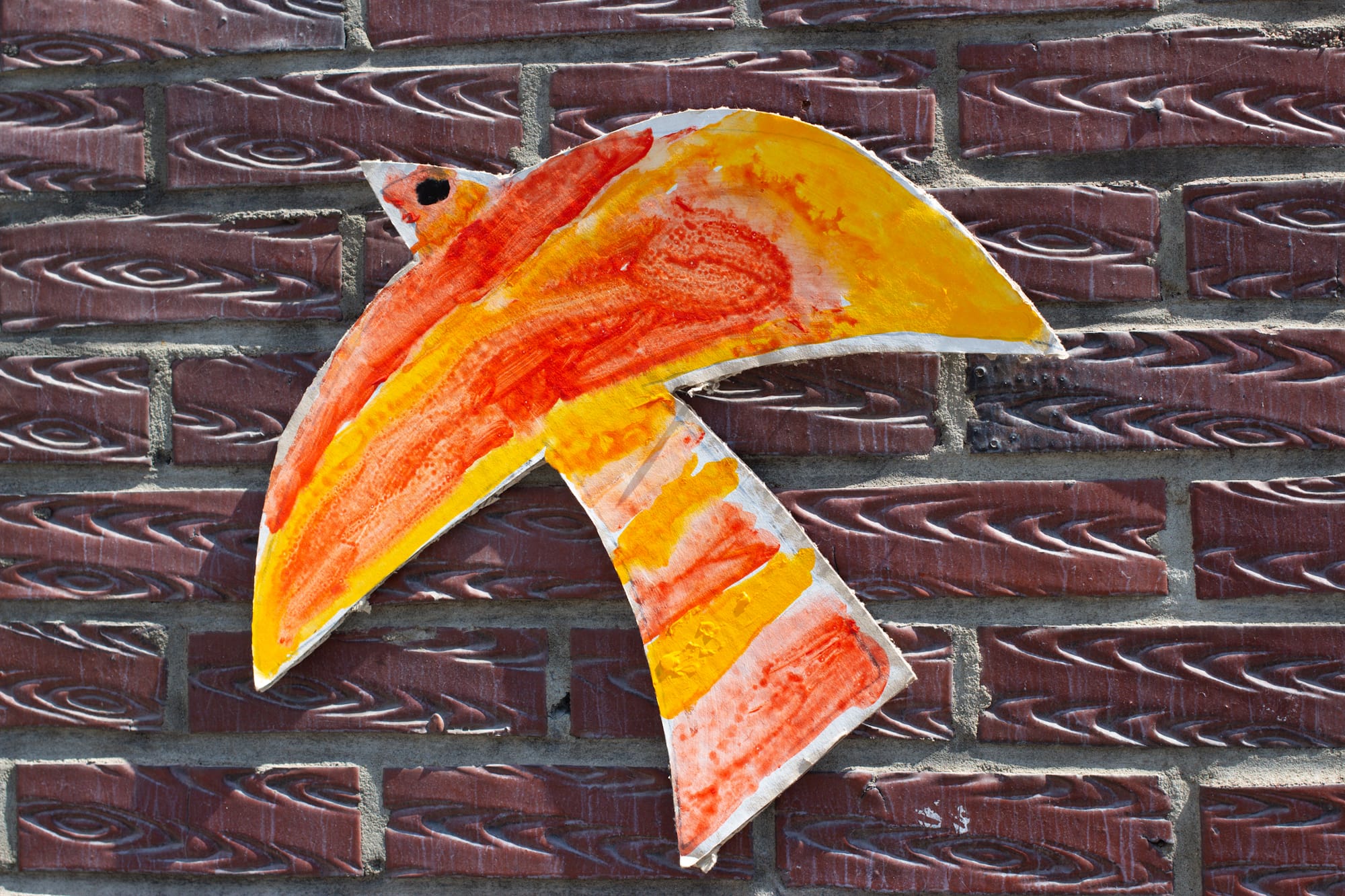
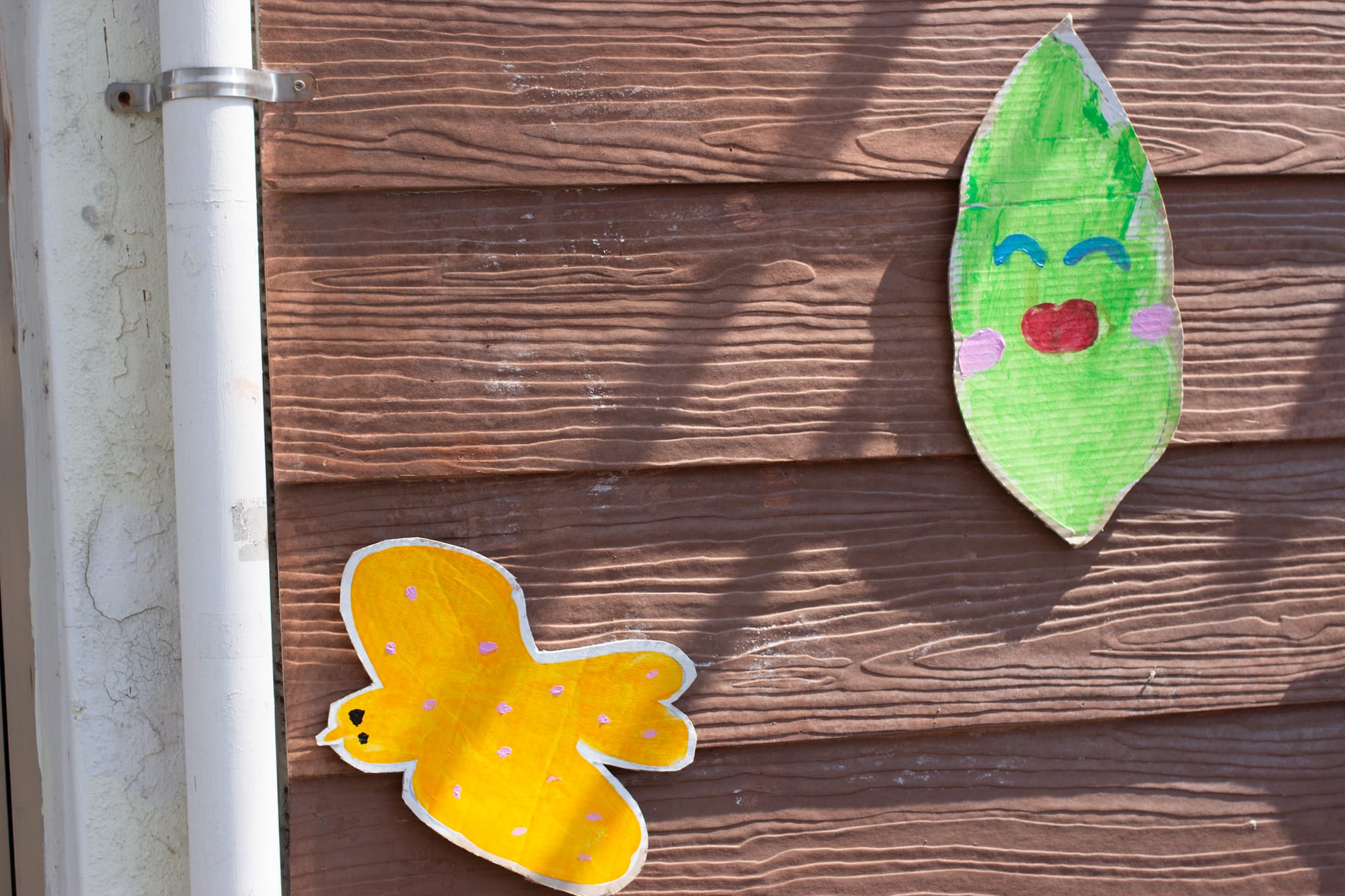
I stepped outside the cafe into the bright afternoon, thinking I might have missed the daycare art. On the other side of the street, a flock of yellow, purple, and red birds flew past brown brick.
I hadn’t missed the young artists’ work after all; it was outside, with all the other non-human beings.
Marveling at the kids’ drawings, I felt like I’d jumped into the Handy Dandy Notebook. Wonky fish and flowers with faces revealed themselves as I strolled down to catch my bus.
I thought about the bird Kim never got to meet alive.
She may have arrived too late to make its acquaintance, but somehow I felt like I was finding those missed moments here, even further in the future. The kids’ drawings pasted up on the brick could be scenes from the late bird’s early years.
The display also felt like a peek at the kind of artist who might grow up to be like Kim.
Along the street of the recycling center, time flipped like a pancake. A bear-like cat with half a tail and rounded ears scampered into an alley.
Perhaps in one of those houses, a person was moving out. And it was time for the creatures to move in.
Sign up here to get Gwangju Midbrow email updates delivered straight to your inbox.


