
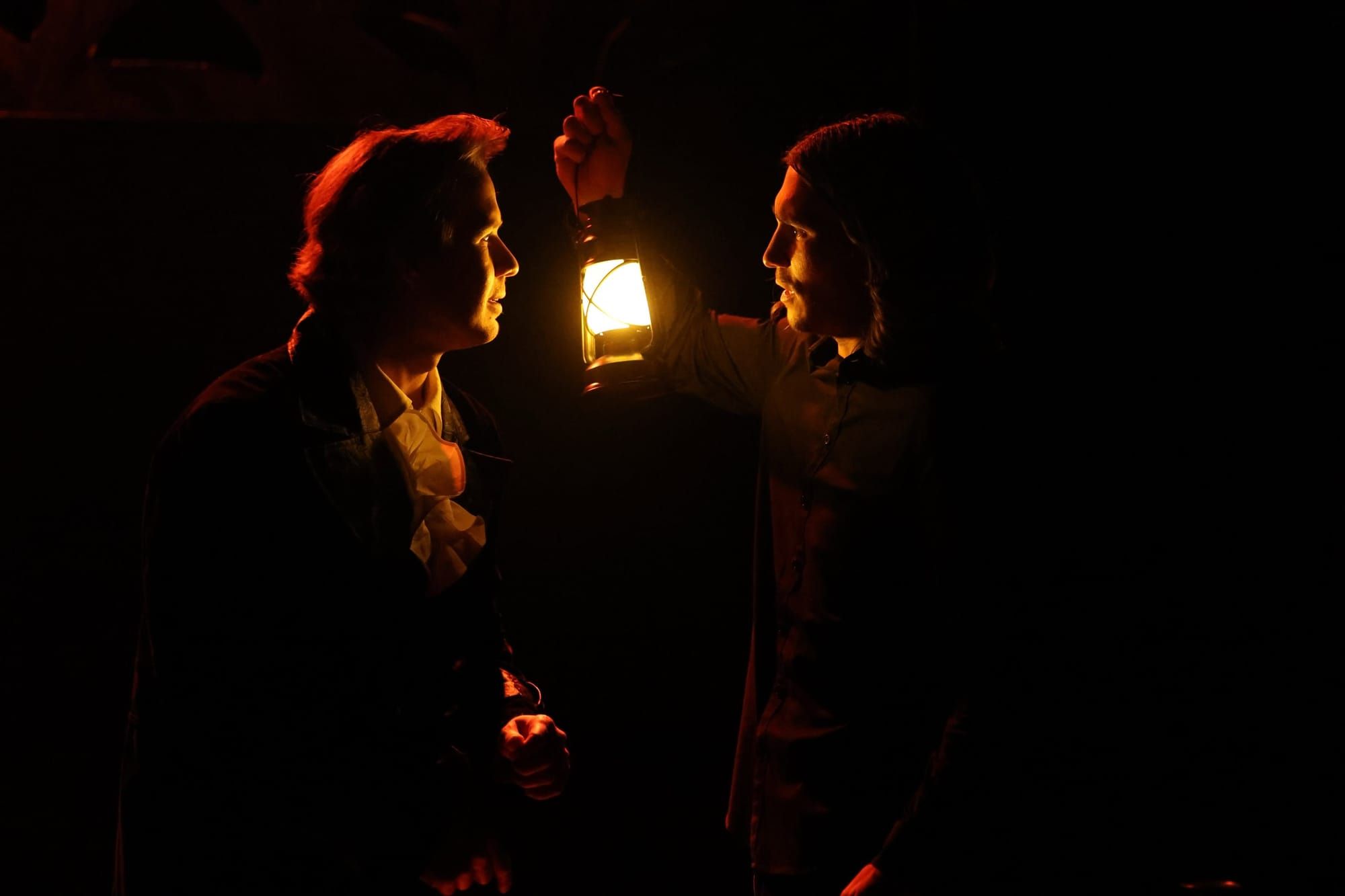
Nightfall with Edgar Allan Poe
Black Cat Theatre Café
October 30, 2026
If you’ve ever asked yourself the question “I’m not mad … am I?” you may be a) due for an appointment with your therapist or b) an artist or c) possibly both. The line between creativity and insanity is a well-trodden one in philosophy and literature, from Plato through Charlotte Perkins Gilman and beyond, but few writers have expressed the horrors of that question better than Edgar Allan Poe. In Nightfall, an original adaptation of four of Poe’s works, the freshly-launched Ninth Life Theatre Company stood right at the edge of madness and never flinched.
Ninth Life, which will have its first full season next year, is different from other theatre groups in town; it’s what’s known as a “resident company” at Black Cat Theatre Café, made up of artists affiliated with Cody Mayo Studios, whose eponymous founder is building an interconnected hub on Studio Row for pretty much anything that can happen on a stage or a set. Everyone involved with Nightfall is part of the actor training program at CMS, which means they bring a distinctive shared set of skills and priorities to the stage, even beyond the eight hours a week they rehearsed together during the six-week lead-up to this show.
The exceptional cohesion and trust that can develop through this way of working were evident throughout Nightfall. With writing and directing by Mayo and Eden Blattner that pushed the actors to their limits, plus well-developed staging and sound design that went further toward truly “immersive” than nearly any other attempt I’ve seen in Tulsa, the production created a space where it felt safe for both the actors and the audience to go all the way into this world. Under spooky ambient noise that built an atmosphere of dread-filled curiosity, even the recorded pre-show announcement worked toward this end—it finished with a terrific rendition of the Evil Laugh Turned Coughing Fit trope, letting us know we were in knowing hands.
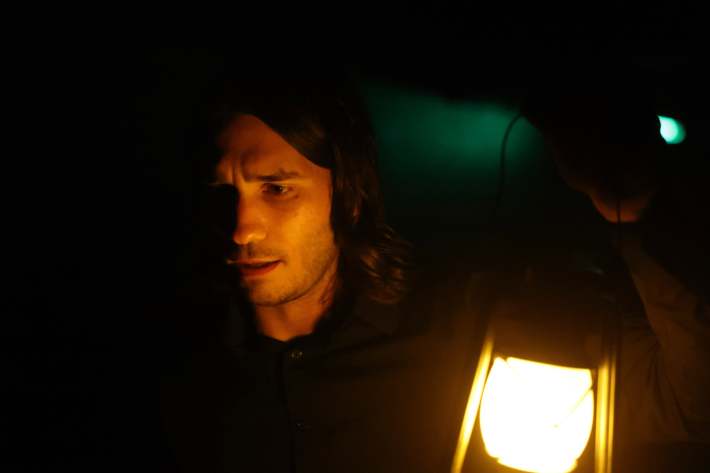
Poe himself (Zac Farrell, a haunt-eyed, heart-wrenching live wire in all black) was the throughline and the narrator here, but the first person we saw was his love, Lenore (Olive Meadows), barefoot and gentle-faced, moving silently around Poe’s writing space. In a perfectly timed moment, she flipped through the pages of one of his notebooks alongside a delicate scale in the piano music. Her simple solo dance, choreographed by Allison Soper, created instant intrigue that shifted into a minor key as she leaned through an empty picture frame to kiss the writer, who’d just emerged out of the darkness, on the other side. Soon after, a knock at the door, and “The Raven” began the night’s full descent.
The show established a blur between imagination and reality within its first few minutes—was this vision of Lenore a memory? A fantasy from Poe’s own mind? Or was it happening in current time? Poe and the audience started out on the same uncertain footing, and Nightfall never let that sense of uncertainty lapse.
photos by Rik Clement, courtesy of Black Cat Theatre Cafe
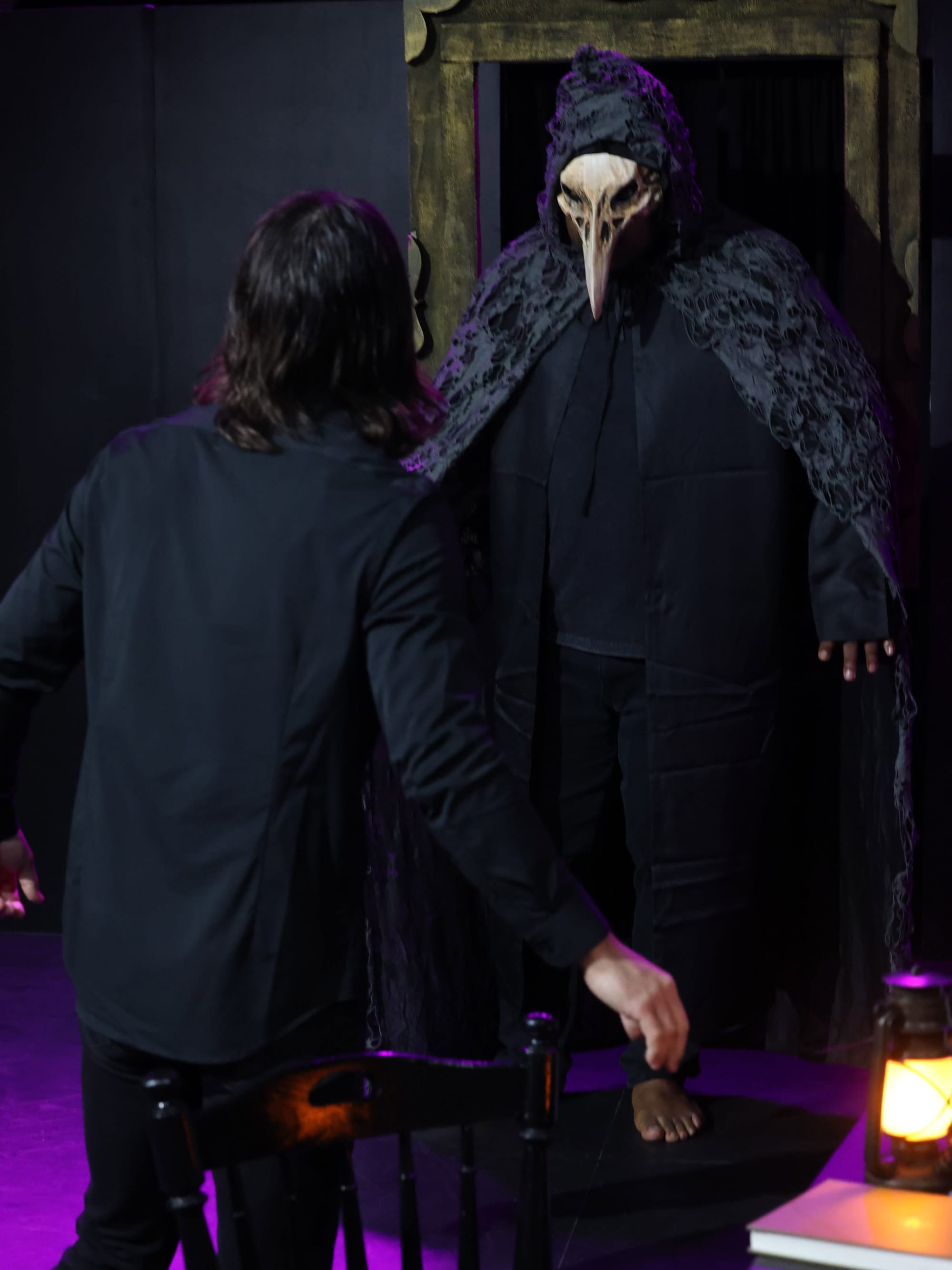
Fearless acting and dynamic movement—off the stage, onto the desk, around and through the audience—kept the stakes high throughout the show. A thousand shades of fright came through the actors' voices, from Farrell's spooked shouts and whispers to the absurdist, disjointed speech patterns of Will Presley as Roderic Usher and Kurt Harris’ rheumatic wheezing as the Old Man in “The Tell-Tale Heart.” Candace Conley seemed gradually to grow in both size and terror as The Raven, finally blocking the audience’s whole view of Poe behind her body.
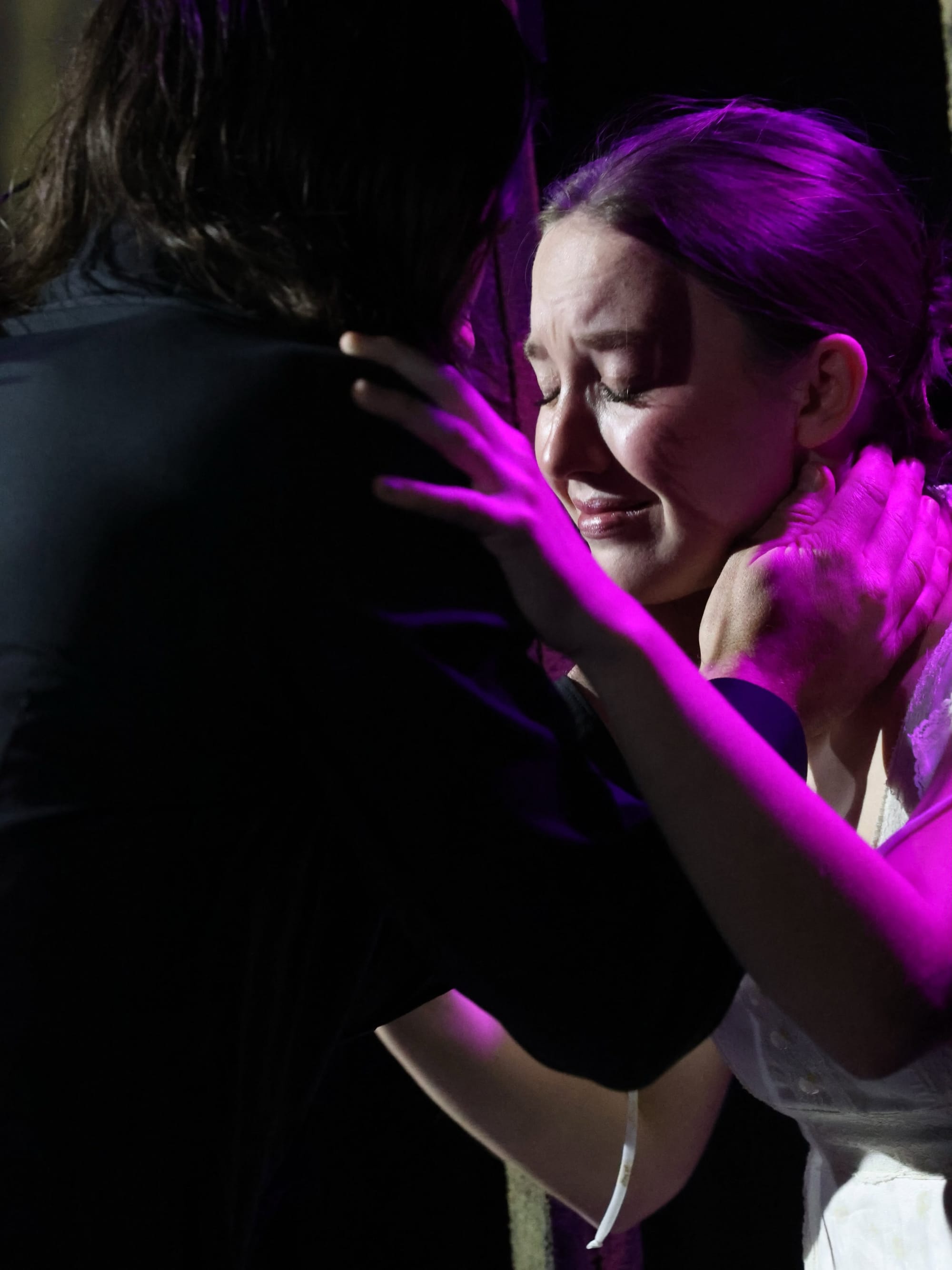
Nightfall’s script—full of diabolically effective doubling and just enough humor—could have been a little tighter in some places, notably in an encounter between Poe and the police after which the repeated question “I’m not mad … am I?” lingered past resolution, like the tell-tale heart itself, as the lights went down. But its most successfully harrowing moment was the one that seemed to go on the longest. In her solo journey through “The Pit and the Pendulum,” Meadows sustained an impossible range of panicked desperation without dropping out of the truth of it for a second. The real horror of this story—that the situation might never actually end—landed fully because of her dauntless performance.
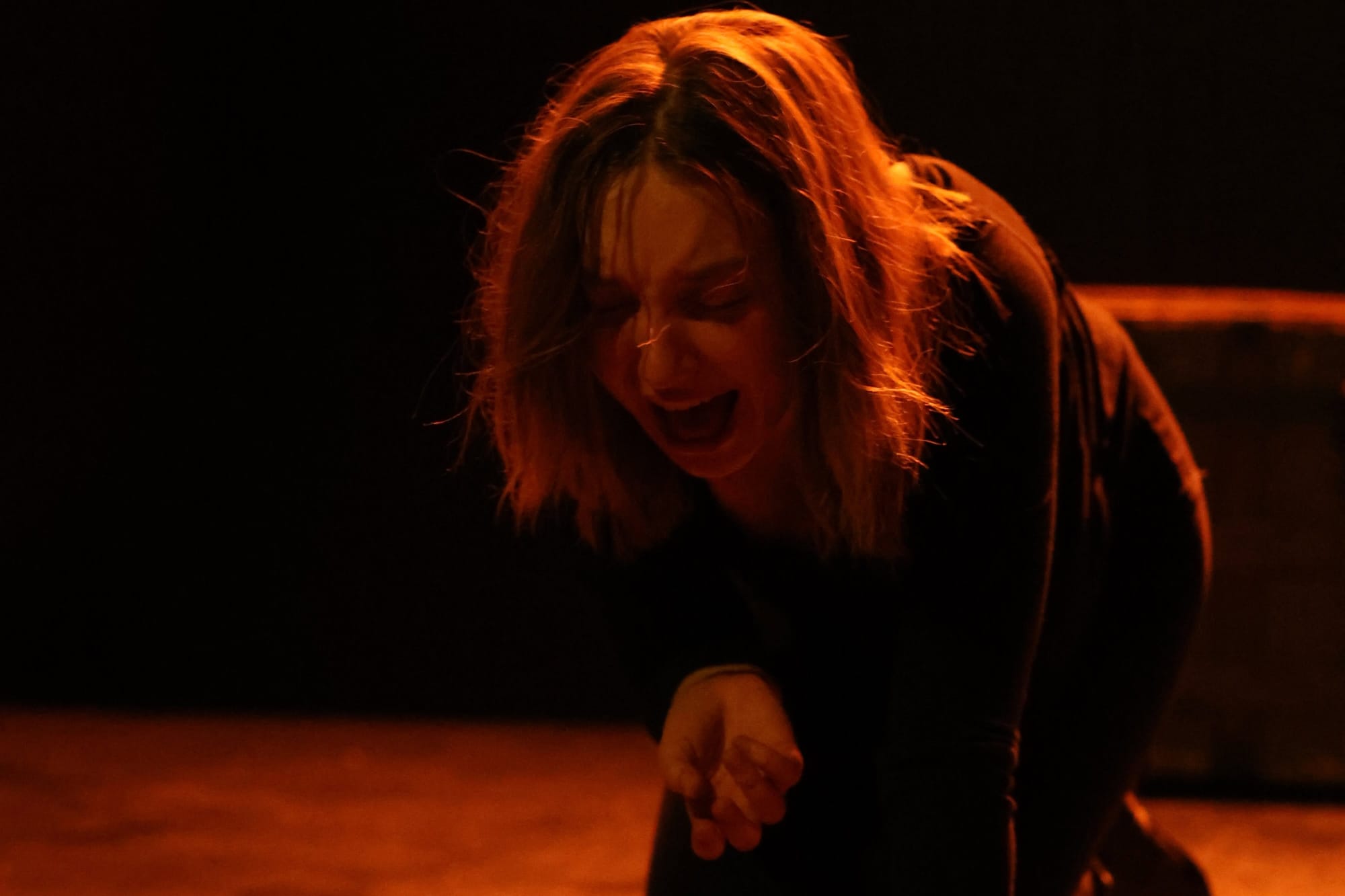
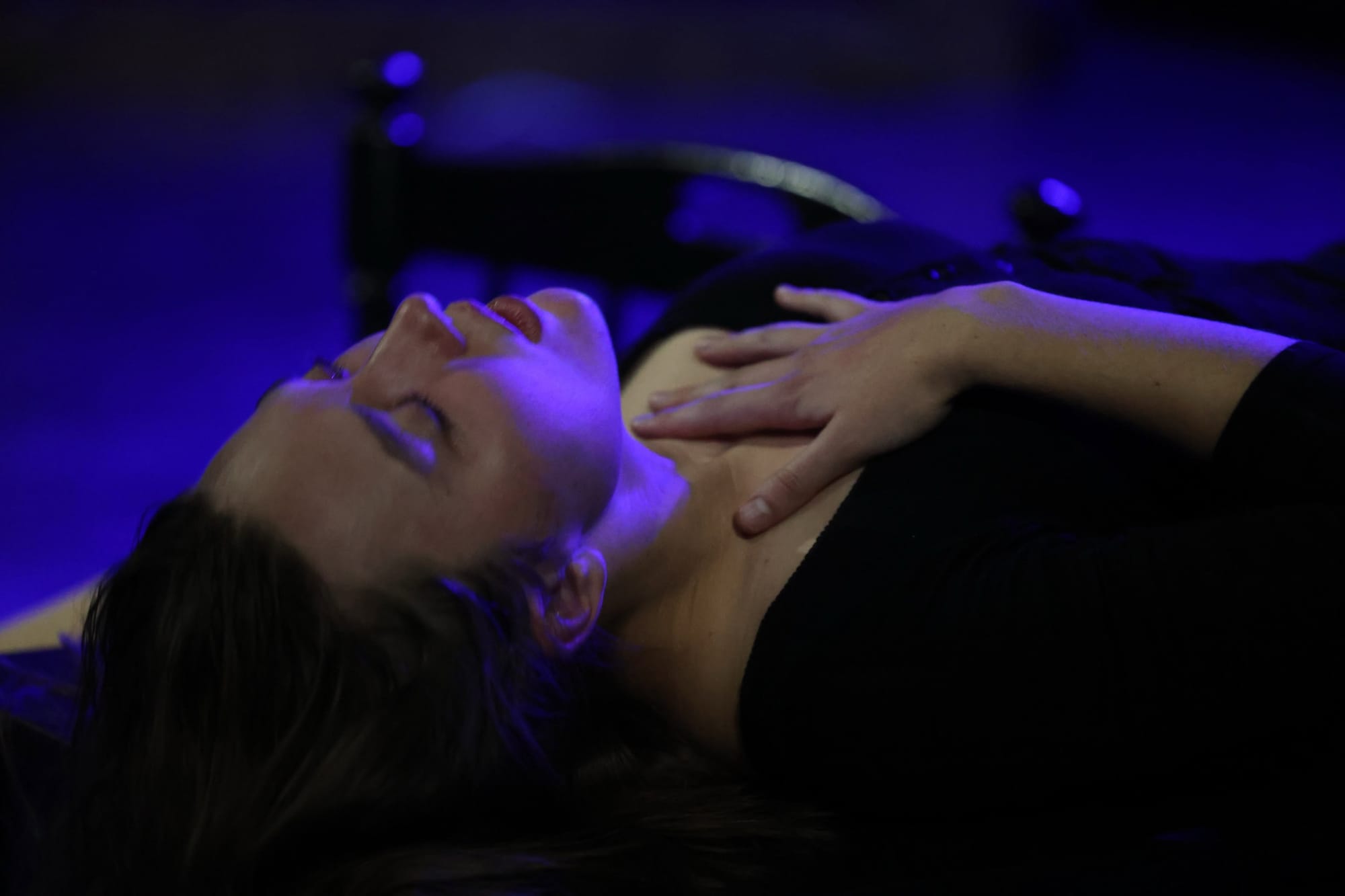
Olive Meadows in "Nightfall" | photos by Rik Clement, courtesy of Black Cat Theatre Cafe
From Poe’s own study to the House of Usher, Nightfall set up room after room where the mind was its own most cunning, least reliable narrator. Poe met himself over and over, in his characters and sometimes literally. (I loved a moment where Farrell faced the young Max Mayo, as young Poe, within a doorframe that Max himself designed.) Which versions of ourselves—much less the realities around us—are the true ones?
Loyal to its source material and bold in its interpretation, Nightfall kept me thinking about a performance space itself as one of those rooms, a place where we might meet what otherwise stays hidden in our lives: feelings both joyful and terrible, fears, doubts, all those secret things that, if let loose on a regular Tuesday, might crack the composure that lets us go on with meetings and dinners and the performance of competence. Are we mad, or aren’t we? Better to meet the question here, with theatre’s truth-telling medicine, than be haunted by it forevermore.


