Fair Haven: The World’s Oyster, 2026
Site Projects
Grand Avenue & Ferry Street
New Haven
At first, the people of Fair Haven did not know what to make of the figures appearing on the wall at the corner of Grand Avenue and Ferry Street.
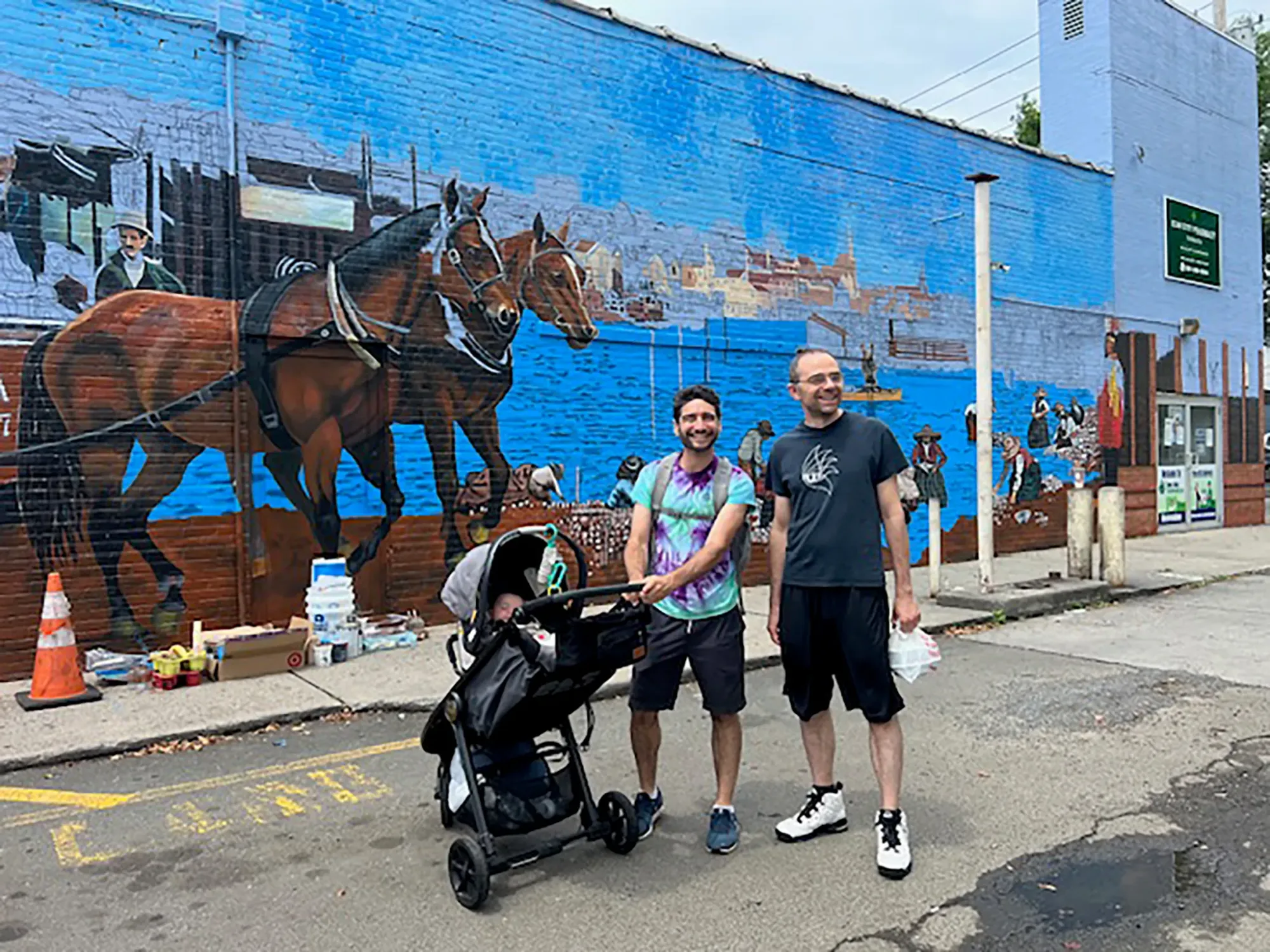
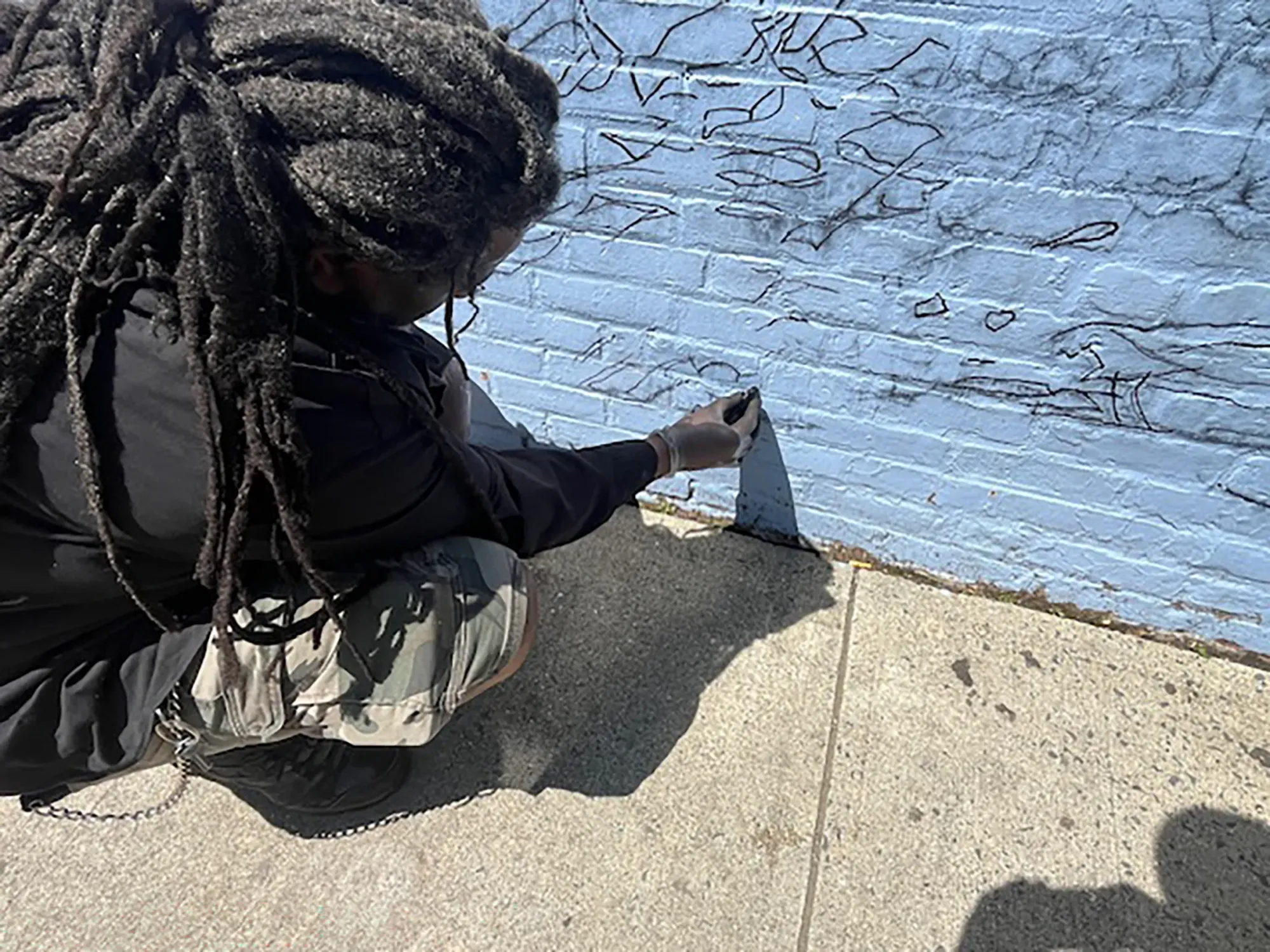
The painted people appeared slumped over. They were meant to be oystering, but the water was not yet painted.
Some residents thought the figures were depicting drug use; others mistook the oyster workers for cotton pickers.
As water, oysters, and local history emerged beneath the artists’ brushes, suspicion gave way to curiosity – and eventually, pride.
“At first, they were angry and we didn’t know why. People went ballistic,” said New Haven artist Katro Storm. “Then people went from tough to being prideful of that wall. They [became] our best friends.”
That transformation is at the heart of Fair Haven: The World’s Oyster, public art nonprofit Site Projects’ sprawling new mural celebrating the neighborhood’s oyster industry, working-class history and communal spirit.
The work has become more than a painted wall: it is a local landmark, a backdrop for family photos and a powerful reminder that Fair Haven’s story belongs in public view.
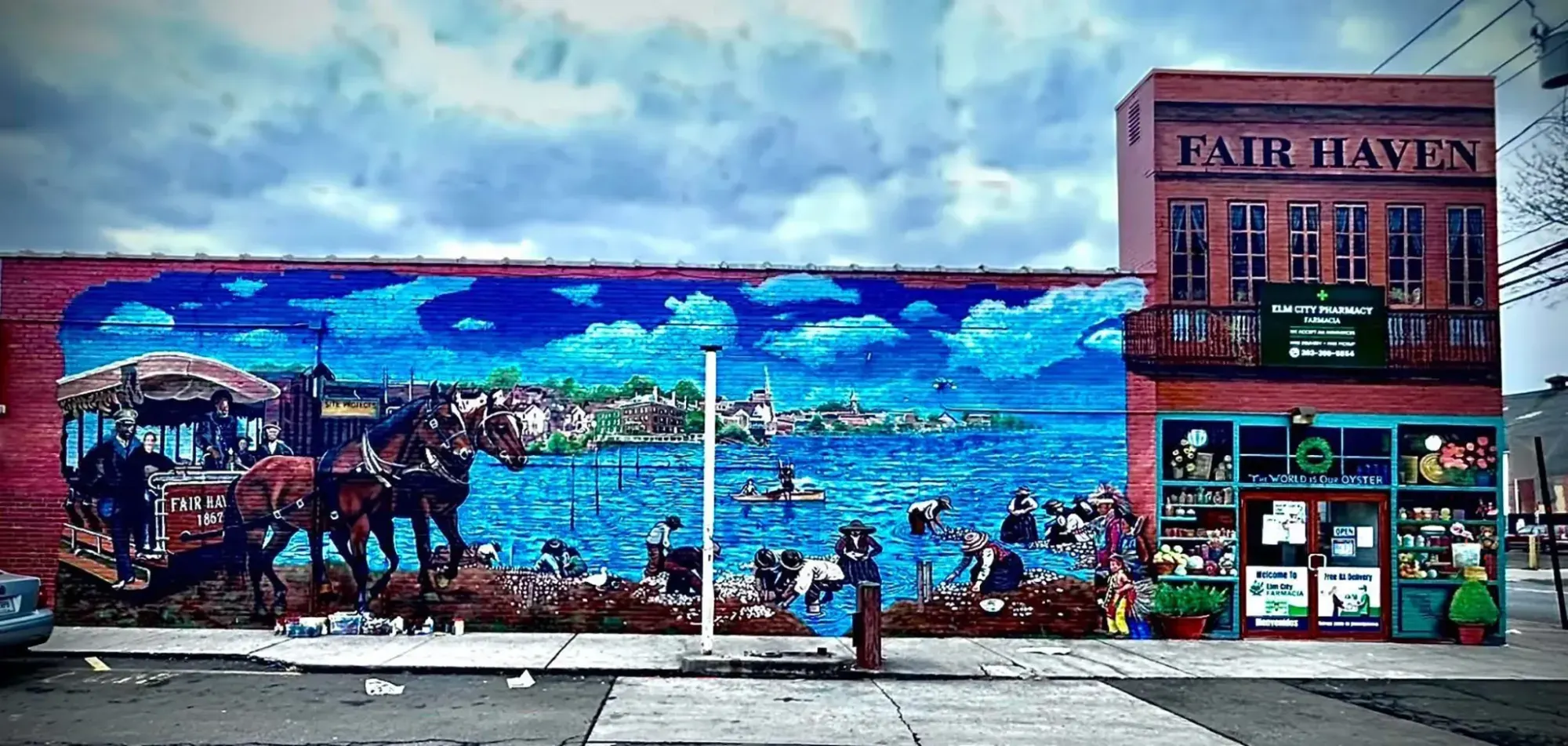
Fair Haven: The World’s Oyster is Site Projects’ first representational mural, as the art on the former pharmacy’s wall directly reflects the history of the neighborhood.
The mural is a sweeping epic that turns the side of an old building into a panoramic history lesson.
The composition begins with a horse-drawn trolley on the left that displays the year 1867, opening into a blue expanse of harbor, then settling into the labor of oystering along the shoreline. The long, unfurling format makes the wall feel cinematic, as though the neighborhood’s past is passing before us frame by frame.
The strongest visual choice is the water. It dominates the mural, not just as scenery but as the painting’s emotional center. The bright, almost electric blues make the harbor feel mythic, larger than life, while the darker bands give it motion and weight. Fair Haven’s oyster history is not treated as a footnote; the sea becomes a stage, workplace, memory bank and source of identity.
The figures along the bottom are especially important. They are small against the vastness of the water, but their repeated bent postures create rhythm. Their labor is rendered as communal. The family of oyster workers become part of the landscape’s architecture, as essential to the scene as the boats, docks and shoreline.
The perspective is not purely realistic. Scenes are compressed together in a way that prioritizes storytelling over strict spatial logic. The bold outlines, saturated color and narrative clarity make it easy to understand from across the street, while the smaller details reward lingering.
What makes the image powerful is its insistence that Fair Haven’s beauty is not abstract. It is in labor, immigration, industry, water, storefronts, horses, boats, oysters and people. The mural transforms a brick wall into a declaration: this neighborhood has a history worth looking at.
Site Projects Board Member Maria Kayne sees the mural as the significance of public art: beauty removed from institutional walls and returned to the people who live among it.
“Everything that’s beautiful in New Haven is literally in a Yale museum, and that does not work for our diverse and intelligent community,” she said.
Site Projects’ first project was a light sculpture by light artist Leo Villareal that was installed in a Chapel Street alley across from the New Haven Green. It was such a challenging endeavor, the members of the organization vowed to never do a public art project again.
A little over 20 years later, Site Projects has completed more than 20 public art projects, both temporary and permanent.
The nonprofit is run mostly by volunteers. Their board is a group of creatives from all walks of life. Selecting ideas for the artwork is a collaborative and generative process which allows ideas to bloom.
“There’s a happenstance sort of element to it that makes it fun,” New Haven-based muralist Russell Rainbolt said.
Rainbolt, who has been painting for 30-plus years, was tapped to lead the painting of the Fair Haven mural. It was a full circle moment for him: He first lived in Fair Haven when he moved from New York City to New Haven over 30 years ago. He and his wife used to shop at the Key Food supermarket across the street from where the mural now lives.
Storm, who has been painting since the age of 5, was invited to join the project by Site Projects Board Member David Sepulveda. Storm then brought in oil painter Cynthia Celone, an Ely Center of Contemporary Art artist-in-residence, to assist him and Rainbolt.
As part of his creative process, Rainbolt looked through old photographs of New Haven and read history books alongside Site Projects founder and former Executive Director Laura Clarke.
He said that he and Storm daydream as they paint, so ideas for the scene just flowed out of them. “The mural changed somewhat because of the different people working on it. How they laid down brush strokes,” for example.
The mural depicts “what the town has accomplished. The economic development of New Haven was brought about by Fair Haven. The jobs were in New Haven, but people couldn’t get there because they had no transportation. So they made the trolleys, and New Haven started to rise up. I mean, can you imagine that?” Kayne marveled.
Public school teachers and patrons of the Fair Haven branch of the New Haven Free Public Library have been some of the most enthusiastic visitors of the mural.
“I had everybody check me out. Even the toughs came over to see who I was. They were kind of giving me pressure. I just said, ‘I’m an artist,’ and I explained the project to them. They said, ‘You know what, that’s cool, we’re going to make sure nobody tags this,’” said Rainbolt.
The muralists received free food from restaurants, and free water to combat the heat.
“Art is a universal language. We couldn’t understand each other, but we could understand each other’s actions. Russell had a bunch of friends that used to come to him and talk strictly Spanish. They [started] teaching me,” said Storm.
Fair Haven: The World’s Oyster took a little longer than expected to complete, three months in all.
“When you’re doing a project outdoors, you’re dealing with the elements. It could be like 100 degrees; the paint is literally drying on your paintbrush. Or it could be pouring down rain,” Storm explained.
Also, Rainbolt just could not let it go. He constantly found excuses to drive to the mural and add touch after touch. The painstaking details in the mural are evident.
The delay “was something of a blessing, because it meant that they were out there talking to people, building that community,” said Site Projects Executive Director Liam Grace-Flood. “We went to the community management team meetings; we did community engagement. And still people didn’t know what was going on in the way that they did by just being on the street, talking to people. It’s one of the most meaningful parts of our work, just being out there.”
To inspire more civic spirit around the mural, Kayne had a vision of hosting a festival to unveil it, with neighborhood folk bringing traditional meals. Unfortunately, that idea was quashed because of fear of provoking ICE raids in the Hispanic community.
“We heard that ICE had done a raid one morning,” said Storm. “We were concerned about some of our friends.”
For Grace-Flood, the lost festival did not change the larger purpose of the mural: to honor where Fair Haven had been while imagining where it could go.
“We wanted to celebrate both the history and the future,” he said.
Speaking of that future, New Haven’s oysters have been making a comeback over the past few years.
A Community Supported Fisheries (CSF) subscription offers regular fresh seafood from Connecticut’s shores. Bren Smith, owner of Thimble Island Ocean Farm, is pioneering regenerative ocean farming. There’s a fourth-generation family-run oyster fishery still operating called Copps Island Oysters. The Sound School is reseeding oyster reefs; reefs offer storm surge protection and filter the water to support climate resistance and other wildlife.
Just as the oyster industry is finding new life, Site Projects is looking ahead to what else public art can make visible. “We have some good ones in the pipeline,” said Grace-Flood.
The next mural will be led by Storm and will feature the late Winfred Rembert Sr. and his wife Patsy. Right now, the idea is that the image will be of the couple embracing. The project carries special meaning for Storm because Rembert was his mentor. It’s also a meaningful project because Storm once taught art at Lincoln-Basset. The mural will be on Lincoln-Bassett Community School, near the Remberts’ home. Rembert’s son Mitch will be assisting with the mural, adding another layer of legacy.
Visit Site Projects’ website for more information. Their work is enabled by community support; click here to donate.