
Music Of, By and For the People: America @ 250
Trinity College Summer Music Series
Trinity College Chapel
Hartford
July 15, 2026
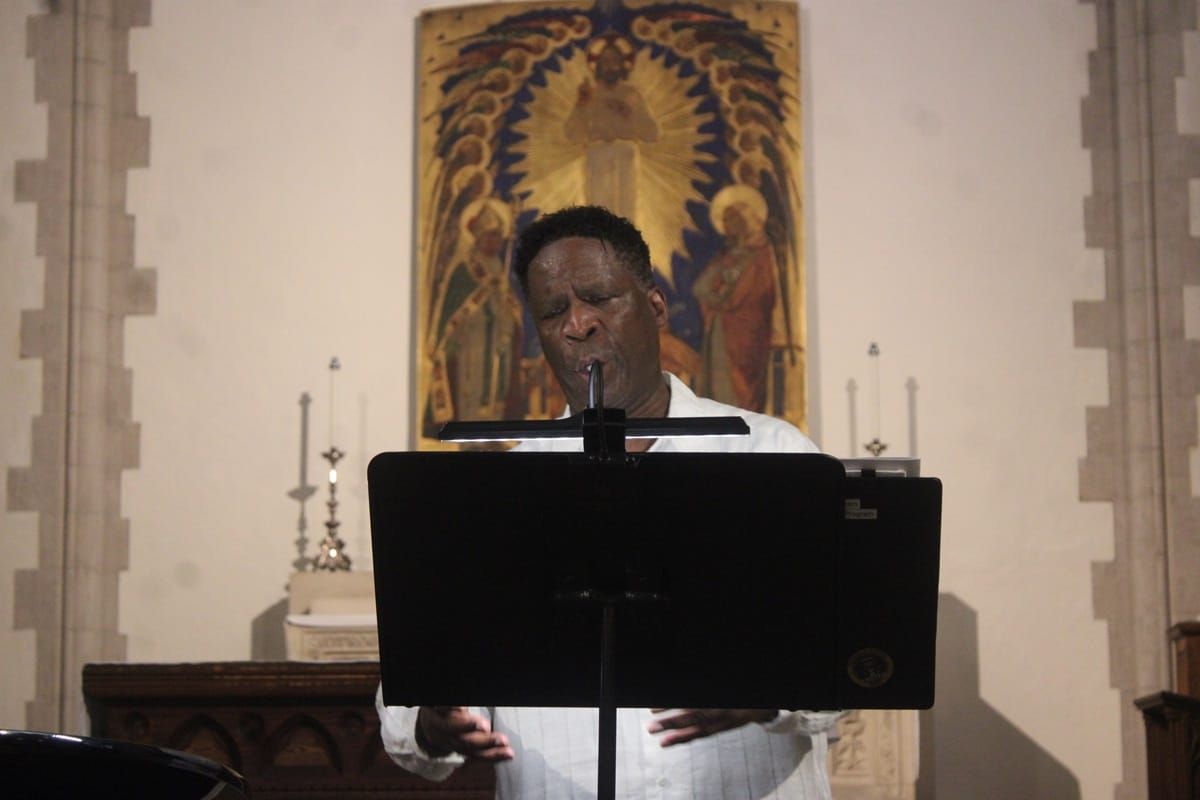
So I may or may not have thought that Edward Pleasant would be playing the baritone, not that he is a baritone.
A baritone singer, that is, not a big piece of brass. But my confusion soon gave way to awe as Pleasant took the stage (sans brass instrument) at and blew away the audience gathered in the pews at Trinity Chapel for the first half of the college’s weekly Summer Music Series.
Pleasant is a world-class singer, with awards and accolades stretching across his career. He’s also a music educator and historian who turns the concert hall into an active classroom of African American musical achievement.
He covered hundreds of years of music in a brisk set centered on how the struggle for freedom and equality fought by African Americans is woven into the fabric of the United State’s history. Like America itself though, Pleasant took a diverse look at the music that accompanied the fight. Beginning with Negro spirituals the enslaved sang to communicate about freedom through to freedom songs written by Pete Seeger and Lee Hays, Pleasant showed that working towards a more perfect Union has been a multiethnic, multiracial and multigenerational effort.
Take for example You’ve Got to Be Carefully Taught from the Rodgers and Hammerstein musical South Pacific. Pleasant’s voice is like a warm tidal wave, awesome in its power and clarity yet still somehow gentle in its touch. His voice enveloped the entirety of the chapel, but didn’t overpower the piano accompaniment next to him (note: Beth Palmer was originally scheduled to provide accompaniment, but fell ill. Trinity College carillonneur Ellen Dickinson stepped in at the last minute and did a terrific job).
I was so entranced by Pleasant that I almost missed the lyrics themselves:
You’ve got to be taught to hate and fear,
You’ve got to be taught from year to year,
It’s got to be drummed in your dear little ear—
You’ve got to be carefully taught!
You’ve got to be taught to be afraid
Of people whose eyes are oddly made,
And people whose skin is a different shade—
You’ve got to be carefully taught.
The recent Trump administration report that describes the Smithsonian’s attempts to accurately portray history as “radical” shows why it’s so important that people like Pleasant continue to defend the truth. Yes, the United States has committed some terrible crimes against its own people, but its people have also come together to acknowledge and correct them. How can you possibly tell the good of America without acknowledging the bad it had to (and still has to) overcome?
Which leads to another way in which Pleasant’s performance was brilliant, because he put the collaborative spirit of freedom into practice. He invited the audience to stand and join him in singalongs for several of the pieces he performed. It’s not every day that you get to sing alongside one of the greatest performers in the world.
And the song choices were purposeful too. The title is Lift EVERY Voice and Sing, despite the song being known as the African American national anthem. All people are required to secure justice and freedom.
Edward Pleasant’s performance was truly a celebration of America in spite of its refusal to sugarcoat the past. It was a great honor to add my voice to his chorus.
NEXT
The Trinity College Summer Music Series concludes next Wednesday with the New Haven String Quartet and Margaret Pan.
Jamil goes to learn about the history of dance in America.


