
Chapman Street Studios, 2908 Chapman Street, Studio C
Oakland
December 7, 8, 13, & 14, 2025
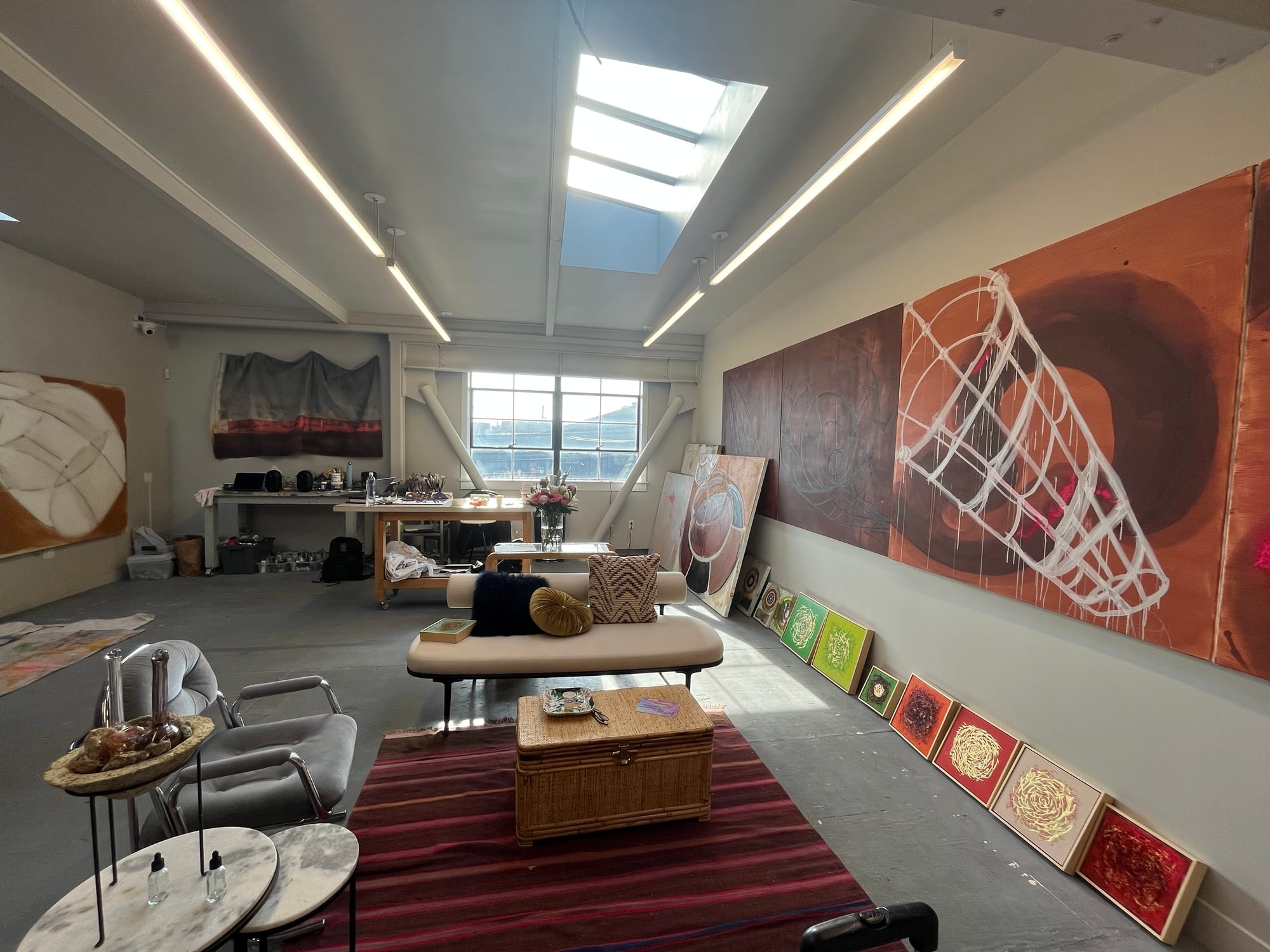
The first weekend of East Bay Open Studios was busy. My partner and I drove around hurriedly to peep art at workspaces in Oakland, Piedmont, Albany, and Richmond, including Katie Korotzer’s large, bright space with sunlit skylights in Oakland’s Jingletown neighborhood.
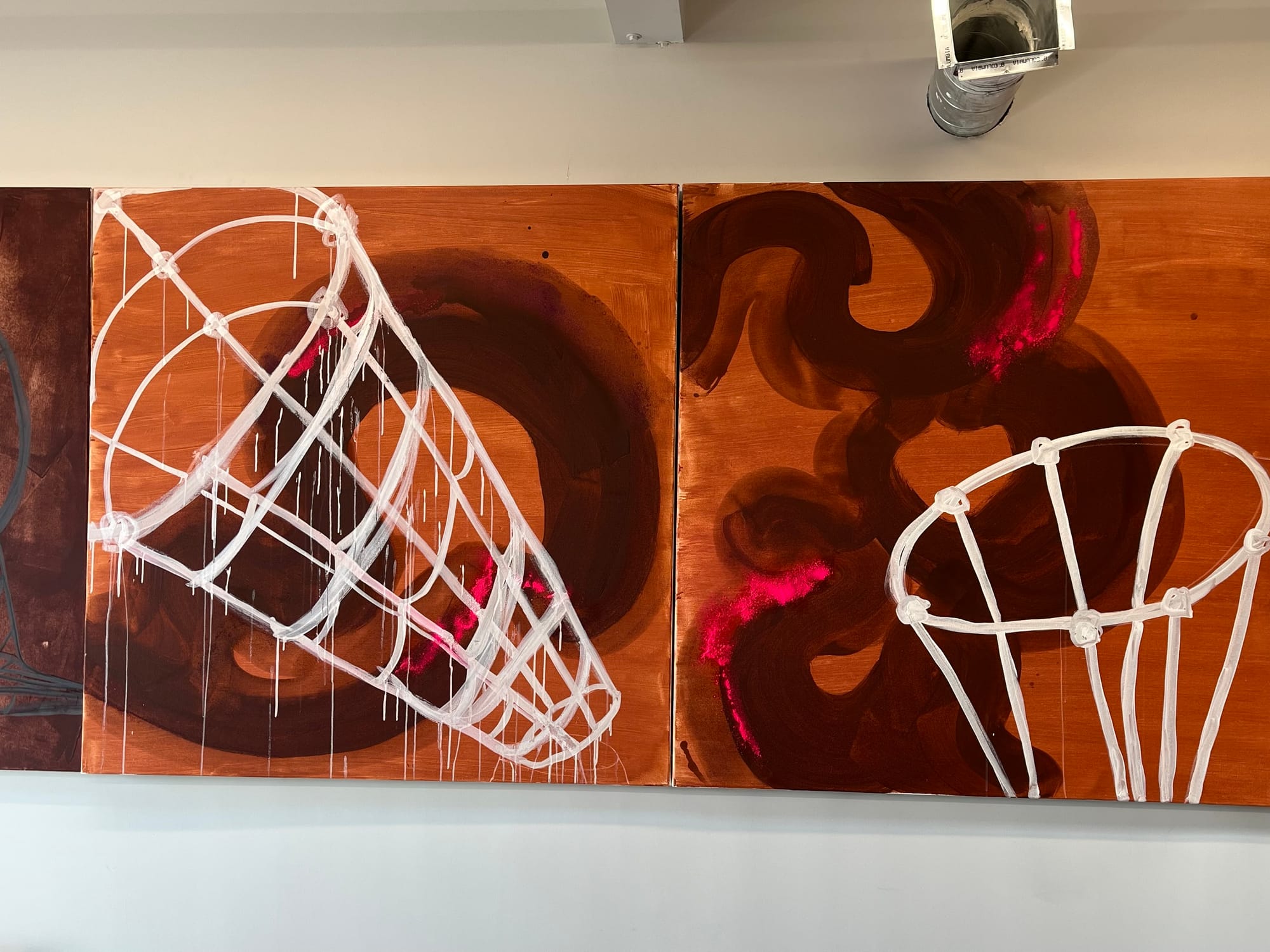
The studio contained a few of the abstract paintings I’d seen online, but it was her most recent painted work—which I hadn’t seen beforehand—that I found most visually engaging. Two of those paintings, “Insufficient Structures: Life Abounds” and “Insufficient Structures: I Am My Own Poem,” possessed a 2-D sculptural quality that caught my eye.
Along with acrylic, ink, fluorescent pigment powders, glitter, graphite, gouache, charcoal, and a variety of mixed media, Korotzer has now added red clay to the repertoire of materials she uses in her newest paintings. The clay, she told me, is shipped from Georgia and comes “from some guy’s front yard in a town within an hour of where I was born.” A native of Elberton, a small town in northeast Georgia, Korotzer uses the clay in work that explores themes of posthumanism. Using the clay as a base over raw canvas, Korotzer superimposes stylized images of crinolines on these backgrounds, stiff petticoat armatures that are used to hold out voluminous skirts, common women’s garments in the mid-19th century.
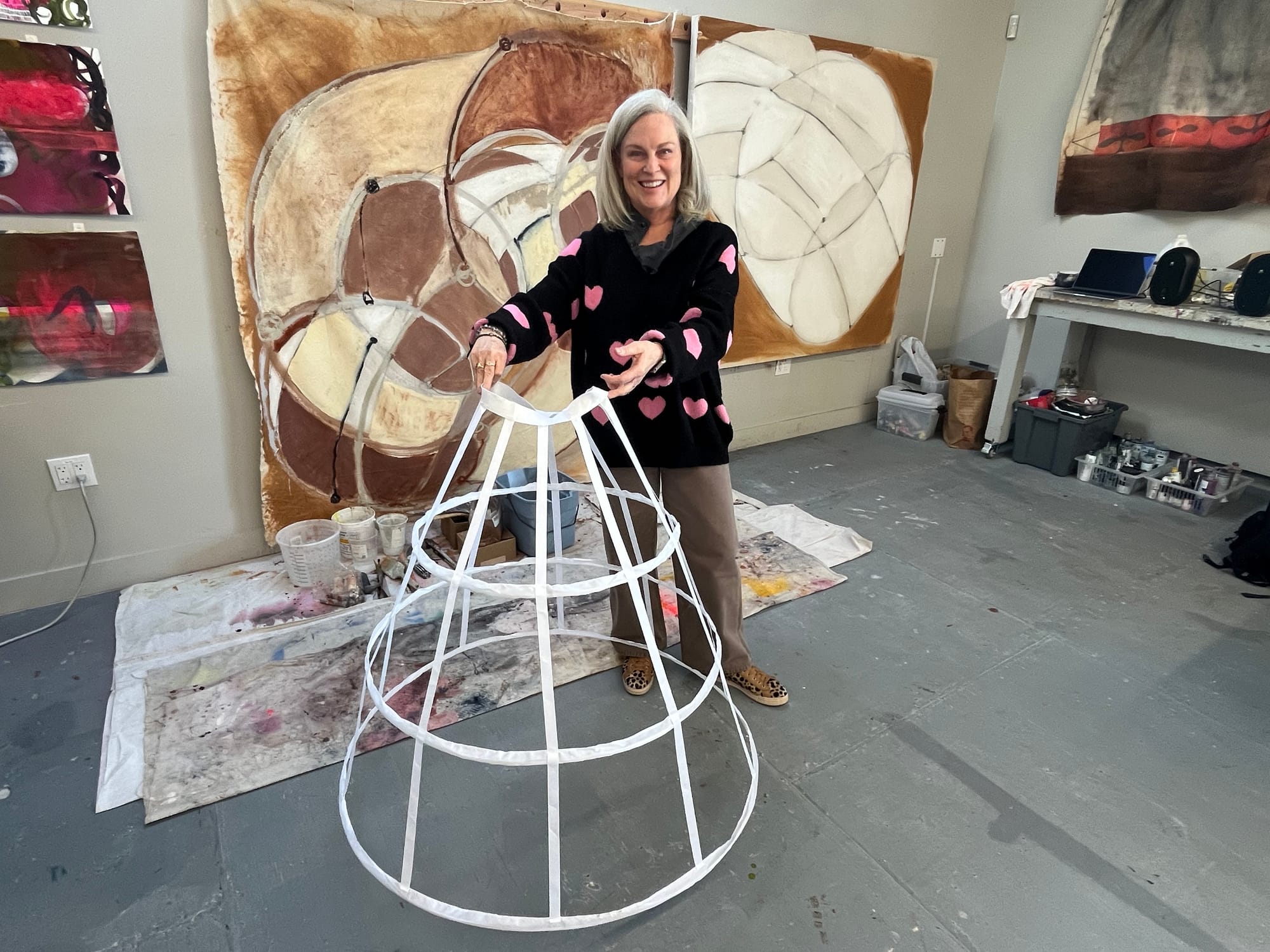
Although I abandoned postmodernism and its rejection of objective truth long ago, it was interesting to hear Korotzer talk about her newest themes in terms of postmodernist theory. “We’re all more than human, we’re ‘cyborgs’,” she said, influenced by the feminist theory of Donna Haraway.“I use the staining red clay as a way to have a physical reference to the place I was born—a way to remember and recognize all the customs and conventions that formed my identity as a child and young woman there, and how I have learned to deconstruct the ones that haven’t been affirmative.” She told me that she is “always thinking about the duality we face in life, how to ease the borders between us and how to deconstruct restrictive systems. That’s where the metaphor of the crinoline comes in,” the visual deconstruction exploring gender roles, both historically and in the future.
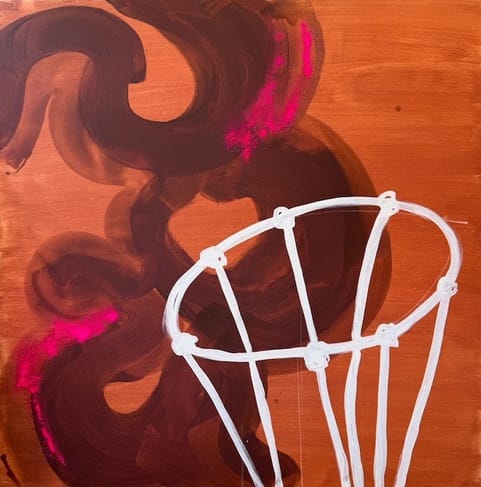
While I found that the uncompromising stark white crinoline renderings got a bit in the way of the more natural forms and unified color backgrounds they were painted over, the works are undeniably striking. Korotzer certainly understands color, diffusing diluted pigments onto wet canvas and combining that method with distinct markings in graphite and charcoal.
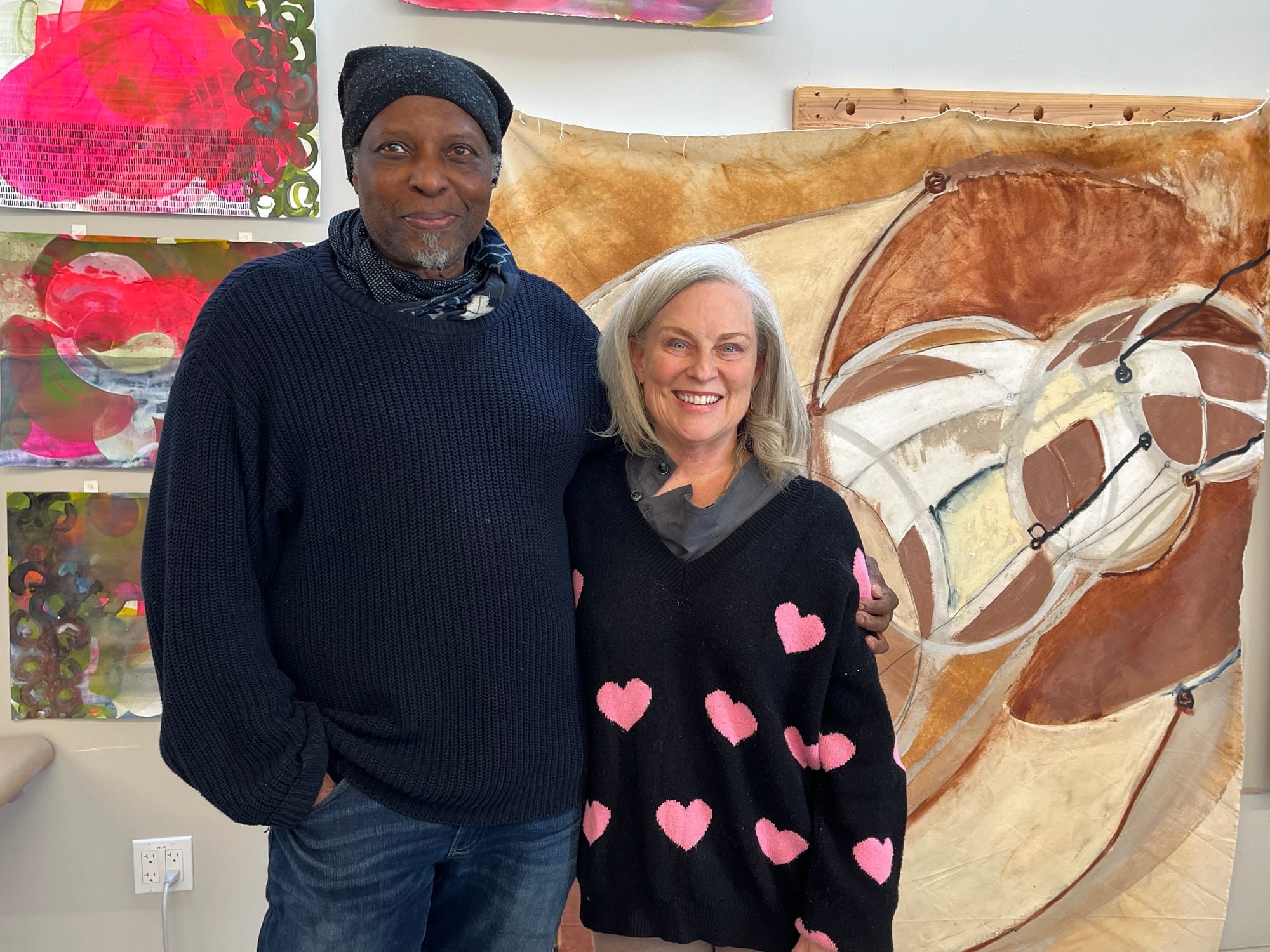
One of Korotzer’s colleagues, Benicia-based artist Carl Heyward, was visiting the studio. Korotzer said that they’ve known each other for over ten years and she considers him her mentor. Heyward, too, is a fan of deconstructionist-type theory. We all had a discussion about its influence on art, a chat that included Peter Paul Rubens and his depictions of the female body. While I won’t be revisiting postmodernism any time soon, ours was a lovely and lively back-and-forth.
But there was no time to linger. My partner and I had many more studios to visit. And this, our first stop, was a wonderful way to begin.
Read previous Midbrow coverage of East Bay Open Studios here.
East Bay Open Studios continues this weekend, December 13 & 14, visit the artist directory for locations.


