
New Haven Paint and Clay Club 2026 Active Members Exhibit
Creative Arts Workshop
New Haven
Through Sept. 25
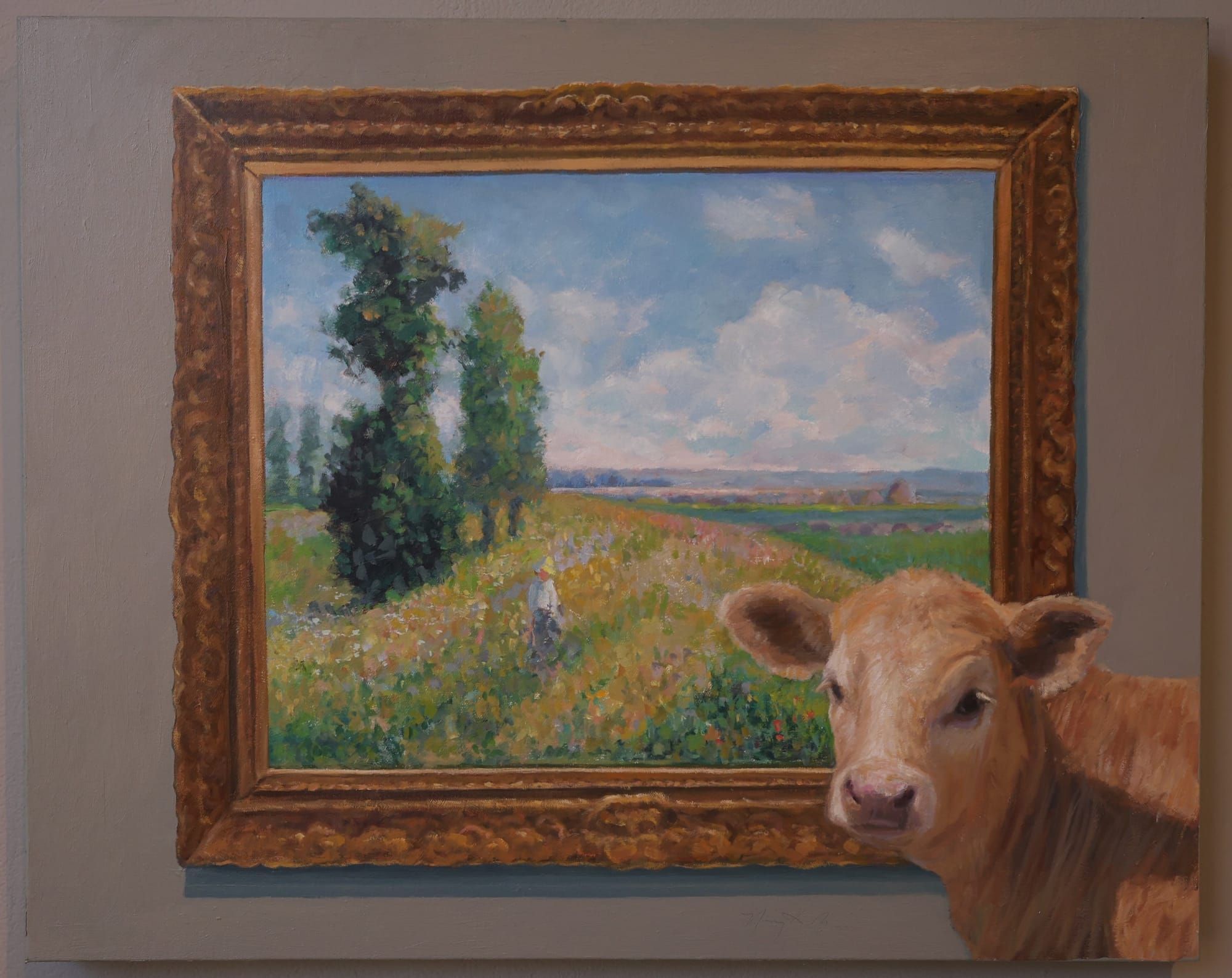
It's a painting of a painting, and a famous one at that: The shape of the trees gives away that painter Nancy Bass is replicating one of Claude Monet's Impressionistic paintings of the poppy fields near Argenteuil, in France, which he painted several times. Bass gets Monet's use of vivid color, but adds a second, colorful twist of her own. The cow in the painting that Bass has standing in front of her replication of Monet's painting has a comical, almost accusatory expression. What is a cow doing in a museum? you might ask. And the cow might respond: What is a human doing in a field?
Bass's painting, near the entryway to the gallery at Creative Arts Workshop, is a fitting introductory to the annual show of the New Haven Paint and Clay Club, founded in 1900 and going strong, with 89 members taking part in the show running now through Sept. 25. As in previous years, the club's annual show feels like a snapshot of where many of New Haven's working artists' minds are these days. This year, amid the panoply of subjects, styles, and media, is an undeniable streak of humor and vivid color.
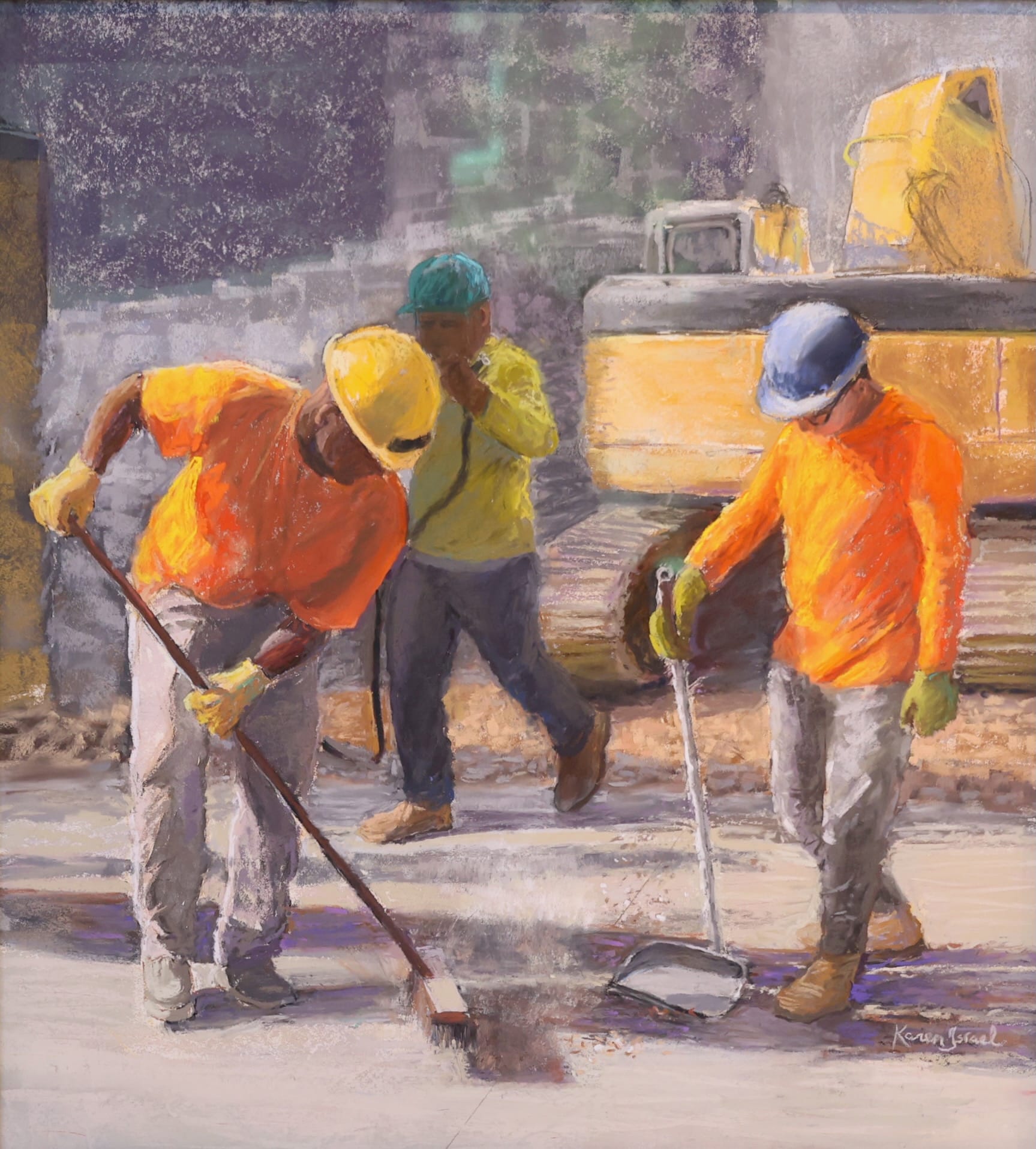
The attraction to color shows up in the show's representational paintings. Richard Stephen renders his Italian cityscape in Florentine Remembrance in vivid blues and oranges. Erik Sundgaard's Beach Scene with Umbrellas includes not only the bright colors of a shoreline, but a line of festive umbrellas. But color shows up even in more everyday scenes. Karen Israel's portrait of a work crew catches our eye by leaning into the workers' fluorescent orange shirts and bright helmets; it's a move that, in turn, demands that we notice the workers as people.
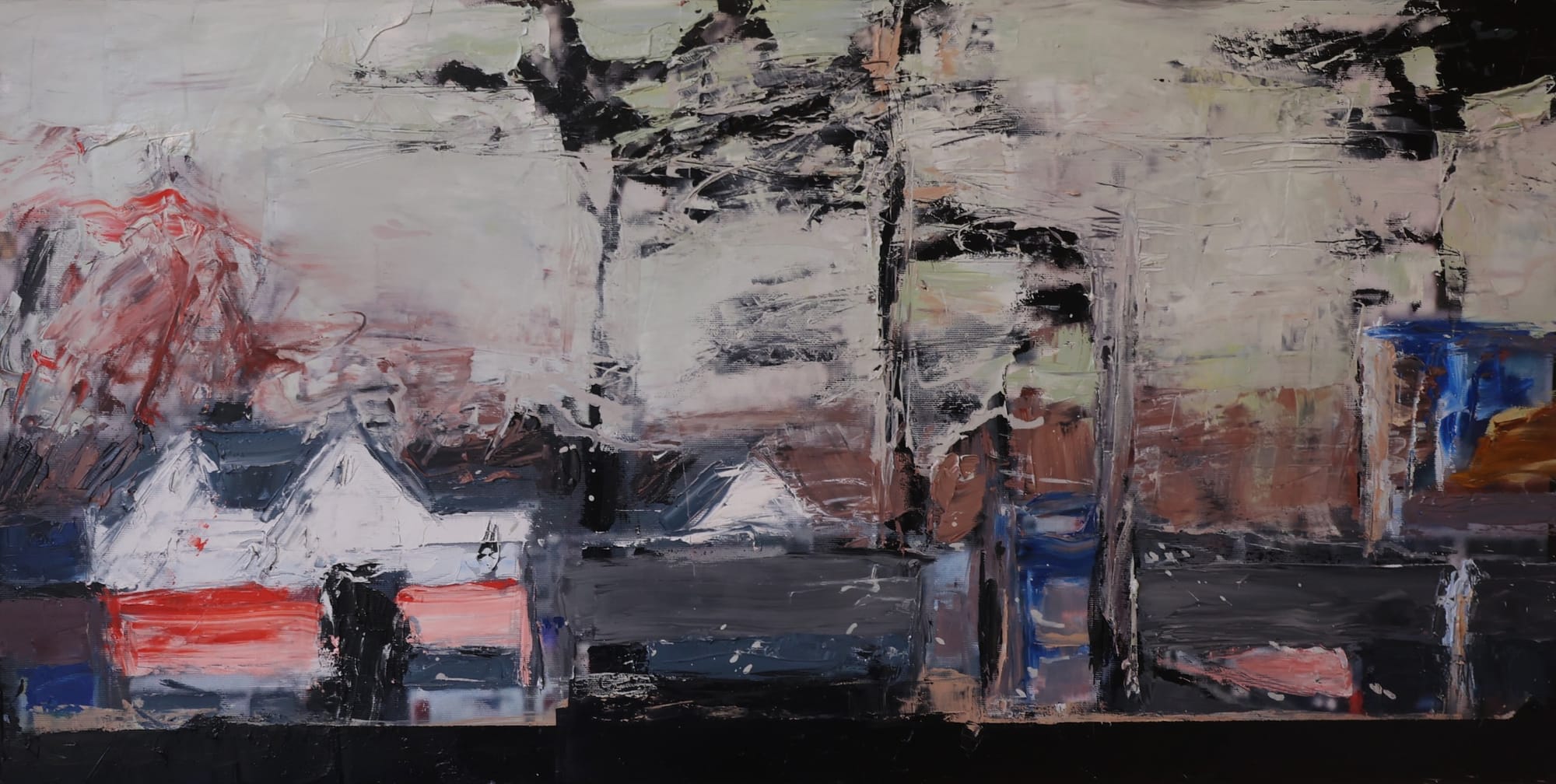
Among the artists that abstract their subjects, Kelly Taylor's Purple Mountain Majesties refracts the light from the landscape to let us see the geometric shapes in the mountainscape. Nan Tussing's First Alert paints a dog running from the house in such vivid blues and reds that it reads more like an intense dream. Meanwhile, Helen Cantrell's Darien Metro-North Station, Snow is full of enough energy that it's possible to imagine her having painted it on the train, as fast as she could — the immediacy being the whole point. In forgoing detail for movement, she conveys what it is to move fast through the state's suburban sprawl, catching only passing glimpses of all of the lives lived there.
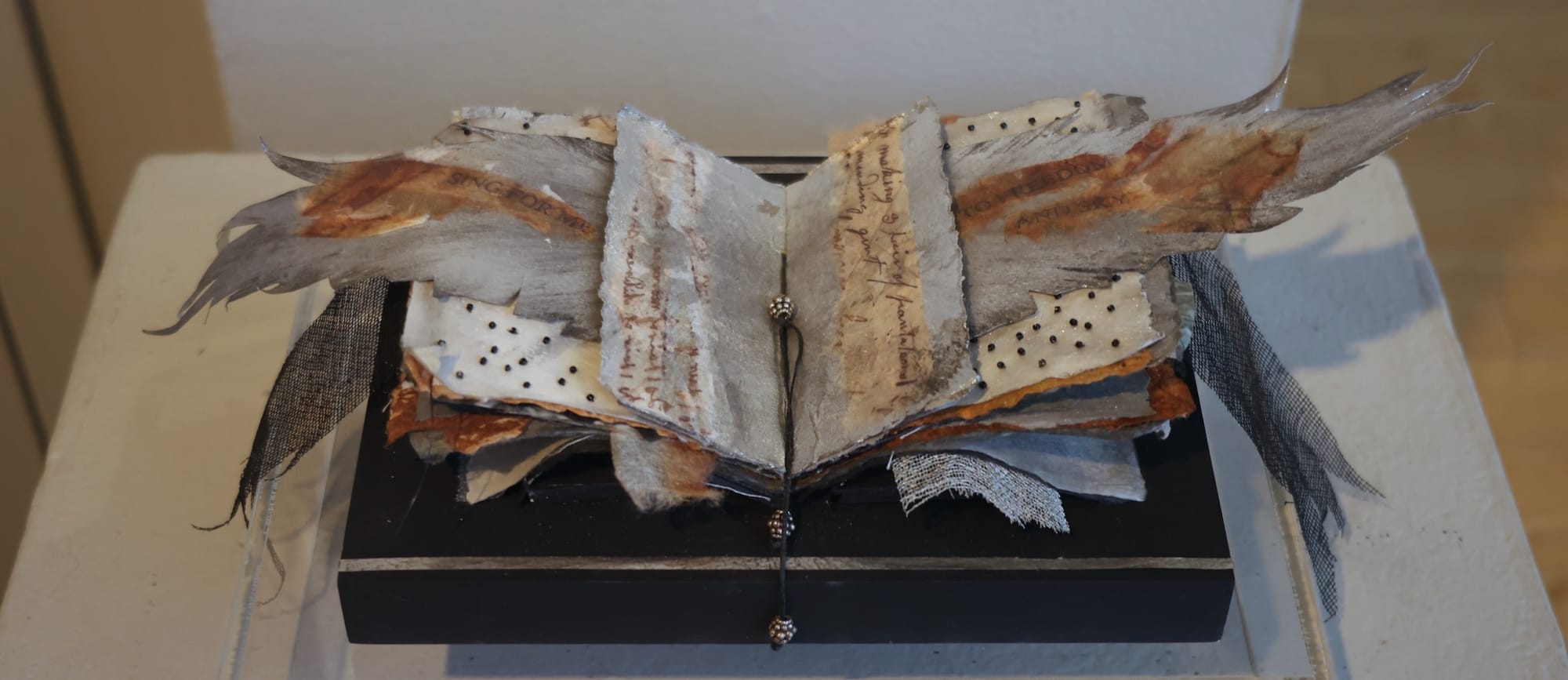
The sculptures in the show are no less playful. Thomas Stavovy's Seated Figure Looking Down and Right conveys its subject and also the movement of Stavovy's hands, the tools he used, to bring the piece into existence from a lump of clay. Rosemary McClain's Flowering Saguaro hovers somewhere between a depiction of its subject and an echo of a Greek column, or even an alien species. Charlotte Hedlund's Shadow Guide, meanwhile, leans into the fantastical to get at something real. Her sculpture reminds us of what reading our favorite books, with their heady ideas and complex emotions, can feel like.
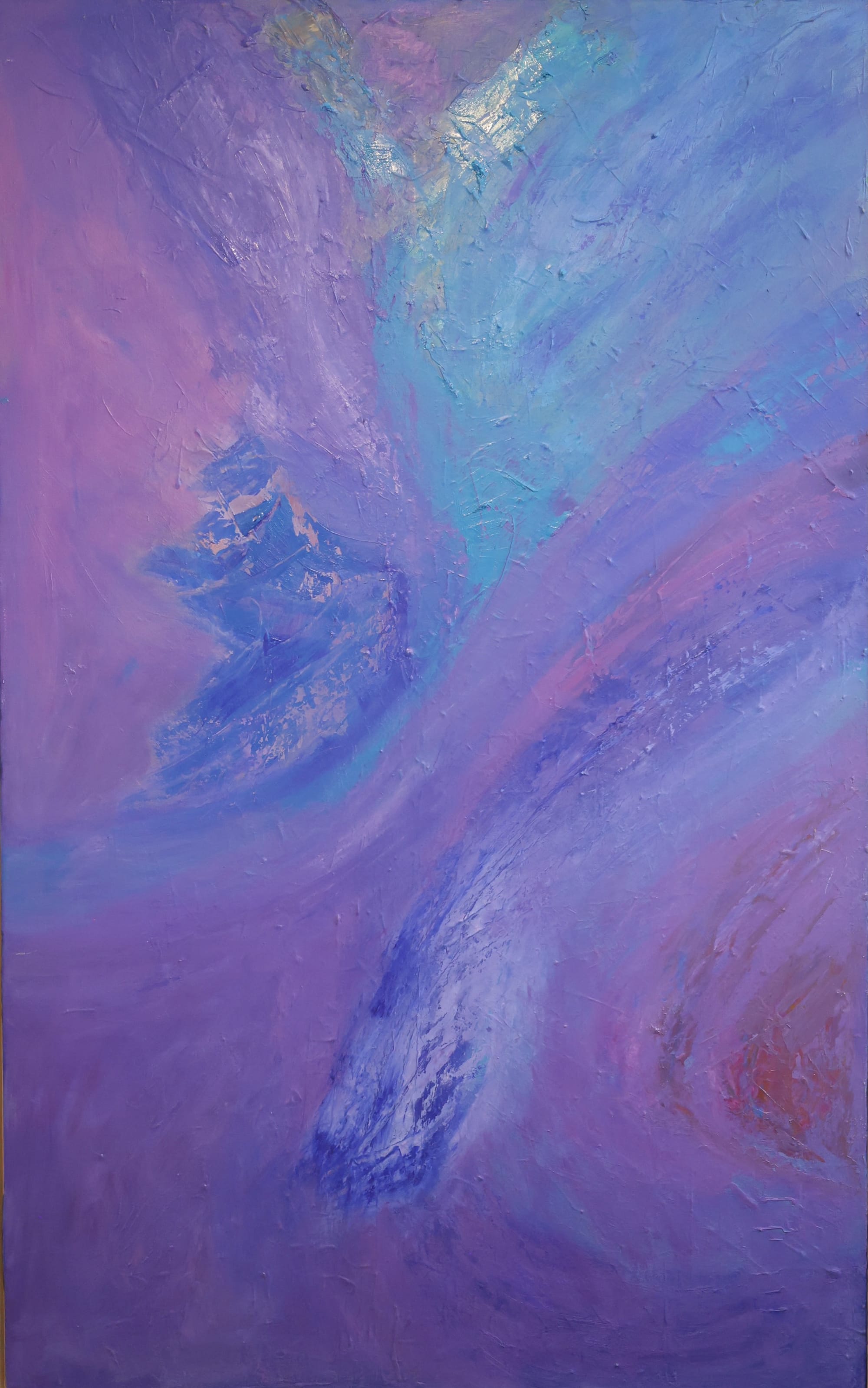
The show's collection of abstract painters perhaps lean the hardest into using the most vivid colors. Robert Jacoby's Red is in fact a canvas of roiling reds, oranges, and yellows, with just enough specks of blue to set the colors off further. Looking at it carries the sense of gazing into the crater of a volcano. John Harper's Polymorphisms plays in a landscape somewhere between cartoon and psychedelic trip; as the title suggests, his bright shapes almost coalesce into recognizable shapes, only to melt away again. Wendy Kohl's Into the Blue might seem more muted by comparison, but in another way, something even more intense is going on. She finds ways to draw the electricity out of what are often considered more calming colors. In doing so, she finds a way into a complex emotional place: she sets her blues on fire.


