Caravan, Mobolaji Ayeni
Playground Detroit
Detroit
Until May 2
Each person is part of a caravan guiding them on the road of life circumstances toward the person they are in this moment. Sometimes we are the ones leading the caravan, sometimes we are following those up ahead, and other times we have no idea where we are headed — we’re just along for the ride.
The caravan of Mobolaji Ayeni’s life has led him to Playground Detroit, where his solo exhibit titled Caravan opened on April 4. Oil paintings by the Nigerian American artist blend stories of ancestral memory, migration, and the ever-shifting relationship between tradition and modernity.
“All these different things can happen in your life, or things happen in one family member’s life, and then they’re on a different path,” Ayeni says about the show. “There’s all these different caravans literally and figuratively, that we’re all just kind of weaving through.”
One moment that shaped the trajectory and, in a sense the history, of Ayeni’s family is when his grandfather, who grew up in a remote area of Nigeria in 1904, ran away from home and joined a caravan of traders passing through the village when he was 11. He ended up at a Catholic church and was renamed Michael, which is also Ayeni’s baptismal name.
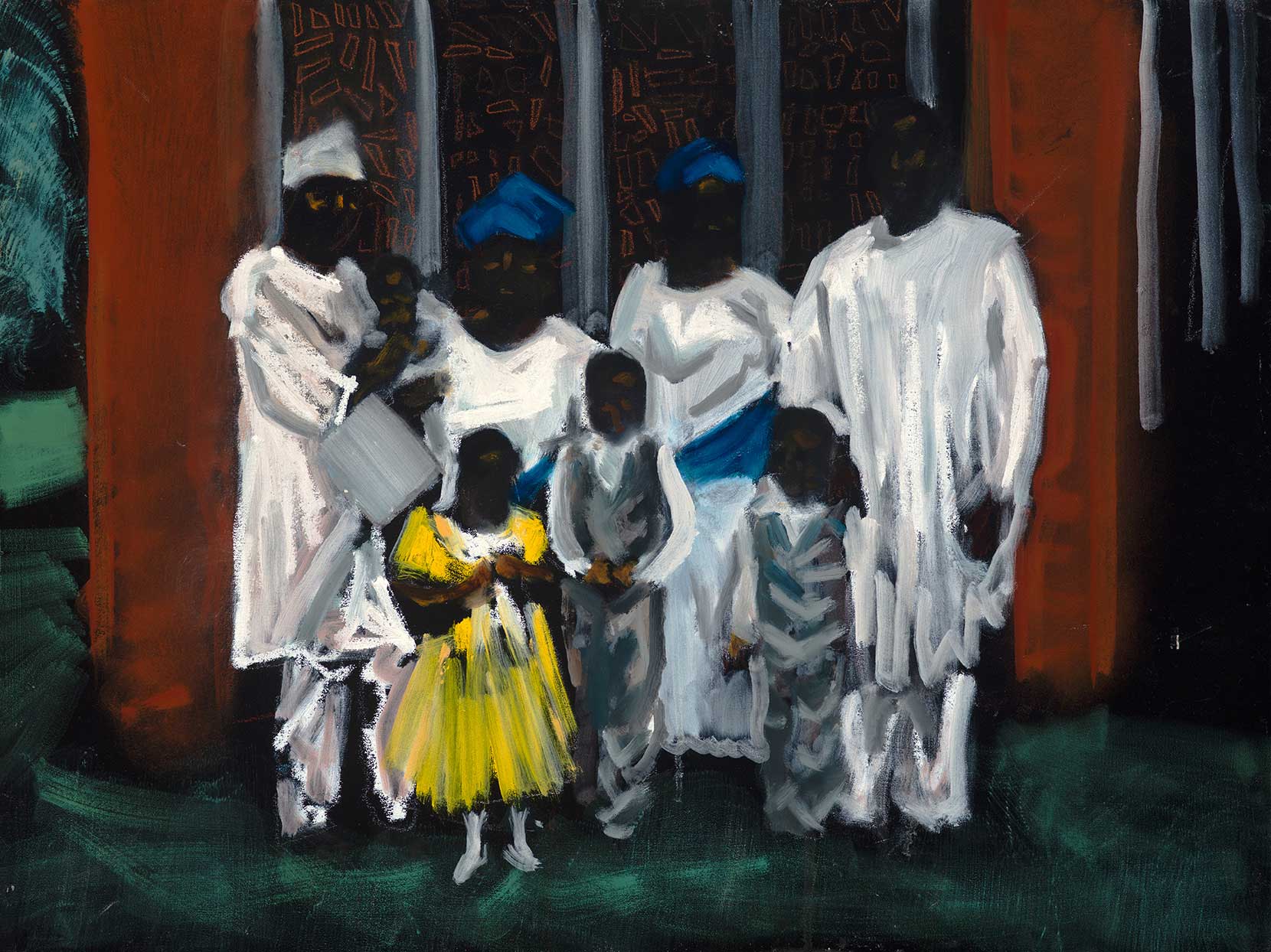
He threads this moment into the show with a painting of his baptism, titled “Michael (Baptism)” where a group of elders dressed in white and blue hold a baby Ayeni post ceremony. It’s clear they are standing in front of a building, but the background is undefined with brushtrokes of green that suggest the moment is taking place in the ether.
“There’s something about it being distinct from our layer of reality here,” he says about the piece. “I’m not particularly religious, but my family is Christian. But that’s only been a couple of generations and that’s kind of a caravan that they joined spiritually.”
He poses the question to me, “who’s leading your caravan,” when we talk about a painting of two young boys riding in a truck bed. One boy turns his head around to take a peak at what may lie ahead — a distant future that he can’t see — while the other faces forward, gazing at the past as they approach an intersection with a green light. It’s the permission to move forward, even when the path is concealed and embrace the unknown.
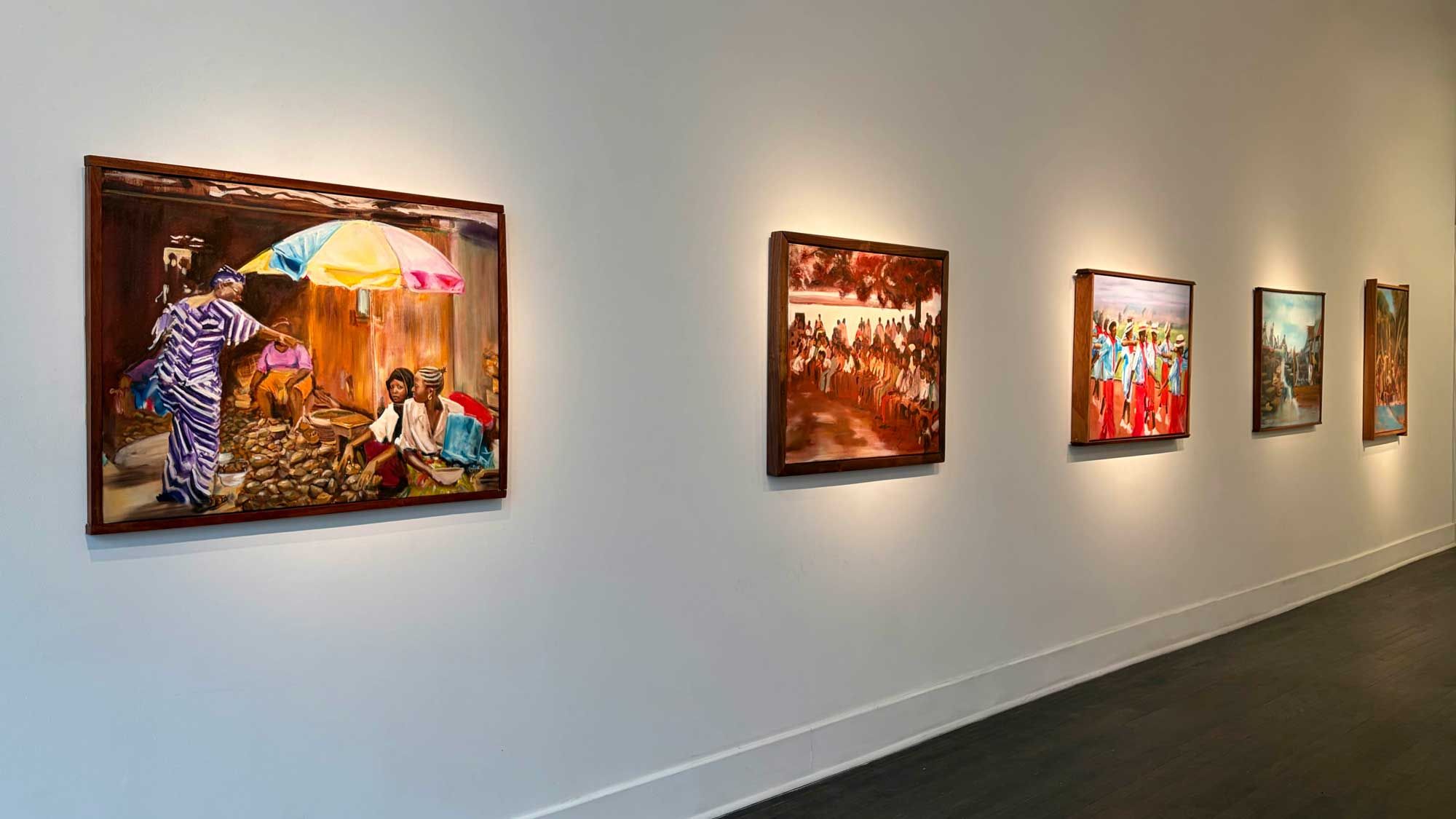
A painting of a group of women working in a shop in a Nigerian market invokes imagery of the Three Fates in Greek mythology, or the Norns of the Nordic pantheon who weave the destiny of all human beings. A faint golden thread seems to connect the women in the painting who have been captured in a moment of pause in the hometown of Ayeni’s mother, Ibadan.
Many of the pieces have a subtle spiritual theme, oftentimes linking back to the Yoruba (a tribe of people of modern-day Nigeria and Benin) culture. Often, for people of the African diaspora, our caravan was derailed somewhere along the line by colonialism, severing ties to the traditions and beliefs of our ancestors.
“My mother’s grandmother, she never converted,” Ayeni says, thinking again about the baptism. “There are things that she believed that other members of the family think are demonic or evil, and that didn’t happen organically. I think it’s a form of terrorism and erasure or violence. Both my parents went to boarding schools, so there are ways in which the process of forgetting has been systematized through colonialism.”
In Yoruba culture, twins can be seen as a blessing for a family, symbolizing divine protection and wealth and the area of Nigeria where Ayeni is from reportedly has the highest rate of twin births in the world. There are numerous sets of twins in his family. His grandmother had two sets of twins, one of which includes his mother. His younger brothers are also twins. In the show, he presents a painting of his grandmother holding a pair of twins with a prideful smile on her face.
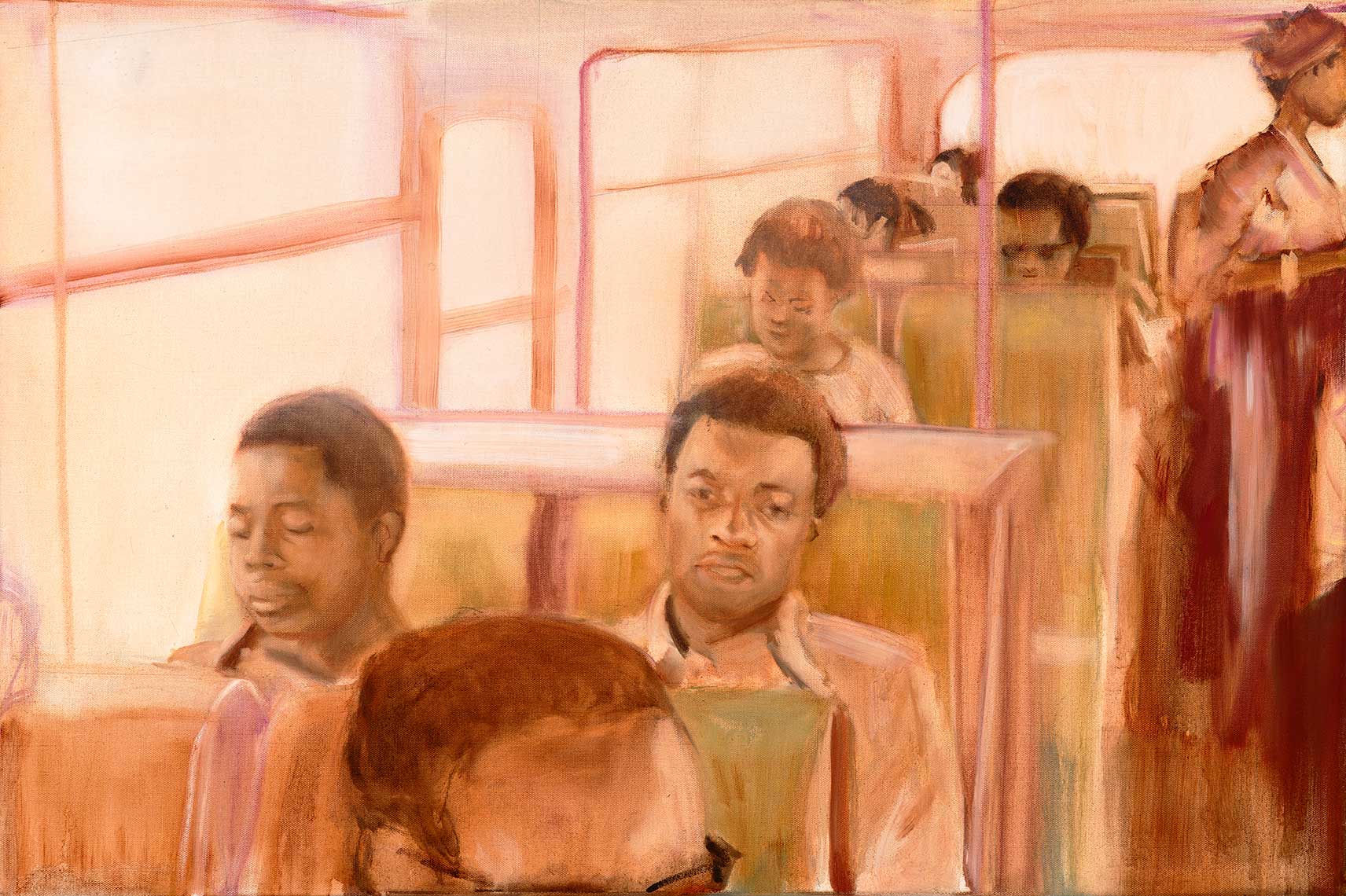
This is just one moment those golden threads of ancestral memory and tradition are being carried on through the show. Another moment, tying together his Nigerian roots, and his life here in Detroit is a simple painting of his father on the bus to see Stevie Wonder play FESTAC (the Second World Black and African Festival of Arts in Culture) in Lagos in 1977. At the time, it was the largest Pan-African gathering in history.
“That was a coming together, another caravan for viewing oneself in relation to other people,” Ayeni says. “Being an immigrant in this country who’s trying to speak to the diaspora about what connects us, that was resonant to me.”
Caravan is the first of Playground Detroit’s 2025 Emerging Artist Fellowship series and will be on display until Saturday, May 2. An artist talk is slated for Thursday, April 30 from 7-9 p.m. with a closing reception on May 2, noon-5 p.m. For more information, see playgrounddetroit.com.
Published in conjunction with Detroit Metro Times.


