
Ho'oponopono
By 김영은 (Kim Young Eun) and 한아람 (Han Aram)
Photographers: Hygge, Better People, Paul, and Sori
Dong-gu Youth Center Agit
Through July 23, 2026
(Jisu Sheen recently moved from New Haven to Gwangju, South Korea, where she’s covering local arts and culture for the New Haven Independent and Midbrow.)
Three columns of post-its told stories of fake selves at an interactive photography exhibit called Ho'oponopono—named after a Hawaiian philosophy of healing, forgiveness, and letting go—at Dong-gu Youth Center "Agit" this past weekend.
It was up to the exhibit's visitors to sort out how these projections came to be and find their true selves amidst the confusion. They had the help of a serene environment, the knowledge they weren't alone, and the artistry of four photographers.
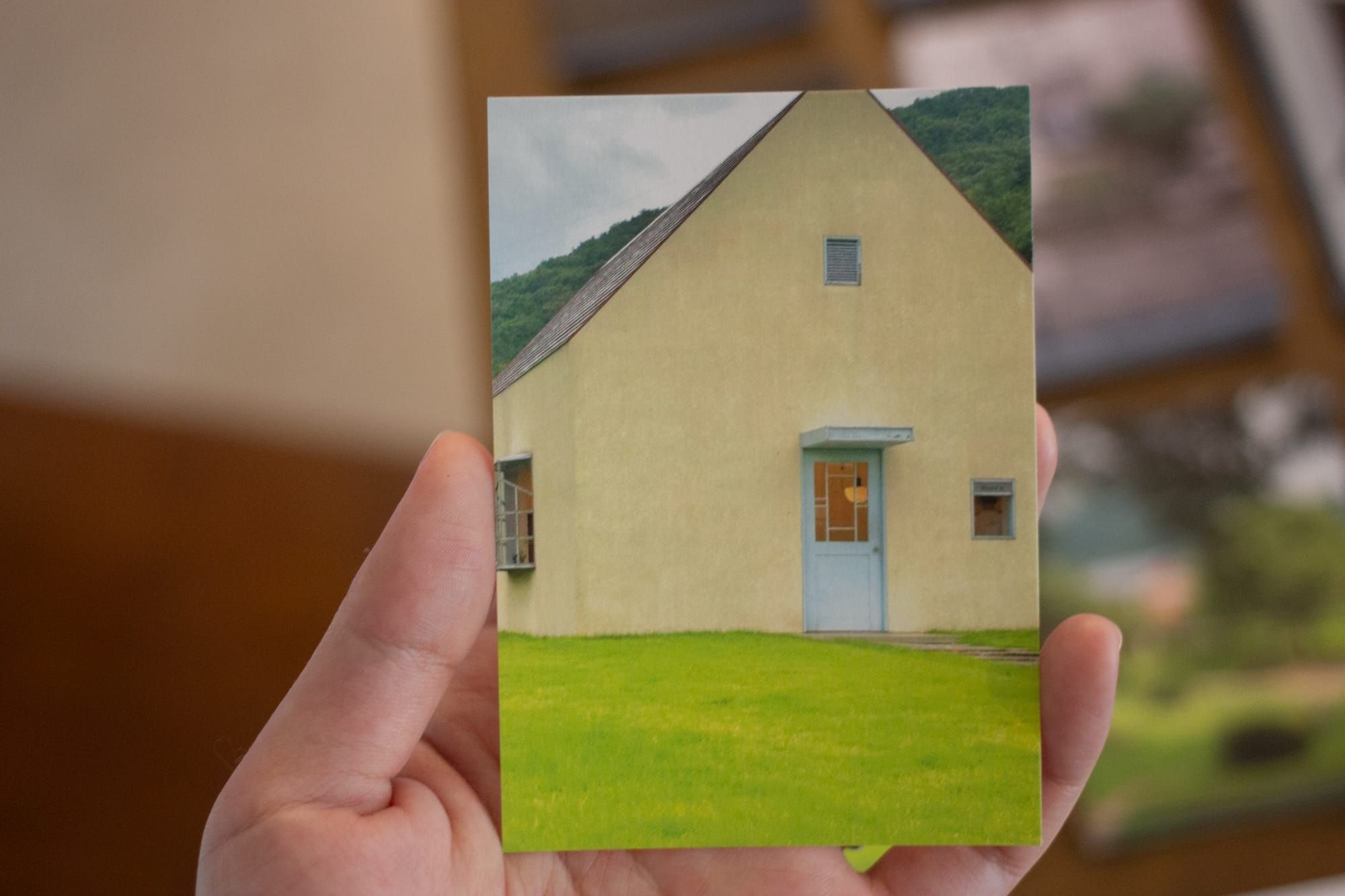
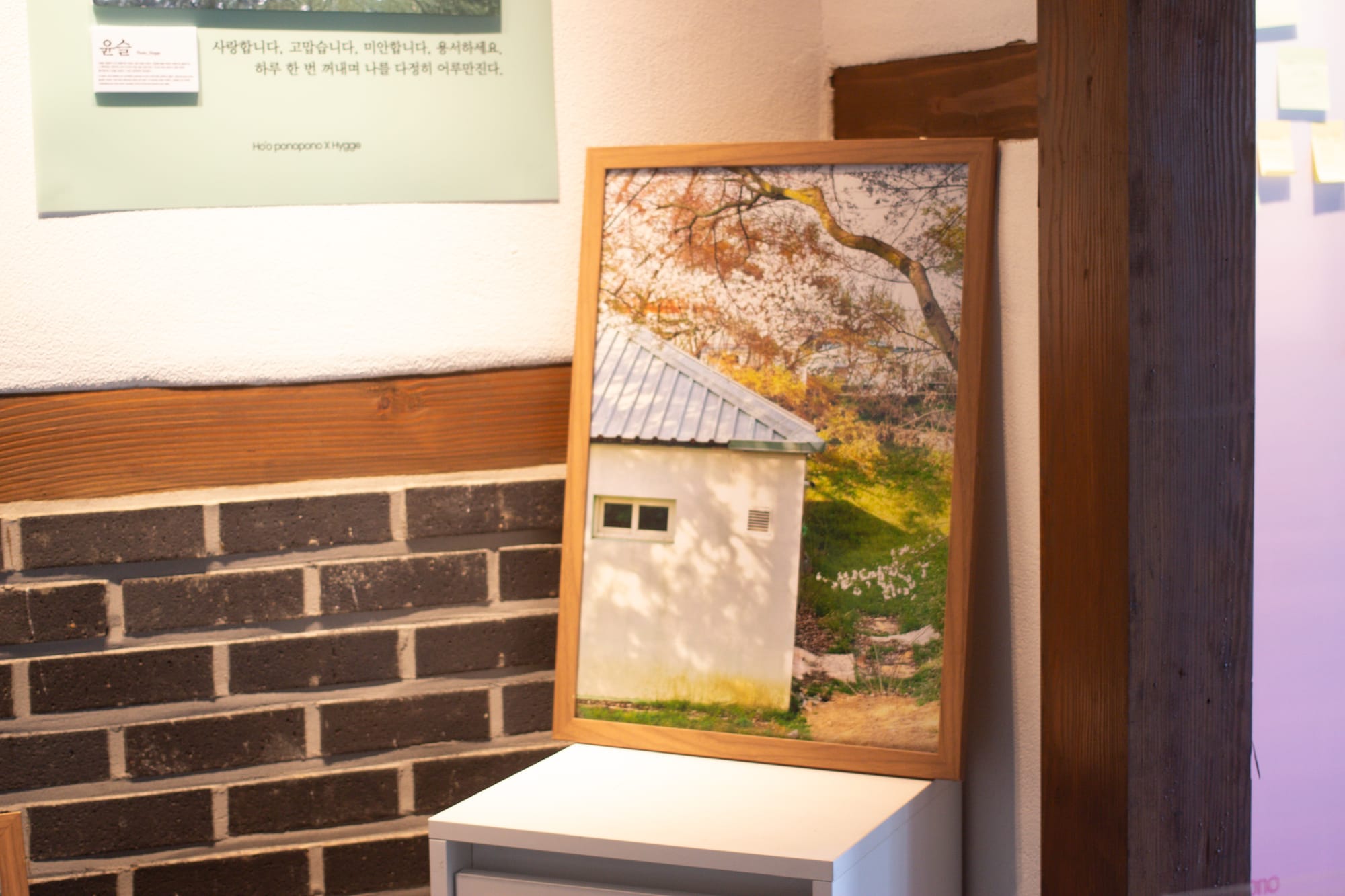
The photographers, emerging artists identified by the monikers Hygge, Better People, Paul, and Sori, provided visuals for concepts that might make up a person's identity. Their subjects ranged from flowers to buildings to road signs; in other words, familiar sights with the potential to reflect a range of inner thought.
The photos in the Ho'oponopono exhibit weren't just on the walls. They also showed up in the form of cards accompanied by single words in Korean. Visitors could search through to find one that described how they viewed themselves.
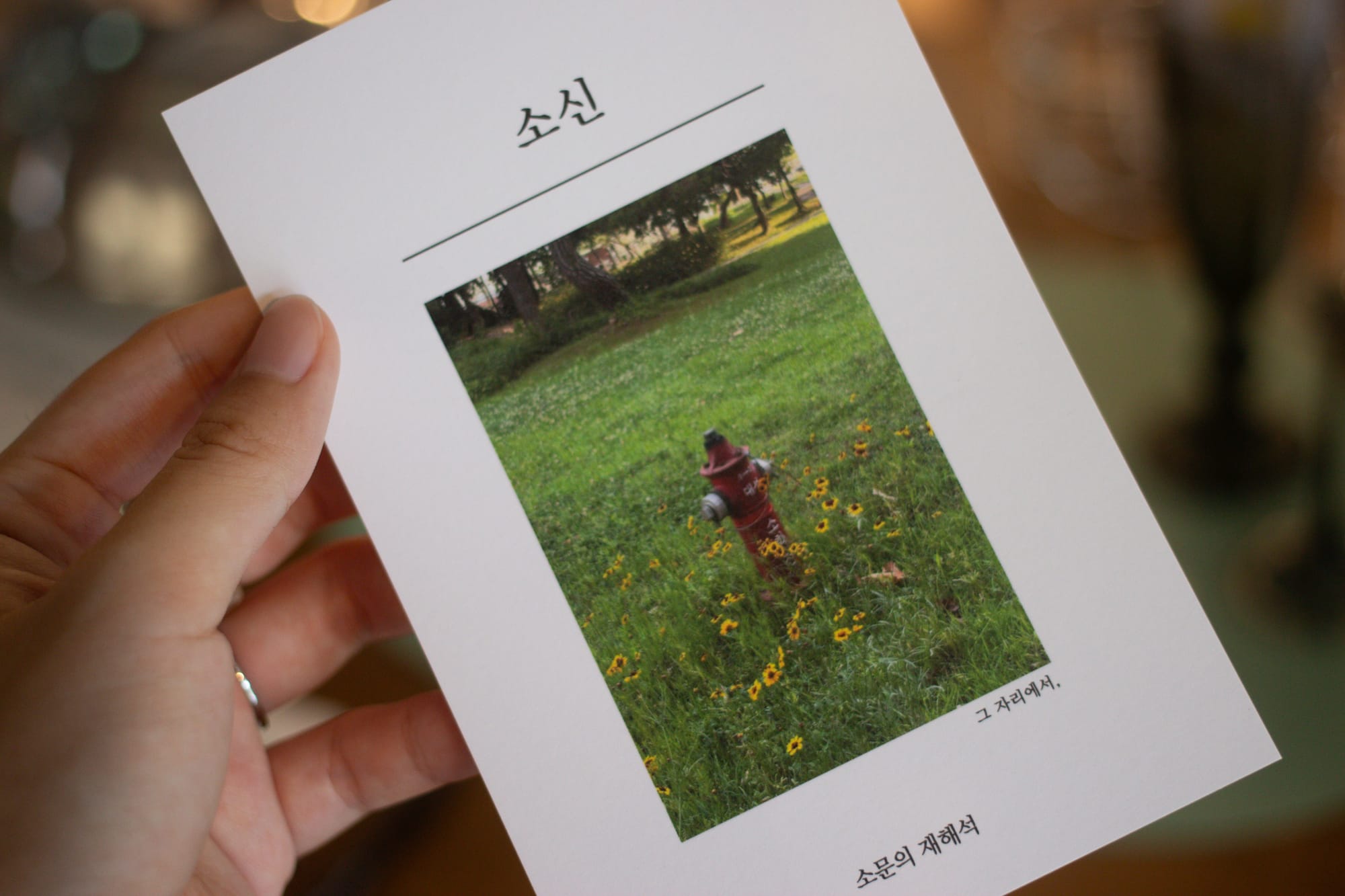
When it came time to select my photo card, I did it a bit wrong; I chose the image before the word. It was of a fire hydrant in a field.
I'm still learning Korean, so when I saw the word soshin on the card, I didn't yet know what it meant. I just liked the placement of the red metal structure in such an out-of-the-way location, surrounded by grass and open space. It looked at peace there.
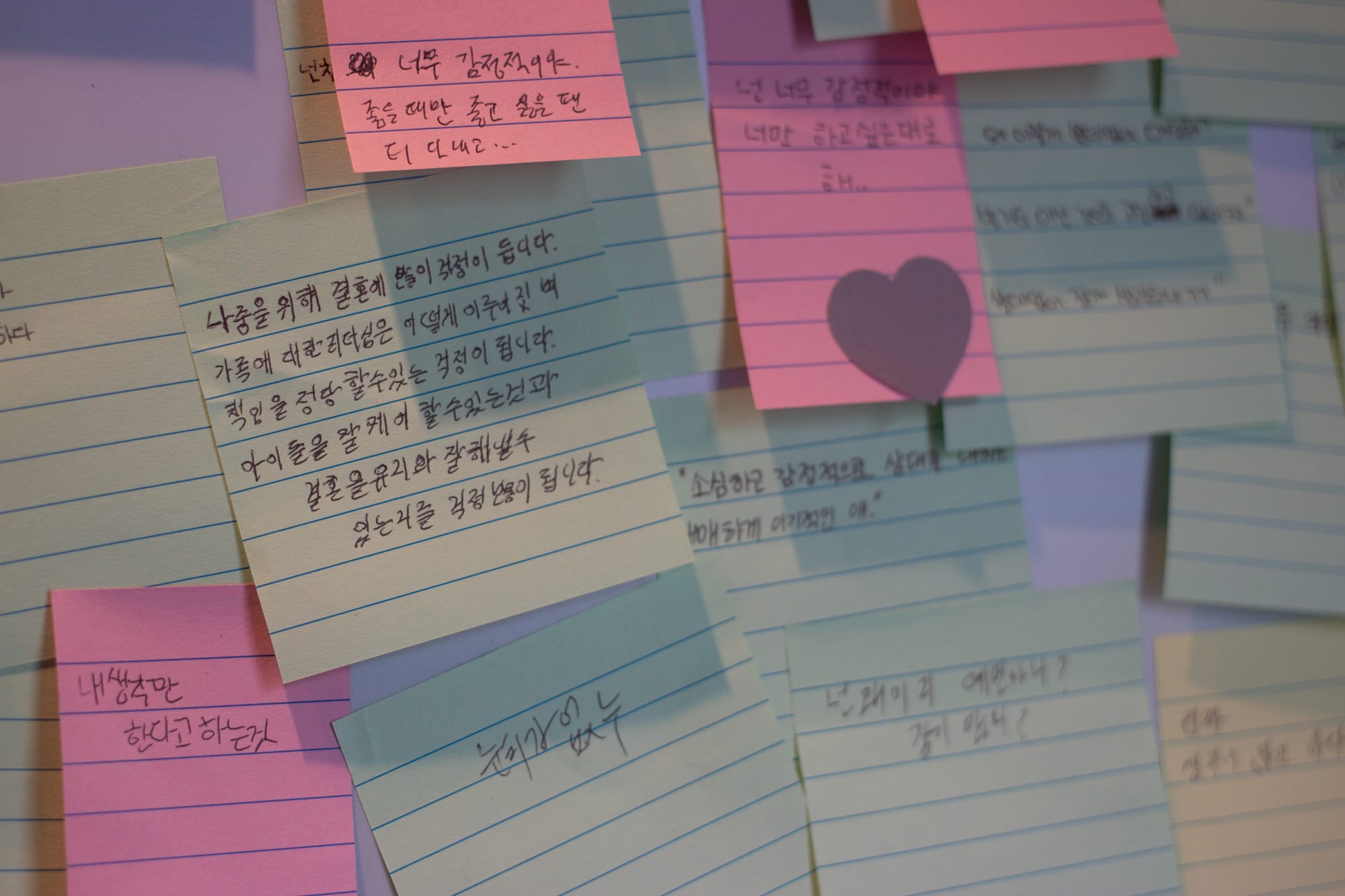
In the next room were three columns of post-its from people repeating (perhaps releasing) the words their lovers, family, and acquaintances have used to describe them.
"This space invites you to face the origin of the 'rumored self'—a version of you gradually shaped by others' words, gazes, and past experiences," the description said in both Korean and English. I was surprised by how frank people were about the criticisms they'd received.
One person wrote (in Korean) that someone told them they "have no nunchi."
Every so often, I see an essay spreading the gospel of nunchi—the Korean concept of situational awareness, emotional intelligence, or the ability to guess what someone is thinking before they say a word. Could it really be, as one book calls it, the "Korean secret to happiness and success"?
I don't think so. Having too much nunchi can come across as creepy. I'd know; I was called out for it more than once as a kid.
If you go about your life always reading others, you lose your decisiveness, the fuel that keeps the day moving. It can make people feel watched (nunchi comes from the word nun, or "eye"), or as though they have to come up with every idea themselves. At its extreme, it's people-pleasing—or to get deeper in the therapy-speak, fawning.
After the show, I finally looked up the word from my card.
"Conviction," "confidence," or "trust," some definitions said. Others invoked "belief" or "principle." It felt fitting; it's how I would describe my current self. If anything, I'm stubborn.
The realization made me feel like, at the age of 29, I might have succeeded in approximating a normal level of nunchi. No longer a creepy kid, I'm now an adult with more of my own thoughts in my head.
Ho'oponopono is a space for honesty in the face of swirling opinions. It's a chance to view the self as a changing creature. There might not be a last word on identity, but we can at least choose the ones in between.
Sign up here to get Gwangju Midbrow email updates delivered straight to your inbox.


