
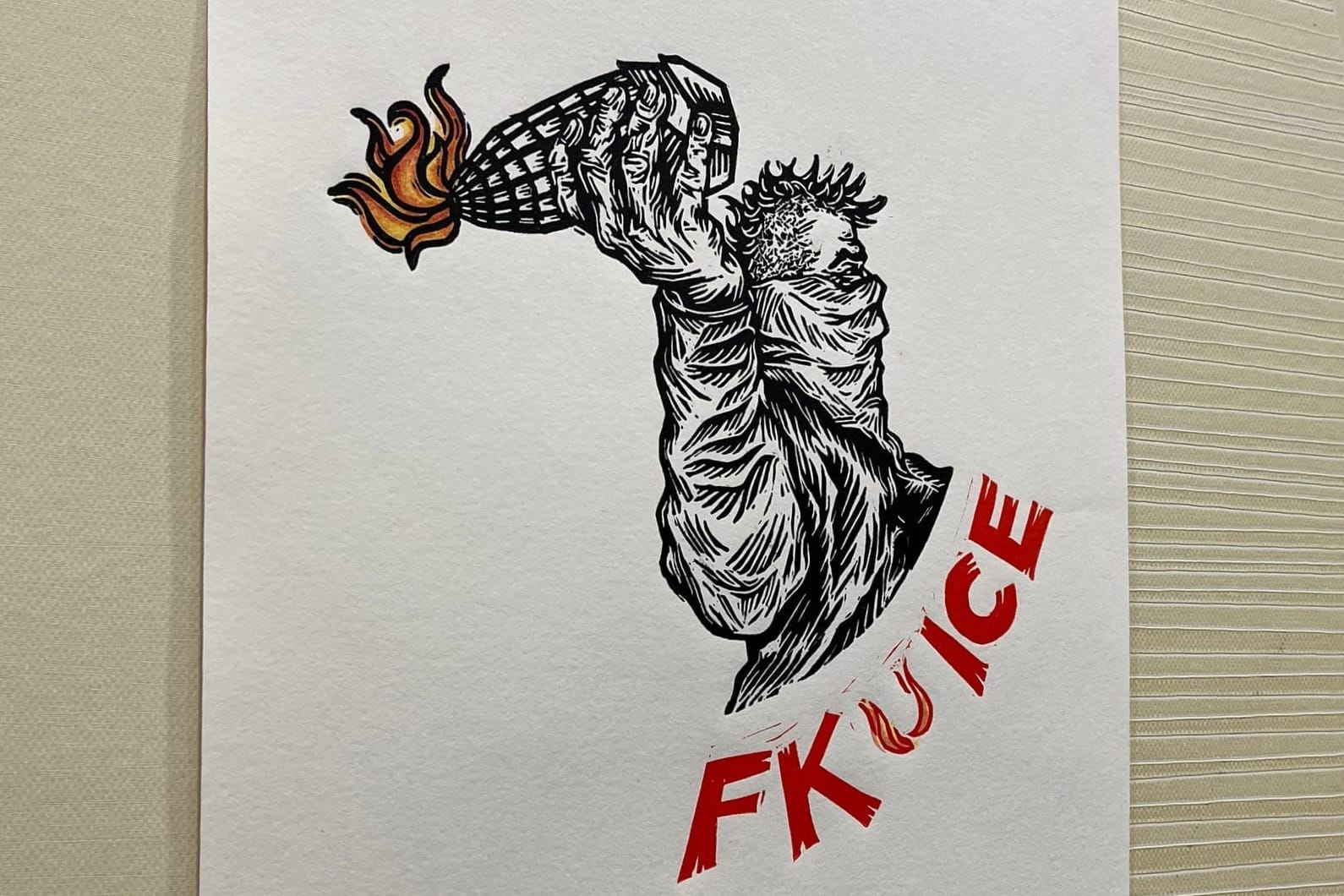
CODEX X: Tenth Biennial International Book Art Fair & Symposium
Oakland Marriott City Center, 1001 Broadway, Oakland
February 7 - 10, 2026
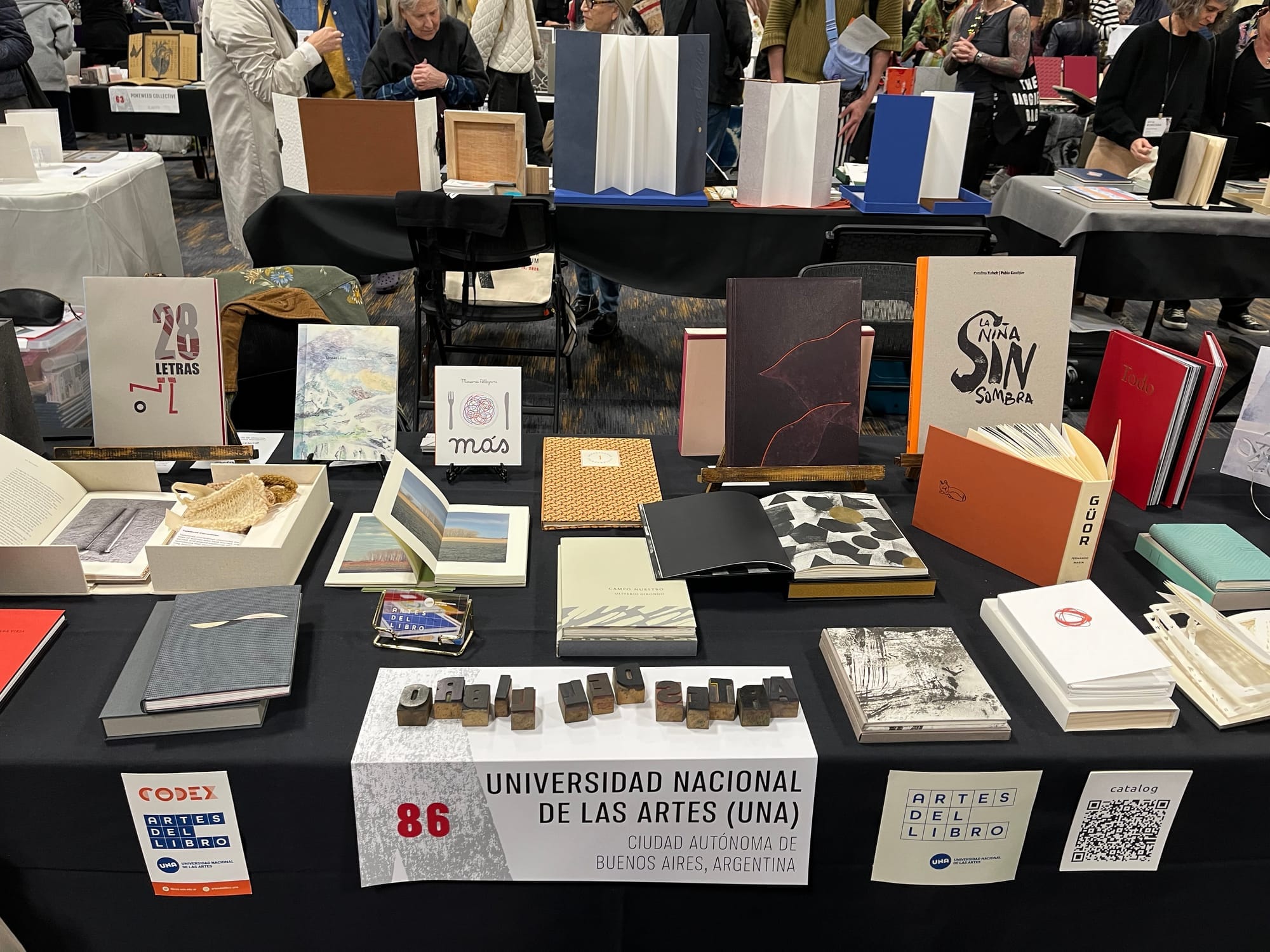
Although I’ve been to plenty of book fairs over the years, I’d never been to one devoted exclusively to book art. When I entered the space for CODEX X, the hundreds of exhibitors and thousands of visitors was overwhelming. The place was packed: a sea of humanity milling about in the expansive exhibition area, the air filled with buzzing, indecipherable chatter. This is the stadium concert for book artists.
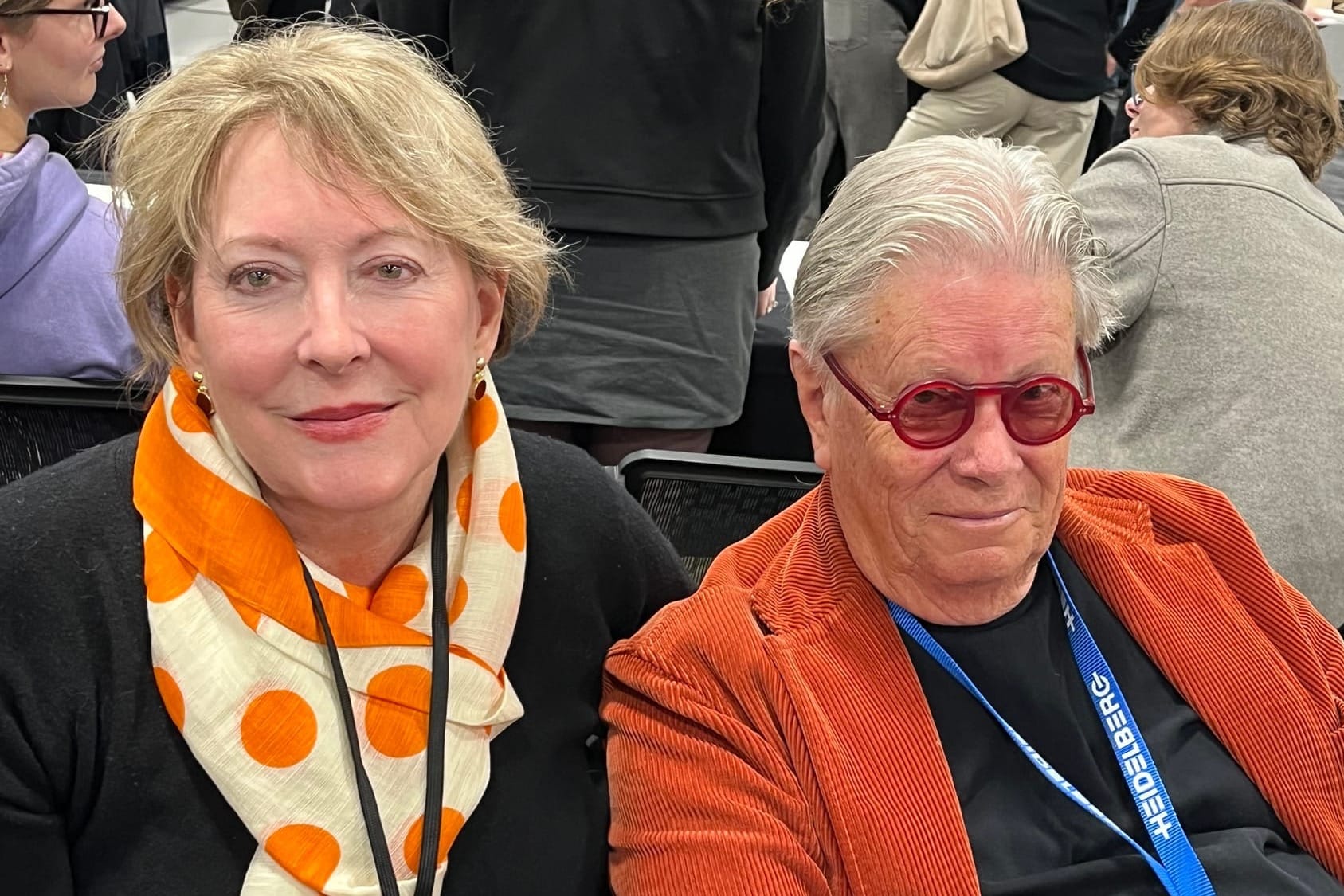
Susan Filter, a paper conservator, and Peter Koch, a fine press printer, established Berkeley-based CODEX as a nonprofit organization in 2005. Now in its twentieth year, CODEX celebrated its tenth biennial book art fair and symposium over four February days at the Oakland Marriott City Center. Book artists from all over the world were in attendance to showcase their work at this once-every-two-years event.
“People call them ‘art books’,” Ms. Filter said with an exasperated sigh, rolling her eyes just a bit. I couldn’t help but chuckle at her humorously disgruntled remark. Animated and forthright, she told me that most don’t understand what Book Art is, thinking in terms of illuminated manuscripts. “They’re books as works of art!” she said passionately, “Like illuminated manuscripts on steroids.”
It was only after spending hours examining exquisite works of art-as-books at a mere fraction of the exhibitor tables before I stopped by the Peter Koch Printers table to chat with the founders. The variety and diversity of Book Art on display blew me away; I didn’t know where to focus my eyes, peeping creative craftsmanship all over the place, my curiosity aflame.
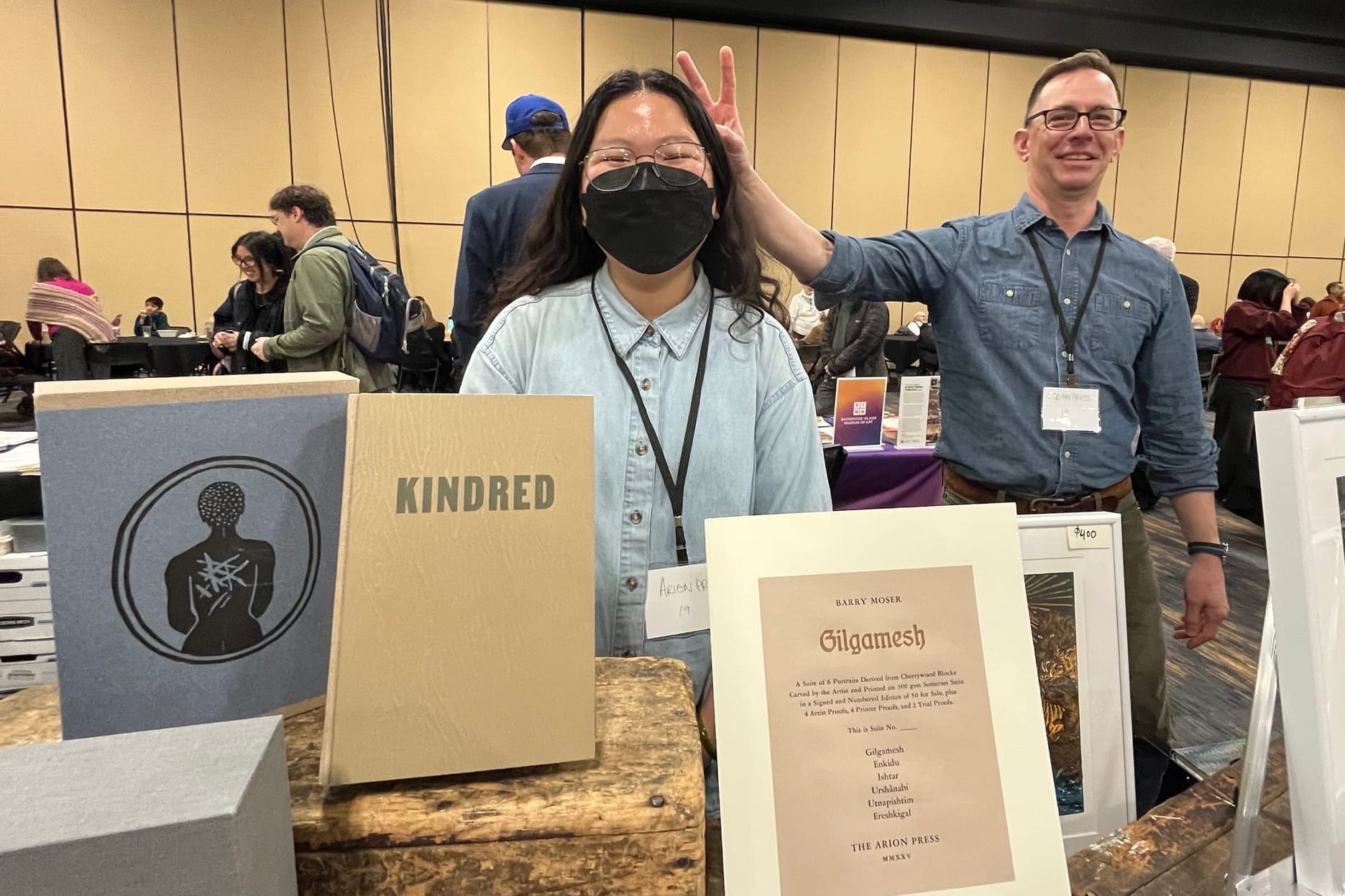
The first place I stopped to linger at length was The Arion Press, which I’d visited years ago at their space in San Francisco’s Presidio (they’re now located at Fort Mason on SF’s waterfront). A big, beautiful folio of the Fables of Aesop was on display, printed to commemorate the press’s 50th anniversary. It includes an introduction by San Francisco author Daniel Handler (Lemony Snicket) and every fable is accompanied by an illustration by one of 15 different artists including luminaries like Barry Moser, Enrique Chagoya, and Kara Walker. Although I could have spent the entire day with just that folio, there was an ocean more to see, so I tore myself away.
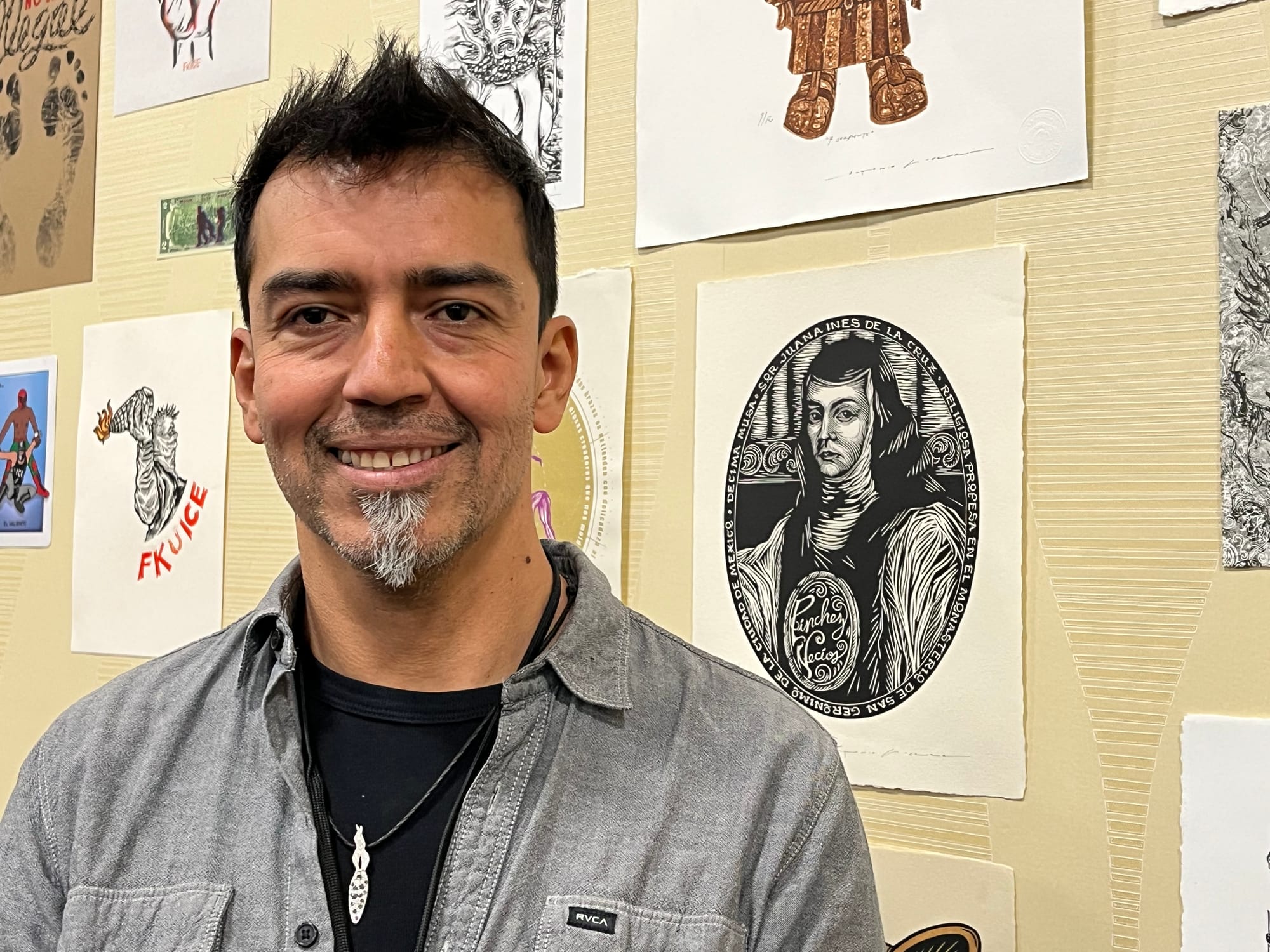
Artist Antonio Guerra (R) with his works.
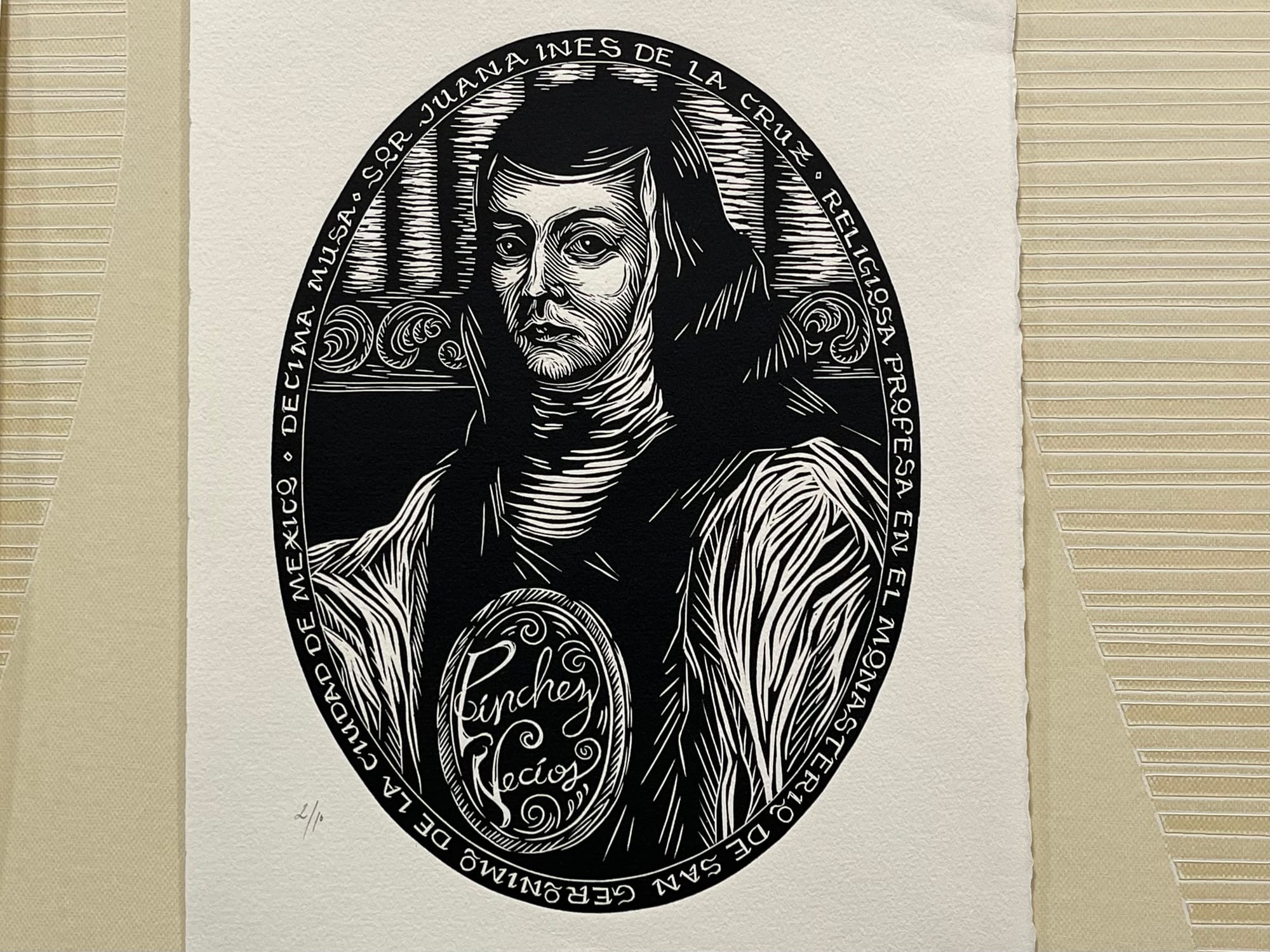
Wandering along past the myriad exhibition tables, my eyes were instantly grabbed by artist Antonio Guerra’s print portrait of Sor Juana Inés de la Cruz, the famed 17th century Mexican Hieronymite nun, writer, and composer. Guerra and his colleague Adriana Sanchez have run the press Tinta Taller in Mexico City for 25 years, and Guerra has been doing bookbinding since 2013.
The work of artists from Latin America (and a few from Spain) enchanted me most, their design aesthetic possessing a dark beauty that rattled my bones. The work of Maria Veronica San Martin, a Chilean artist who makes her home in Brooklyn, New York, was particularly intense for its gravitas.
In addition to being an artist who uses not only paper, but resin, metal, and other materials, San Martin is also a performance artist who incorporates her sculptural pieces into her choreography. Her creations address social and political issues in Chile and its relationship to the United States.
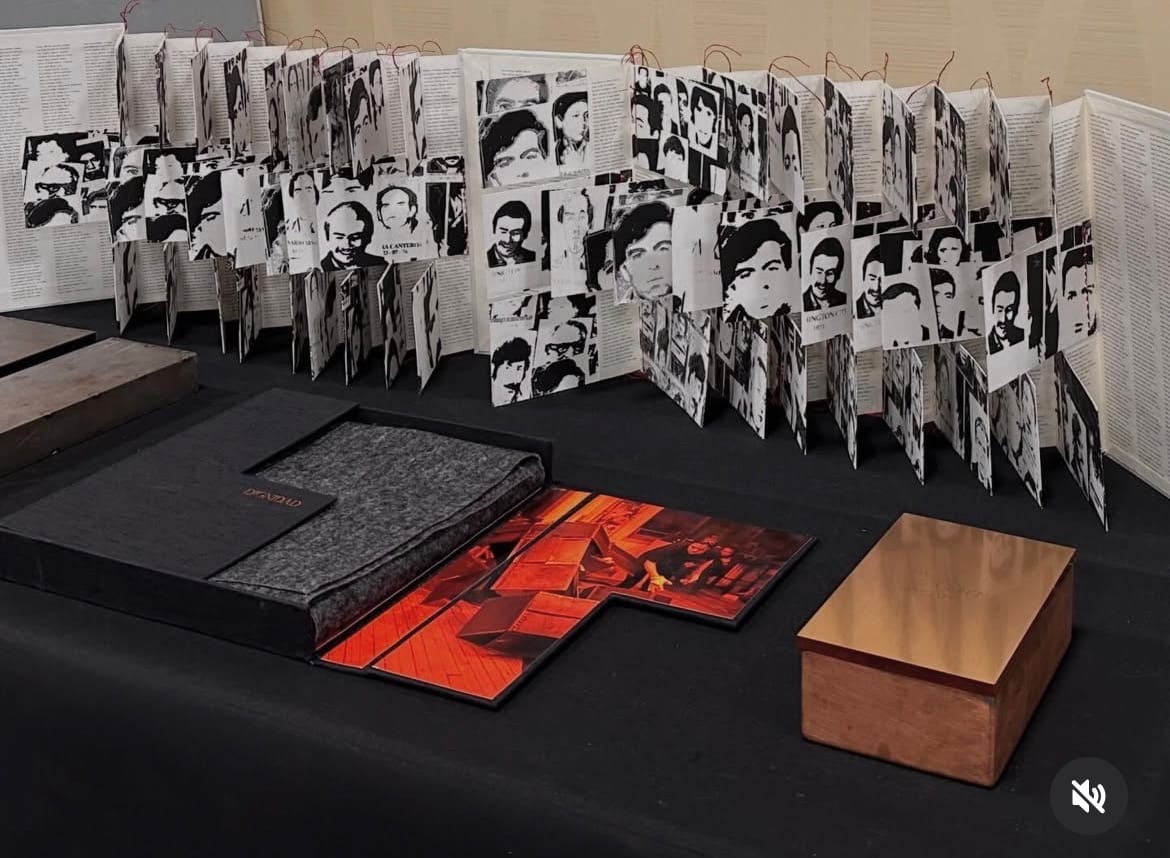
Faces of the disappeared.
One of her art books, “In Their Memory,” accordions open to reveal some of the faces of the disappeared—citizens kidnapped during Augusto Pinochet’s brutal regime. It was a haunting, poignant piece I loved for its tastefulness and life-in-death kinesis. San Martin was fascinating to chat with and I spent a great deal of time at her table.
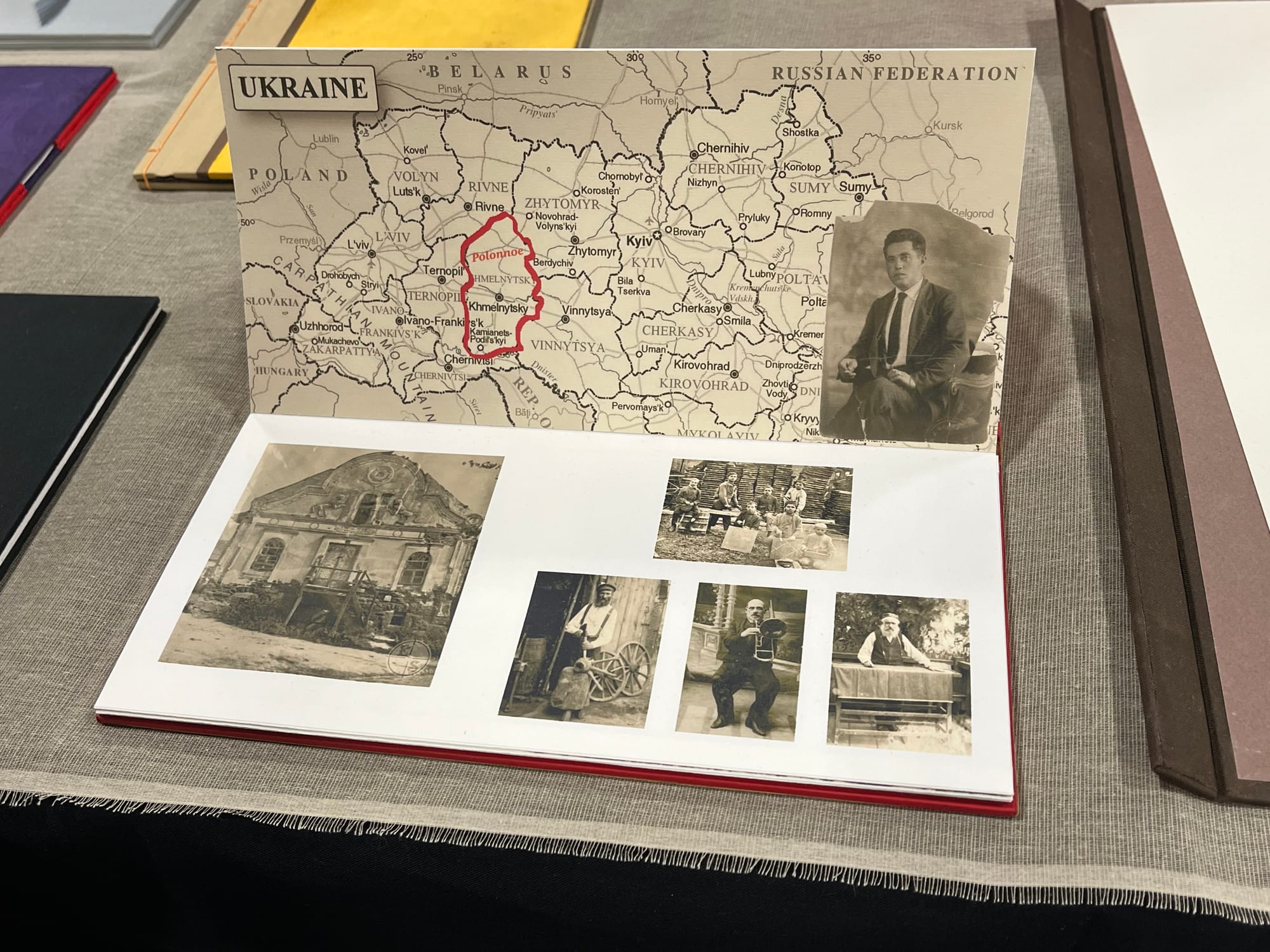
Three other artists’ work that resonated with me were books by Bela Limenes, Ximena Pérez Grobet, and Ioulia Akhmadeeva. Limenes, who lives in Valladolid in the Mexican state of Yucatan, showed me a book that chronicles her grandparents’ immigration journey from Ukraine to Cuba to Chicago. When folded closed it resembles a suitcase or valise.
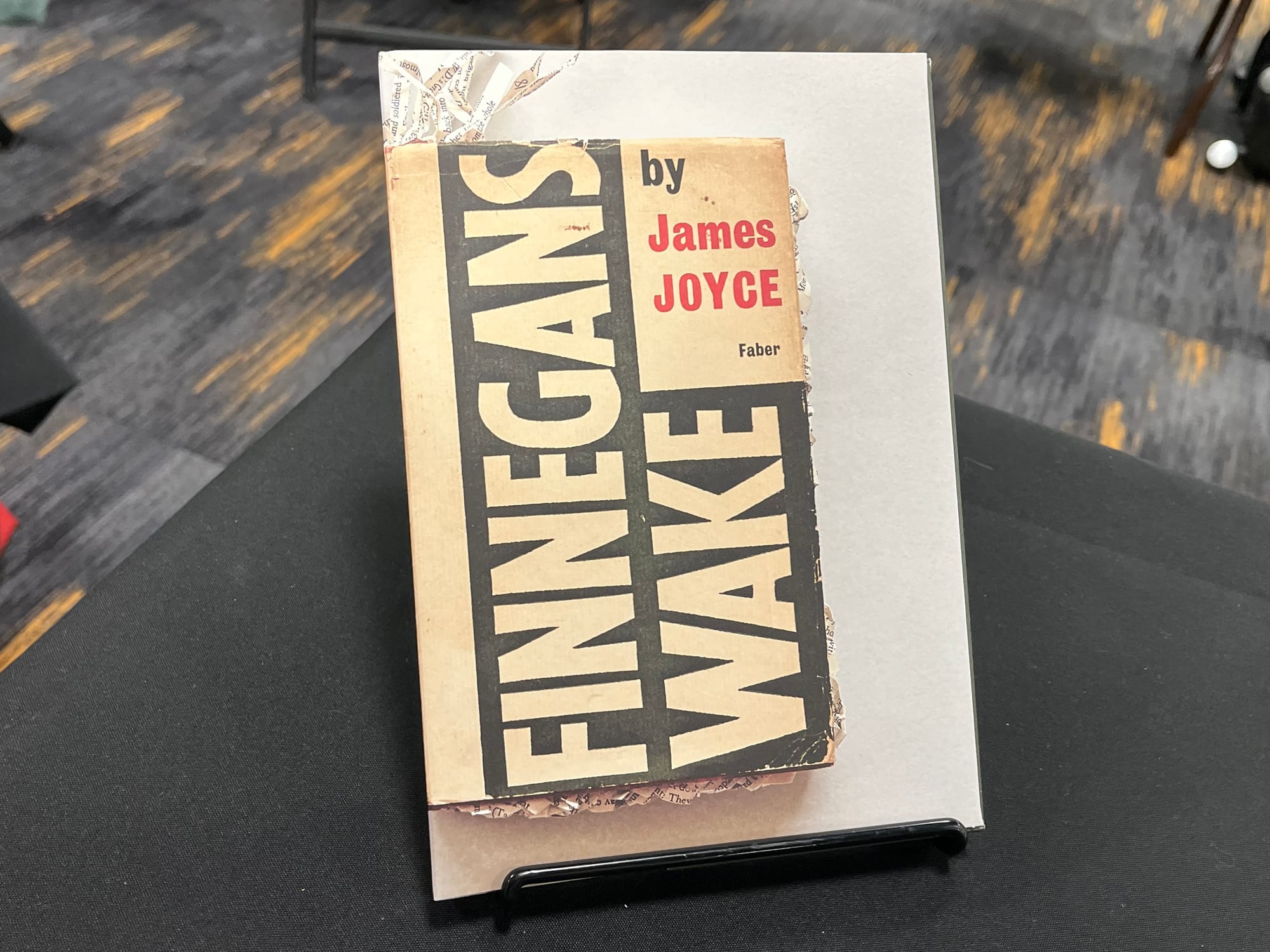
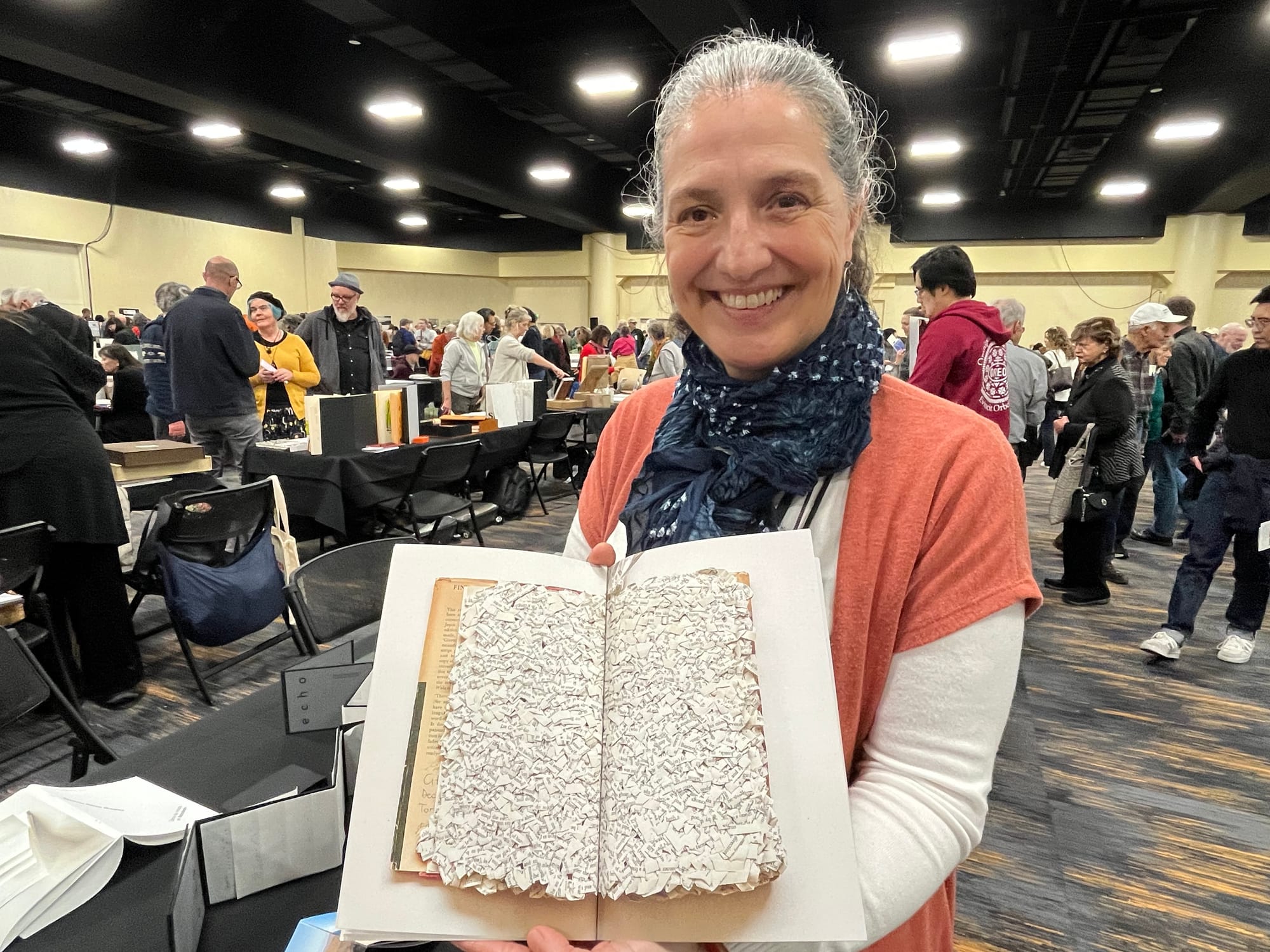
A knitted Finnegan's Wake by Ximena Pérez Grobet.
Ximena Pérez Grobet showed off an art book she’d created using “Finnegan’s Wake.” She hand knitted the text together to underscore the complexity of James Joyce’s dense, experimental novel. A native of Mexico, Pérez Grobet lives in Barcelona, Spain. Her work was impressive for its ambition, labor intensiveness, and beauty.
"Everything is Clear, No Ambiguity"
Ioulia Akhmadeeva, a native of Russia who lives in Mexico where she is Full Professor on the Faculty of Fine Arts at the Universidad Michoacana de San Nicolás de Hidalgo, turned the pages of a huge folio she’d made titled “Everything is Clear, No Ambiguity.” The colors, design, and size were stunning.
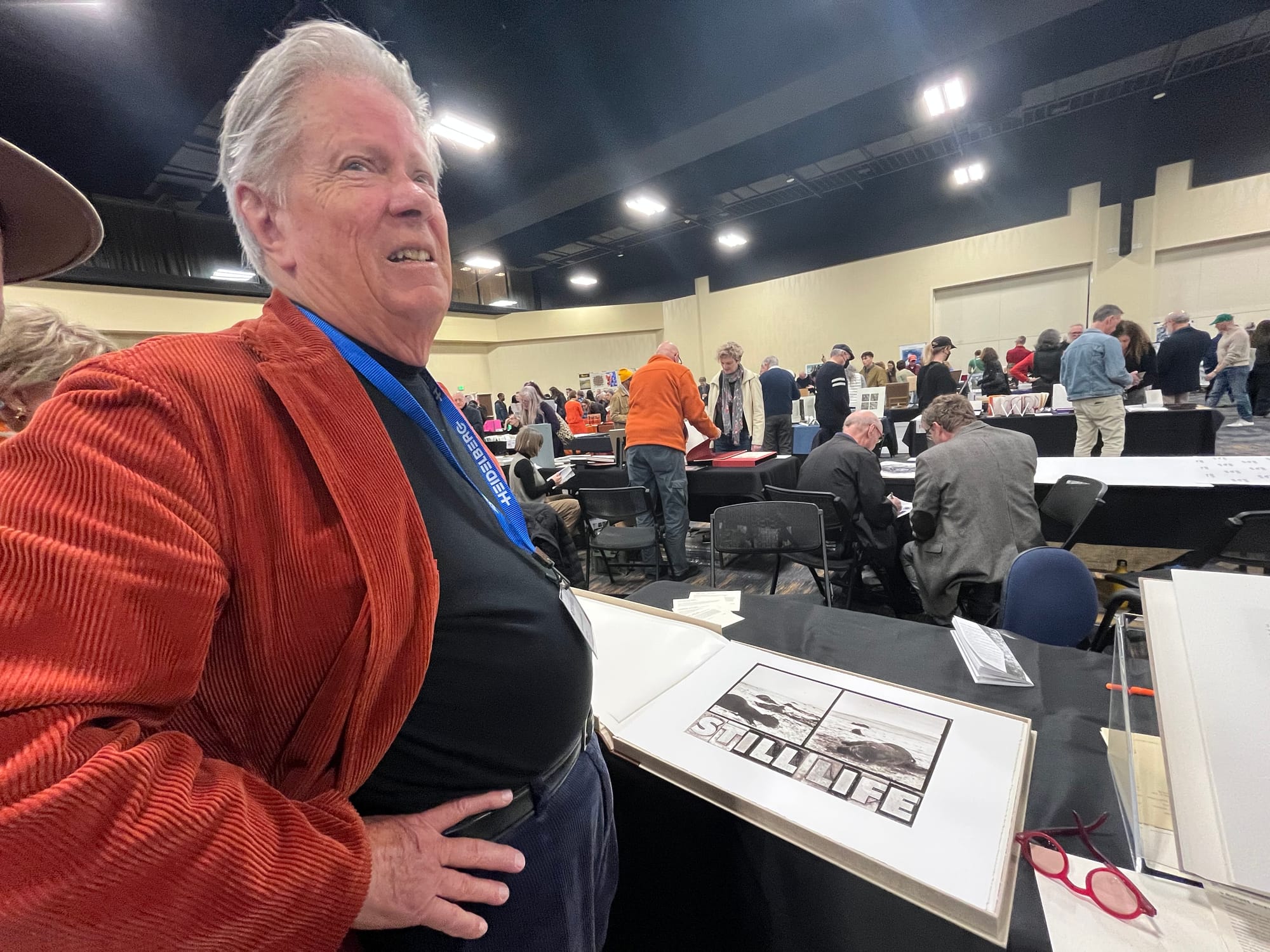
When I finally made it to the Peter Koch Printers table I listened to Mr. Koch talk about his portfolio Nature Morte, a collection of gorgeous digital pigment prints assembled from historic photographs and documents to mark the occasion of the bicentennial of the Lewis and Clark expedition of 1804-1806. Koch described his prints as a combination of “18th century idealism, 19th century boosterism, and 20th century irony.”
Ms. Filter told me that she and Koch always wanted the CODEX fair to be international, that after the Americans, Mexico and France have the second most exhibits at the biennial event. “Now we want the Koreans,” she said. “We want the Chinese, the Australians, the people of the Pacific Rim.” She also told me that CODEX tries to put exhibitors next to each other who might collaborate. “There’s been a lot of friendships made through CODEX. Now it’s a party. We build in a lot of social times, and the symposium.”
I didn’t attend any of the social events or the symposium talks, but it was a party alright—for both the eyes and the mind. “Dazzling” is too weak a word for the work I had the privilege of seeing. I can promise you I’ll be back for CODEX XI in 2028.


