Aaron Jones: Big MOdels
108|Contemporary
through September 19
What if we could pause a process midstream, between concept and final outcome, and get curious about what that moment looks like? It’s a peculiar and surprising state, a often-rushed-through waystation, and it’s one that Big MOdels—Aaron Jones’ current show at 108|Contemporary, up through September 19—goes all in for.
Jones is a working architect who’s regularly called on to build small-scale models for large-scale projects. Here, he explores a kind of model that slips out of the strict architect/client project development timeline and takes on a life of its own. Instead of moving toward installation on a playground, for instance, or living forever in miniature 3D plans, Jones’ triple tube slides get sliced off at the top so they’re open to the sky, then strapped together like forms that might want to squirm away or just keep rolling around each other forever if given the chance. He expands the model to a scale just big enough to get your arms around, to feel its physicality alongside or even as distinct from its function.
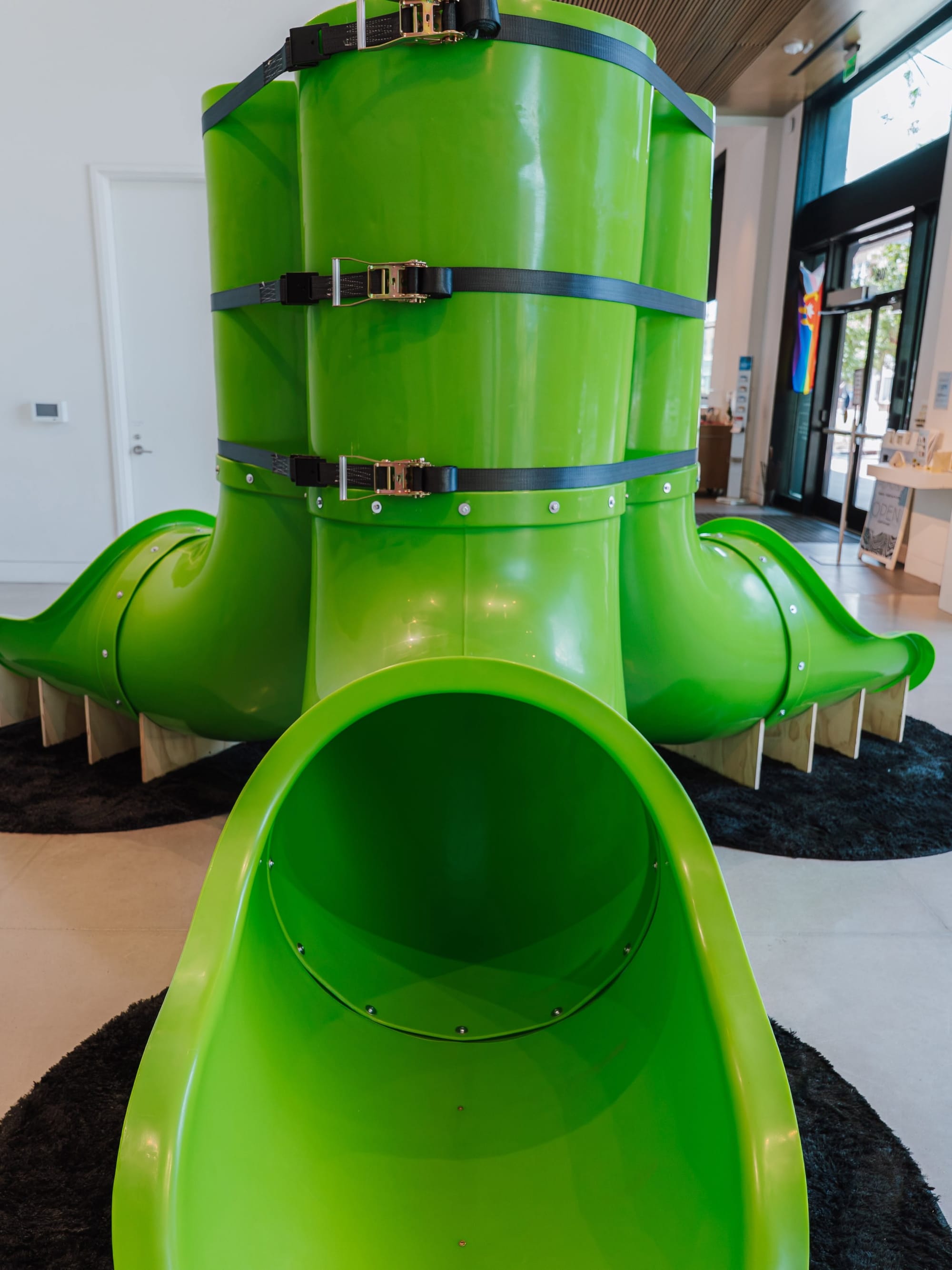
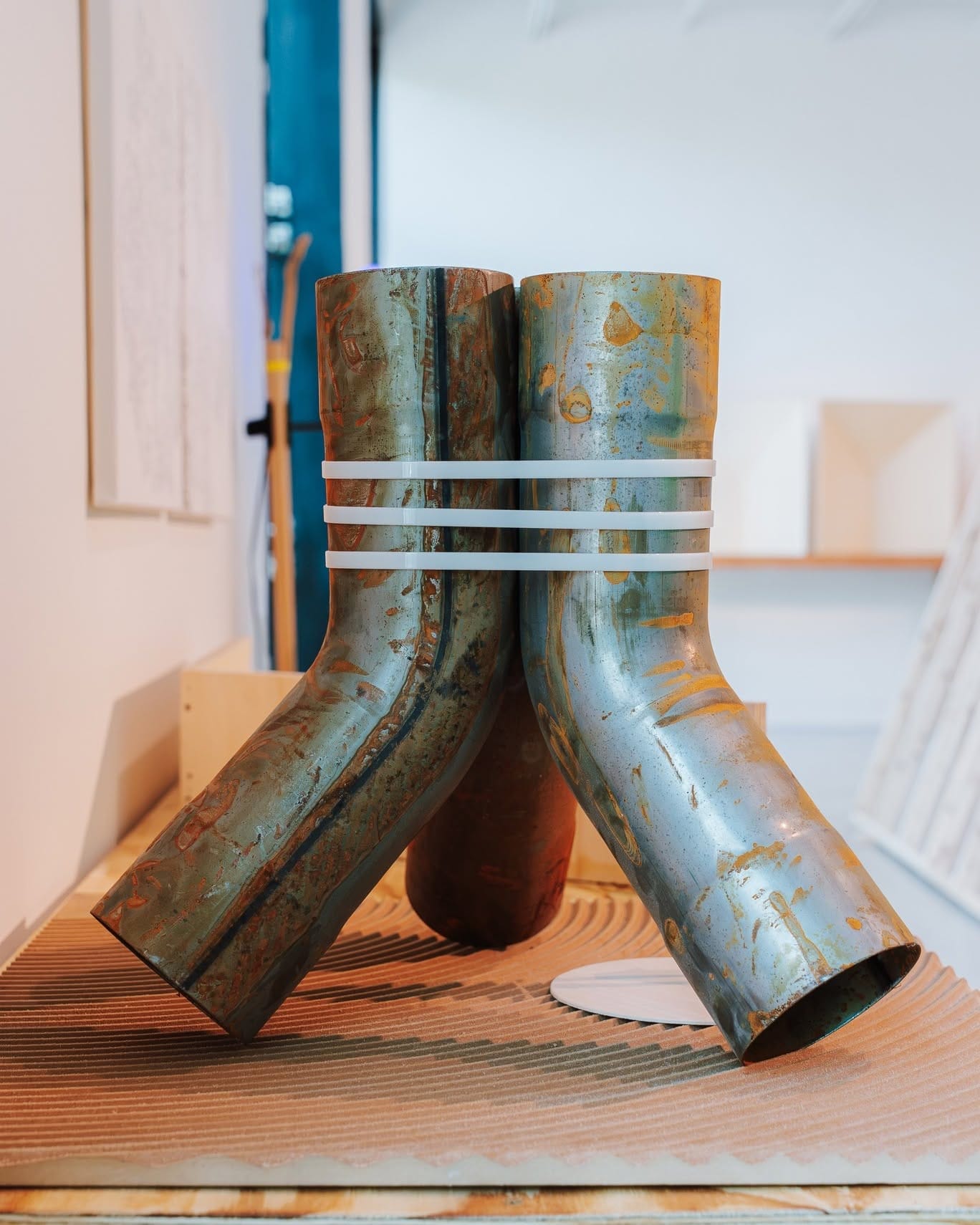
"Tube Slide Bundle" (L) and "Misc Study Model" (R) by Aaron Jones | photos courtesy of 108|Contemporary
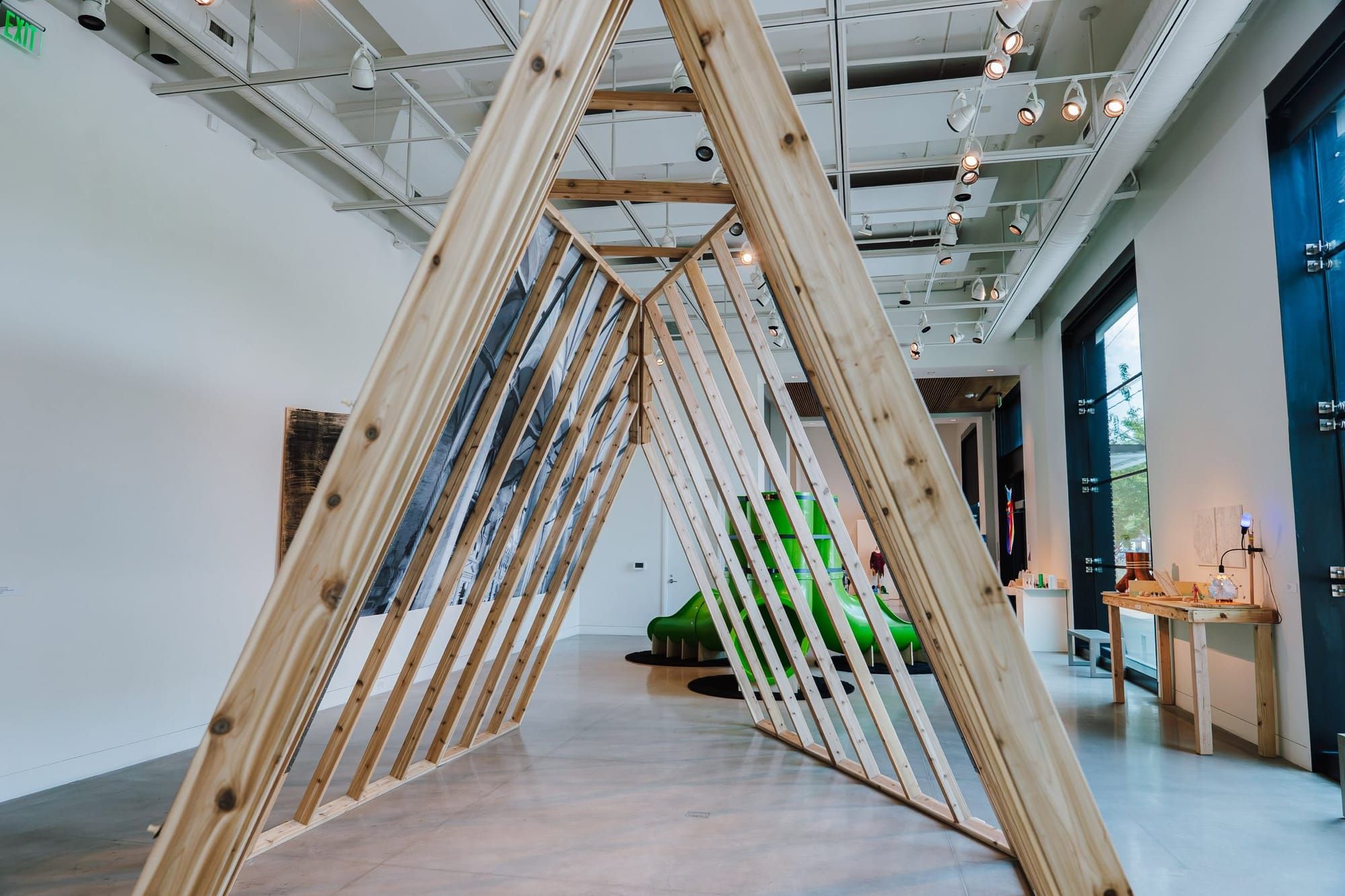
Far from feeling unfinished, these models instead read as open. In fact they’re full of spaces: a plywood panel that folds and hinges off the wall like a Jacob’s Ladder toy to make triangular pockets behind, or the bare wood studs that become the exposed framework of, maybe, a chapel like the one in Venice that’s captured in a huge printed photograph tacked to on one side of its interior. On the gallery’s far wall, four roof tiles are sat on end, their undersides (with a cyan base layer peeking through) facing out and peaks facing back, like alcoves or resonating chambers. It’s hard to resist the urge to put your face right into all these spaces, but you really don’t have to resist it: these pieces invite you to get close and coexist.
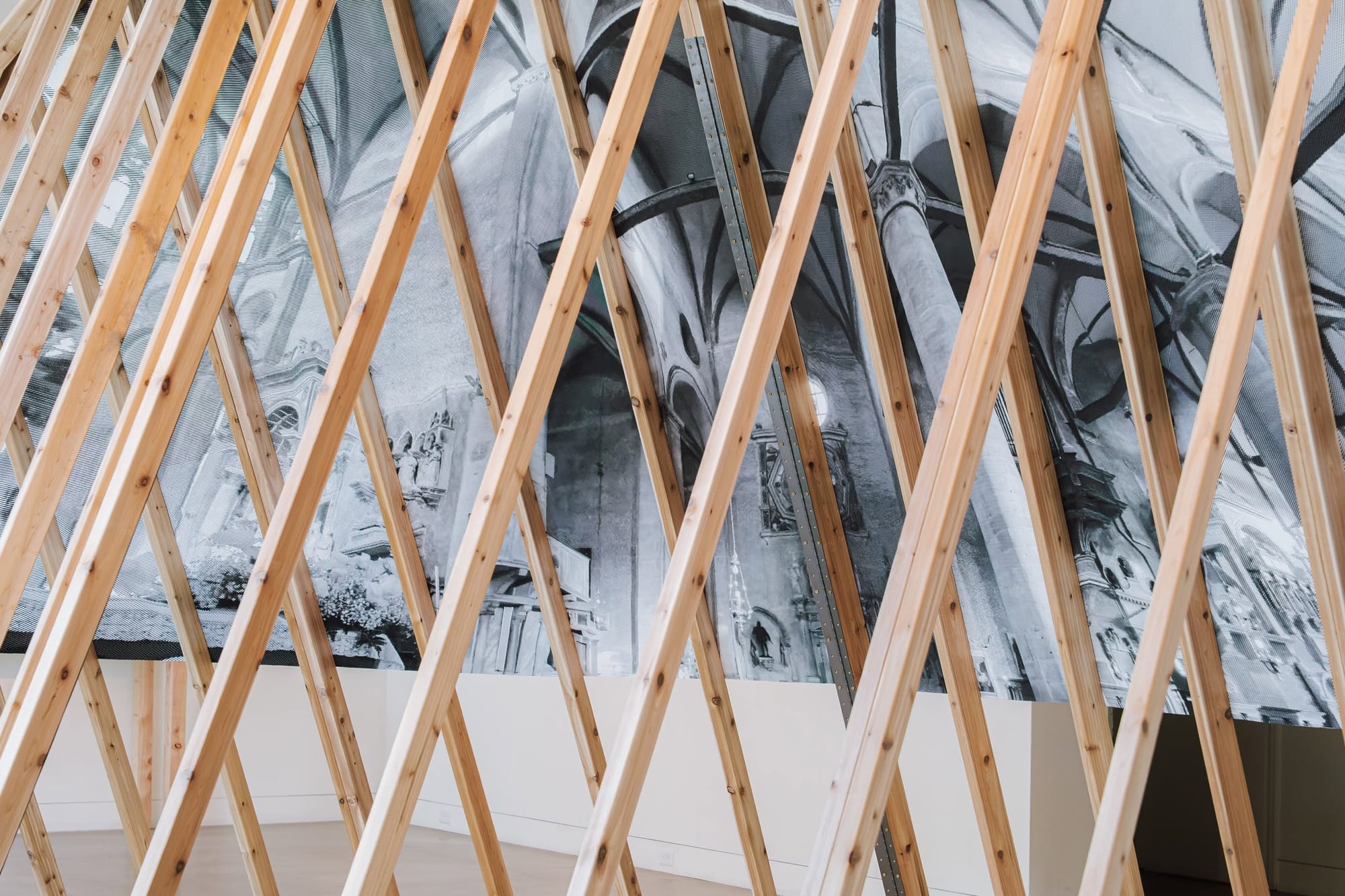
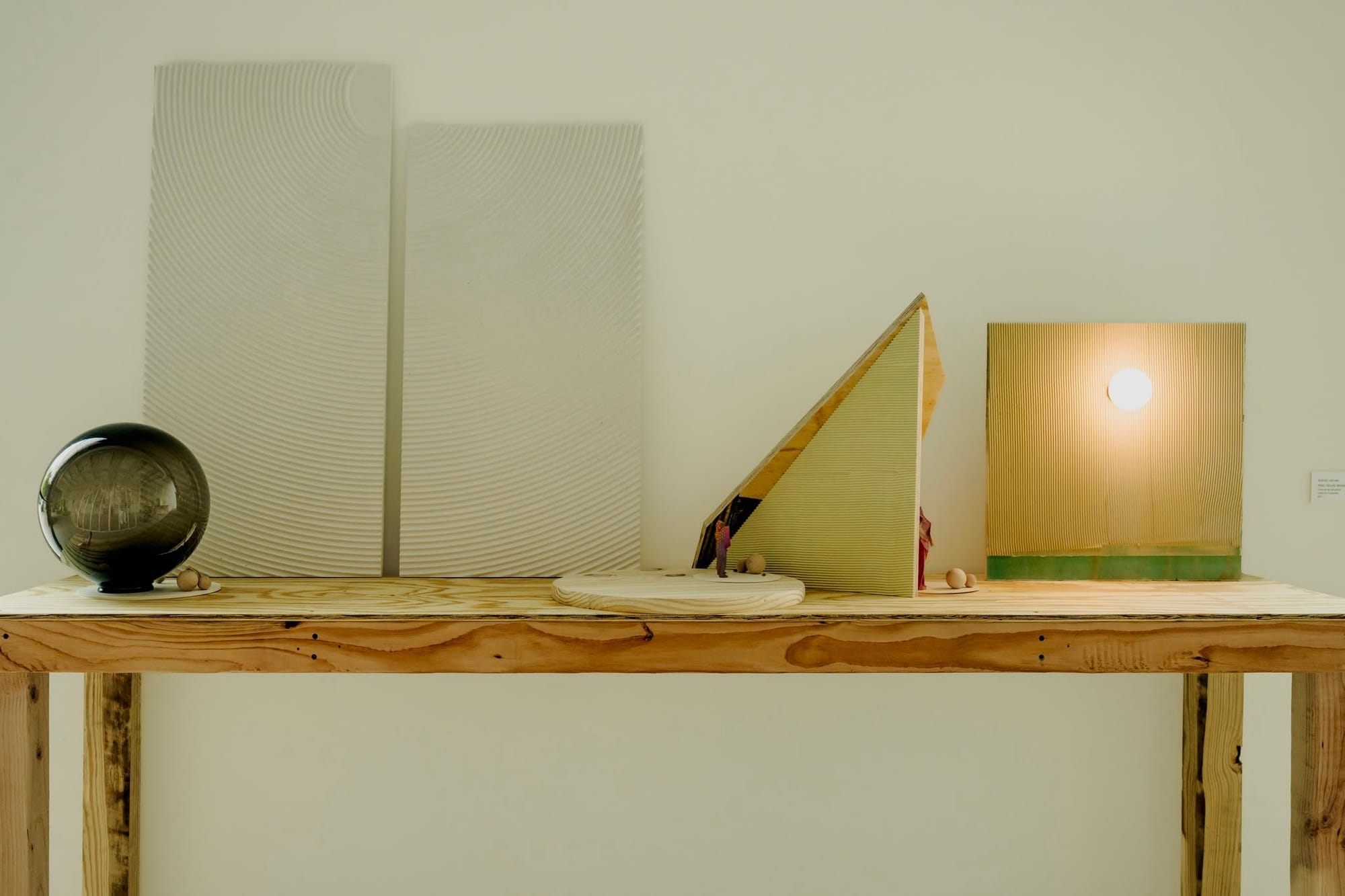
Aaron Jones, "Feel'd Chapel" (L) and "Misc Study Model" (R) | photos courtesy of 108|Contemporary
I’ve moved through this exhibit a few times, getting ready for an improvised performance my movement collective did there last weekend. We poked out of holes and leaned out between boards that leaned in; we played with the angles and curves and grooves in the surfaces; we looked through structures and tucked ourselves under tables, our bodies' architecture in conversation with these forms and the slightly-off-from-"normal" way they inhabited the room.
Improvisation has a lot in common with what’s happening in Big MOdels, which suspends an ephemeral moment so it lingers a little longer, so we get to inhabit it, even move around in it and feel the shape of our own permanent in-between-ness. The space between things—idea and outcome, floor and ceiling, past and future, built environment and living body—turns out to be as interesting as the things themselves.
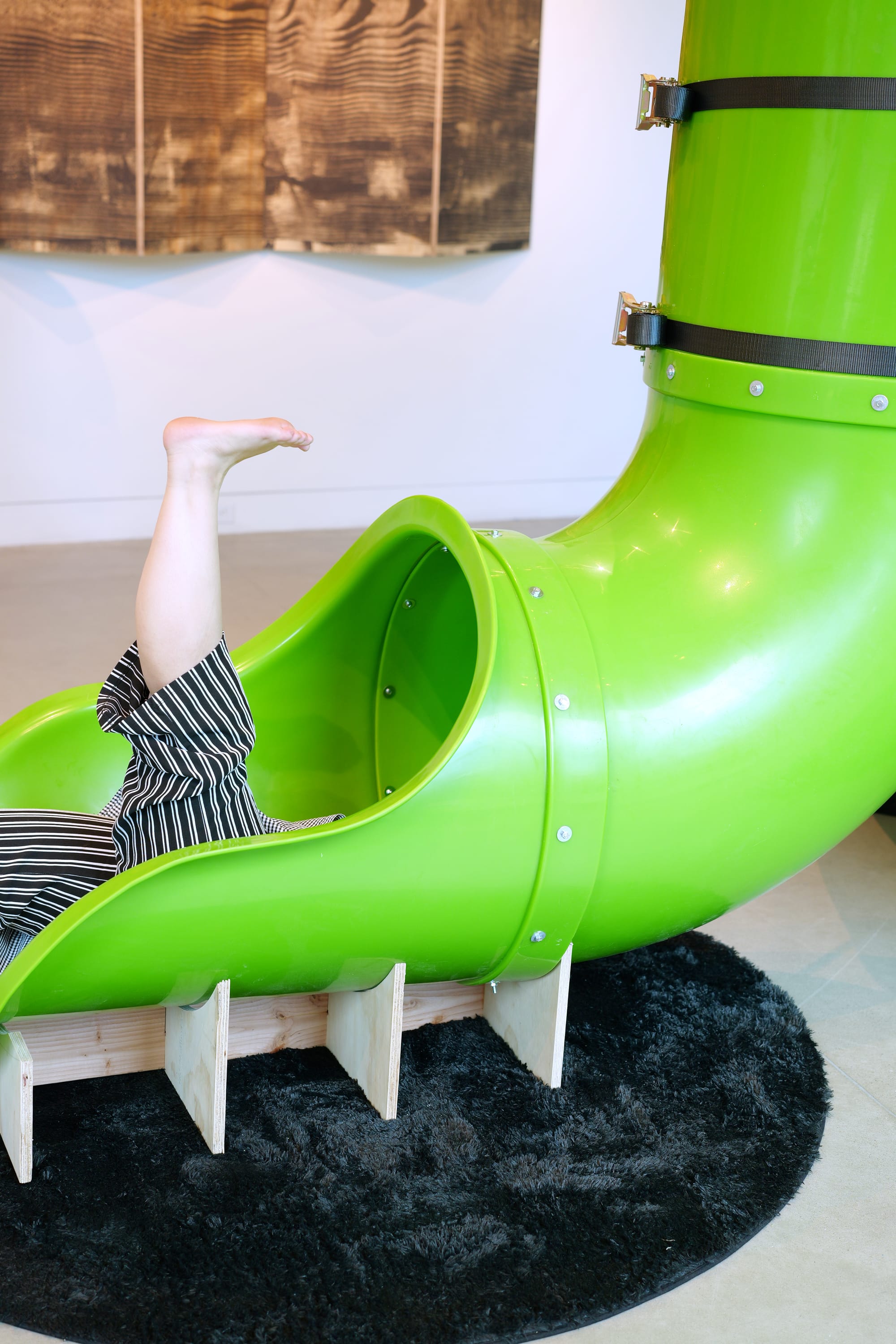
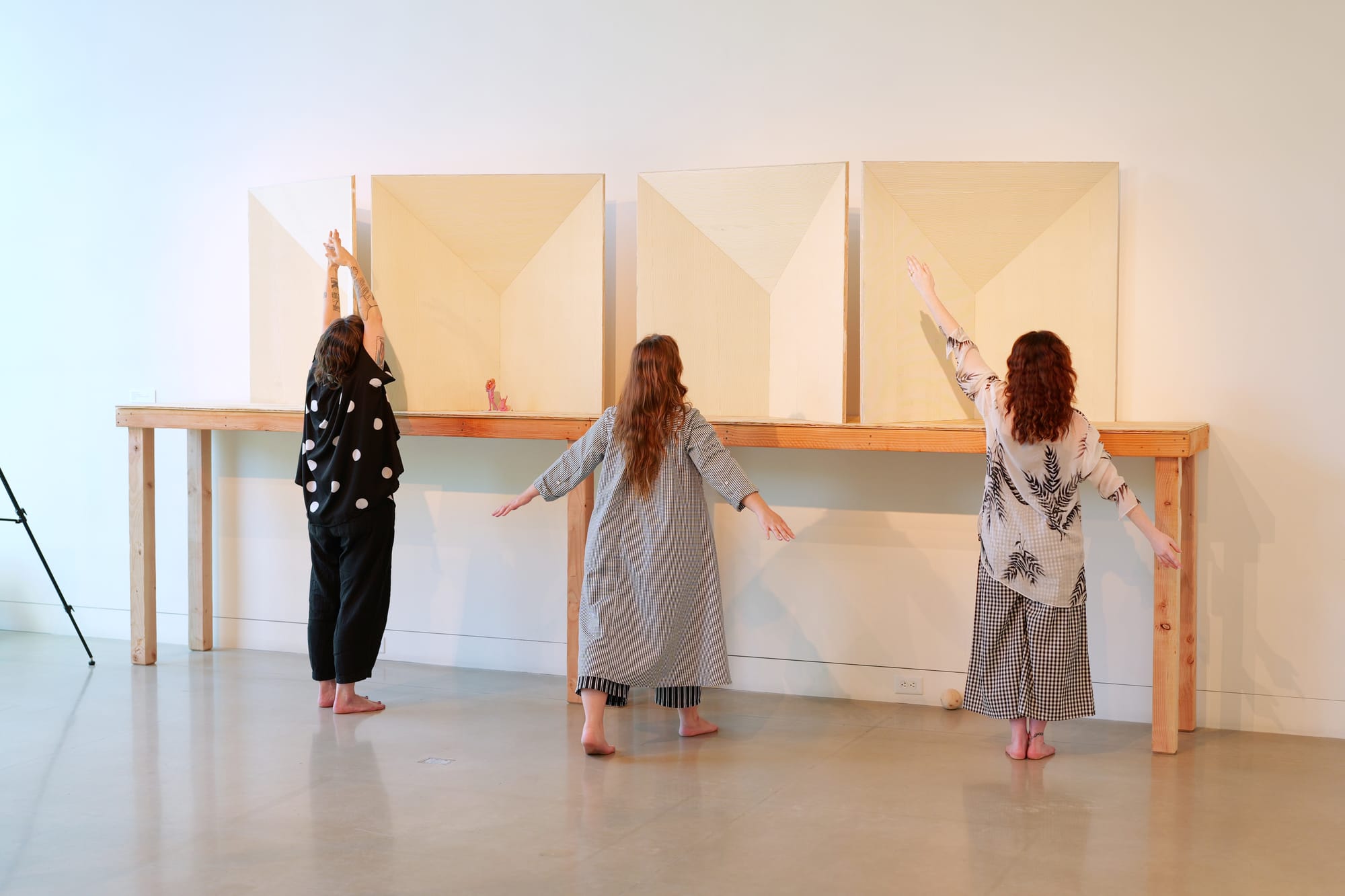
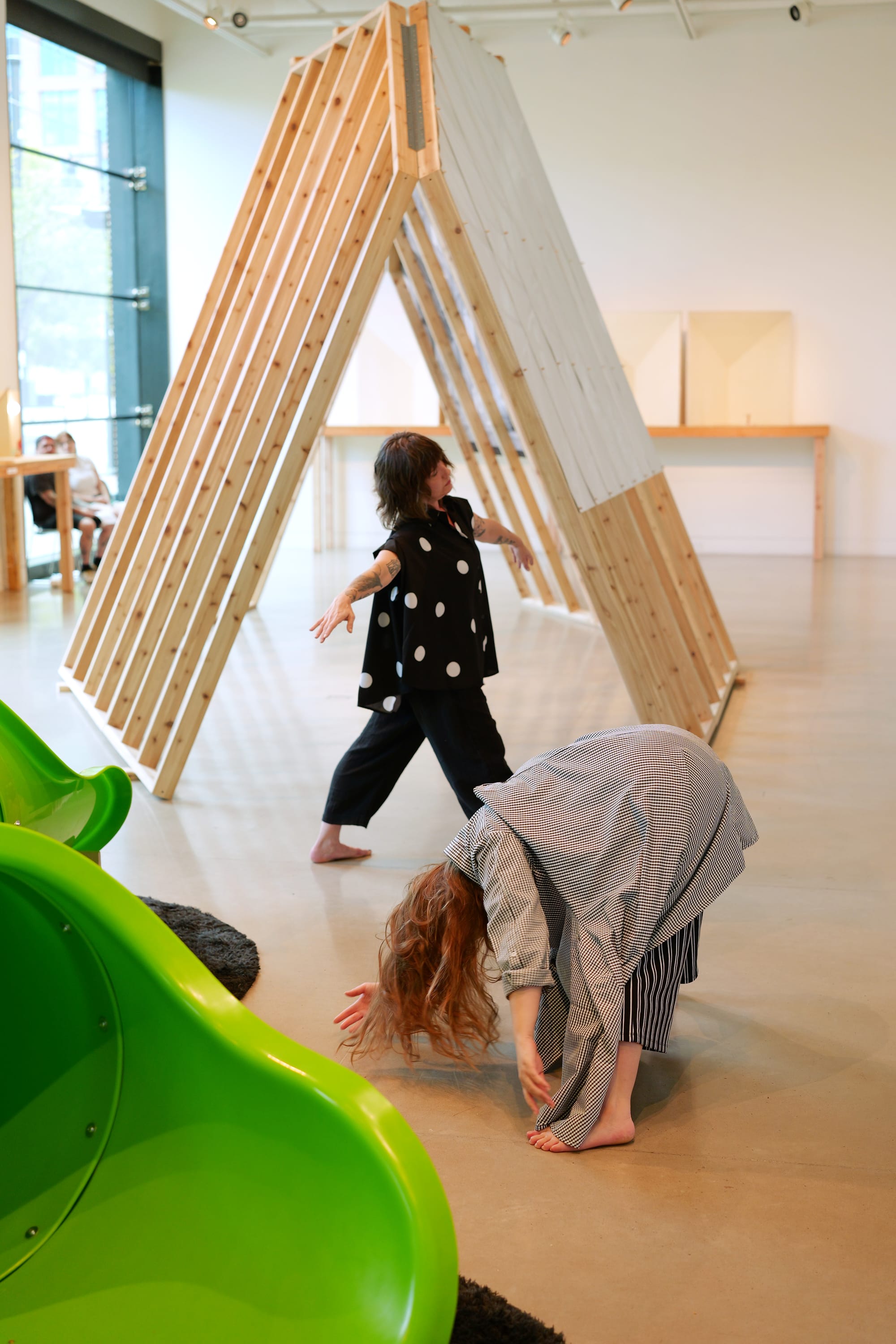
Transitive State Collective performing within "Big MOdels" | photos by Tidal House Media
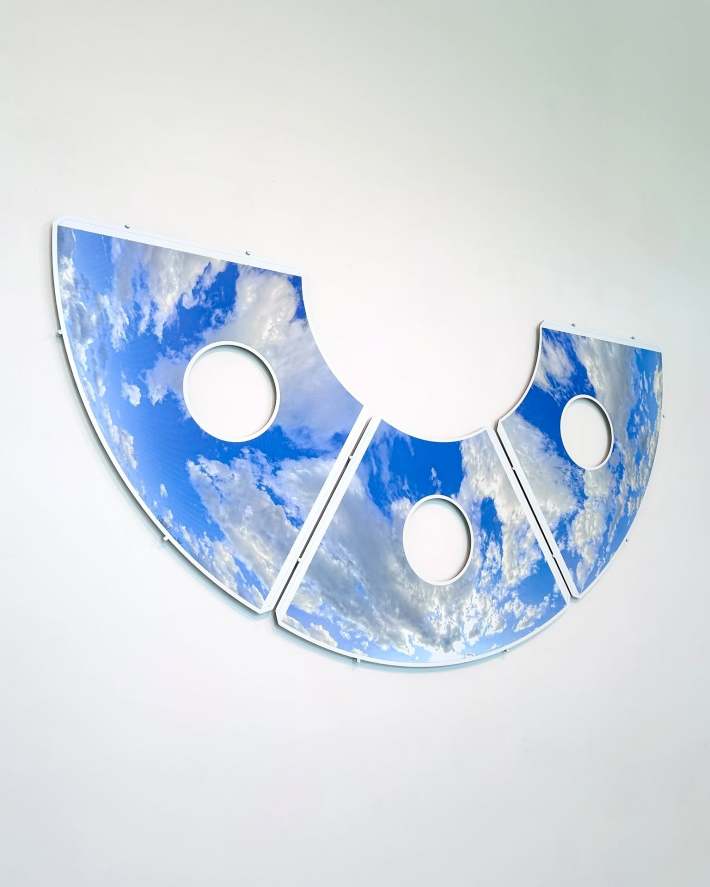
For all the seriousness of its craftsmanship, this is an extremely witty show that reminds me that craft is as much pleasure as work. Jones paints that hinged plywood panel with brown housepaint, using a tool he adapted from one he found in a Martha Stewart catalog that replicates woodgrain. The result—faux woodgrain on cheap wood—is weirdly gorgeous and funny, way more than the sum of its parts. Three segments of a photo of the sky are jointed together as if they’re about to gather into a sort of cupola; instead the triptych is laid flat in an arc like a window, with little portholes in each panel. The tiny figures in the show’s smaller-scale models seem peculiarly alive as they gather under a flickering light or sit quietly on a little wooden ball, maybe thinking of how it would feel to level up to medium format.
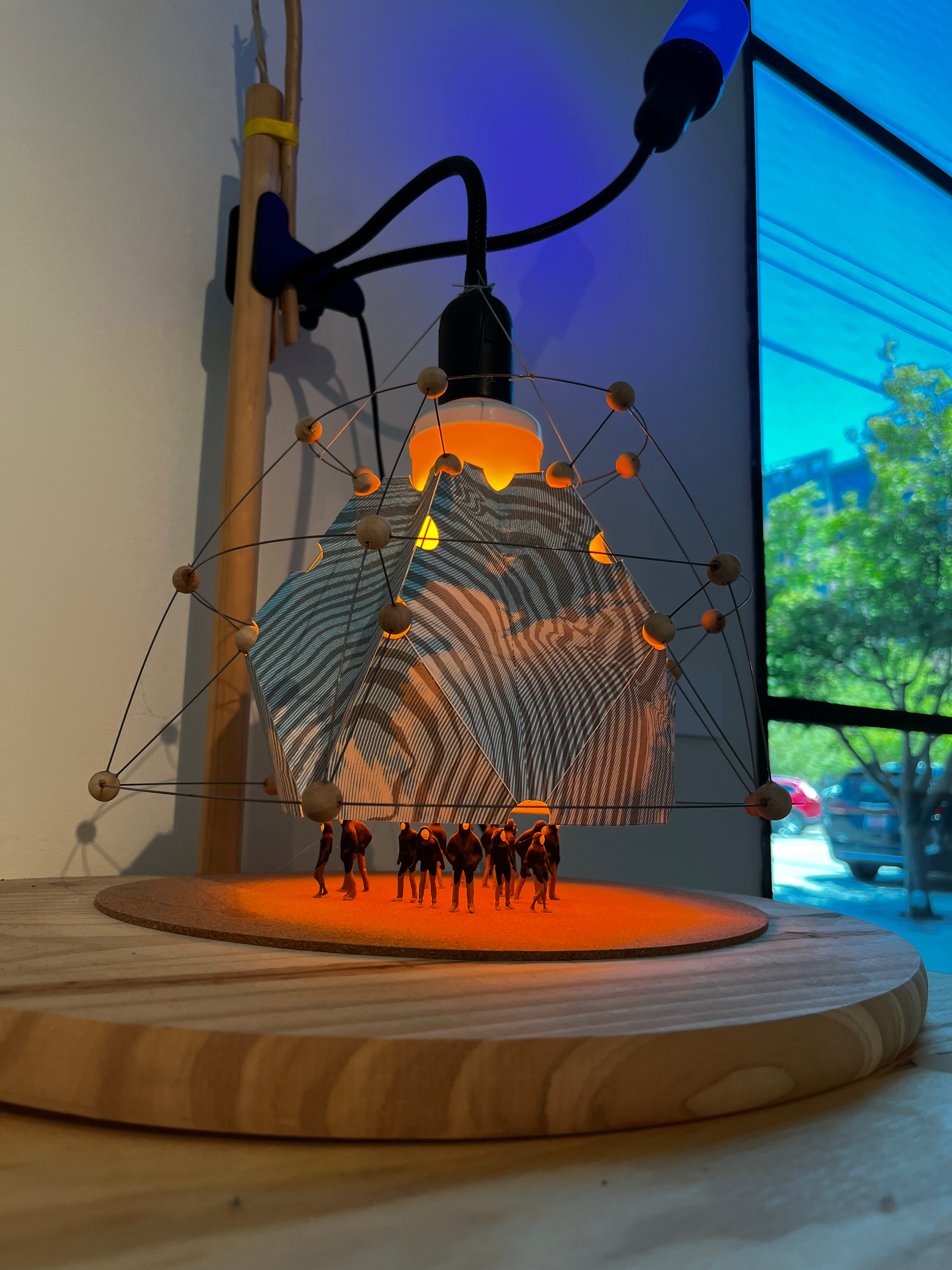
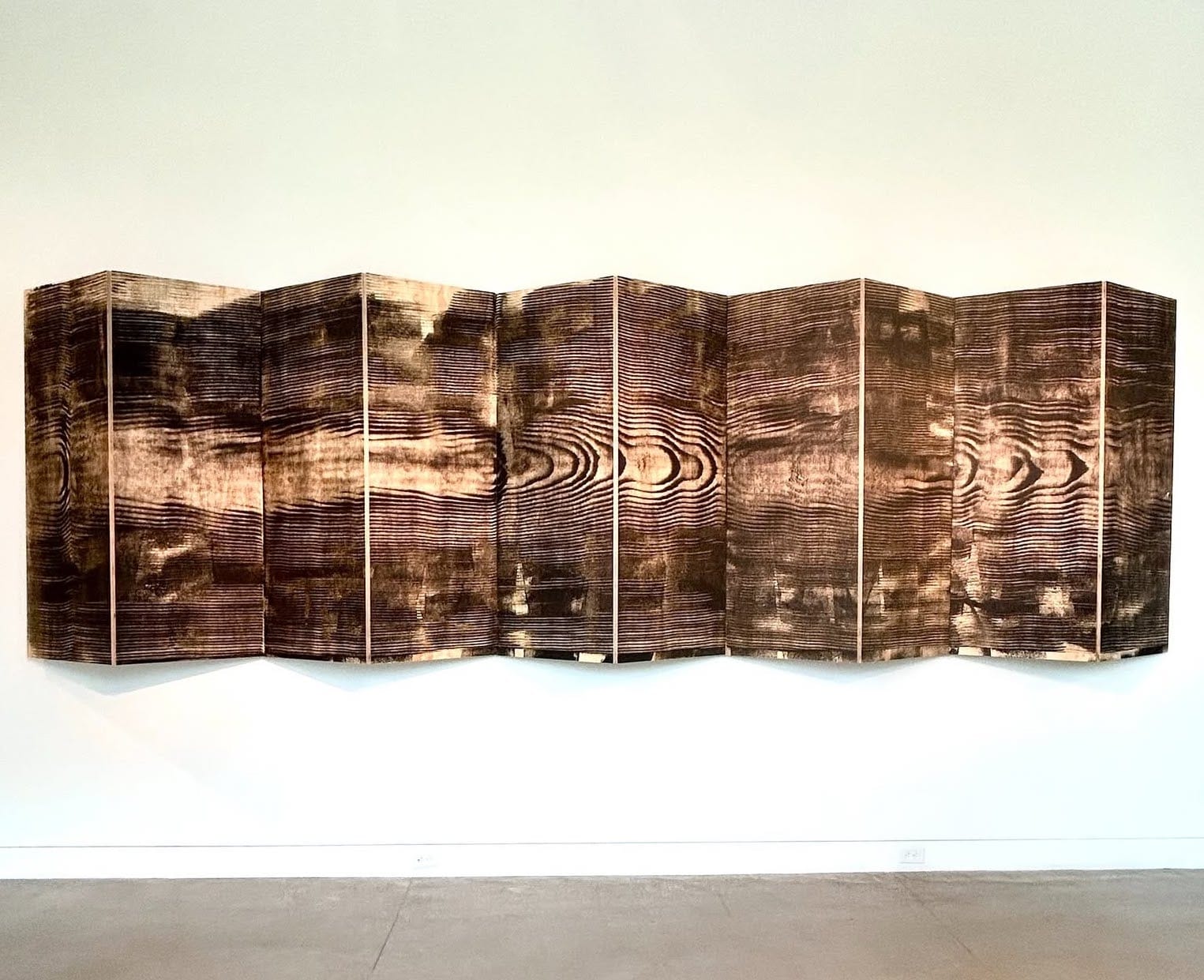
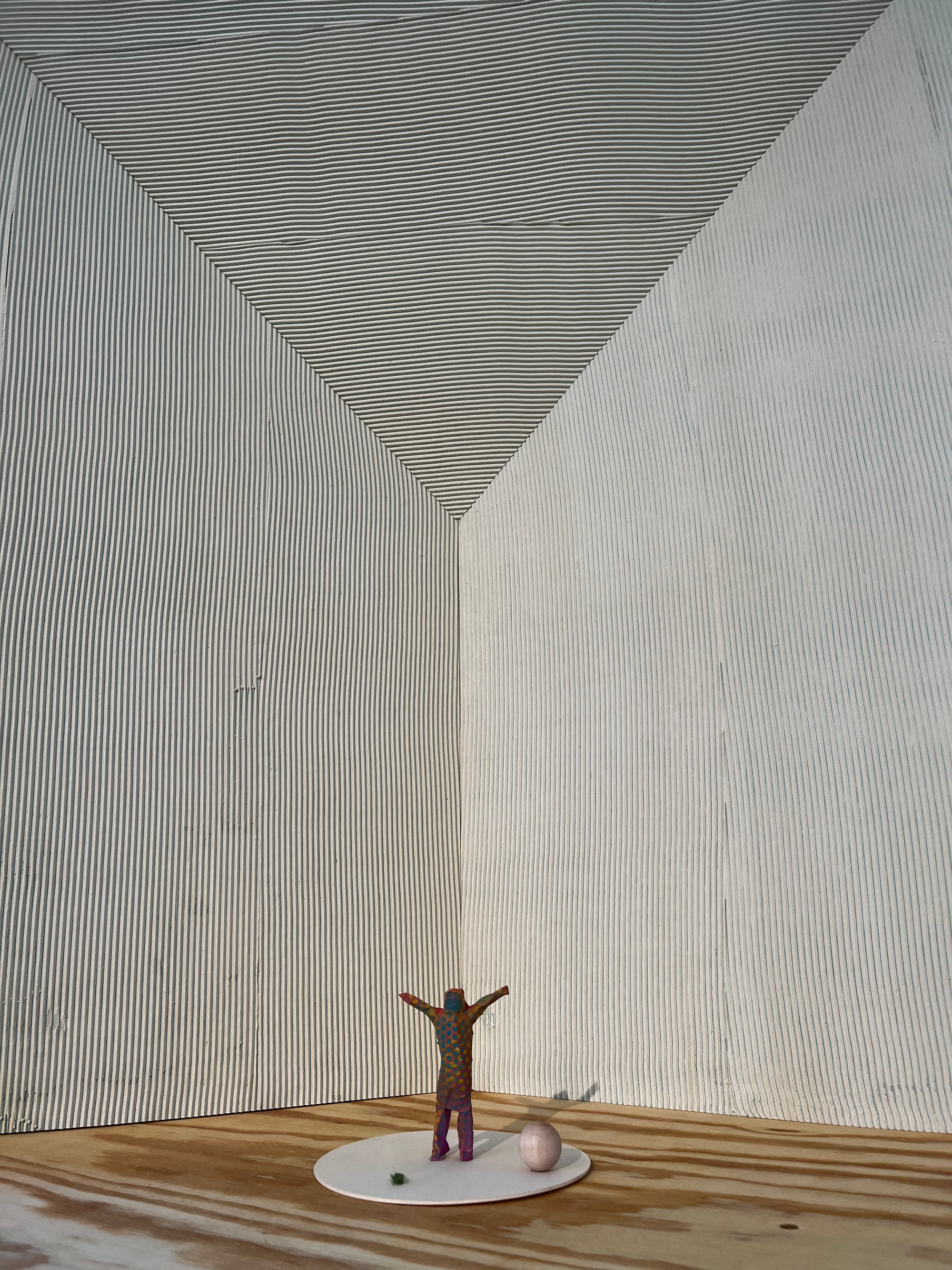
Center: Aaron Jones, "Old Growth Faux Finish" | photo courtesy of 108|Contemporary. R and L: photos by Alicia Chesser
So much of Jones’ work in Big MOdels feels like it could fold right up and get carried out under one arm to exist in a field or a courtyard somewhere, persisting as a kind of in-progress project that might end up covered in graffiti or become a makeshift shelter or respond in some other way to human imagination or need. Even the human-shaped figures play in this space: they come out of the box rigidly gendered, but he dips them in rubber and paints them so they can potentially be anybody, anywhere.
What is “the right size” for anything, anyway? The world always feels both too big and too little, doesn’t it? We tower over curbs; we disappear under skyscrapers. We flick a drop of water off our car after a thunderstorm; we get pulled under by an ocean wave. Everything is in this state of perpetual transition all the time, not anymore what it was nor yet what it could be. Jones suspends us in a place between big and small, between sketch and finality, maximizing the experimentation phase so it has its own time to just be that in its fullness, with no expectation to continue in that direction or revert to smaller scale.
There’s something liberating in the world Big MOdels invites us to consider: a freedom from the demand that something must be “complete”—must have an explicable, predictable, or productive function, must do what inertia tells us it must do—in order to be whole.