
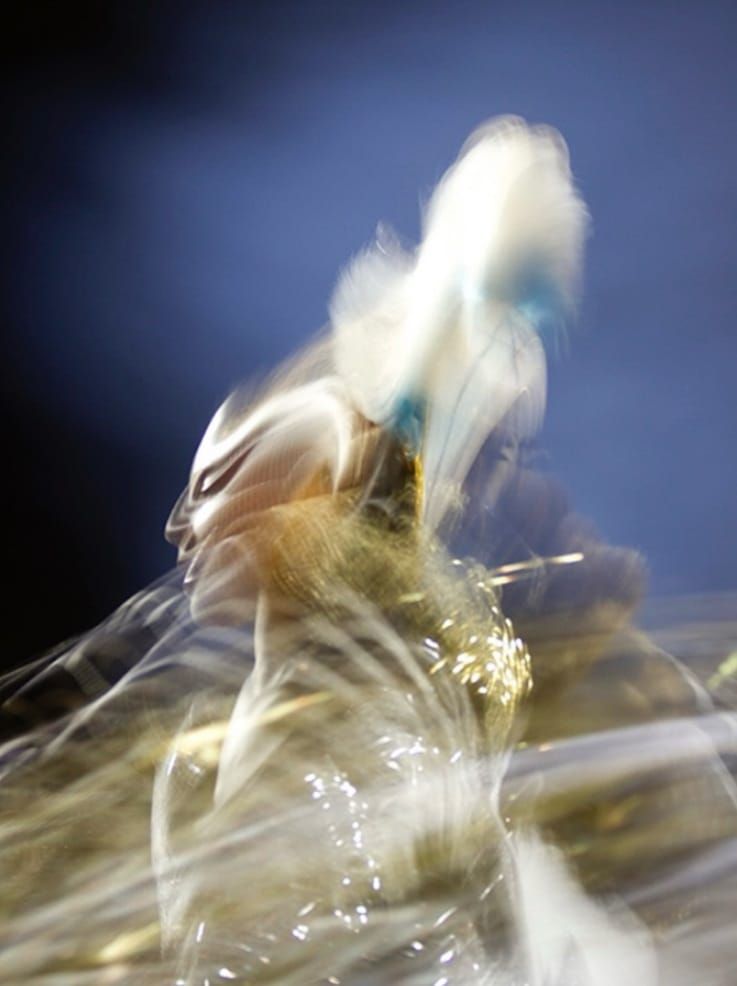
Dancing With Sweet Grass
Works by Kim Weston
Clare Gallery
St. Patrick-St. Anthony Church
Hartford
August 30, 2026
I wrote a review for a play a few weeks ago that was written in a “southern gothic” style, which is primarily characterized by how the South’s past of racism and violence shapes the lives of its people today.
While artist Kim Weston doesn’t use the term, I think “northern gothic” might be applicable to her current exhibition Dancing With Sweet Grass. It is the opening exhibition of the fall season at Clare Gallery and the third in a series that honors voices left out at the founding of our nation 250 years ago.
Weston’s work isn’t necessarily focused on northern tribes; in fact, her ancestry is African American and Cherokee, two groups with distinctly southern roots. Yet Weston has photographed Powwow circuits around the country in an exploration of the connection between what is “seen and known,” in her words.
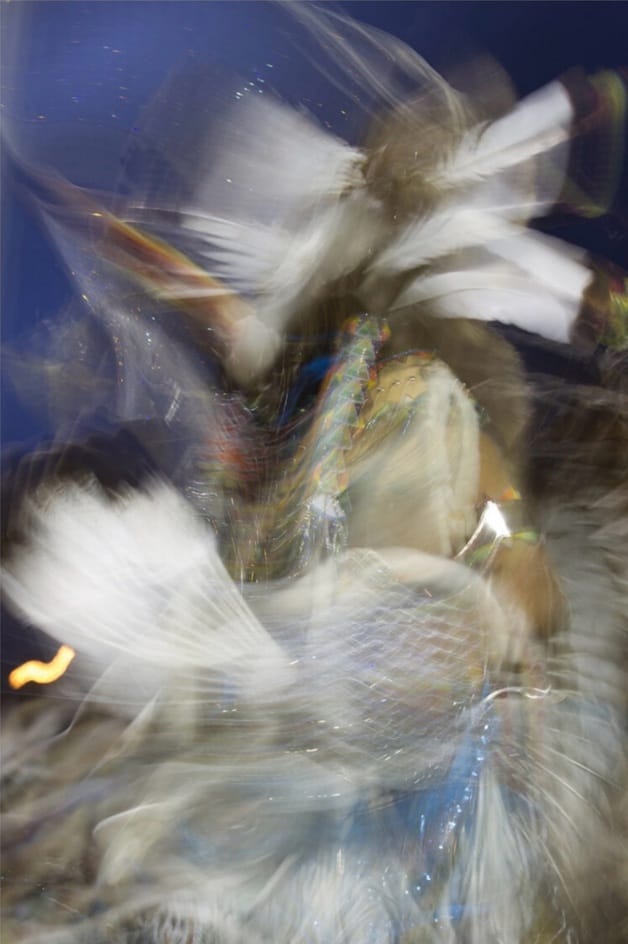
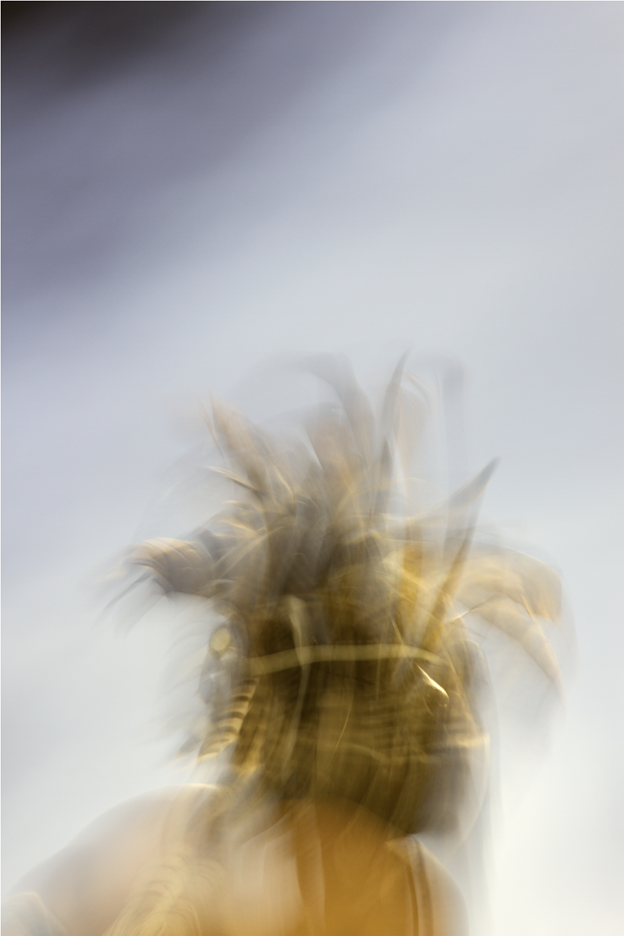
Her use of blurred, out-of-focus photography gives her subjects a spiritual, almost ethereal quality. That’s no accident. Weston explains in her artist’s statement that her grandmother instilled a sense of spirituality in her that was heightened by a near-death experience.
Weston manages to represent the movement and grace of the powwow dance, and even somehow a bit of the unseeable. Her technique creates streaks and flashes in the photograph, as if the forces of history and nature are captured momentarily in her frame along with the dancer.
It’s a history that we’re all familiar with, especially here in New England. It’s why Weston’s images speak to this area and our past, the site of the first Thanksgiving, the French and Indian War, and the eventual end of Native culture as the dominant one in the Americas.
We acknowledge this history, although we’re unwilling to take the steps to rectify it. Perhaps one of the most frustrating invocations I hear on a regular basis is when well-meaning people begin an event with an acknowledgement that the participants “are standing on stolen land.” Well, unlike other historical tragedies, at least part of this great wrong can be addressed right now: Just give it back.
I think the term “northern gothic” is appropriate because there’s been no serious reckoning in northern culture regarding the genocide of Native people, past or present. Two of Connecticut’s most famous attractions, Foxwoods and Mohegan Sun casinos, sit on reservations that weren’t established until 1983 and 1994, respectively. The struggle of Native people to reclaim their land is not ancient history. It has endured into our lifetimes.
Weston’s work serves as a celebration of Native culture and spirituality, as well as a mirror to us, the beneficiaries of the displacement and destruction of these groups. In that sense, the blurred focus of her images functions like a funhouse mirror, reflecting back the grotesque twists and turns our culture continually contorts itself with to minimize history rather than confront it. Remittances and remembrances seem to be all we have to offer the people on the reservations today.
NEXT
Jamil returns to check out the Tuesday weekly concerts.


