
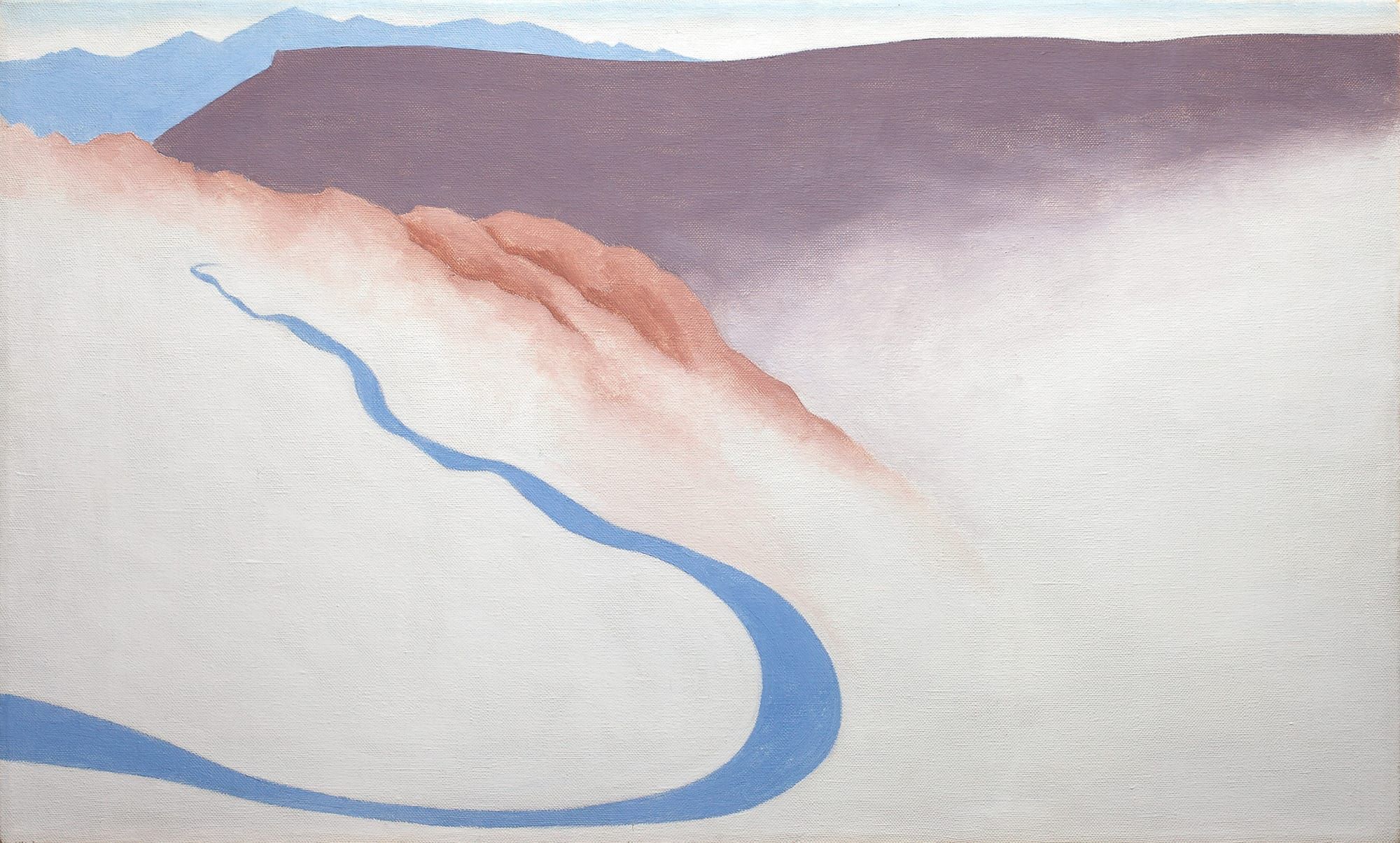
Roadside Abstractions: Route 66 & American Modernism
Philbrook Art & Gardens
On view through January 3, 2027
I’ve been to almost every town mentioned in Bobby Troup’s “(Get Your Kicks On) Route 66,” yet I’ve still heard more hubbub about the Route this year in Tulsa than in the rest of my life combined. As the official centennial date approaches in November, the city’s tourism has been whipped into a frenzy, leaning hard into the neon, the classic cars, and the nostalgia of it all.
But that slice of Americana is really more like a sliver of the truth of the impact of Route 66. On view at Philbrook through the rest of the year, Roadside Abstractions: Route 66 & American Modernism zooms out from the roadside diner vibe to examine the way a century of art trends converged and embraced the interconnectedness of politics, economy, and culture.
This exhibit puts the cars out front too, literally, but it pushes against the urge to glaze the past. The first room of Roadside Abstractions instructs viewers to “experience American art the way you’d experience the open road: with a sense of adventure.” The Ford Model T parked inside is paired with a smattering of paintings completed in the 1930s and ‘40s, some of which stand in open critique.
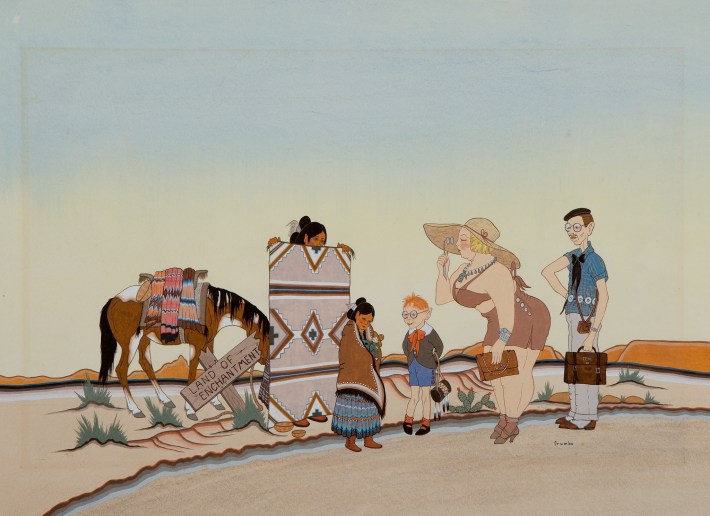
Ella Jack’s Cotton Picking and Woodrow Wilson Crumbo’s Land of Enchantment are placed alongside scenic landscapes, hinting at the irony to come. Neon signage meant to lure travelers to stop in Tulsa stands alongside photos of families fleeing Oklahoma during the Depression and scenes from The Grapes of Wrath.

As a whole, Roadside Abstractions accurately captures the rapid economic and cultural change that started with the automobile and moved cross-country via the Mother Road. In just a few steps, the exhibit carries viewers from World War II and the G.I. Bill through the explosion of postwar auto production and leisure spending, including the bizarre—the bikini was named after America’s atomic bomb testing at Bikini Atoll—and the ironic. A nod to “(Get Your Kicks On) Route 66,” made famous by Nat King Cole, is displayed near a copy of The Green Book, which Cole may have needed to traverse the road safely despite his endorsement of it.
These early rooms of the exhibit are a helpful guide through history before the conversation turns more directly to how the road directly affected American art movements. Examples of Abstract Expressionism, Gestural Abstraction, Color Field Painting, Hard-Edge Painting, and Minimalism are shown in sequence, depicting how the visual language of travel moved artists working throughout the 1940s to 1960s. This section of the exhibit feels optimistic and color-forward, and the chronology is easy to understand.
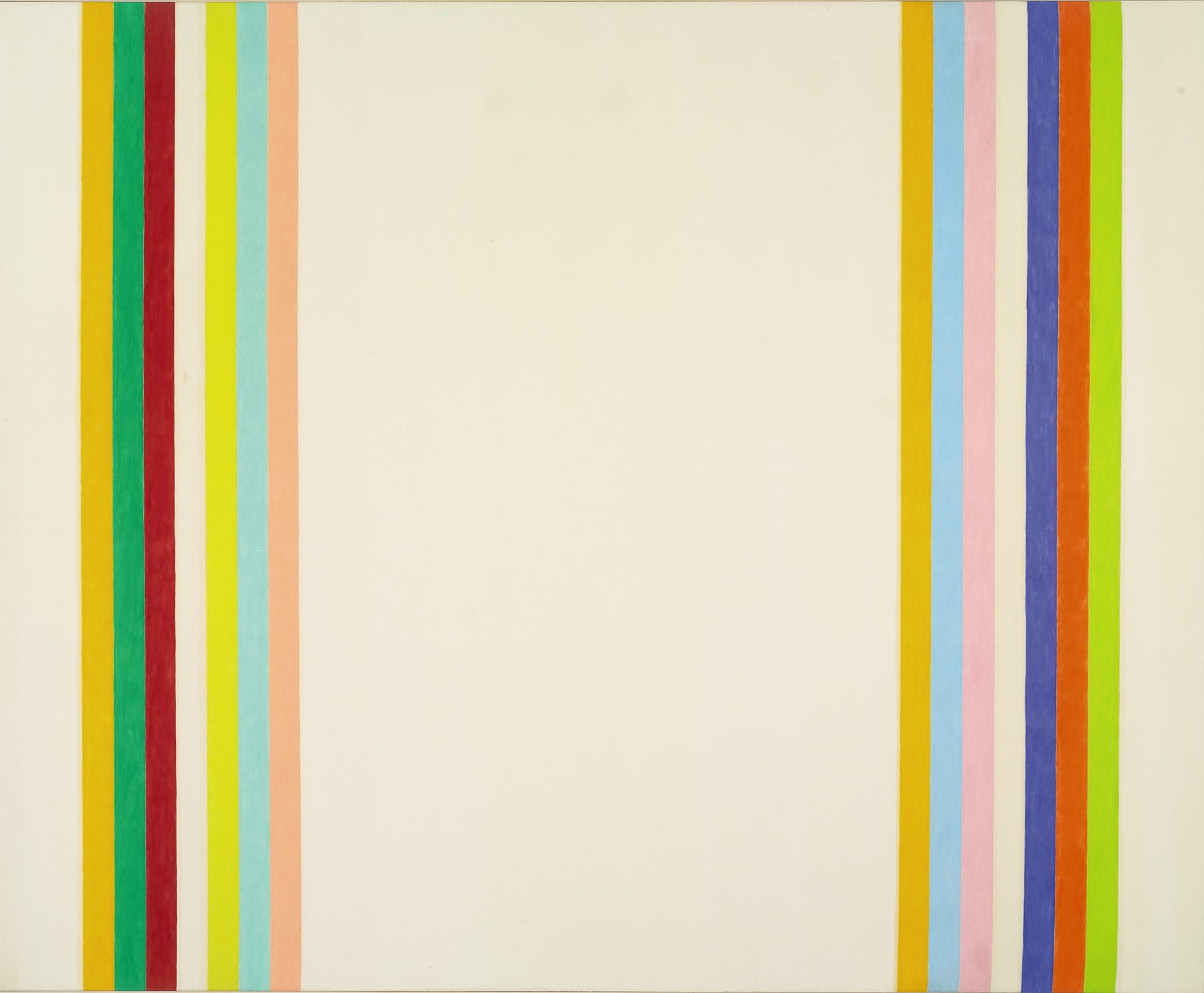
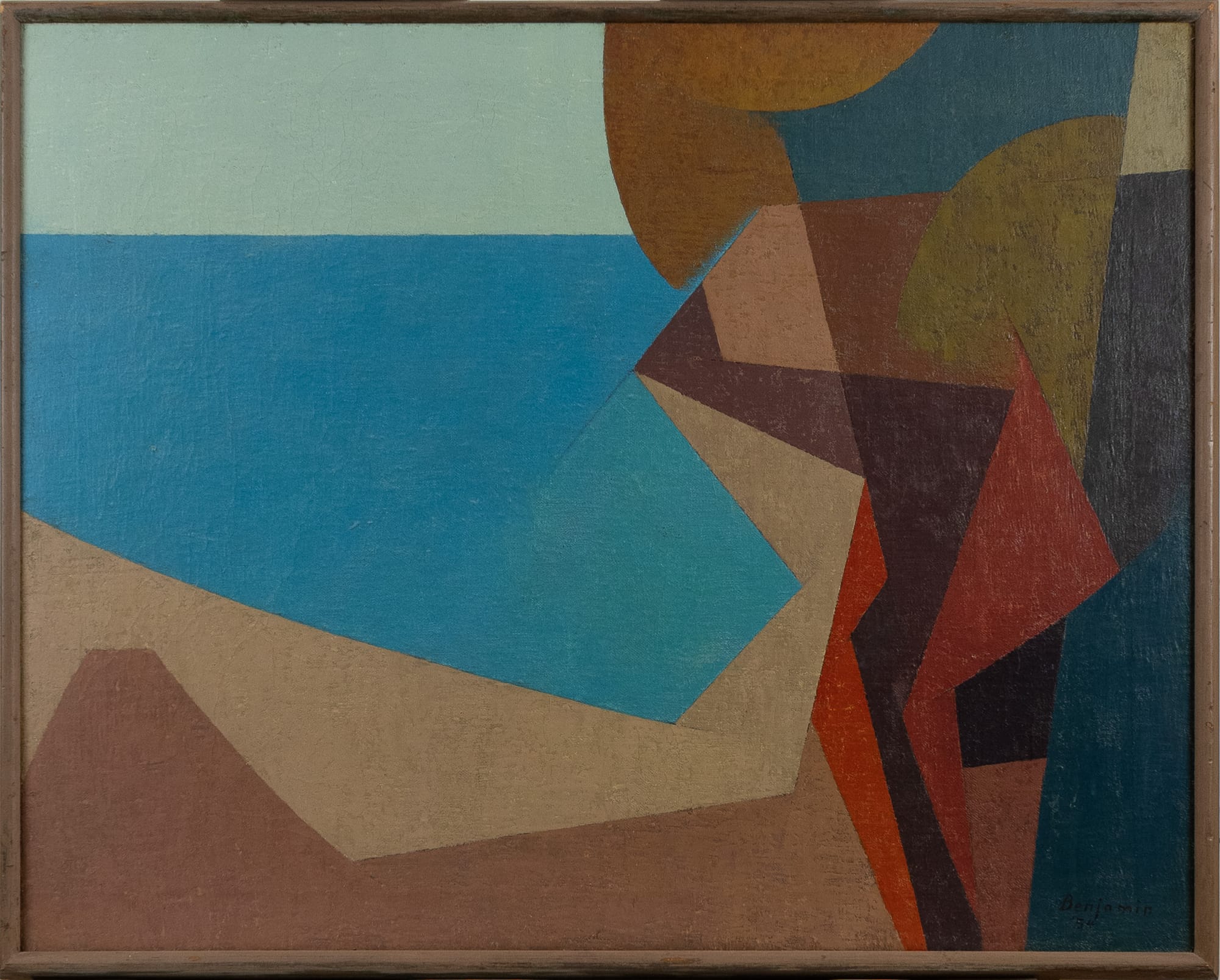
L: Gene Davis (American, 1920–1985), Homage to Matisse, 1960. Acrylic on canvas, 94 13/16 x 115 5/8 x 1 1/2". Collection of Carl & Marilynn Thoma Foundation, 2011.015. © Gene Davis/Artists Rights Society (ARS), courtesy of the Carl & Marilynn Thoma Foundation, photo by Kate Weinstein. R: Karl Benjamin (American, 1925–2012), Laguna Seascape II, 1954. Oil on canvas, 24 1/8 x 30 3/16 x 1”. Collection of the Carl & Marilynn Thoma Foundation, 2020.074. © Estate of Karl Benjamin, courtesy of the Carl & Marilynn Thoma Foundation, photo by Tim Porter | photos courtesy of Philbrook
A 1964 photo of Lyndon B. Johnson signing the 1964 Civil Rights Act hangs alongside Anthony Toney’s Assassination, moving the exhibition into unease alongside pop culture references like Bewitched and a Miss Astronaut Barbie from 1965 (Sally Ride would not pioneer space travel for women until 1983) that drive home the chasm between ideas and progress.
A handful of household names like Ed Ruscha round out the last bit of Roadside Abstractions. Works from a collective including Roy Lichtenstein and Yoko Ono are encased in glass next to a placard explaining the art was made to be touched and played with. (Have a sense of adventure with your eyes and not with your hands, folks.)
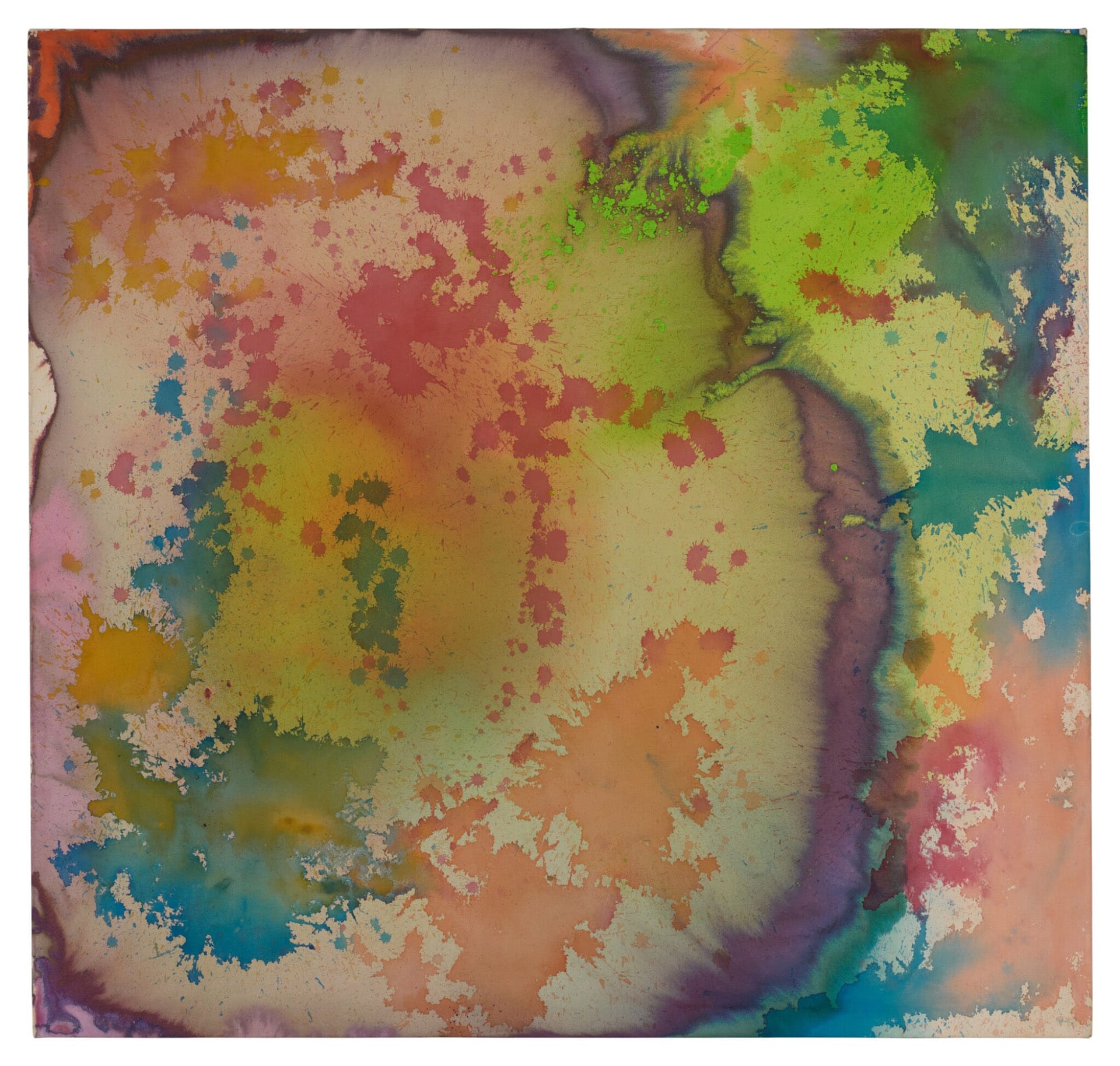
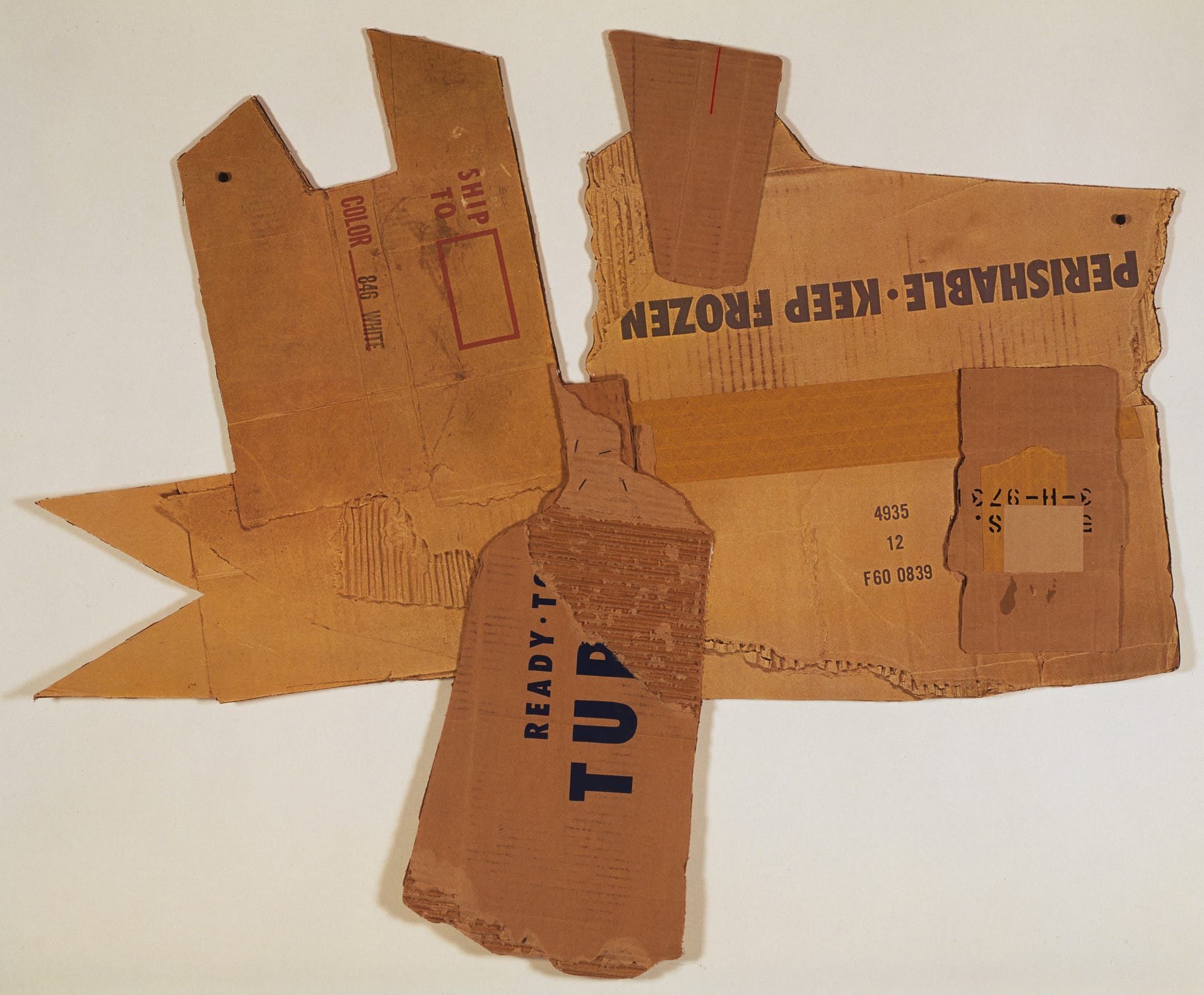
L: Vivian Springford (American, 1913–2003), Untitled (VSF243) from Expansionist series, 1972. Acrylic on canvas, 49 5/8 x 52”. Philbrook Art & Gardens, Tulsa, Oklahoma. Museum purchase, Taber Art Fund. © Vivian Springford. Photograph Courtesy of Sotheby’s, Inc. R: Robert Rauschenburg (American, 1925–2008), Cardbird V, 1971. Corrugated cardboard, tape, photo offset lithograph, and screenprinting, 34 x 40”. Philbrook Art & Gardens, Tulsa, Oklahoma. Museum purchase, 2012.9. © Robert Rauschenberg Foundation/Licensed by VAGA, New York, NY | photos courtesy of Philbrook
The exhibit ends at the 1985 decommissioning of Route 66 in favor of the modern highway system. It’s quick to move through, given the breadth it covers, and in the midst of all the look-at-me neon fervor in Tulsa, this warts-and-all contextualization of the Mother Road centennial is much-needed without overstepping.


