Jejune
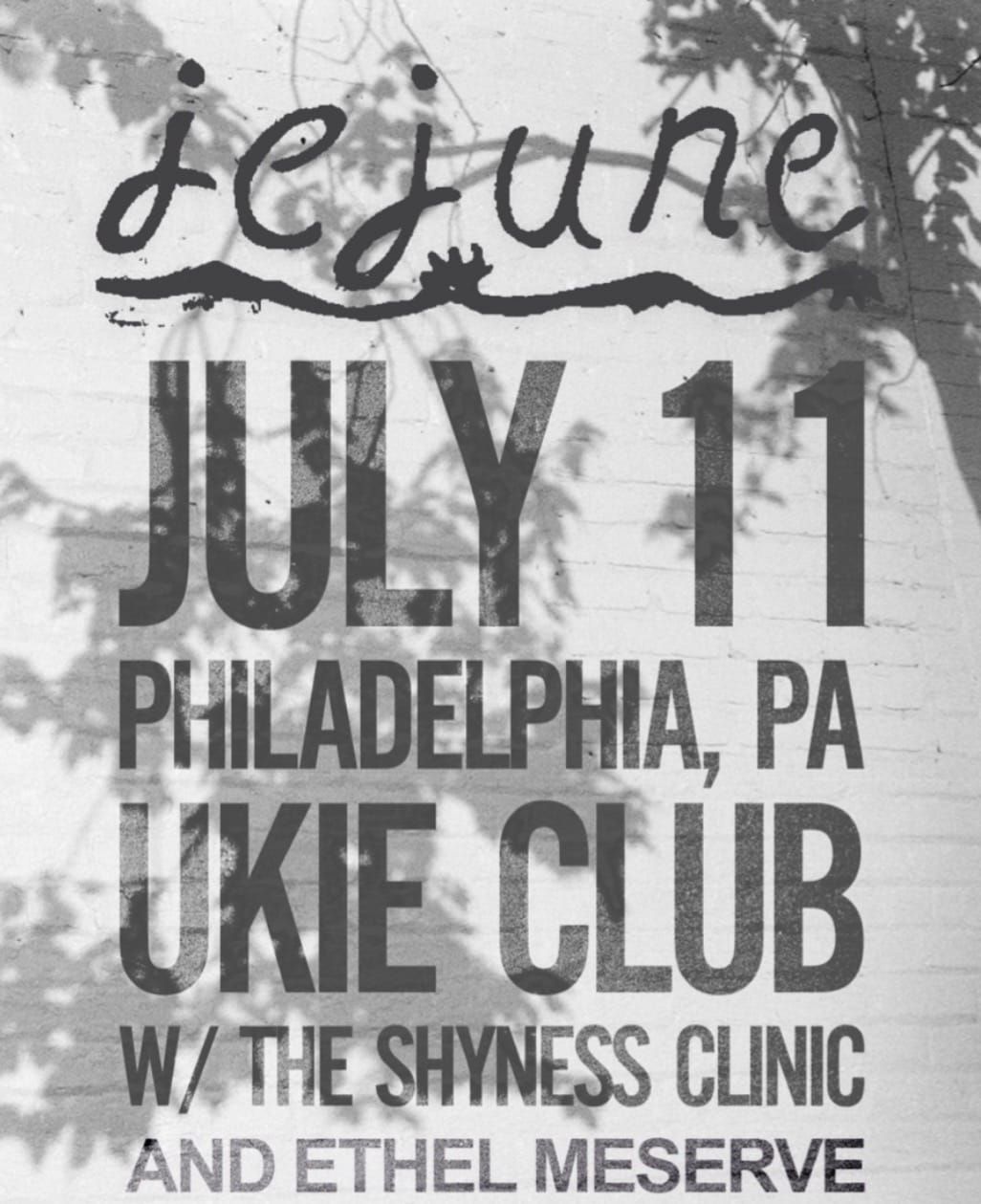
Ukie Club
847 N Franklin St.
Philadelphia
July 11, 2026
Jejune have a story that I’ve heard with increasing frequency about '90s rockers. A band is consigned to relative obscurity after disbanding, but are kept alive by digital cratediggers and archivists, young enthusiasts with personal stakes in the genre, and aging punks who were there the first time. Once the chatter about said band reaches a specific fervor, it turns into offers and requests for reunions. After emo torch-bearers Capn’ Jazz provided the model in 2010 for how bands in this genre can get their second wind, an avalanche of acts followed suit, creating a veritable economy for lesser-known releases and a new paradigm for seasoned rock musicians. Numero Group, who at this point were just over a decade into their archivist and curatorial approach to running a label, would take on a new significance as they helped bands reestablish themselves with reissues of past material.
I realize that I’ve been documenting this phenomenon for a decade. It began with my (short-lived) tenure as an intern at Jade Tree Records, the purveyors of Capn’ Jazz’ discography and the handlers of its reissue. I interviewed Vic Villarreal about his experience in the band and in music, fantasizing throughout and after about all of the other musicians I admired that I may one day get a chance to speak to and/or write about. Jejune was one of those bands, a find that came a few years before from late nights sifting through related artists on YouTube, landing me on a full-album stream of This Afternoon’s Malady. Ad-free, might I include. By the way, I’m not omitting mention of Junk for any specific reason other than that I simply haven’t connected with the material and the sound they were going for on it the way I did with Malady. This could always change, but Junk just doesn’t yet provide me the same deeply emotional and cohesive listening experience. I do also think that Ted Leo’s production efforts on Malady probably also make a significant difference.
Anyways, I was searching for a band like Jejune with an increasing appetite for years by this point. By the time I was a regular listener to that album, Philly DIY was undergoing a social reckoning and re-imagining surrounding identity and male domination of the scene. I had already been listening to a whole lot of Rainer Maria. I wanted to hear a band where the vocals were as strong as theirs. I appreciated the anti-talent approach of a lot of what was popular already, but I was missing out on well-pitched singing in the genre. I wanted to hear vocals that hit me as hard emotionally, but also showed a clear refinement and unmistakable natural talent. Throughout This Afternoon’s Malady, songs often range dynamically between extremely delicate and hard-hitting instrumentation, both styles supporting bell-clear singing from bassist Arabella Harrison and guitarist Joe Guevara. In other words, a lot of these bands rocked, but alongside that I wanted to hear a band with vocals that were neither whined or screamed, but belted hard.
Fast forward 27 years to now, and Jejune is in the midst of touring different regions of the country after a slew of shows in Japan. Knowing I was getting a tour-tight version of this definitive power trio was a fact that comforted me on many a rough day leading up to this show; I only had to remember that I had this to look forward to. From their surprise return at San Diego’s Che Cafe to now, I knew that whenever a Philly show was to occur, I would be unavailable for anything else. On this leg of their tour, Jejune brought along two acts who have had a similar trajectory. State College, PA’s Ethel Meserve and Boston compatriots The Shyness Clinic are both '90s bands returning to share in the new interest in their work, largely sparked by discovery by Gen Z. This sold-out show sold 70 under-21 tickets, in fact.
The room was as I’ve come to expect emo and screamo reunion shows to be; around 60 percent younger people, all standing up front, with the elders forming the perimeter and showing all the same enthusiasm. From song one, the vocal interplay between Harrison and Guevara was stronger than I would’ve ever imagined, especially after more than two and a half decades. More than once, I found myself saying to no one, “Damn, she really belting this shit,” and in that moment, I understood that I was realizing a dream about 15 years in the making. For a lot of the crowd, tracks like “Coping With Senility,” “This Afternoon’s Malady,” and “Fixed On The One,” and “Regrets Are Unanswered Dreams,” (which is one of my favorite songs by anyone ever) drew cheers from each song’s first notes. The dynamic shifts in the forms of midsong tempo changes and volume peaks that Harrison, Guevara, and drummer Chris Vanacore were achieving here were deeply impressive, as were the solos Guevara had reworked to far surpass each album version. I had spent the last 15 years not only waiting to see this band live, but evangelizing about them to others. Now, here I was, surrounded by all of the other people in Philadelphia who love them as I do. I don’t always get that feeling.


