
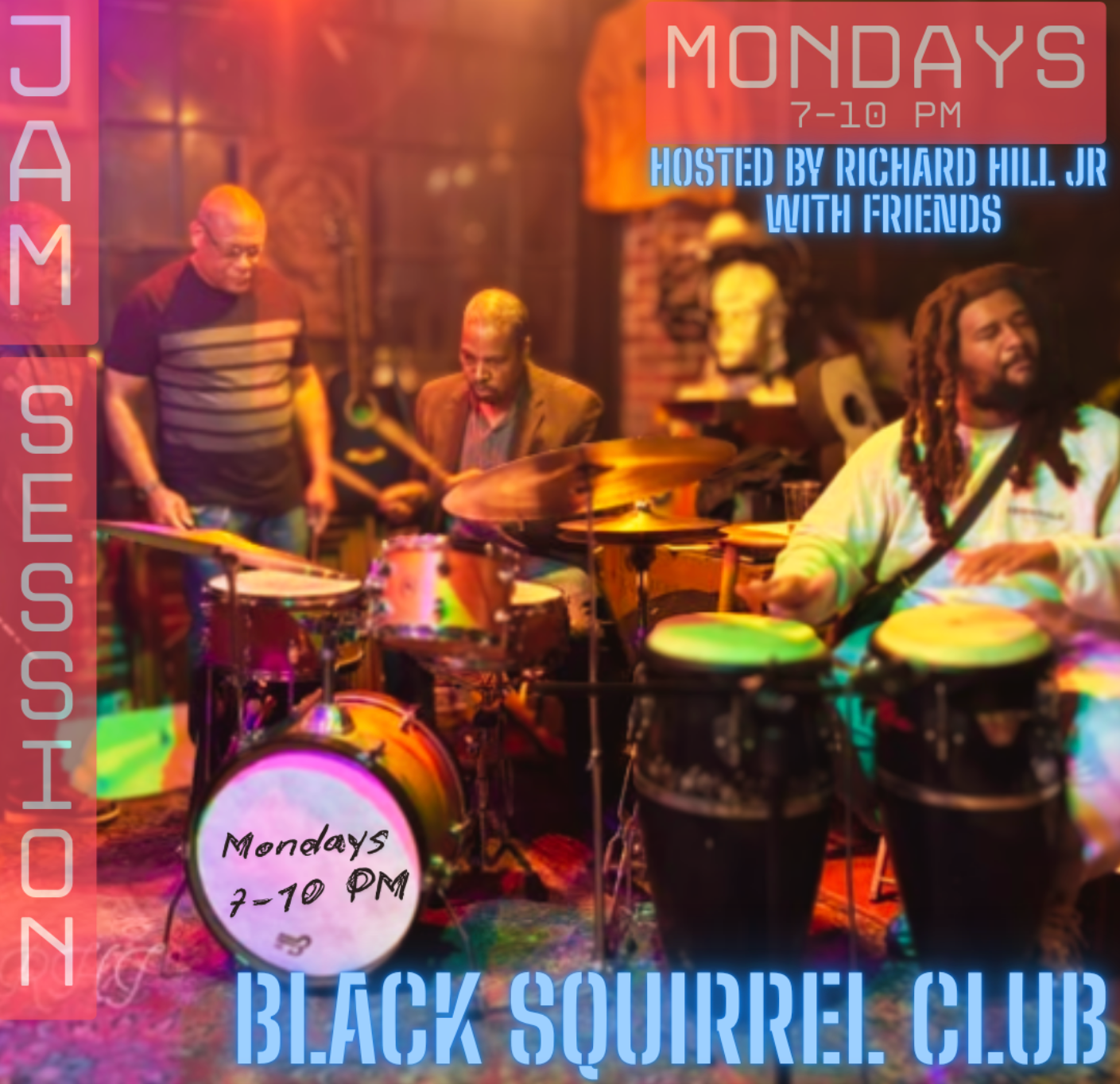
The Monday Night Jam Session with Richard Hill Jr. & Friends
Black Squirrel Club
1049 Sarah St.
Philadelphia
May 11, 2026
For much of jazz's history, the music was innovated and cultivated at jam sessions. In the 1920s, musicians would congregate at private gatherings and play for each other after their professional gigs. By the 1940s, the now-legendary sessions at Milton's Playhouse in Harlem served as a crucial incubator for one of the greatest revolutions in jazz: bebop. Perhaps more than in any other genre, jazz requires a space where the music can be reworked and experimented with away from the commercial pressures of jazz nightclubs and the recording industry. For all intents and purposes, the jam session has served as jazz’s laboratory where veteran players and emerging talent alike can try new things and push the music forward.
Every Monday night, bassist and composer Richard Hill Jr. hosts a weekly jazz jam session at Black Squirrel Club in Fishtown. One key difference between Mondays at the Black Squirrel and the historic sessions of the past is that Hill’s events are open to the public, benefitting from the feedback and appreciation of music lovers from all over the city. Last night, joined by pianist Suzette Ortiz and drummer Mark Beecher, Hill hosted and led the band through a number of beloved standards and intriguing original compositions. Playing an electric upright bass with a deep, silky tone, Hill started the session by launching into a gorgeous mid-tempo tune with a Latin groove. Ortiz’s solo here was full of dramatic, cascading melodic phrases and rich chords. Hill also took a gorgeous, bluesy bowed solo and Beecher’s thunderous tom fills evoked the sound of a great salsa timbale master.
As Hill, Ortiz and Beecher played, musicians filed into the club with instruments in tow and sat in the pews awaiting their turn to play. Curating the event in real time while playing, at one point during a tune Richard yelled “Jacob!” out into the crowd. From there, trumpeter Jacob Lane began playing a fiery a solo from the pews as he made his way onto the stage. Lane was then joined by a young saxophonist who took a daring, arpeggio-rich solo. Cycling through some gorgeous original pieces from Hill and Ortiz that ran the gamut from Samba to jazz-funk and bebop, the Monday night session was musically fertile and represented multiple generations of jazz lovers both on stage and in the audience. While jazz as a genre and culture has undergone innumerable changes since its early days, it’s encouraging to see that some key traditions are still alive. If you’re ever in doubt about jazz’s future, a $5 entry fee into an old converted steam plant in Fishtown should be enough to assure you that the music is still alive and well.


