
Japanese War Brides: Across a Wide Divide
Old State Capitol
Baton Rouge
Through June 6
Yoshiko Arakaki was the oldest of five living in Okinawa, Japan, when she met Eugene Dale Skains from Winnfield, Louisiana. He was an electrician for the armed forces in Japan. They were married in 1952. Then he brought her home to the U.S.
“My mom has told me … she thought that she had hit the jackpot. She was going to a rich place that was going to be golden,” her daughter told interviewers for the Japanese War Brides exhibit.
“As she went closer and closer to Louisiana her face got longer and longer.”
Yoshiko’s experience wasn’t unusual. Over 45,000 Japanese women braved the trip to America from Japan as the wives of servicemen after World War II. Many had no idea what they were getting themselves into and became the only people of color in their communities. They were the first and largest group of immigrants to the US since 1924. Spearheaded by three journalists and first-born daughters of Japanese War Brides researching to understand their own mothers’ experiences, “Japanese War Brides: Across a Wide Divide” is a traveling exhibit now on view at the Old State Capitol telling their stories.
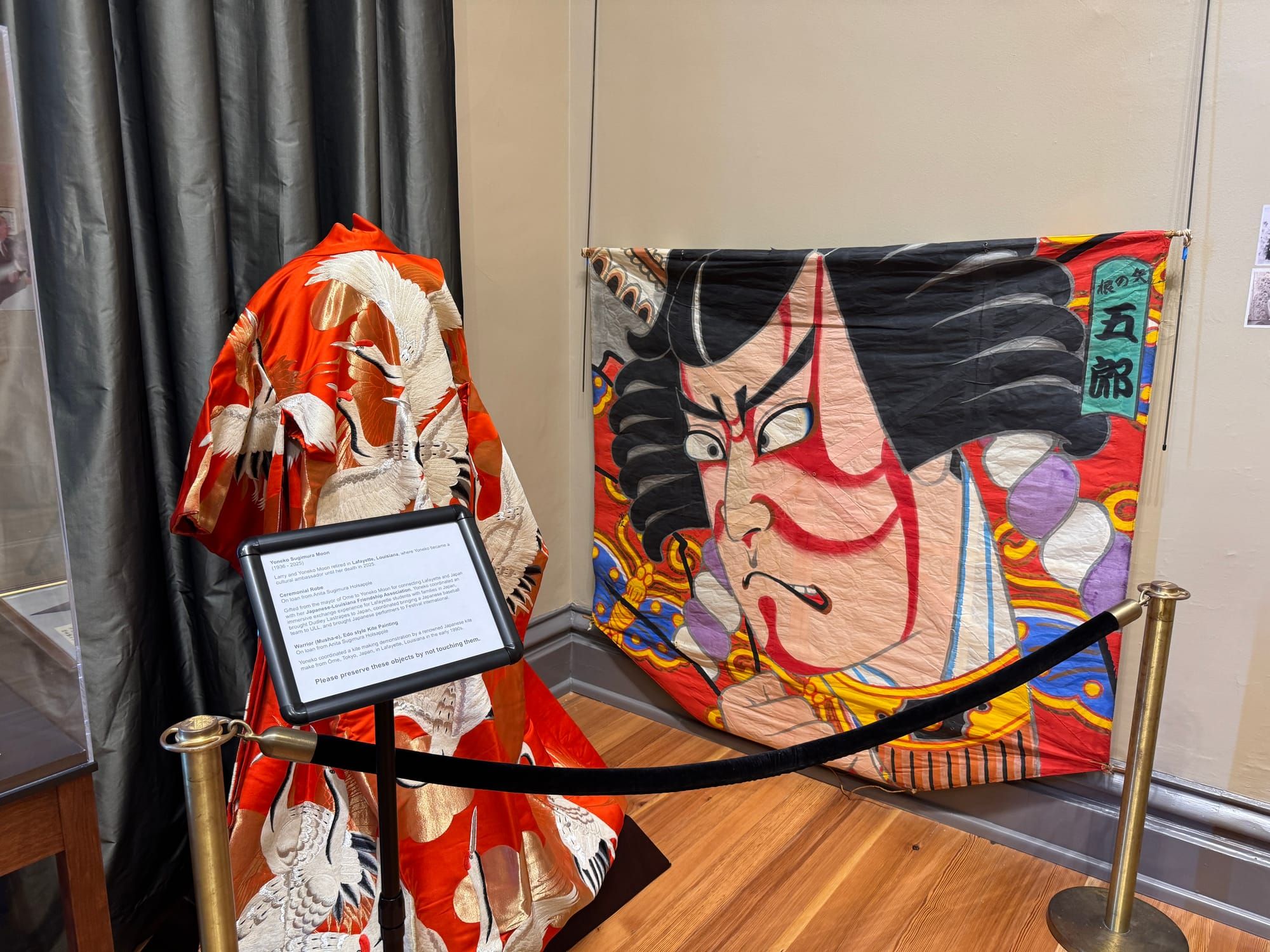
The exhibit features objects, photos, oral history videos and informational panels that tell different aspects of their stories. The first wall to the right of the beginning of the exhibit is dedicated to women who first immigrated to Louisiana. A small collection of photos and objects tell their stories. One beautiful ornamental robe was gifted from the mayor of Ome to Yoneko Sugimura Moon for her work connecting the city of Lafayette, Louisiana, to Japan after she moved here with her husband. She worked as a cultural ambassador until her death in 2025.
“Japanese War Brides: Across a Wide Divide” shines in bringing the stories of these women to life and in a way that feels close to home. It doesn’t just tell the story of Japanese women who moved somewhere and lived lives a long time ago. These are people who lived here; some passed away only a few years ago.
The most eye-catching item in the first room is Moon’s robe. Emphasizing the local connections between the viewer and the subjects of the exhibit is a nice local touch.
In the present, Japan is seen as a dream destination living in the future. But it’s important to remember that Japan has rebranded itself many times in the international stage and specifically in the U.S. The war bride population both saw and influenced these inflections. From enemy to foreign to exotic to neighbor, the women who came over for love were both unknowing participants in this change and sometimes directly the cause of it within their communities.
One of the best examples is a large tin of Kikkoman soy sauce the informational panel says was a staple in many kitchens. A video of one woman talks about getting a letter in the mail from the company thanking her for teaching Americans how to eat Japanese food.
The war brides ended up in a variety of places. Some people got to the U.S. and found out their new husbands were from rural places with no running water. Others didn’t have the happily ever after they imagined after their husbands turned abusive or left them.
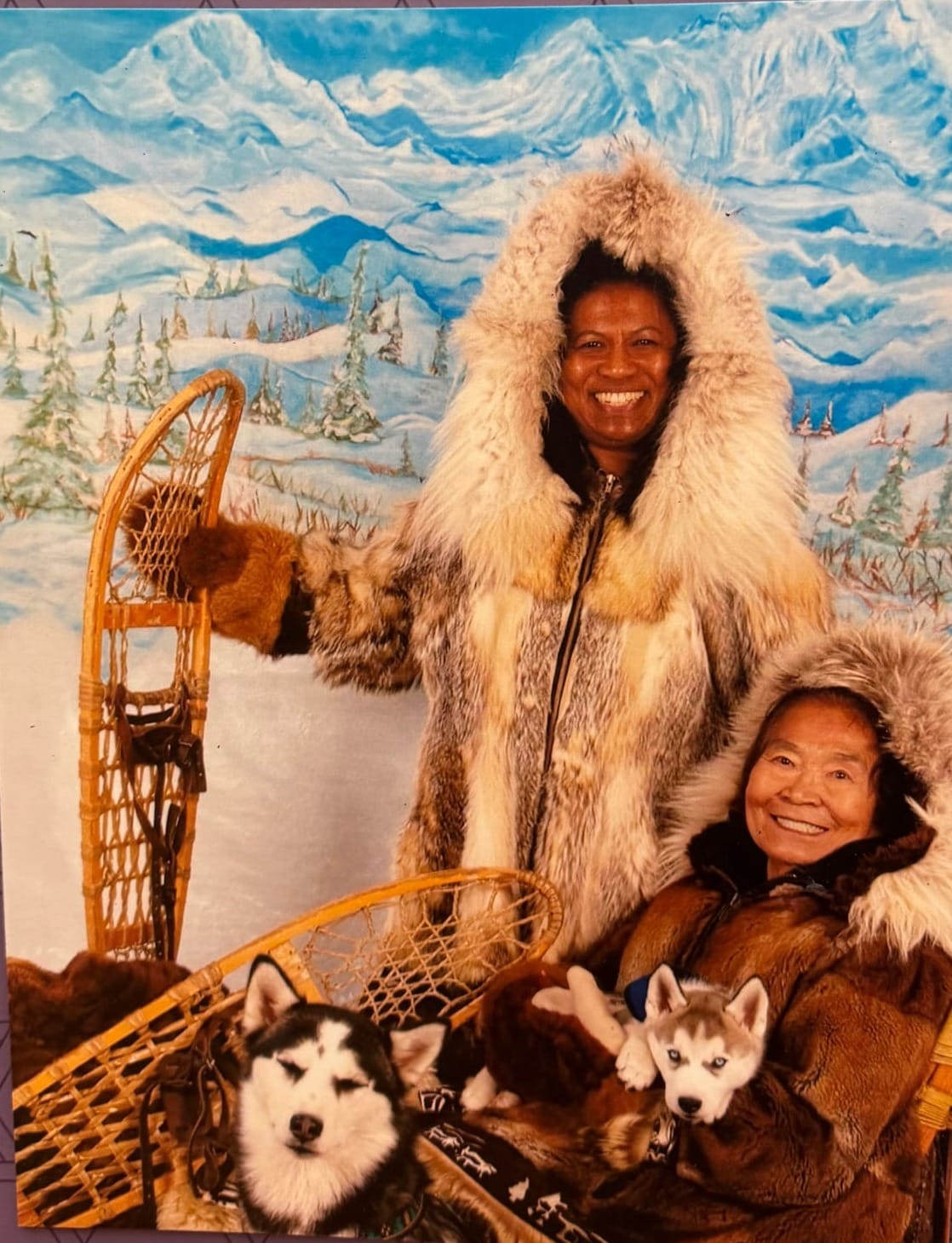
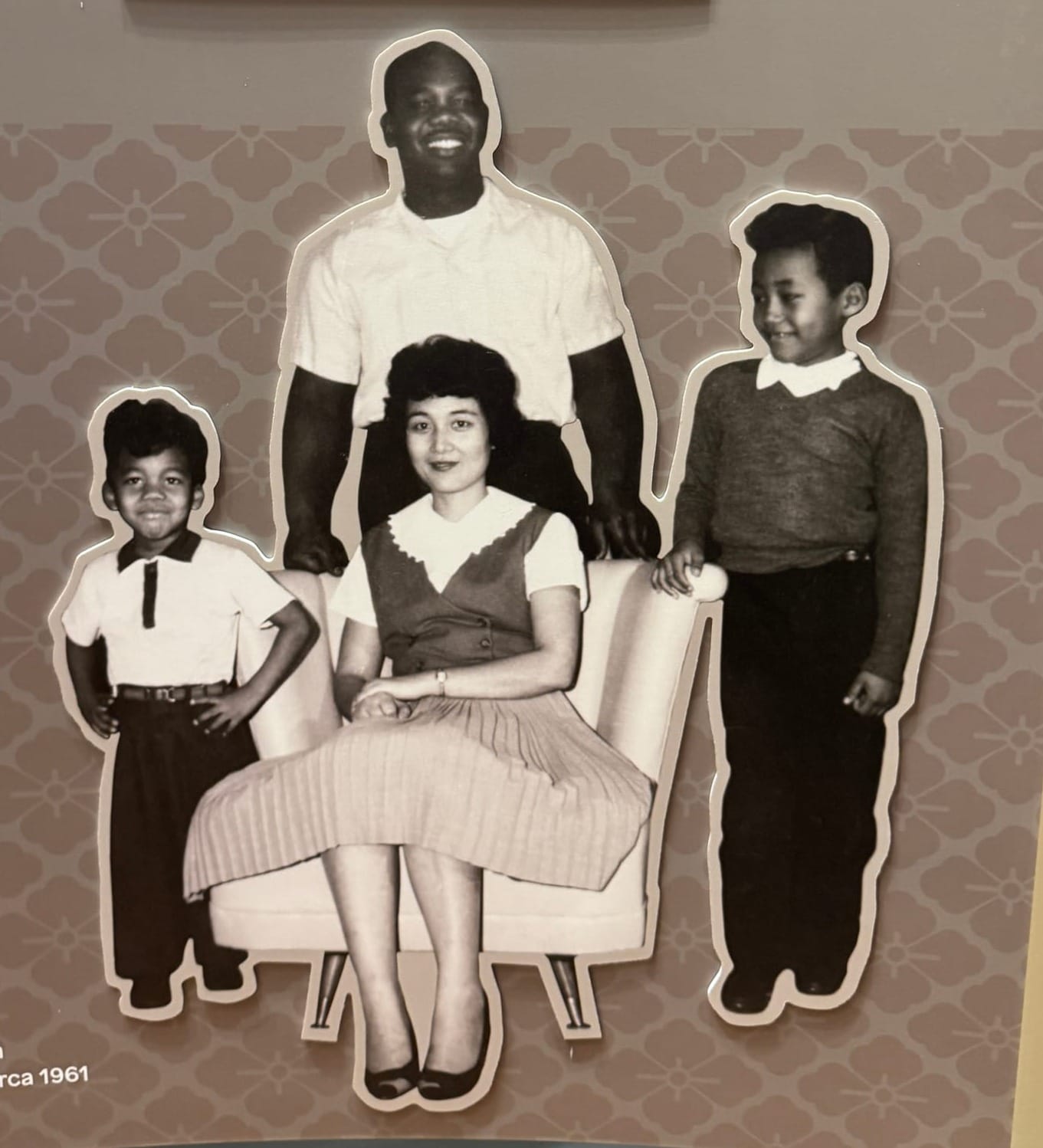
The exhibit doesn’t try to tell every story or do everything. It's well curated in a way that tells different stories. The stories range from those who married Black men and came to their new home only to find a whole different caste system they didn’t know about to those who settled in Alaska and found new ways of living there.
“Many Japanese War Brides did not think they had a story worth telling, but in ordinary lives there are extraordinary legacies,” declares a sign at the end of the exhibit.
“Japanese War Brides” has found and highlighted those legacies.


