
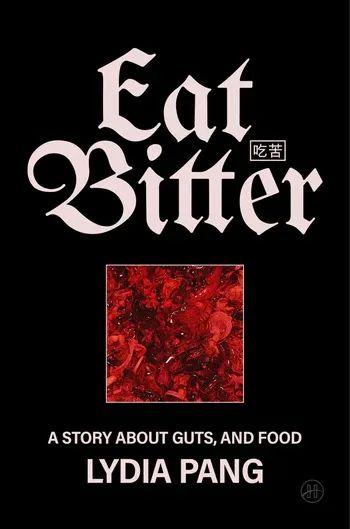
Eat Bitter: A Story About Guts, And Food
By Lydia Pang
HarperOne
What did you eat after your first broken heart? What are your comfort foods when everything is going wrong? You’ve heard of eating your feelings, but have you ever returned to those feelings through food?
In her new debut memoir, Lydia Pang advocates for doing just that.
“What would we find if we revisited recipes that uncover our childhood pain?” Pang boldly asks in the first chapter of “Eat Bitter.”
Through eight personal essays accompanied by recipes, Lydia Pang writes her manifesto on eating bitter and the way she’s conceptualized it has changed over time. Each dish reminds her of a particularly hard time and the lessons she’s learned from it.
“Eat bitter” or 吃苦, is a phrase with a fluid (and at times, inarticulatable) meaning in Chinese-speaking communities. The central idea revolves around enduring suffering to reap sweetness at the end.
I, like Pang, don’t remember a time I didn’t know the phrase, but what I do remember is the time I was accused of never having eaten bitter growing up because I was raised in the U.S. The life procured for me by my parents’ immigration to this country was so much easier than the one they grew up with. What did I have to complain about? Pang’s deep reflections on her growing up, framed in the larger story of the Hakka people, makes room for both things to be true: our respective ancestors went through a lot, and it’s hard to be a person right now.
“Eat Bitter” is not a feel-good memoir or one of those aesthetic cookbooks with exact recipes with defined measurements. Readers follow her from her journey through childhood, marriage troubles to child loss. She tells us to add “dash of soy” to things, and her recipe for congee only includes three ingredients: rice, water and “goodies.” These are not recipes for the amateurs. At the same time, they’re all hyper-specific. It’s not just congee but wrinkly congee. Not wontons but hot mess wontons. In her recipe for bleeding banana bread, she tells readers they’ll know it’s done when a chopstick comes out clean when you insert it into the center – not a toothpick like most recipes. (As a hobbyist myself, I can confirm this is the way to go).
At times the philosophy of “Eat Bitter” feels forced into places where it doesn’t feel needed. Like any pithy phrase, it has its limits of applicability.
Pang rights the ship in the end.
“The feeling of not knowing your next move in life (or even your day) can feel disabling and crushing. Suddenly every step is the wrong one, every motion reinforcing your lack of vision,” she writes. “We fumble. Cling to clarity no matter the direction we’re heading. But if the strategy and path is blindingly clear so deafeningly decisive, where is the room to rot and fester?”
Eating bitter isn’t just about accepting the bad things that happen or even waiting for the light at the end of the tunnel. It’s a state of being that lingers not just in taste but in aftertaste. It is becoming, as she puts it “more intense over time,” to linger and grow in the bitter not just through it.


