
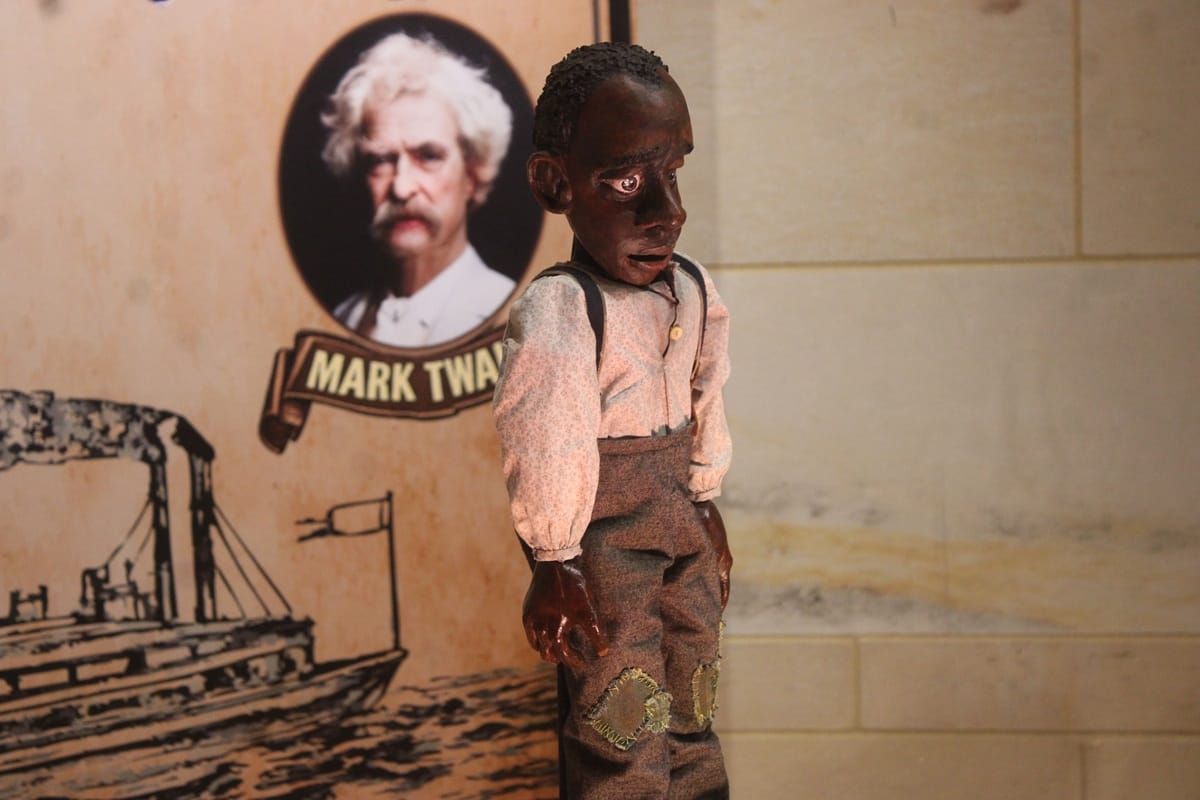
The Adventures of Huckleberry Finn Puppet Show
The Mark Twain House and Museum
Hartford
July 10, 2026
Fun fact for the day: Despite being born in Missouri, Mark Twain wrote his most famous novels in Hartford, including what many consider one of the Great American Novels, The Adventures of Huckleberry Finn.
So it only makes sense that the Mark Twain House and Museum invited master puppet and mask-maker Robert Beuth to come all the way from Los Angeles to present his own innovative take on the classic novel, in puppet form.
Beuth has been a puppeteer in LA for over 35 years, and has participated in many Hollywood-level productions for both film and television. He premiered his puppet show in 2024, explaining that Huckleberry Finn is his favorite novel.
The show was a brisk 85-minute, one man production. Beuth played the role of Huckleberry Finn. Every other character in the story was rendered as a hand-crafted puppet or mask. The craftsmanship for the puppets was remarkable, especially for Jim, Huck’s enslaved friend who decides to make a break for freedom.
Cool looking puppets are one thing. Beuth brought each one to life with its own personality and charm. Huck’s drunken father, Pap, was a hideous mask twisted into a constant shout, while the hustlers the Duke and the King are presented as professional-looking, but still shady. Samuel Clemens himself was part of the show, invited by Beuth to witness his work.
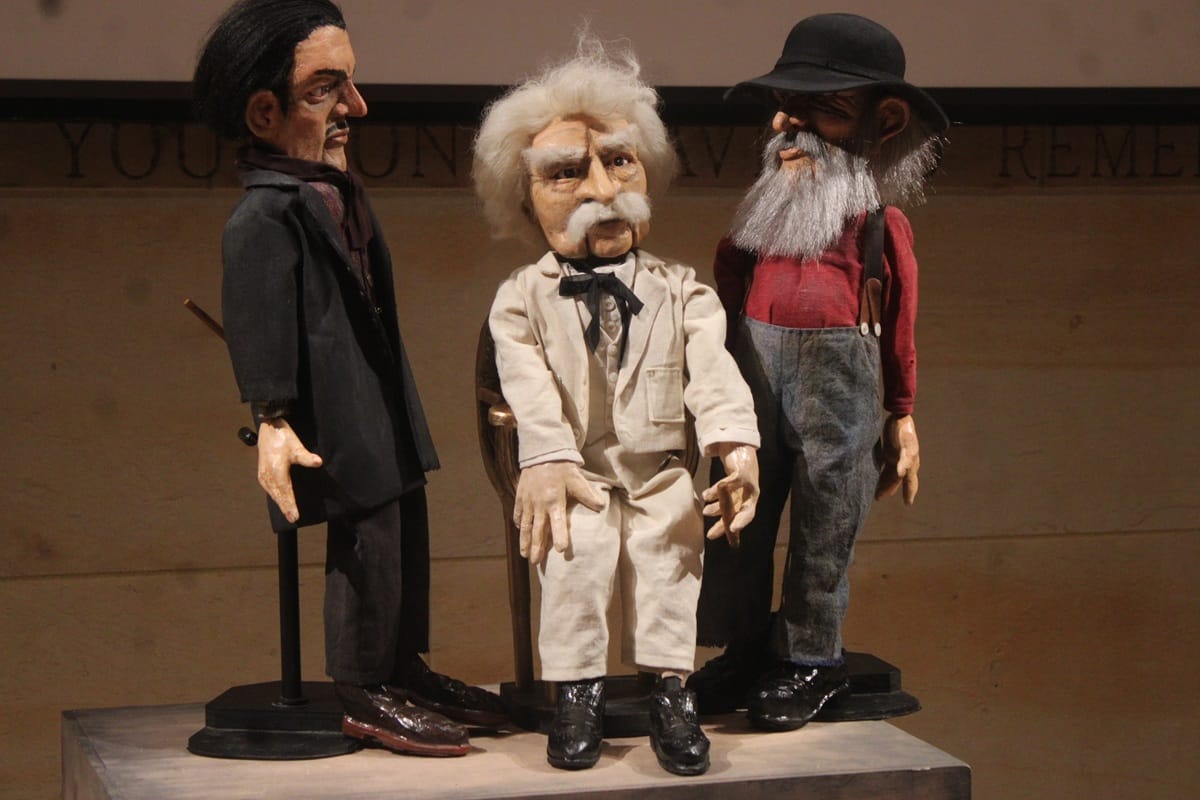
I haven’t read Huckleberry Finn since high school. I got a little lost at times trying to keep up with the story, constantly muttering to myself, “That’s right,” as pieces of my memory shook free.
But even if some of the details are lost, I vividly remember the central moment of the novel, when Huck Finn decides that he’s going to rescue Jim. What makes this moment towering in American literature is Huck’s decision to do the wrong thing. Good Christians support enslavement, so Huck consciously declares his intent to go to hell rather than allow his friend to be returned to bondage. By having Huck make the moral decision at the expense of his own soul, Twain elevates Huck to one of the great heroes in American history, and simultaneously provides damning commentary on a society that holds the abhorrent as “right”.
So this was the moment I’d been waiting the whole play for. Beuth delivered. He stood at center stage, surrounded by the puppets, holding the letter to Ms. Watson, Jim’s enslaver, telling her where he is. It was a quiet moment. Beuth paced back and forth, turned the letter over in his hands, and ran the gamut of facial expressions before ripping up the letter and declaring his intentions.
Tears rolled down my face. The moment was deeply moving in the text, but to see the anguish in Huck’s face as he wrestled with social morality versus his own was equally as affecting. Kudos to Beuth for capturing the moment of pathos so well.
The lesson from Huckleberry Finn is not to do the right thing, but to remain true to oneself no matter the cost. Huck’s decisions were not cost free, and his personal sacrifice is a reminder to us that there must be something wagered for anything gained. Thank you Robert Beuth for delivering that message again in such an entertaining way.
NEXT
Jamil goes to check out a drum circle in the North End.


