Tracing Trane Bus Tour
Philadelphia
Sept. 27, 2026
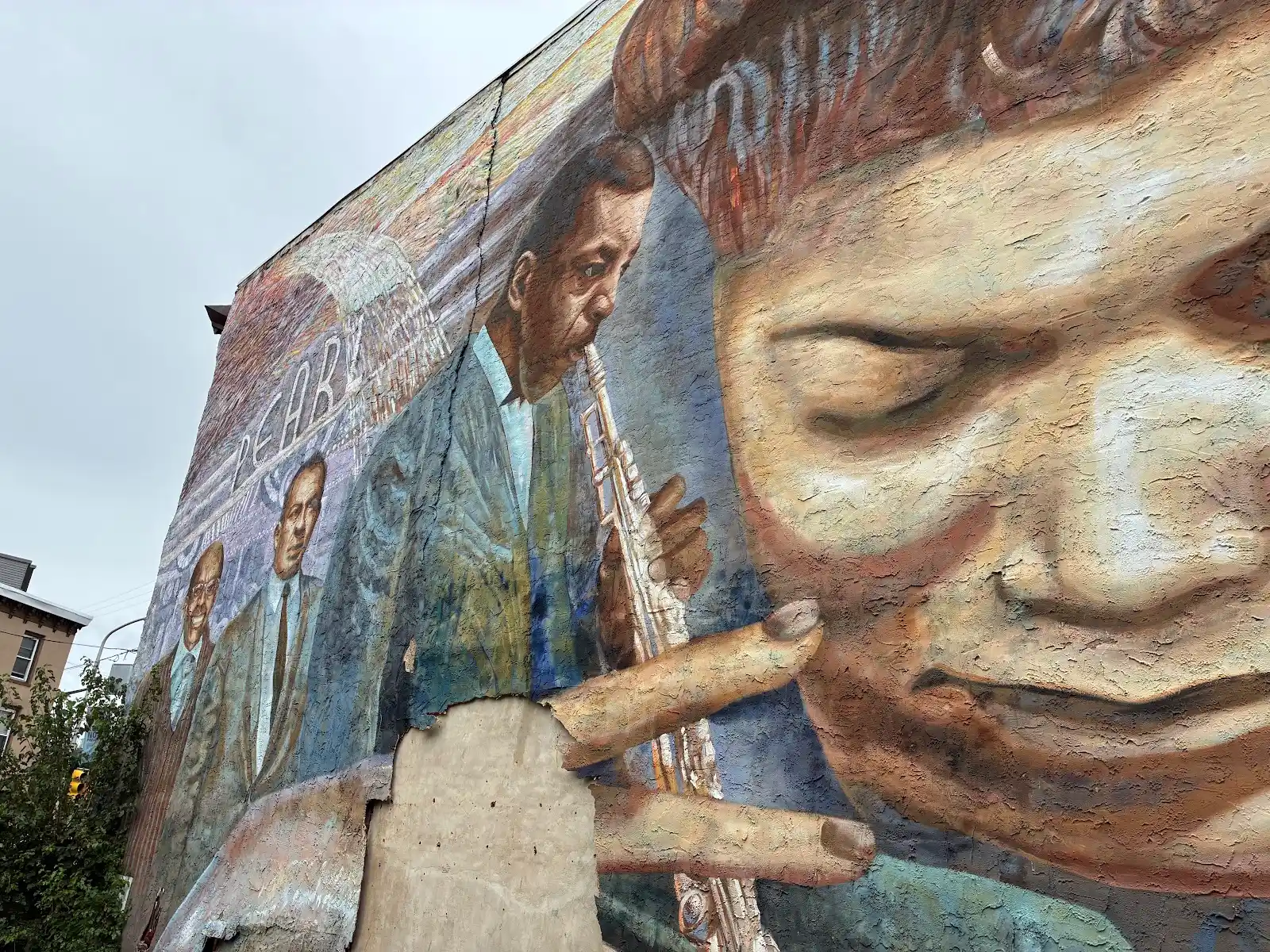
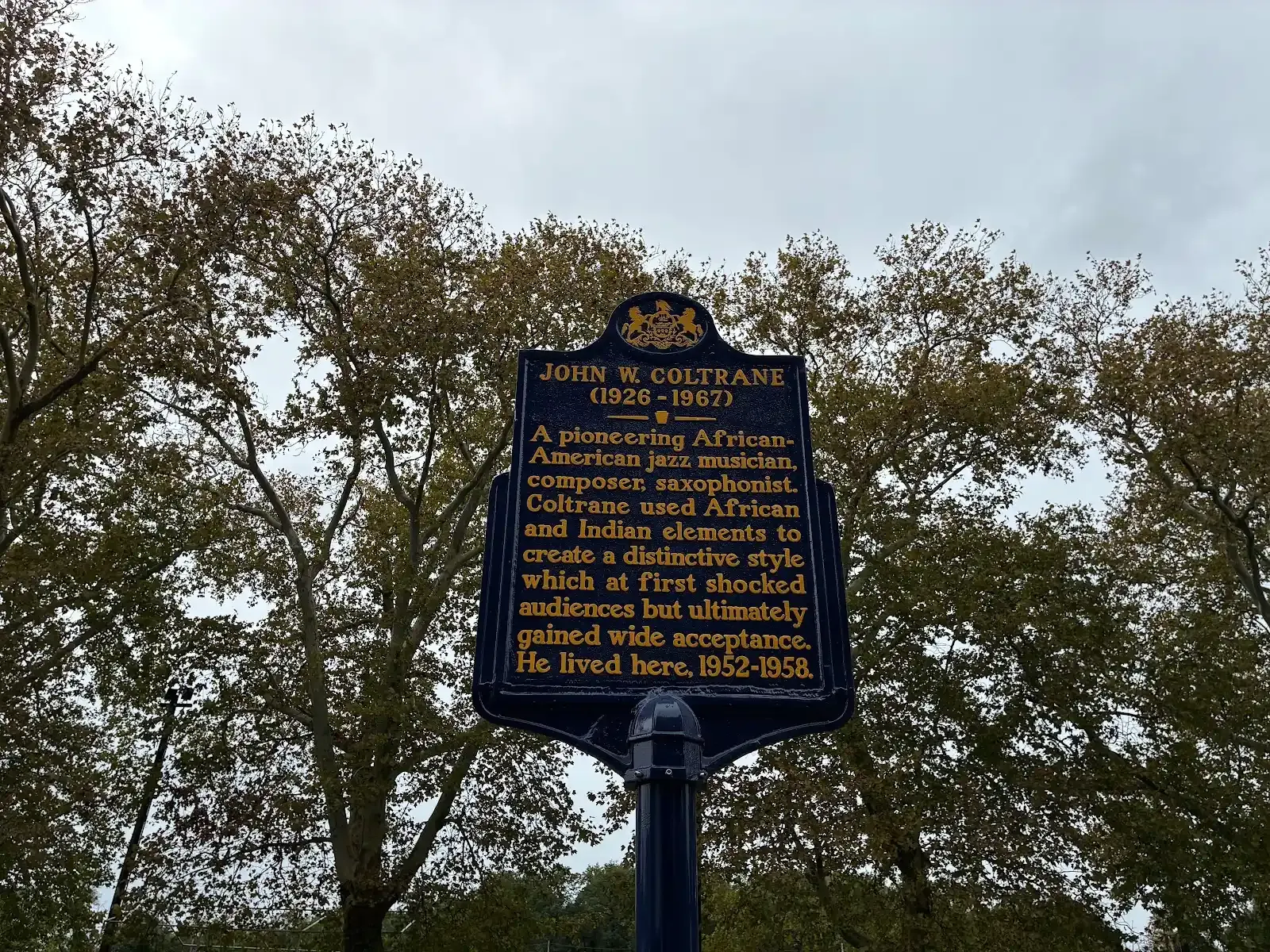
When John Coltrane arrived in Philadelphia as a teenager in 1943, he was welcomed into a thriving Black community. With the country suffocating under the dark spectre of racial segregation, Black Philadelphians strived for dignified lives, carving out spaces of freedom anywhere they could. Whether it happened in churches, parks, community centers, theaters or a small neighborhood bar, music was central to liberatory struggles and daily lives of Black folks in Philly. John Coltrane lived, loved, worked and refined his craft right here in this city. The overwhelming majority of his time here was spent in North Philly. While the city has undergone sweeping changes since Coltrane’s days, a few of his old haunts are still standing.
On Sunday, Sept. 27, Scribe Video Center and the North Philadelphia History Festival hosted Tracing Trane, a wildly informative bus tour through Coltrane’s North Philly. Our host for the afternoon was esteemed Philly jazz historian Faye Anderson. As the founder and director of the public history project All That Philly Jazz, Anderson is doing invaluable work documenting and researching our city’s storied jazz lineage. It rained lightly as we boarded the small bus parked near Progress Plaza on broad street. Anderson led the tour with expertise and humor as she playfully sparred with Yasuhiro "Fuji" Fujioka, one of the world’s preeminent Coltrane scholars who happened to be along for the ride. We started by cruising down Cecil B. Moore Avenue, which used to be known as “the golden strip” because it was lined with jazz clubs from the 1930s to the '60s. From Joe Jones’ stint as the house drummer for the Cafe Society at 13th and Columbia to the site of the old A.M.E. Zion Church at 12th and Oxford, Anderson guided us through a time when nearly every corner of North Philly was filled with music.
In addition to the tour’s musical revelations, we learned about how the Black community’s creative struggle was also deeply political. Anderson dropped knowledge on the early days of the Clef Club — of which Coltrane was a member — and how it started as a social arm of the last independent Black musicians’ union. The final stop on the tour was the John Coltrane house at 1511 North 33rd St. Anderson talked about the pieces that Coltrane composed there and the contentious legal battle to preserve the space. As we rode back to the original meeting point, Anderson continued to point out Coltrane-related landmarks like The Church of the Advocate and various bars and after hours spots. While these areas have been ravaged by gentrification and development, a few still stand in various states of disrepair. As we parted ways, Anderson urged us all to get involved, write a councilperson and honor the memory of John Coltrane by helping to preserve the community that molded and shaped him.