
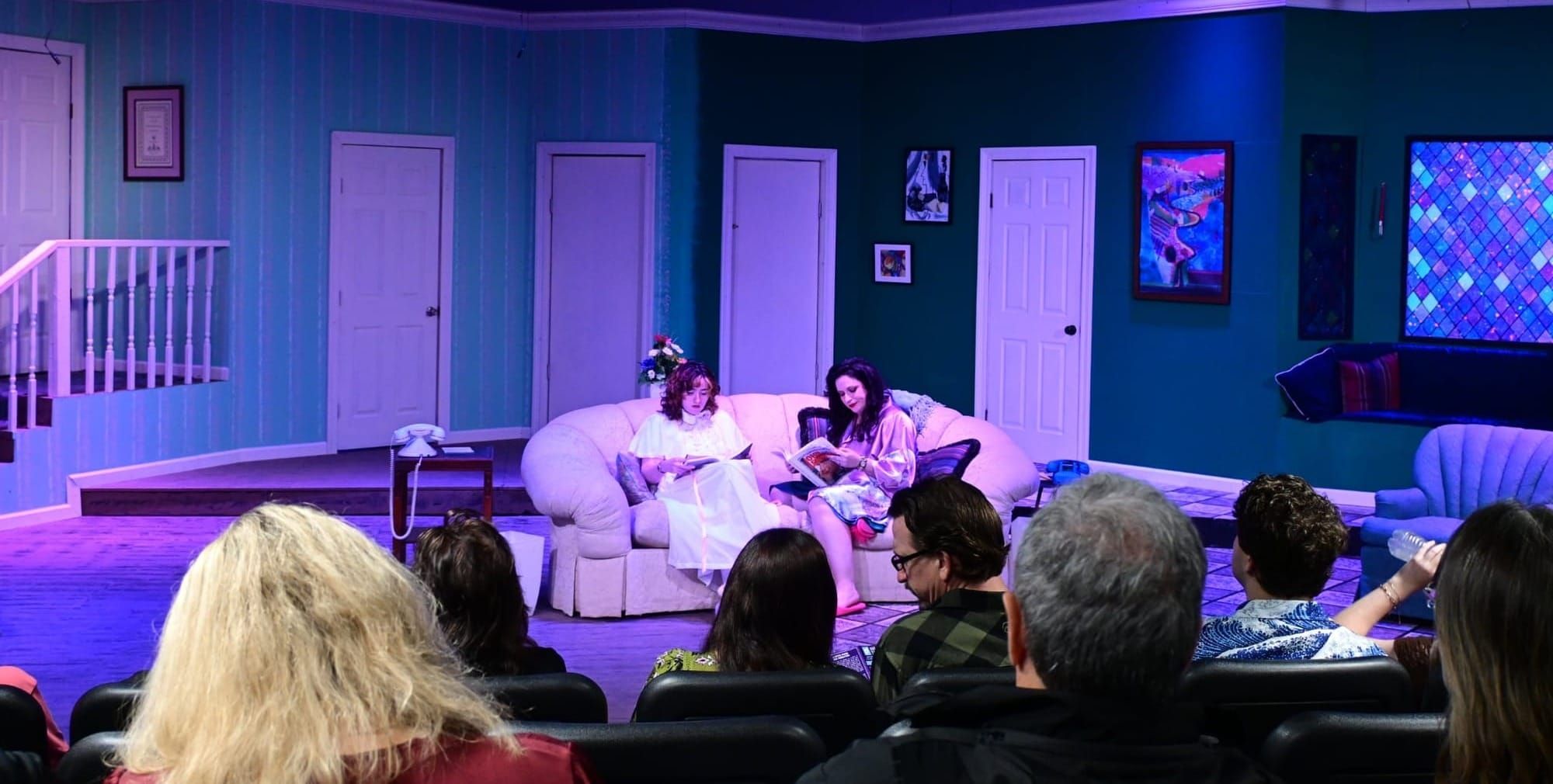
Run For Your Wife
Sullivan Theater
Central, Louisiana
May 9
They say that no good deed goes unpunished, and that may be true for John Smith, the main character in the Sullivan Theater’s latest production, “Run for Your Wife.”
The play by Ray Cooney is a British farce written in 1983 about a taxi driver named John (Cade Williams) who has been living a delicately scheduled double life married to two different women, Mary (Sophie Rollins) and Barbara (Brittany Zimmerman). After he intervenes in a mugging and sustaining a concussion, his schedule falls apart, and he spends the rest of the day trying to explain himself to his two wives and two suspicious police officers who are doing more than their due diligence following up on the case. Chaos ensues as John would rather the detectives and his wives believe that he’s gay and rented a second house with his lover — his upstairs neighbor Stanley (Jon Allen Russo) — than just admit the truth: He’s an unrepentant cheater who was too much of a people pleaser to tell the second woman that he was already married.
Cooney’s play was controversial for its time. And farces (particularly of the British variety) are known for their stereotypical characters and bawdy humor. A Baltimore production of the play was panned in '87 in the Washington Post, where the critic wrote that “'Run for Your Wife' is characterized by imbecility, sexism and rampant homophobia.” The Sullivan Theater’s production begins with a disclaimer that the play was written in the '80s and some jokes and phrases haven’t aged well. That’s not their fault. Blame Ray Cooney.
But of the older plays the Sullivan Theater has revived for the 21th century, “Run for Your Wife” presents an interesting case in it that times have changed a lot since the '80s but some of the derogatory words frequently used in the play like “pansy” or “Nancy” have been reclaimed by the LGBTQ community or otherwise lost their biting edge. Obviously, the community is not a monolith, and LGBTQ or not, there are still those who would be offended by the homophobia written into the play. But it’s interesting that the culture has evolved so much that there are some who would take a larger issue with the ableism in the ‘87 criticism of the play in WaPo than the homophobia in the play itself.
The farce, in all its chaos, is genuinely enjoyable to watch unfold despite these jokes. Critics who take issue with the fact that the women don’t figure anything out sooner and are written to be one-dimensional characters would do well to remember that literally no one comes out looking good in this play. None of the characters is smart. They are all extreme stereotypes. That is the point.
The production shines in its supporting cast. Sean Lou is the perfect Detective Sergeant Porterhouse, who seems to comically loosen a button on his shirt with each appearance. The production's gender-bent casting, Meg Jett as Detective Sergeant Troughton and Daphne Hudson as Bobby Franklyn, cleverly reframes some of the dated jokes. It feels like we’re laughing with them at the situation rather than at them for the implication of being gay. Daphne Hudson shines as Bobby Franklyn, a gay neighbor from upstairs.
As director Madalyn Mullins wrote in her note from the director, the play is a rare “chance to laugh at the ridiculous and self-imposed misfortunes of someone else,” and a reminder that the farces in our own lives will end too. In a week where so many things have been rescheduled or canceled due to rain, the future of democracy is being actively debated in Senate committee rooms and it costs over $60 to get a tank of gas, we need that kind of relief.


