
Fix-it Faire
East Baton Rouge Parish Public Library
Baton Rouge
May 16
Fixing things, mending your own clothes and upcycling are trendy these days. Maybe it’s because money is tight or maybe people are starting to care about the estimated 11.3 million tons of textile waste Americans produce each year. Or maybe it’s just that we need a little more whimsy in our lives. Regardless, what once was considered normal and then uncool has come full circle. Doing it yourself is cool again.
But getting started can be difficult. Upcycling often requires equipment or craft materials that people don’t usually have on hand: fabric scissors, sewing machines, extra parts. There’s only so much a Youtube tutorial can do for you if you don’t know the first thing about remote controls.
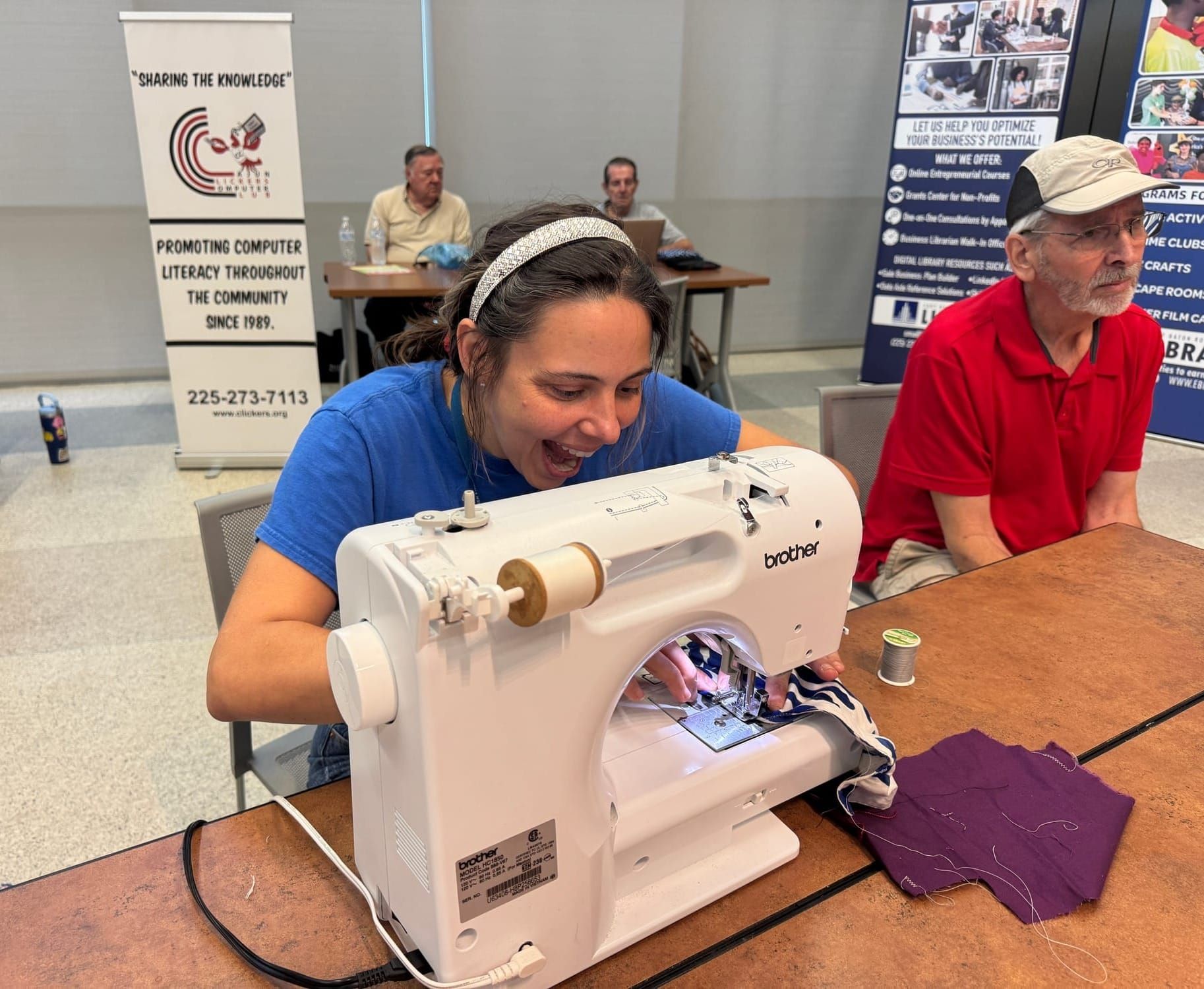
That’s where the library’s first Fix-it Faire came in. On Saturday, dozens of people gathered at the Main Library on Goodwood to fix, tinker and learn what could be done about their old items. It was a quiet affair. There was no music or flashy production, just tables of electronics, tools, soldering and sewing machines inside staffed with volunteers. Front Yard Bikes brought bikes to fix and give away. Another group of people were checking and fixing brake lights for free.
According to community programming librarian and sewing table volunteer Allison Gianelloni, the event gave people who were retired or had experience working in fields not as popular these days the opportunity to pass on their knowledge to younger generations. The first woman who came in, she said, had a remote control that would have cost $300 to replace. She’d held onto it for years because she didn’t have the funds to do so. The volunteers fixed it right up.
“We’re trying to do a lot more sustainability programming " at the library, Gianelloni said.
“The right to repair is so important. You can save money, you save things from the landfill,” she continued. “That’s what it is for me — I’m more frugal and like to be resourceful. It’s such a good feeling knowing how to fix it or learning how to fix something.”
Of the tables, the sewing table was the busiest. I brought two dresses I’d thrifted that had gotten torn up in my washing machine. I walked in and sat next to a man seeking advice about how to fix a family heirloom quilt that had belonged to his late grandfather with pieces of other family members’ clothing. Gianelloni evaluated my items and suggested how to fix them, then we got to sewing. The process of hand mending clothing is not as easy as TikTok makes it look. I have sewed before, but never clothes, and I wasn’t confident about my skills. After finishing my (rather subpar) sewing job, I was offered fabric glue to finish off my work. It looked good as new.
Is this something I could have done at home? Maybe. Would I have without the guidance and impetus of the Fix-it Faire? No. I didn’t even know they made fabric glue. Some of the people were experienced menders who just needed the tools. One woman came with a bag of clothes ready to fix on the machine. Her friend had a skirt that was just a smidge too big. But the thing that struck me were the men who came in with no experience. The man at the end of the table who’d never sewed before but came to learn. Another who stopped in to get a button sewed on the shirt that he was wearing. The Fix-it Faire wasn’t just a pitstop where volunteers fixed things for you. It was an event that empowered you to fix things yourself. For a first time event, the library seems to have tapped into a real need in the community. Hopefully, they’ll do it again soon.


