
Intervals
Ely Center of Contemporary Art
162 James St.
New Haven
Through April 12
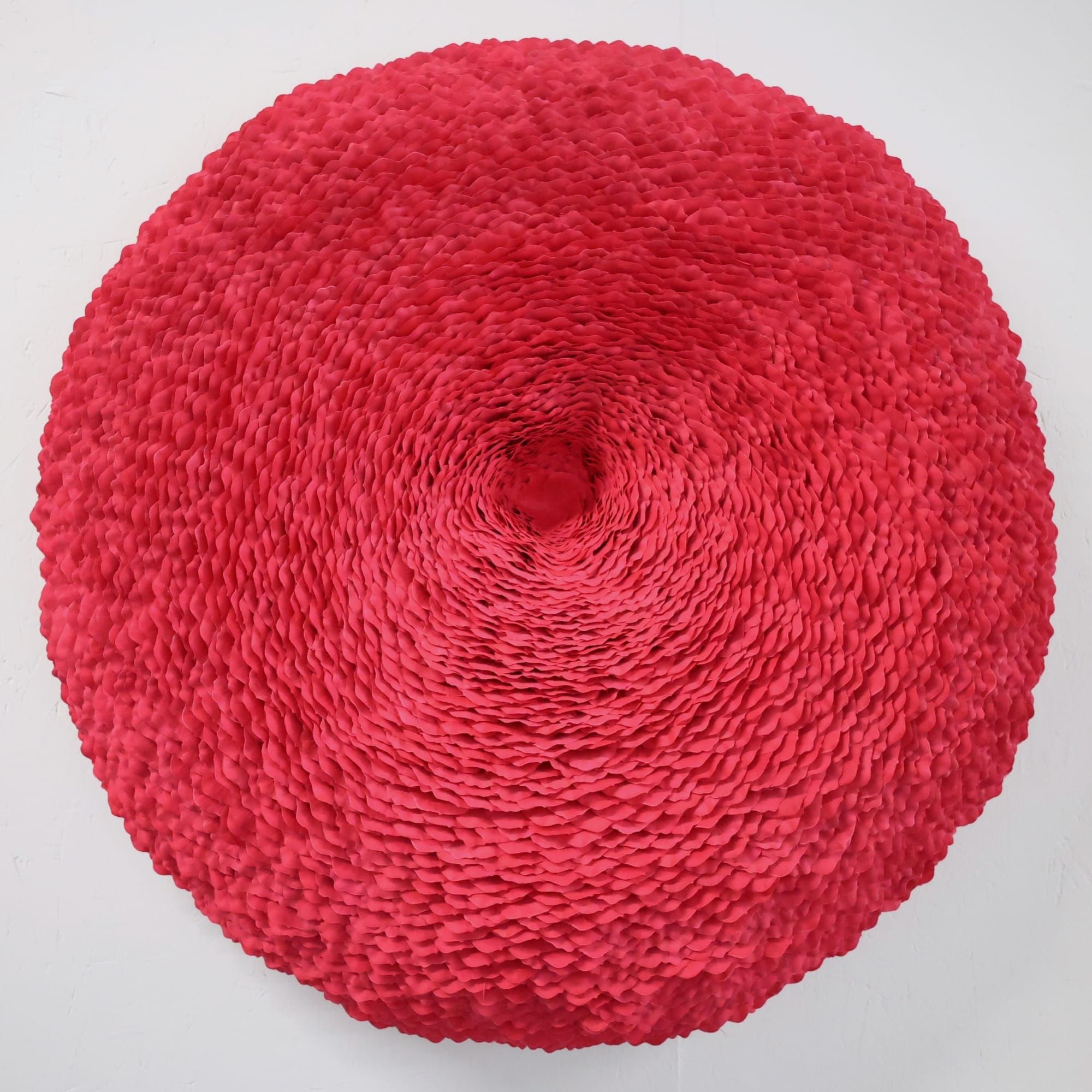
Molly Gambardella's sculpture pulls in the viewer's eye like a whirlpool, its swirling red petals a source of both fun and vertigo. On one hand, perhaps thanks to its vibrant red, it might not be out of place as a tree in a Dr. Seuss book, a prop in a vivid puppet show. On the other hand, it has a careful sense of proportion and detail that pulls it into reality and gives it a sense of threat, like a carnivorous plant. If you touched it, would it be fluffy or sharp? Either way, it's a piece made for a big space, which it fills and comments on, redefining it. This space is mine, it says, for as long as I'm here.
Gambardella's work is part of Intervals, the first group show, of 25 artists' work, from the Ely Center of Contemporary Art in its new spot in CitySeed's building in Fair Haven, and plays into the show's greater themes of ambiguity and flux. "Intervals mark both pauses and beginnings," an accompanying note states. "Presented by the volunteer artists and curators who make up Ely Center’s Curatorial and Program Advisory Committee," along with other invited artists, "this group exhibition reflects on the spaces between places and moments of change."
"The title speaks to these in-between conditions — a break, a measure of time, or a structural division; something that separates while also connecting," the accompanying note continues. "Here, it gestures toward the shifting site of the gallery, the dual positions held by artist-curators, and the transition into the organization’s next decade. Intervals is a reflection on where we have been and an opening toward what is to come."
Part of the motivation behind the show isn't abstract: It also "responds to another interval, a temporary relocation of our gallery" — a nod to ECOCA leaving the large mansion at 51 Trumbull Street, historically called the John Slade Ely House, that had been a creative hub for New Haven's artists for decades under a few different incarnations. The move meant the end of ECOCA's struggle to keep and maintain the building. It didn't mean the end of ECOCA, however. The arts organization has a half-million-dollar donation slated toward the purchase of a new space, which it has a year to find.
In the meantime, ECOCA has moved into the first floor of CitySeed's building at 162 James St., as that food and community development nonprofit undergoes its own transition. On its currently empty first floor, CitySeed plans to build four or five shared-use commercial kitchens for entrepreneurial chefs to start their food businesses. It also intends to house Sanctuary Kitchen, office space for itself, cold and dry storage for produce, a small retail outlet, and maybe a co-working space. Those renovations don't start until late in this year, at the earliest.
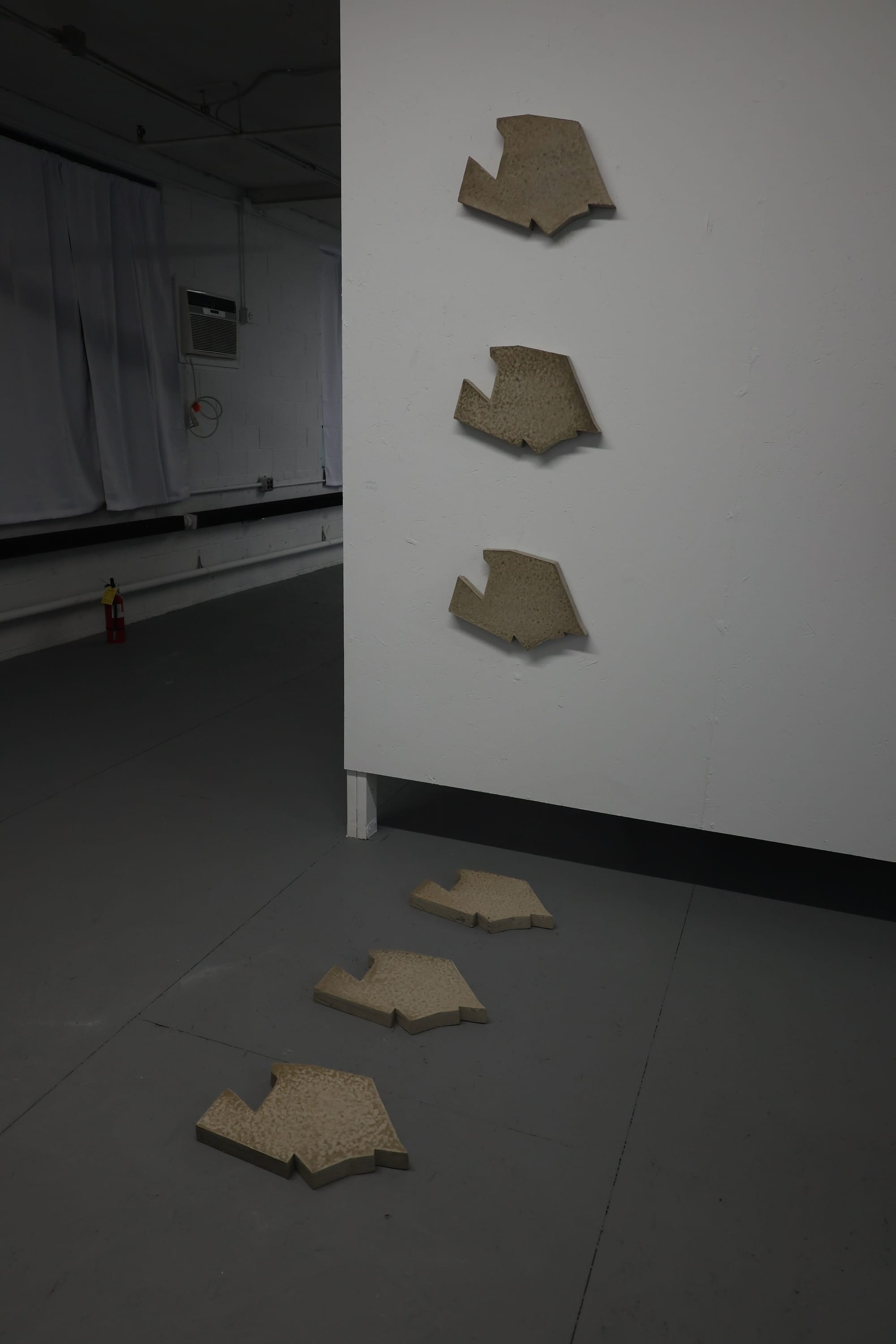
So ECOCA finds itself in a large, undefined space, in many ways closer to a typical art gallery than the mansion on Trumbull Street ever was, and the artists invited to use the space have made the most of it. Taking advantage of the wide space for walking, Jayden Ashley's piece, made from identically cut material, evokes stepping stones while defying gravity, suggesting that those brave enough to walk them might do the same. Artist Maria Markham has built a pile of stones on the floor, with a projection of wavering water at its peak. The eerie effect is of looking into a portal, or perhaps sustaining the illusion that somehow the rock pile is itself supported, improbably, by liquid.
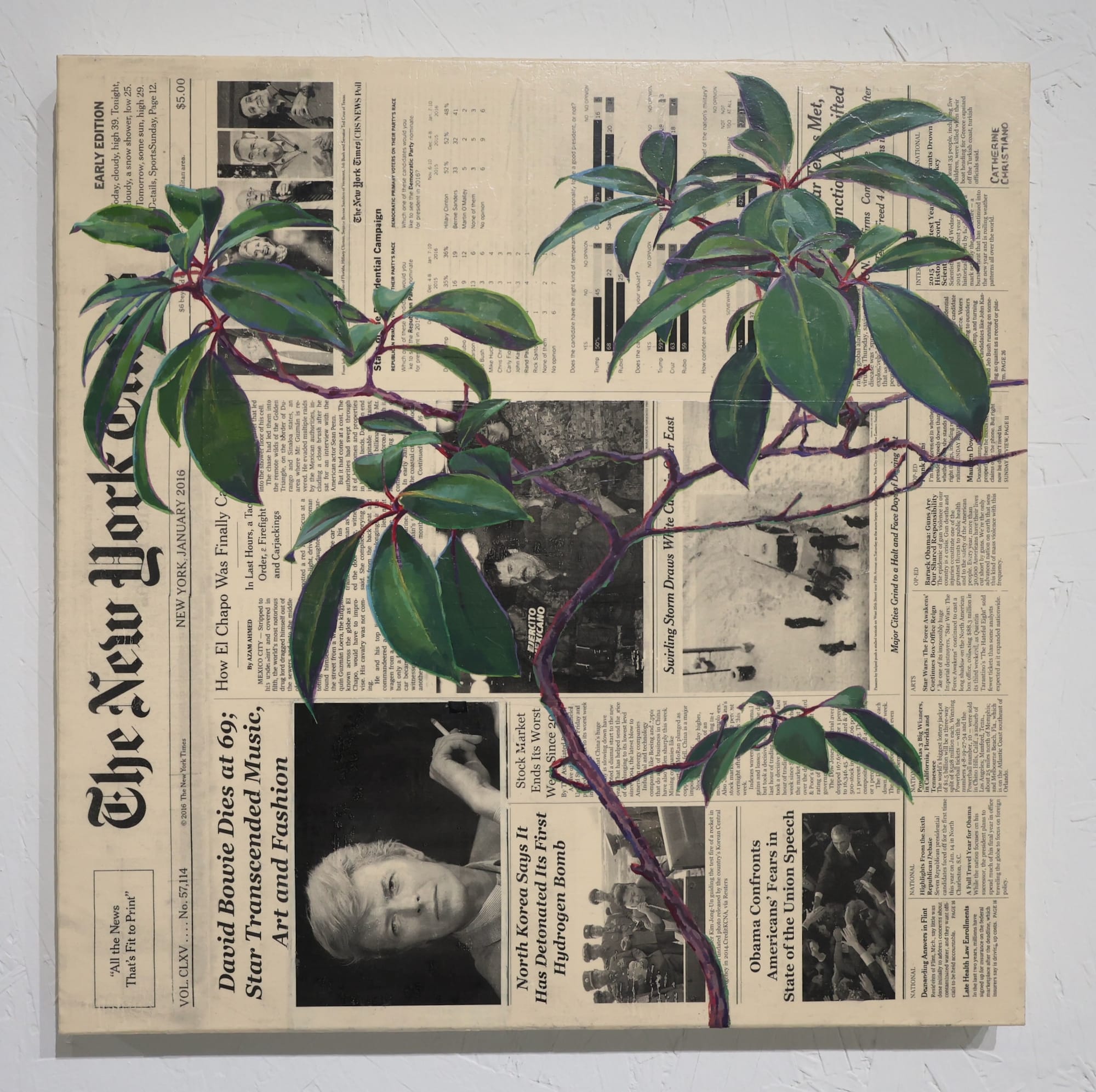
Where many of the artists play with space, Catherine Christiano's piece plays with time, in juxtaposing a page from a newspaper — a decade old — with a sprig of mountain laurel, notorious for its slow growth. The comparison of time frames doubles: first, the difference between the news stories fluttering across the front pages with the mountain laurel, year after year, inching toward sunlight; and second, the time interval between that newspaper and now. How many of those headlines still matter? How many have meaning that still linger for us? What happened to it all, and to us, in the time between David Bowie's death and now?
As the accompanying note relates, "the works in Intervals respond to ideas of construction, duration, conversations, and connectedness. Together, the works support the idea of the Ely Center as a fixed container and a living framework shaped by collective effort. In this moment of temporary architecture and long-term vision, Intervals affirms the importance of art, volunteer labor, shared authorship, and the spaces we build together." It's an apt message for our uncertain times. Art spaces and artists come and go, and even most artworks don't last. But the energy of making art and the community that coalesces around it were around before we got here, and it's a good bet it'll outlast us all.


