
Open Studios @ City, Part 1
City Gallery
New Haven
Through Oct. 25
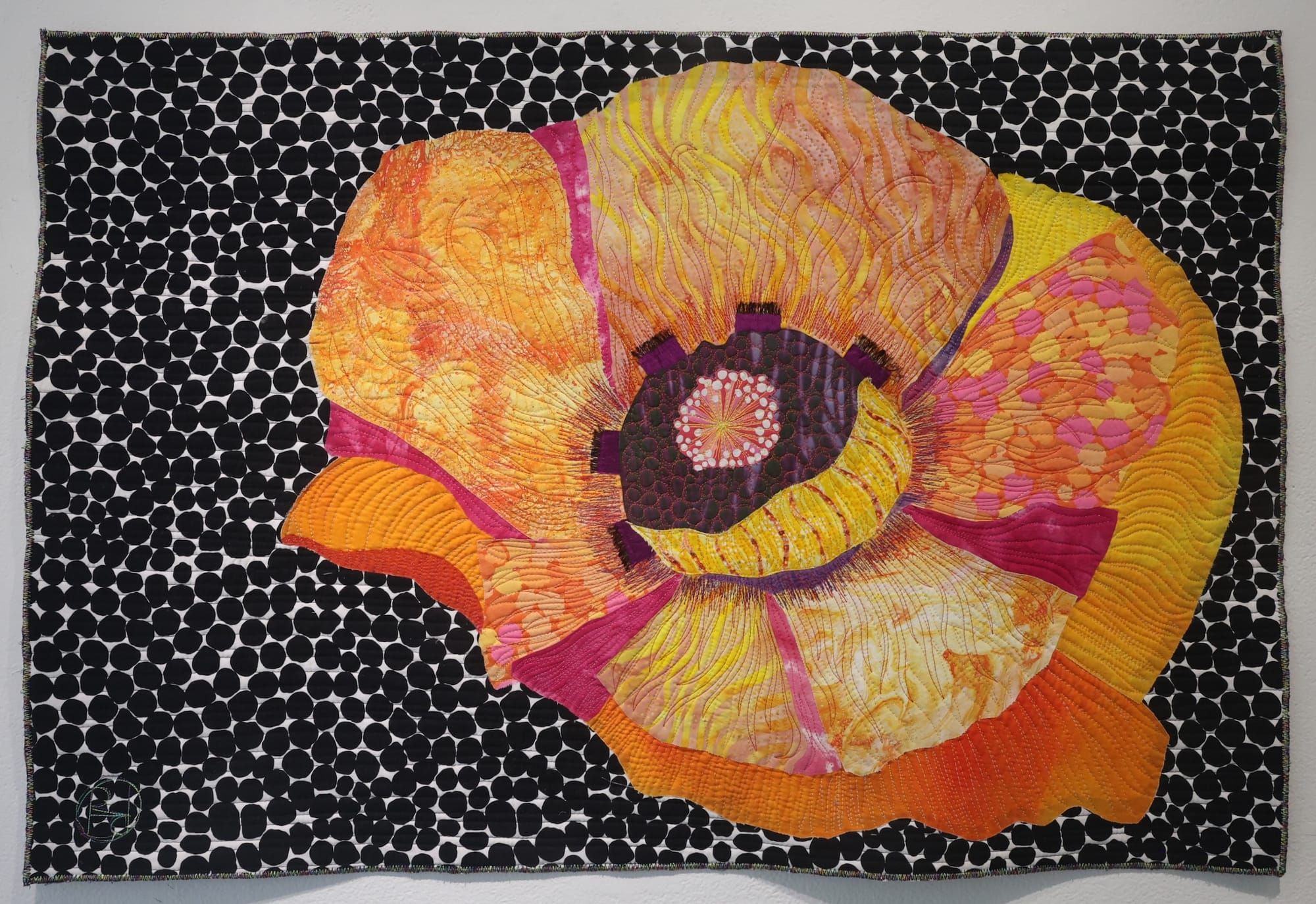
The main subject of Rita Hannafin's Poppy floats above its background with such distinction that it seems three-dimensional — first in the way it lifts itself to the foreground, and second in the way one petal falls behind another. Poppy flowers are vivid enough in nature to have made appearances in Impressionist paintings, numerous photographs, and the phantasmagoric colors in The Wizard of Oz. Hannafin creates a poppy that partakes of several different varieties. Her choice of medium — quilting — makes the colors so eye-catching that it takes a minute to see that the pattern in the background is no accident; it's the seeds from the same plant, reminding us that the flaming flower also produces something that, especially if we go to a bagel shop, we might see every day.
Poppy is part of Open Studios @ City, a two-month exhibition (with part one running through Oct. 25) timed to join in Open Studios New Haven, the month-long celebration of visual arts in the Elm City featuring events and studio visits from Westville to Fair Haven. City Gallery's monthly shows usually feature the work of one to three of their member artists. This month showcases work from all 15 members, letting audiences see the individual viewpoints of the artists and the sensibilities that bring them together.
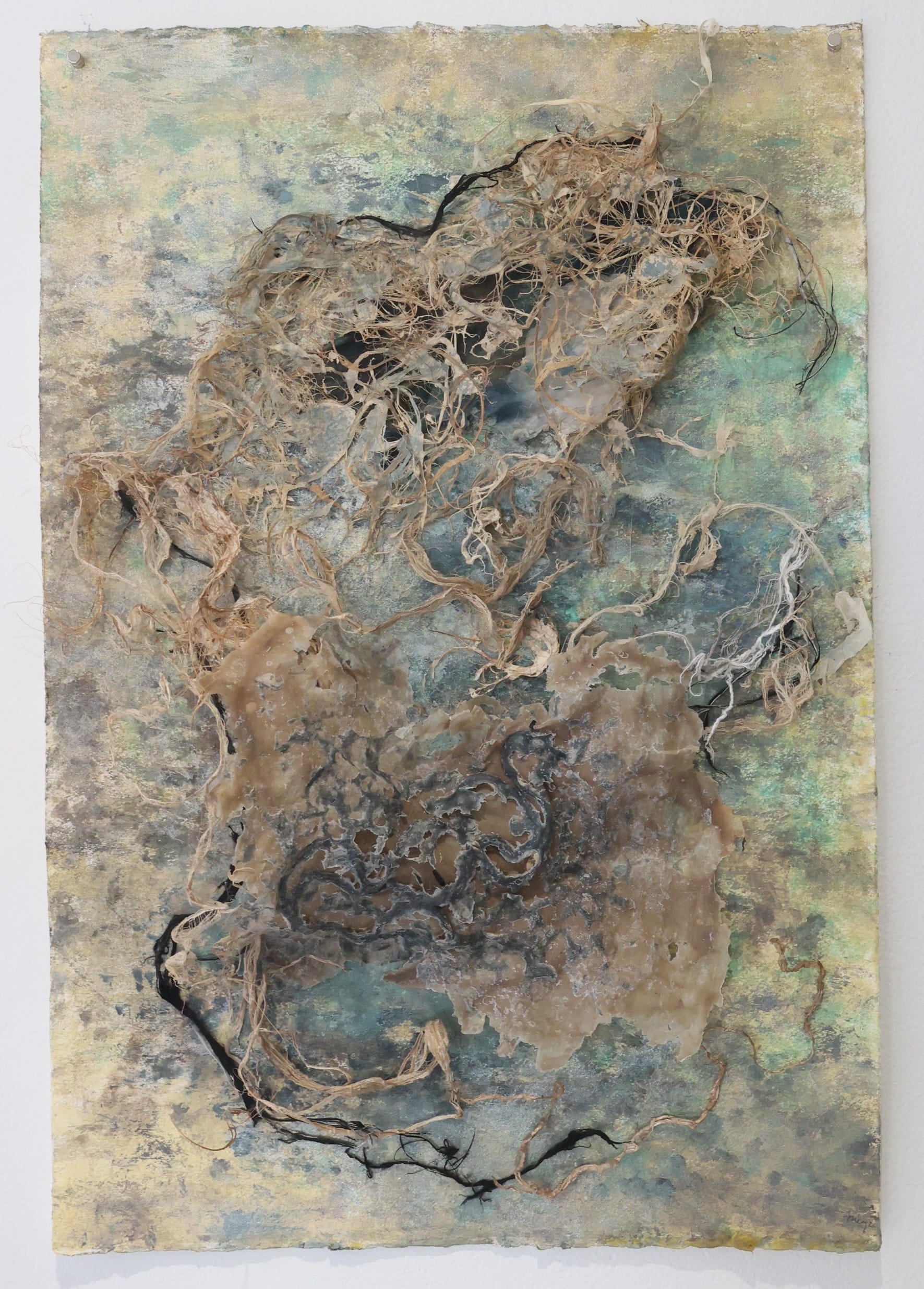
Meg Bloom's Arrhythmia hovers somewhere between painting and sculpture, its swirling shapes suggestive of a disruptive break, turmoil, chaos. It has in common with Hannafin's piece a predilection for vibrant color, but put to very different emotional use here. "I experience contemporary life ... as having continuity and fragmentation — things relating, being experienced but not always finding a common thread. The demands of this time feel very fragmented — horrifying, beautiful, terrifying, alarming, affirming, unreal," Bloom writes in an artist statement. "I am deliberate in wanting my art, like nature, to do its own revealing: thus the insistence on leaving the 'imperfections': the warped, bent tangled, entangled, imperfectly beautiful, frayed uneven edges, parts torn, smashed, shattered, unable to support themselves, persistent on survival, regrowth, regeneration." Hannafin's piece has the air of a celebration. Bloom's piece suggests a more ambivalent psychological state. There is danger in it, but vigor, too.
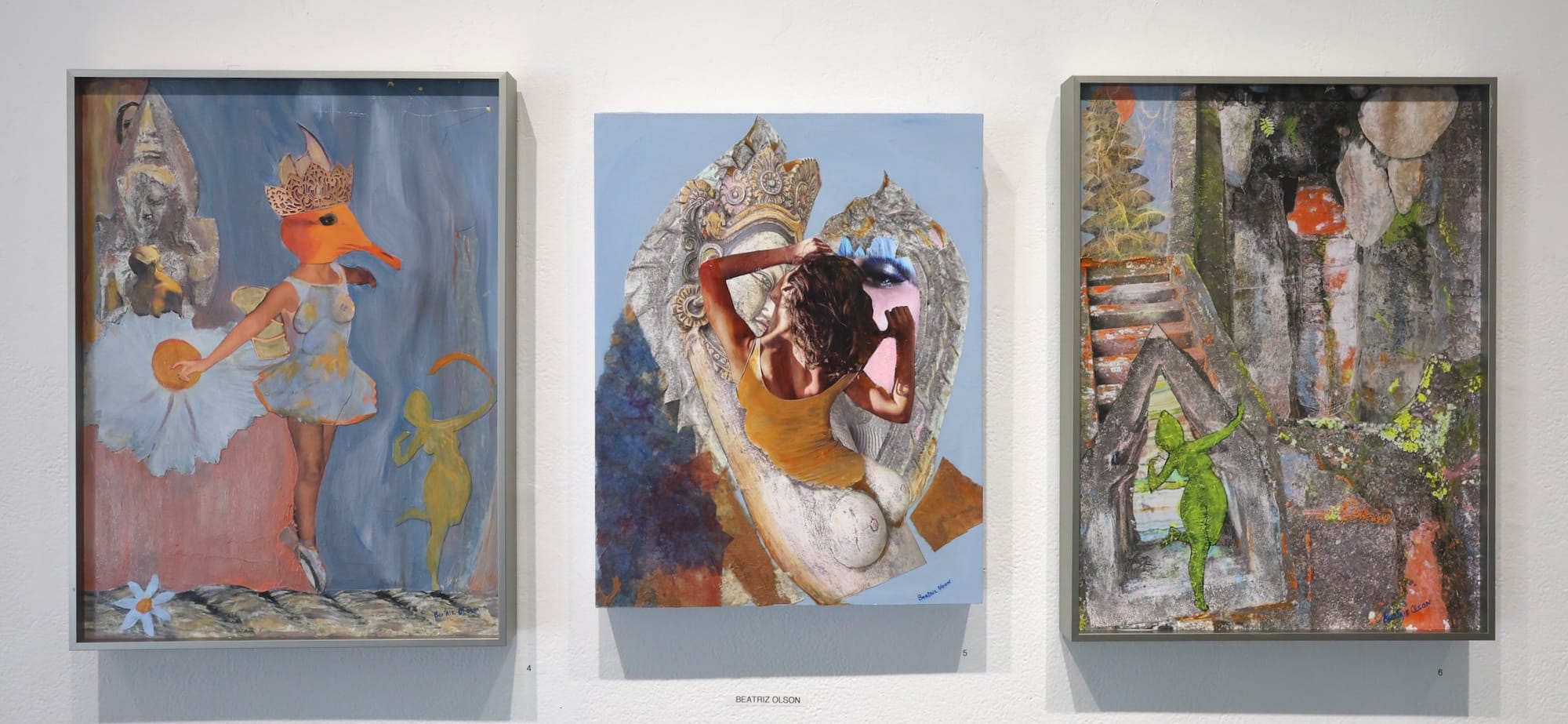
Beatriz Olson, in her paintings, unites the disparate color palettes Hannafin and Bloom use. The backgrounds of her canvases have some of the same blues, greens and grays. The figures that pop to the foreground echo Hannafin's sunny poppy. In Olson's images, the colors add to a sense of gritty fantasy, "moving between magical realism and vibrant abstraction," she writes in an artist statement. Through color, her "work bridges abstraction, memory, and feminine expression." The colors help make the evocation specific: "Shaped by migration, medicine, resilience, and spiritual inquiry, her paintings transform lived experience into immersive spaces of healing, intuition, and freedom."
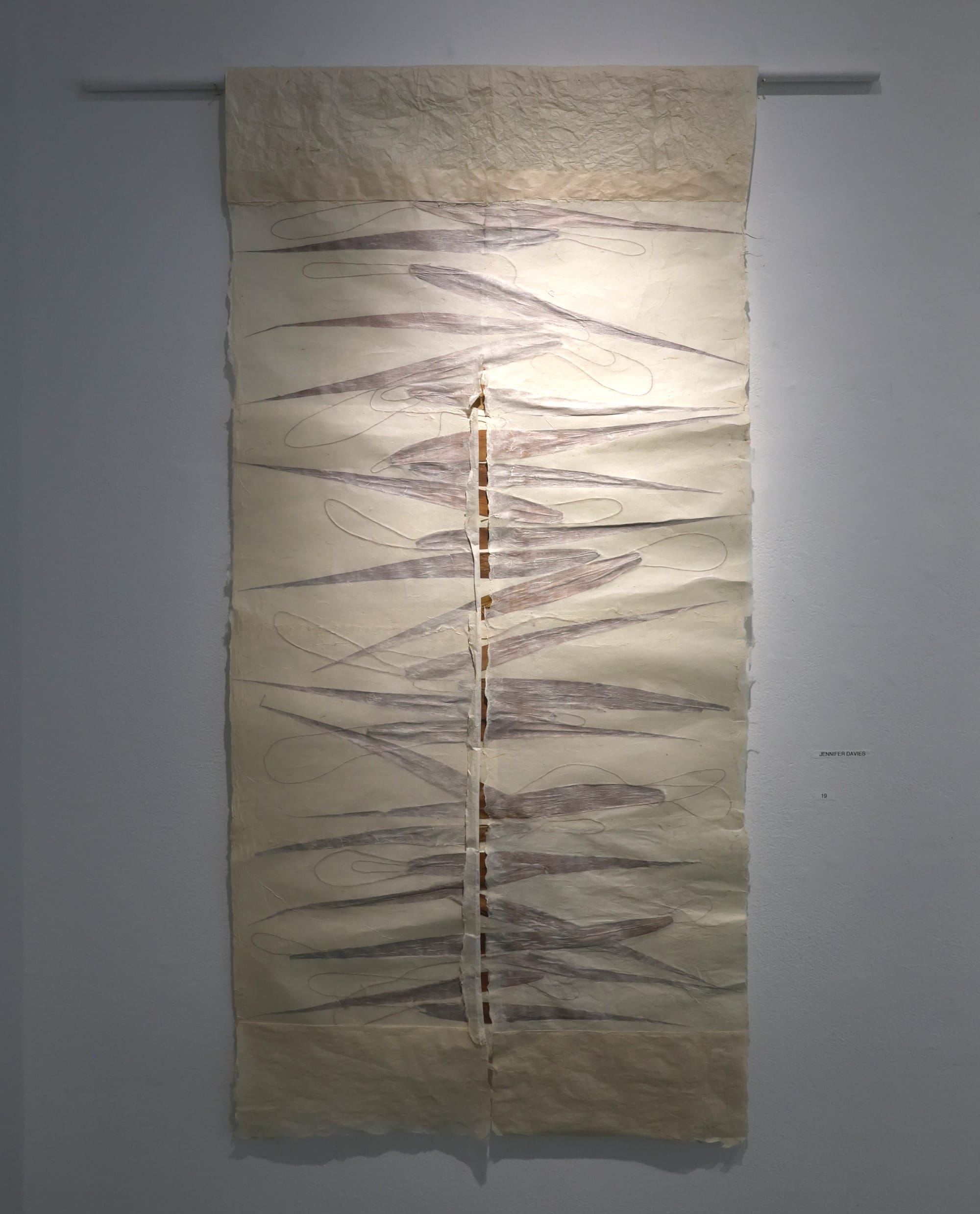
The artists' viewpoints diverge, too. Jennifer Davies was "trained as a painter and illustrator" and "worked for many years in watercolors, drawing, and monotype," she writes in an artist statement. "Now her work is largely fiber oriented, incorporating paper she makes by hand using both Eastern and Western papermaking traditions. Fiber techniques she uses are dipping weavings into paper pulp, indigo dyeing, and sewing handmade papers together to make large wall hangings." Phragmites has a serenity to it that the previous three pieces do not. But look again, and there's the interest in natural forms that Hannafin has; the attention to the texture of the materials in Bloom's piece. City Gallery's exhibition shows how, whether it's explicit or not, the artists' pieces are always talking to one another.


