Chamber Music Tulsa: WindSync
Discovery Lab
April 17, 2026
A kids’ science museum isn’t the first place you would expect to see a world-class woodwind quintet. However, as a space that has “building community through exploration, exhibits, and play” as a key part of its mission, Discovery Lab turned out to be an appropriate host for an award-winning ensemble whose name is a tongue-in-cheek reference to a 1990s boy band.
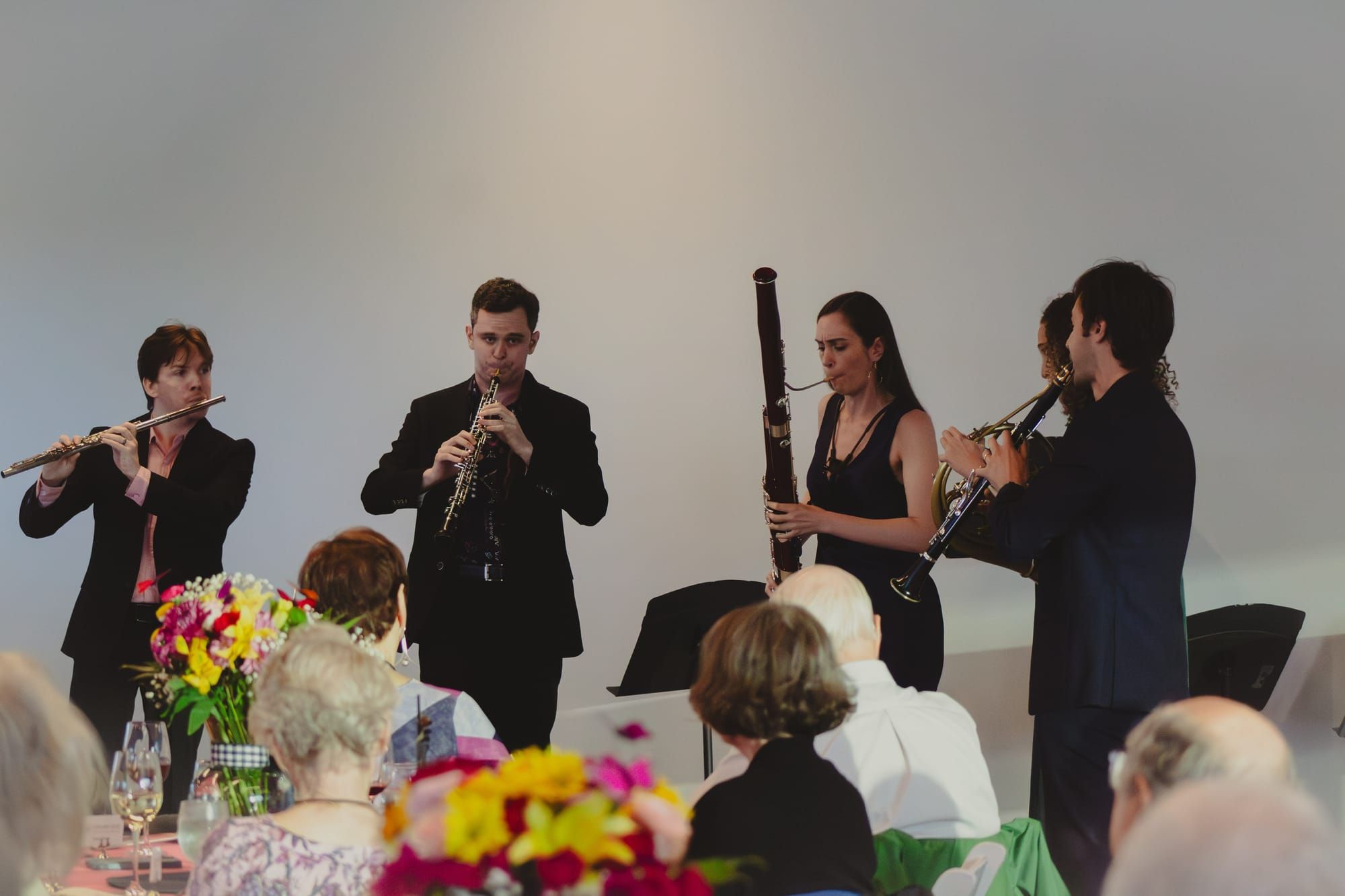
For the conclusion of their Friday Gallery Series last week, Chamber Music Tulsa brought back WindSync, a five-person group consisting of Garrett Hudson on flute, Noah Kay on oboe, Graeme Steele Johnson on clarinet, Kara LaMoure on bassoon, and Anni Hochhalter on horn. The 2025-2026 season marks the 17th year that these performers have played together, touring internationally and playing some of the country’s biggest classical music stages such as Carnegie Hall, the Metropolitan Museum of Art, and the Library of Congress. WindSync are unique in that they typically play a “self-generated repertoire” of in-house arrangements or commissioned pieces. This evening at Discovery Lab was no exception, with two arrangements by Kara LaMoure and two commissioned pieces, including Viet Cuong’s Flora, which was originally commissioned by Chamber Music Tulsa for WindSync several years ago.
The thread binding the evening’s pieces was an exploration of the impact of the French music teacher, conductor, and composer Nadia Boulanger on a diverse range of American artists. Born in 1887, Boulanger spent decades teaching in Paris and had many composers with a wide variety of styles come study with her, including Aaron Copland, Quincy Jones, and Leonard Bernstein. The first piece WindSync played in their Nadia tribute during this show was an arrangement of Etude no. 17 by Philip Glass, another composer who studied with Boulanger. WindSync reworked the etude to fit the wind quintet instrumentation, taking what was originally a flowing single-instrument piece and breaking it apart into a conversation between the five instruments that highlighted the counterpoint melodies within the piece—a technique that, appropriately, Glass focused on in his studies with Boulanger.
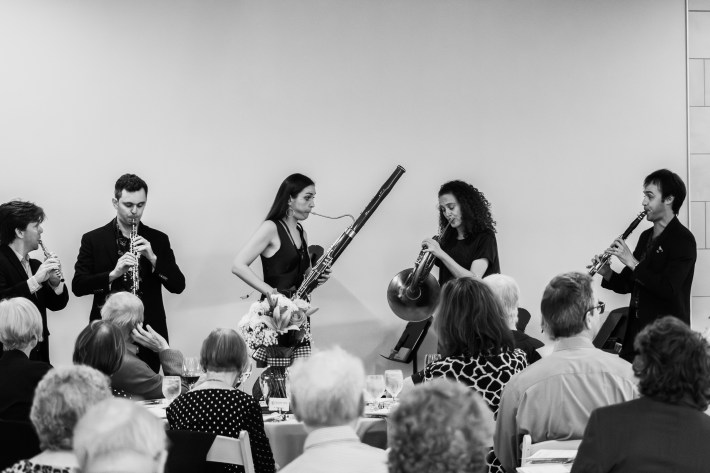
Complementing the Glass piece was a second arrangement by LaMoure of several works by the Swedish folk band Väsen which, in turn, were contemporary adaptations of pieces from the 1600 and 1700s by composers related to the pioneering biologist Carl Linnaeus. LaMoure translated parts written initially for nyckelharpa, viola, guitar, percussion into a piece that gave the winds an opportunity to mimic the stringed and rhythmic instruments and showcase the wide range of sounds possible with a wind quintet. Though this piece was not explicitly tied to Boulanger, LaMoure noted that it was included in the program to showcase the diversity of influences on the quintet itself, much in the same way that Boulanger had a deep impact on American music.
Commissioned works were interspersed throughout the arrangements and proved to be the highlights of the evening. Arrangements may provide a new lens through which to see previously created works, while live performances of pieces by contemporary composers afford the opportunity to listen to those pieces in a fresh way. No matter how far from the original they may be stylistically, arrangements and canonical pieces always have some reference to an existing body of performances and recordings. Etude no. 17, for instance, can’t fully be isolated from all of the recordings that already exist or all the writings on how someone should interpret Philip Glass’s etudes. But commissioned works like the ones presented at this show are unique in that they don’t often exist anywhere outside of the performance. No recordings exist of Akshaya Tucker’s What will you hold or Viet Cuong’s Flora, and, as was noted in WindSync’s intro to the Cuong piece, commissions often have exclusivity riders built in so that other performers can’t play the pieces.
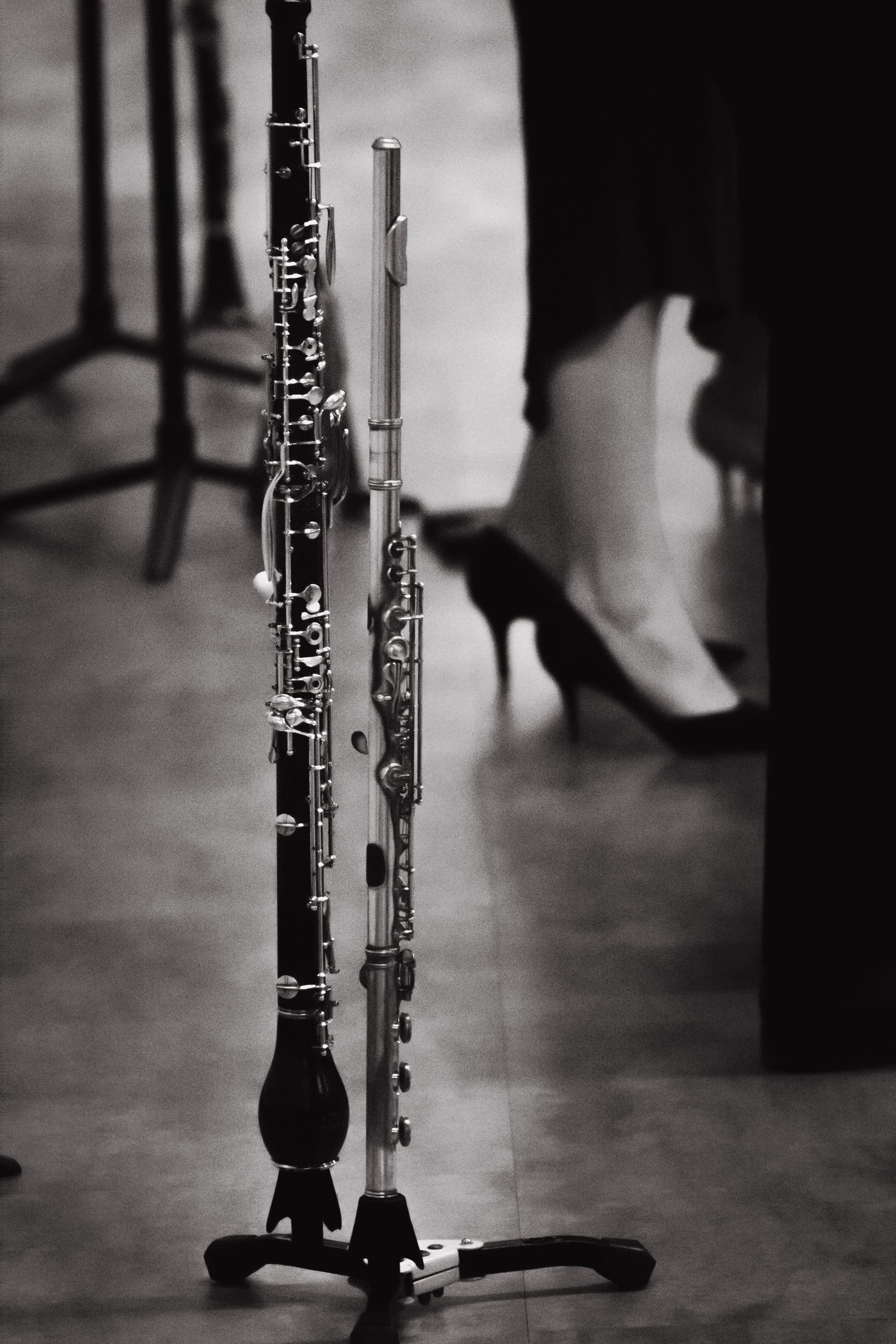
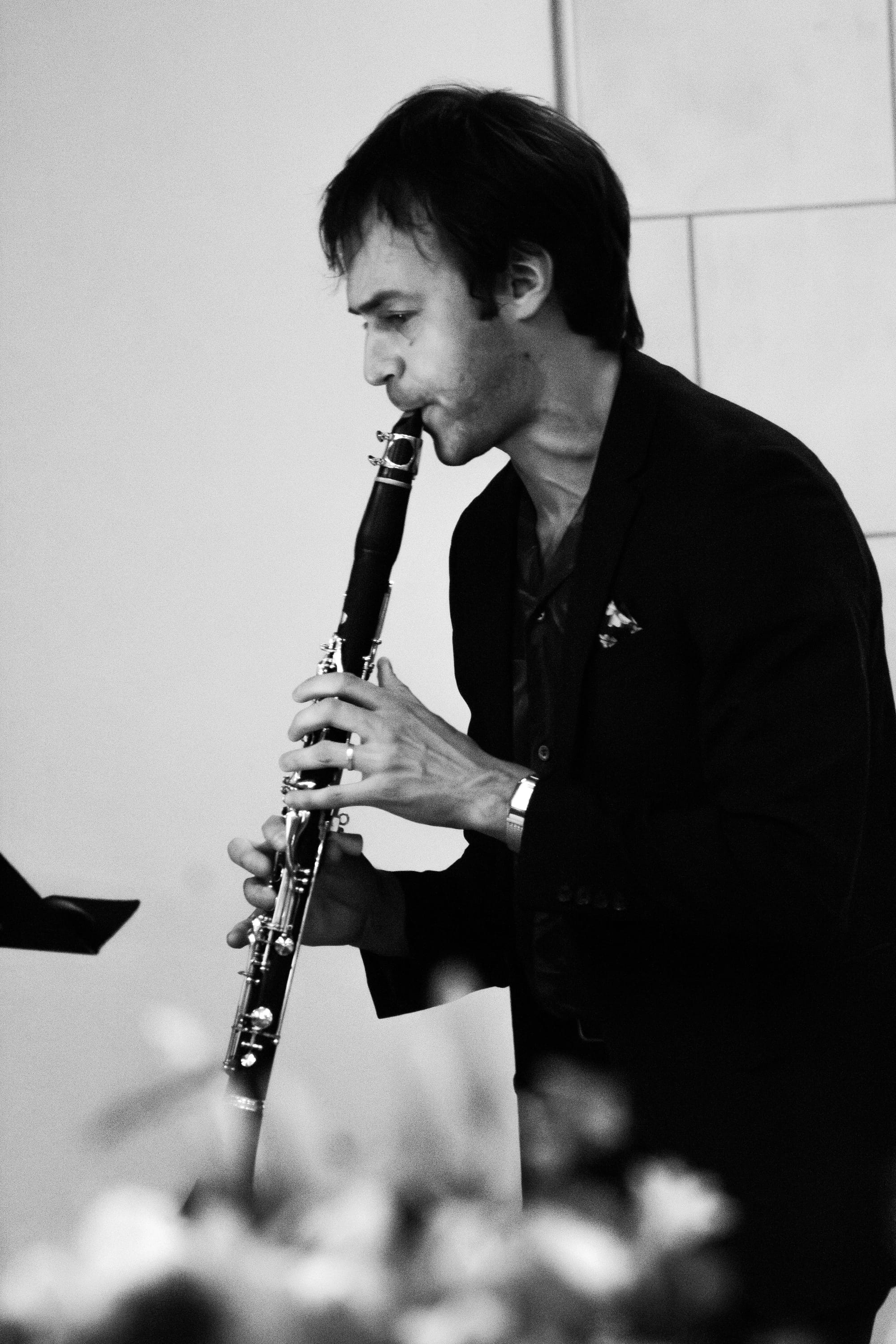
photos by SIGNAL @signaltulsa, courtesy of Chamber Music Tulsa
Listening without context or preconceived ideas to pieces that ask “what will you / hold sacred / in the rain” or meditate on plant life in the American southwest feels very much in line with the intent of the composers—and incidentally seems like a good fit with Discovery Lab’s focus on exploration.
What will you hold is a three-movement work that creates a dialogue between the parts in the ensemble, each acting as a voice that emerges out of the musicians raspily breathing into their instruments, then develops into what Tucker characterizes as a “rainstorm of sound” at the end of the piece. As the melodic lines develop and interweave, Tucker’s survey of care and presence comes to the forefront and opens up space for each listener to create their own answer to the question of what will be important to them when their foundations shake.
Flora asks us, similarly, to investigate the different spans of time present in our surrounding vegetal landscape. Just as the music rises and falls and melodies circle around each other at varying tempos and intensities, agave plants grow to almost fantastical sizes before they wither and the lives of creosote bushes can span for thousands of years.
A meditation on presence, community, and ephemerality seems an apt exercise for this moment in history. Like these pieces that can only be heard during the performance, we have to make an interpretation of the current state of our country without a blueprint. These times are influenced and shaped by what we know, but what we’re experiencing is different and uncertain. There’s a lack of foundation and a sense of fleetingness in our experience of today; some new crisis or news story will create some storm that changes the course of interpretation at a moment’s notice. It’s a perfect moment to ask, as WindSync prompted us to do: “What will you hold sacred in the rain?”


