Arwa Yemeni Coffee
335 Orange St (1st floor of The Audubon)
New Haven
Valeed Hussain filled a jug with hot water. Behind him were curved sculptural pieces destined to come together into the shape of a Dragon’s Blood Tree, the national tree of Yemen.
Valeed poured the water into a metal pot on an electric stovetop to the right of a cash register. He was making Adeni tea, the rich, creamy signature drink of Arwa Yemeni Coffee, which soft-launched its teas, coffees, and Yemeni pastries last week on Orange and Grove Streets in Downtown New Haven. The café joins a handful of other Arwa Yemeni Coffees, most of which are in Texas, where the company started.
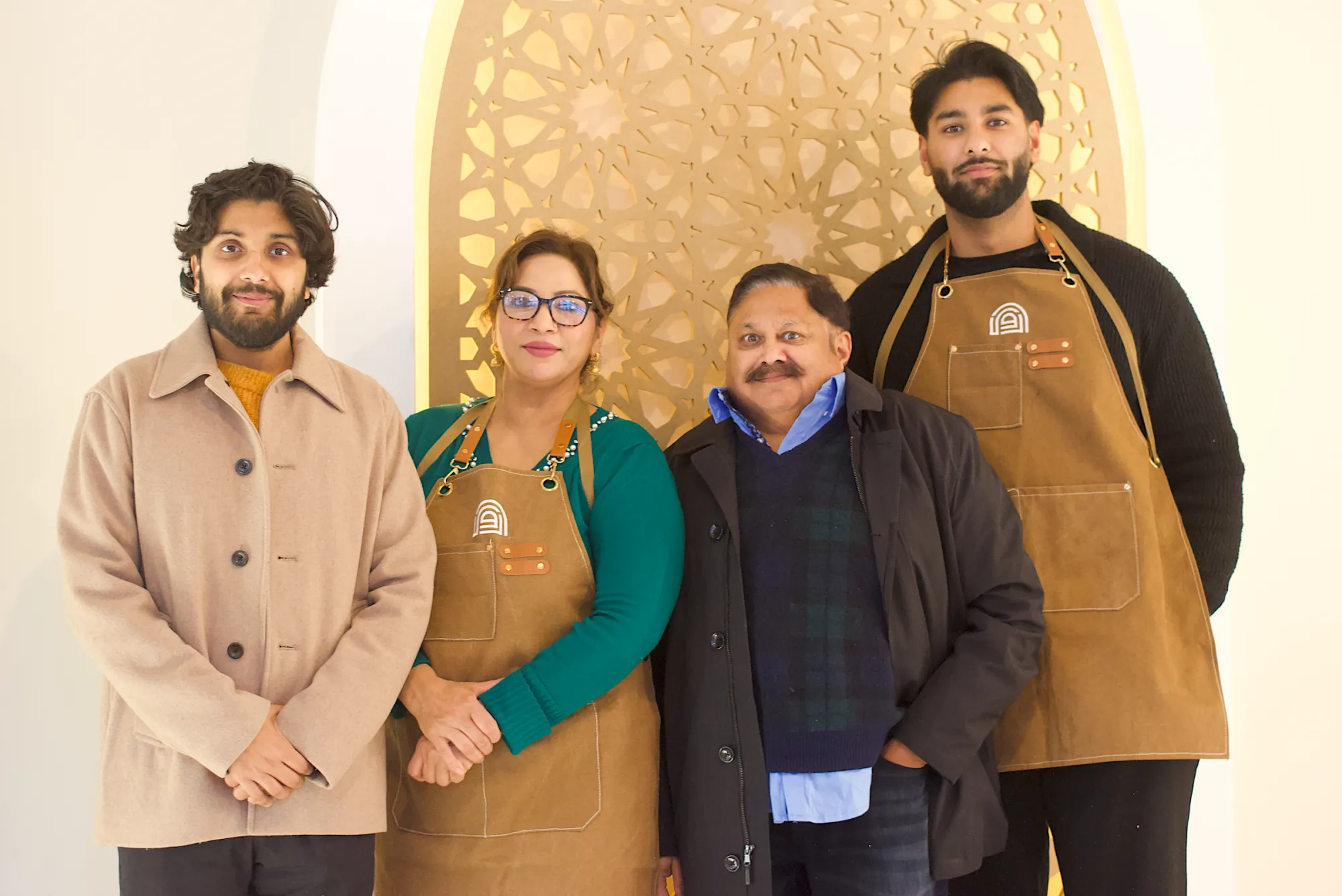
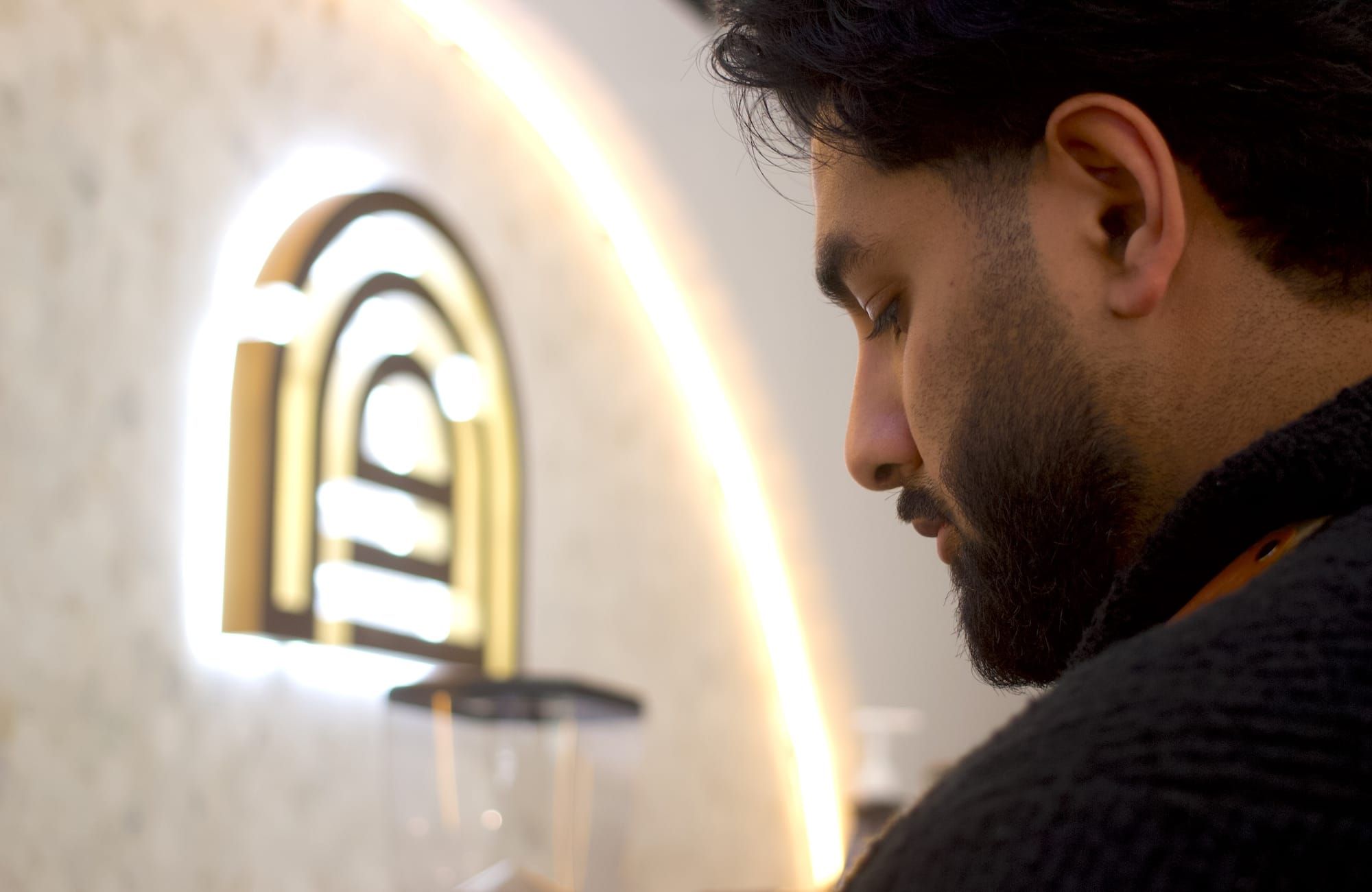
Valeed’s duties go beyond barista-ing; he is also a co-owner of the New Haven location. At 24, he told me watching the coffeeshop develop “feels like my dreams are being achieved every single day.”
The coffee-maker’s story begins at Elmhurst Hospital in Queens, N.Y., near the beginning of a new millenium. Valeed was born the youngest sibling of one brother and two sisters, all of whom (along with his parents Samina and Taliv Hussain) would play some part, small or large, in his future coffee dreams.
Salman Hussain, Valeed’s older brother by four years, co-owns downtown New Haven’s Arwa with him. The two brothers share duties, coordinating their schedules based on each other’s needs. When I visited Monday afternoon, Valeed was filling in for Salman so that he could rest. (On top of co-running Arwa, Salman works as a full-time engineer.)
When the water was just right, Valeed added a top-secret spice blend to the pot, along with some sugar. He mixed everything with a long, twisty metal spoon.
I asked Valeed how his personality differs from his brother’s. He dubbed Salman “definitely the brains” of the operation before calling in his mom, Samina, for backup. She was sitting at a table near the front counter with Taliv, and she was more than happy to come help Valeed describe his older brother.
“He’s very dedicated,” Samina said, twice, about Salman. When Valeed mentioned the word “shy,” Samina opposed it.
“No, he’s not shy,” she argued. “If he’s comfortable, he’s very open.” Other words she used to decribe Salman were: responsible and hardworking.
Then I asked Samina to describe Valeed, and she smiled. “He’s my baby,” she said, referring to his position as the youngest of the family. She called him soft-hearted, loving, and social, telling me both sons are very caring and humble. She and Taliv lend a hand at Arwa whenever they can, helping make tea or going on milk runs.
Valeed gestured to the surface of the liquid simmering in the pot. He was showing me the caramelization at the top, a darker brown signaling the tea was almost ready. What was important, he said, was making sure the water didn’t boil. If so, the tea could get burnt.
Valeed’s coffee-making interests first started brewing at age 20, when he would make drinks for his cousins, his two older sisters—anyone who came over. They told him the coffee was good, though he said he suspects they were just trying to boost his morale.
Then Valeed started experimenting with different beans, finding a favorite source in Connecticut roaster and café Perkatory. Now, Valeed uses coffee beans from Yemen (coffee’s first cultivator) for Arwa’s range of coffee drinks.
In preparation for Arwa’s opening, Valeed underwent a year and a half of training, even traveling to Texas with Salman and Samina in July to practice working at the original location. “They welcomed us with open hearts,” Valeed said of Arwa’s founders, a group of two couples.
Over at the stovepot, Valeed saw the dark brown shade he was looking for. He mixed the tea, turning the mixture light again as the top crust combined with the body. The new color was what he called “liquid gold.”
So far, the community has responded warmly, Valeed told me. The coffeehouse has already had one event so far, a cookie swap and gift-wrapping party. Recently, an author stopped by, looking to start a book club. Valeed and Salman aim to make more ties with the literary community, hoping to host events with a variety of local authors.
The tea was ready. Valeed poured me a glass, catching small particles with a strainer, then said, “That’s actually my brother.”
I looked up to see Salman walking in. As I sipped my glorious, fragrant Adeni tea, Salman helped tell me about the Yemeni Dragon’s Blood Tree–“No spoilers!” Valeed said at one point—and lent a hand to workers who had come to put together the sculptural feature.
Once fully assembled, the tree would branch out over the coffeeshop’s interior, serving as a cultural symbol of its homeland: not just Yemen as a whole, but the remote island of Socotra, where diverse wildlife thrive. While Valeed and his family are Pakistani, there is a brotherhood he said he feels with Yemen and its surrounding region.
Valeed showed me pictures of the Dragon’s Blood tree in nature, along with other Socotra plants, whose striking shapes spoke to the island’s specific environmental conditions. Tea enjoyers who wanted to learn more about Yemen could flip through a Yemen-themed coloring book for sale, featuring architecture, clothing, and food—down to a specific, well-loved brand of potato chips.
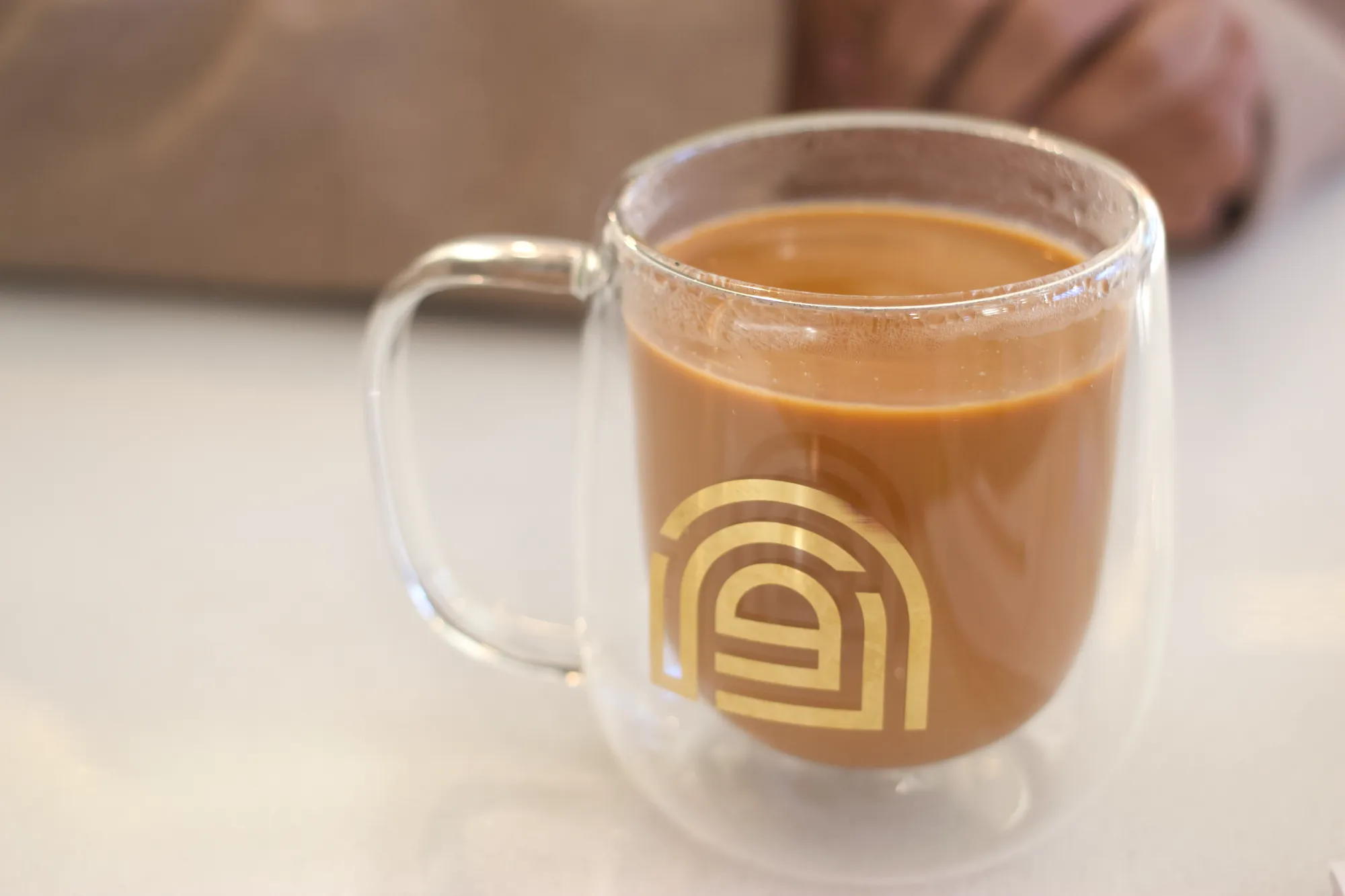
While Valeed got up to join his brother and the tree-assembling team, I drank my two drinks; along with the tea, Valeed had also made a Yemeni latte, drizzling honey on the insides of the mug before melting it into a generous pour of coffee and milk with another mystery blend of spices. The Adeni tea was nutty and comforting, while the latte was sweet and pleasantly strong.
The day before, Valeed was out getting a fresh supply of milk when his dad called.
“Come, come, come, we’re so busy,” Taliv said on the phone. A running club had stopped by, the café was packed, and a line was forming. Valeed hurried back from the store to help out—and to take a panoramic video of the bustling establishment, which he showed me on his phone, beaming.
It was a “really good rush,” he said.